| Author |
 Replies: 54 / Views: 17,404 Replies: 54 / Views: 17,404 |
|
Pillar of the Community
France
1591 Posts |
Hi, I think I remember there are philippines coin collectors here - so I'll post this one :) It's a very nice F7o counterstamp from Manilla, for Ferdinand VII, made between 1832 and 1834. Considering the host coin (1833 8 reales from the republic of Peru, which was in its first years), this one should be from 1833 or 1834. The closeup picture was before PVC removal from the coin ( darn holders ...) 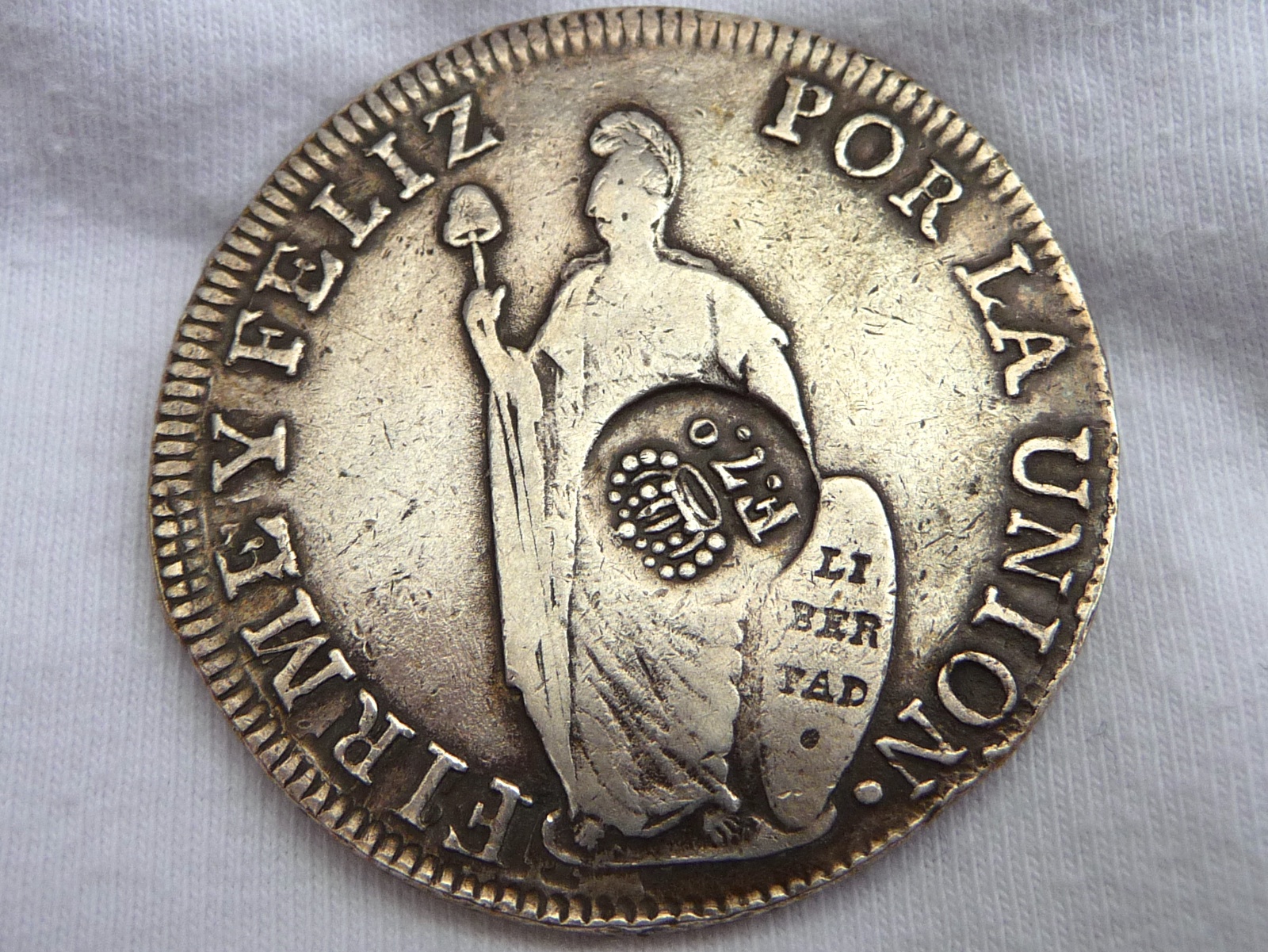 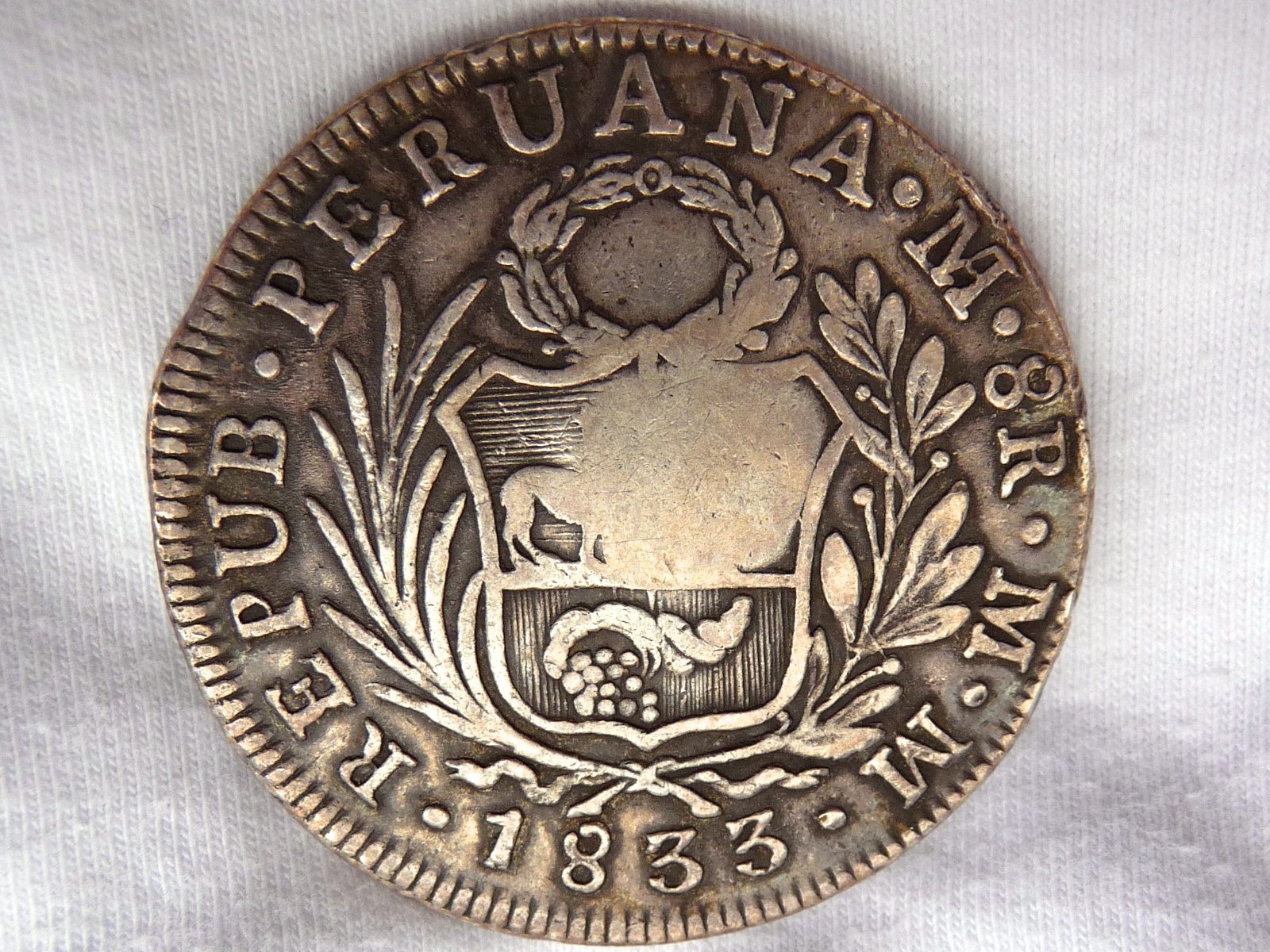 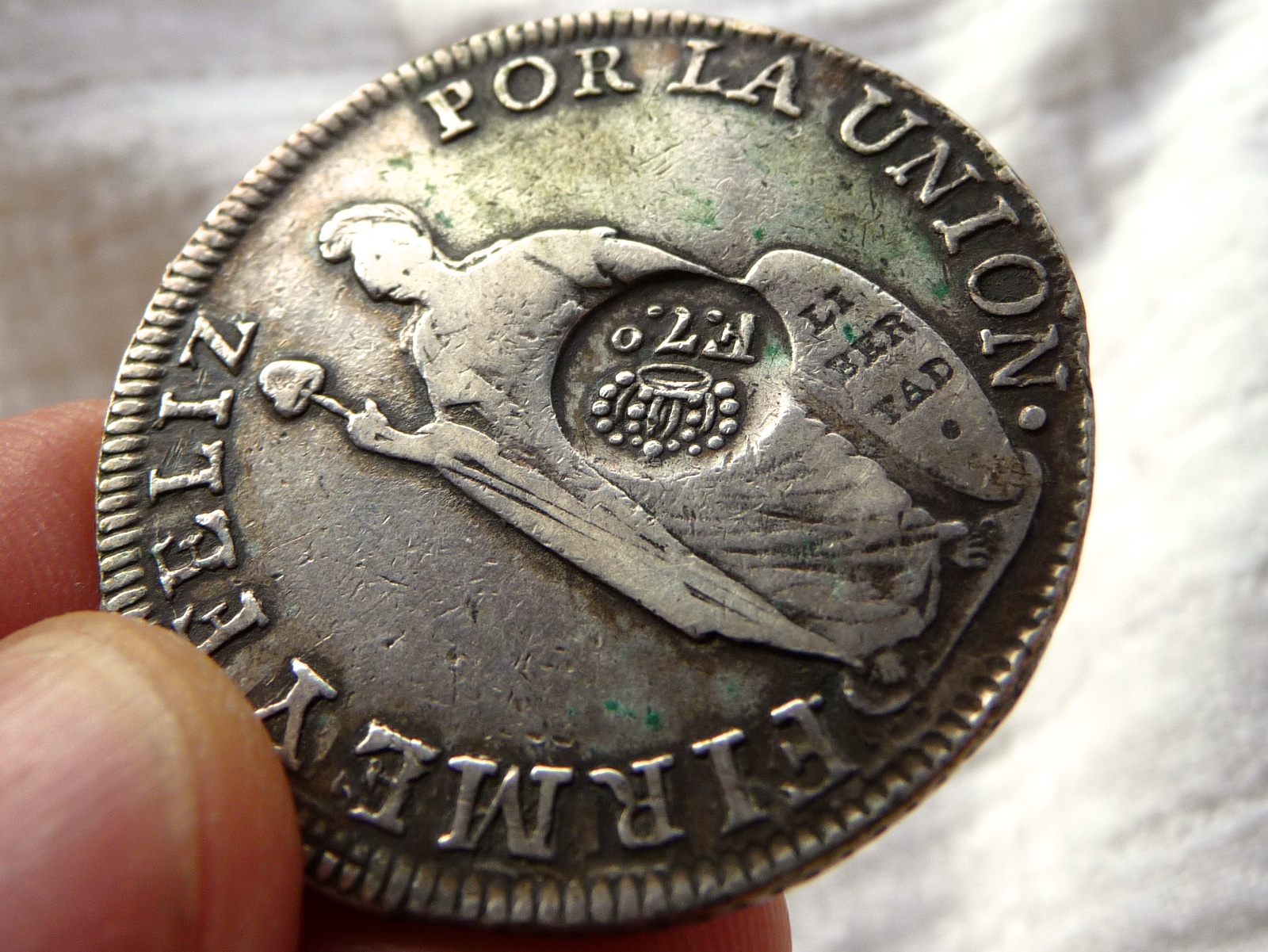 I know there are many fakes of this C/S, this one look fine. Oh, the Peru coin seems to have been struck over something, I can see inverted letters on the face side (I'm not sure what to read though) Edited by MathieuMa
04/08/2012 5:01 pm
|
|
|
|
Valued Member
Australia
262 Posts |
nice coin! I agree with u, not fake.
|
|
Pillar of the Community
Hong Kong
1270 Posts |
Hello MathieuMa, the mother coins of this type of Peru 8 Reales have so many fake, do you mean that? Or the C/S be fake? I have several Peur 8 Reales (1832, 1835 and those Nor-Peru 1836) are over-weighted, they are all fake in my opinion. Can you tell the weight of your coin? If you want to see my coin, just to tell me, I will post them under this topic
|
|
Pillar of the Community
 France
1591 Posts |
I'm aware there are many fakes of those, and of that particular counterstamp (I mentioned it in the initial topic).
This one is from a safe source (Cayon in Spain) - although in the same auction he had some fakes c/s listed (which were removed before the auction went live, but are in the catalog if I remember well)
I'll go get it and weight it - I just need some time to get it out of the safe :)
|
|
Pillar of the Community
United States
5362 Posts |
MathieuMa The coin and stamp look fine to me.
I believe the dies were clashed which caused the appearance of incuse letters.
wonghinghi Most copies of Peruvian issues were counterfeited within a rather narrow time frame and tend to be rather scarce. But I would welcome a look at any counterfeits.
|
|
Pillar of the Community
Hong Kong
1270 Posts |
Hello swamperbob, I have two Peru 1832 8 Reales that I think both are fake. This is the first one. Bought about 3-4 years ago in ebay.     Diameter 40mm Weight 27.70 grams I see some of your discussions and find the term specific gravity but I don't know how to do that for a coin so would you please to outline the procedure to do?  |
|
Pillar of the Community
Hong Kong
1270 Posts |
|
|
Pillar of the Community
United States
5362 Posts |
wonghinghi Sorry it took so long to get back to you. Got busy.
Other than an odd coloration that might be from an old chemical cleaning, I do not see any serious problems with either of the Peruvian coins. They look pretty good in a photograph. The edges on that series are NOT as well done as Mexican and some variation is allowable. If the weight and SG are correct and there are no other clues that are visible only in person than I would call them real.
|
|
Pillar of the Community
France
1591 Posts |
I agree with Swamperbob, I don't see anything alarming on your coins.
Both look fine to me.
When I got my first similar one, I was also worried about the edge - but it's normal for this type.
Oh, sorry, didn't found time to weight my coin :D
Maybe later. Thanks :)
|
|
Pillar of the Community
Hong Kong
1270 Posts |
Bob: You said that "Most copies of Peruvian issues were counterfeited within a rather narrow time frame" What was the time frame,can you state it? I had mailed these two coins to an Austrian sellers years ago for a closer examination and he concluded that they are both fake. Bob, I have sent these two coins to you with the Bolivian 8R 1791 you bought so you also have a chance to examine them closely and make your final judgement. As I find it(1832) very crude and over-weighted, I have no confidence to tell they are real. When compared with the North Peru coin shown below, I find this North Peru is more eye-pleasing, was much better struck and I believe it is real. The two coins seem to be produce by two different technical skills. Were the two coins struck at different mints?      |
|
Pillar of the Community
Hong Kong
1270 Posts |
P.S. The weight of the North Peru 1836 8R is 26.96 grams.
|
|
Pillar of the Community
United States
1962 Posts |
Be aware that the weight of these post-Colonial Peru LIBERTAD 8R varied, especially the early-to-mid 1830's Lima pieces. I've come across ones which appear to be perfectly genuine that weigh as low as 25.8g or so. The Riddell book noted this contemporaneously, and also indicated that debased issues existed (were these from the mint?). Riddell #98 (an 1836 Lima, "Repub. Peru." is shown) is listed as being 25.92g with a .510 silver fineness.
Krause does not acknowledge this practical variation, giving "27.07g" as the standard weight for all of the variant Peru 8R issues from 1825 through the early 1850's.
|
|
Pillar of the Community
United States
5362 Posts |
wonghinghi - The time frame I was referring to is based on my experience with collecting 8Rs that were used in International trade. Locally produced counterfeits of minor denomination coins were made for local use in the same way that they were made in other SA republics but they tend to be very scarce as a group and crude in manufacture. They are similar to the 2 reale forgeries which were produced in Mexico.
Peruvian 8R coins, like all of the other former Spanish colonial Republican issues began with the expressed intent to MATCH the silver content of the 8R. However, the majority were not successful for very long. To quote Riddell, ..."the Republican money...was intended to maintain the same standards of weight and fineness. But, really, in these respects, some very great irregularities have been found to prevail." Riddell reports three dates 1828 (510 fine), 1836 (510 fine) and 1838 North Peru (540 fine). I own an example of the 1828 but have not located the other two.
The largest number of 8R counterfeits appears to center on the dates 1828 to 1834. Dates after that are unknown to me. This tends to correspond with a presumed loss of confidence in Peruvian 8R coins about 1840.
Regarding the Peruvian coins themselves - there is a wide variety of talent visible on the various dies. Some are crude comparatively while others display nice detail. There is also a noticeable range in production techniques - primitive local replacements for original Spanish mint apparatus may be the cause. But the series is NOT as uniform as Mexico.
|
|
Valued Member
United States
80 Posts |
Mathieu.
This coin is new to me so I am just commenting. Both coins have the upper right M with a small bar across. Is this the assayers initial? Also both coins show a break in the upper left of the 8 in the date. Both coins appear to be from the same die.
Mike
|
|
Pillar of the Community
France
1591 Posts |
What you are seeing, crossed M, ins the mint mark : LM for Lima, mixed together. For the 8, it's not a die break, that's how the number was made, with style :) Here is my certified 8 reales of this type to compare with - it's quite crude as well, particularly the edge (Oh, it's no more slabbed, didn't I said I hate those before ? :D ) 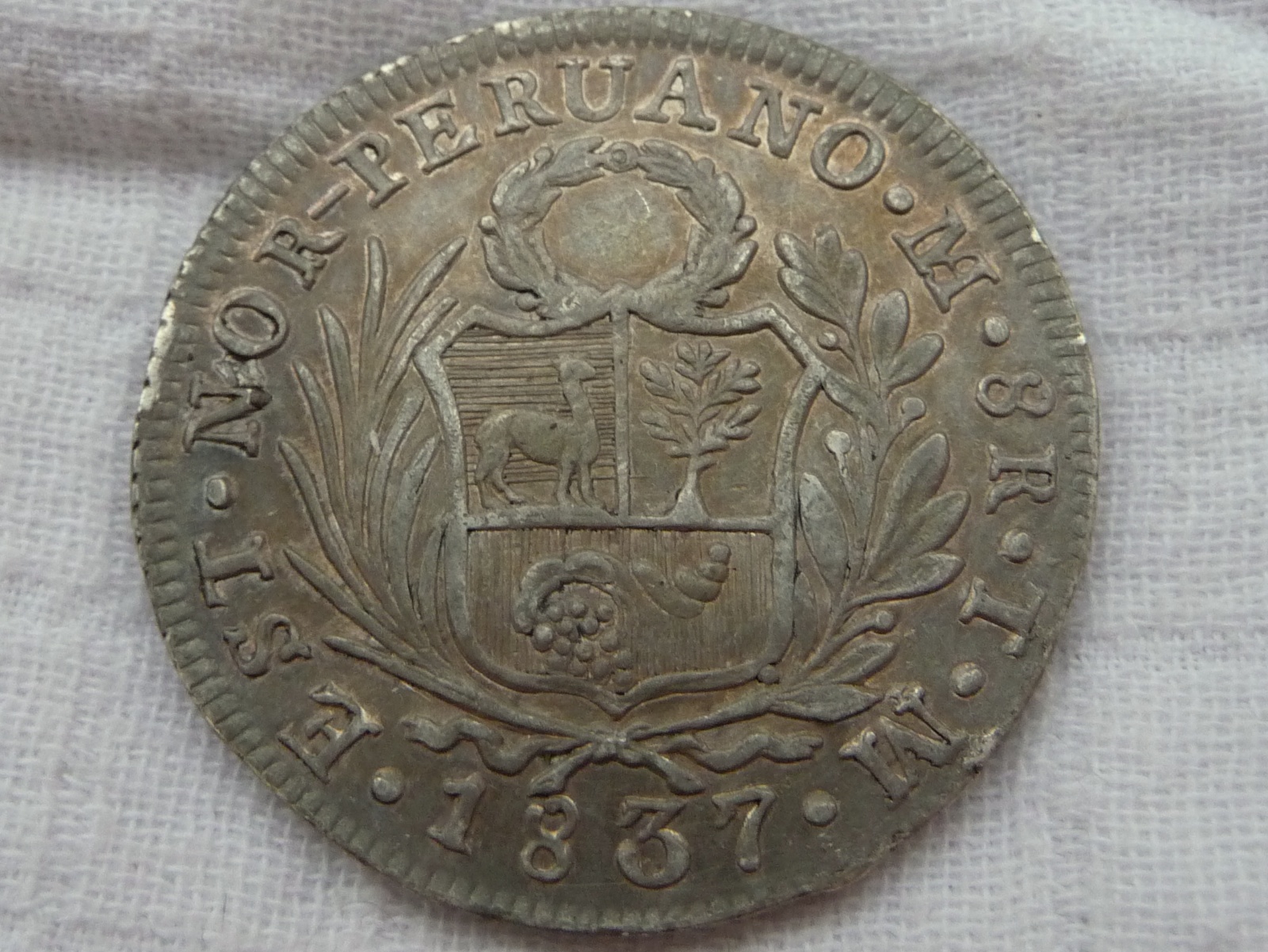 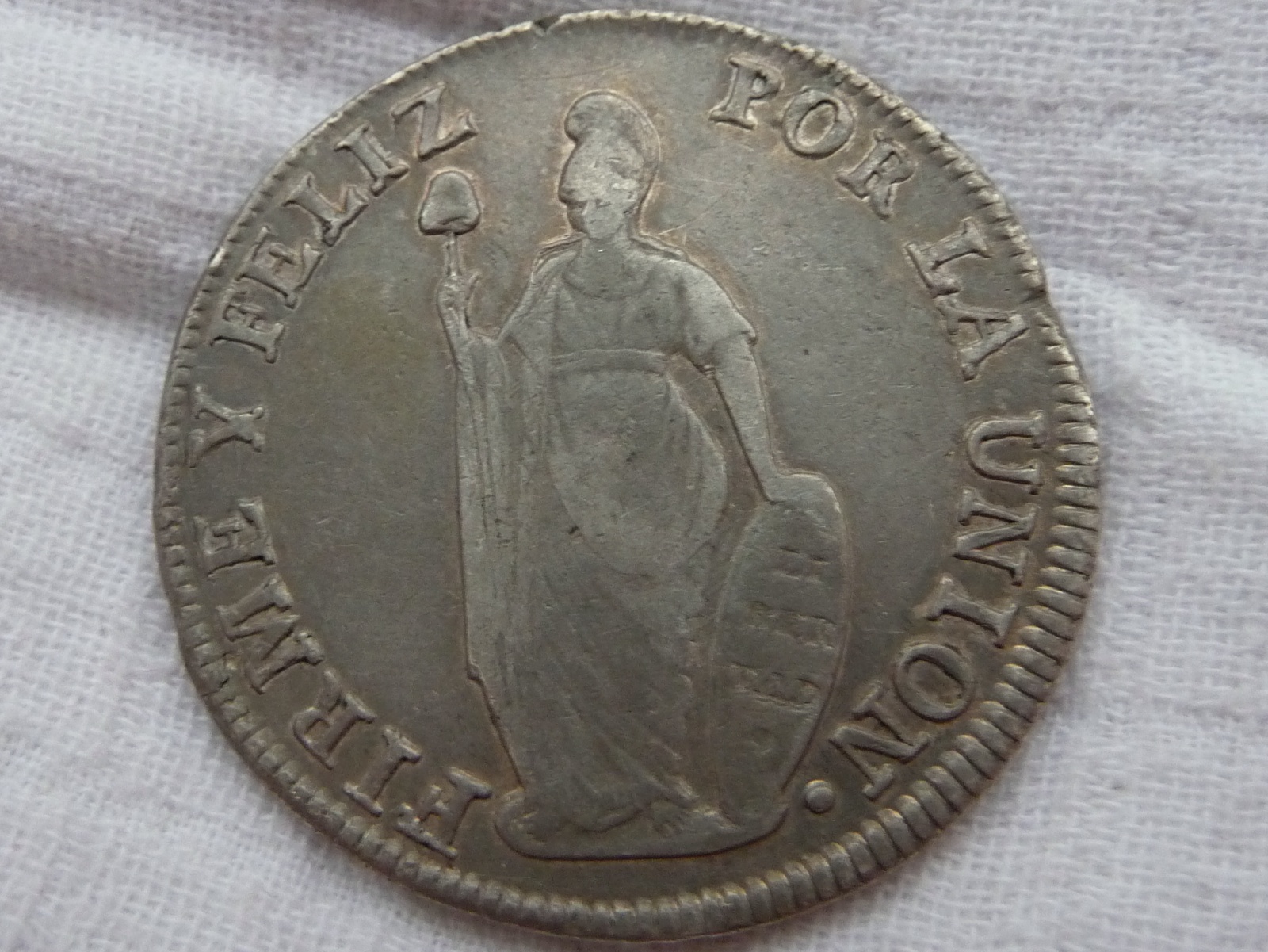 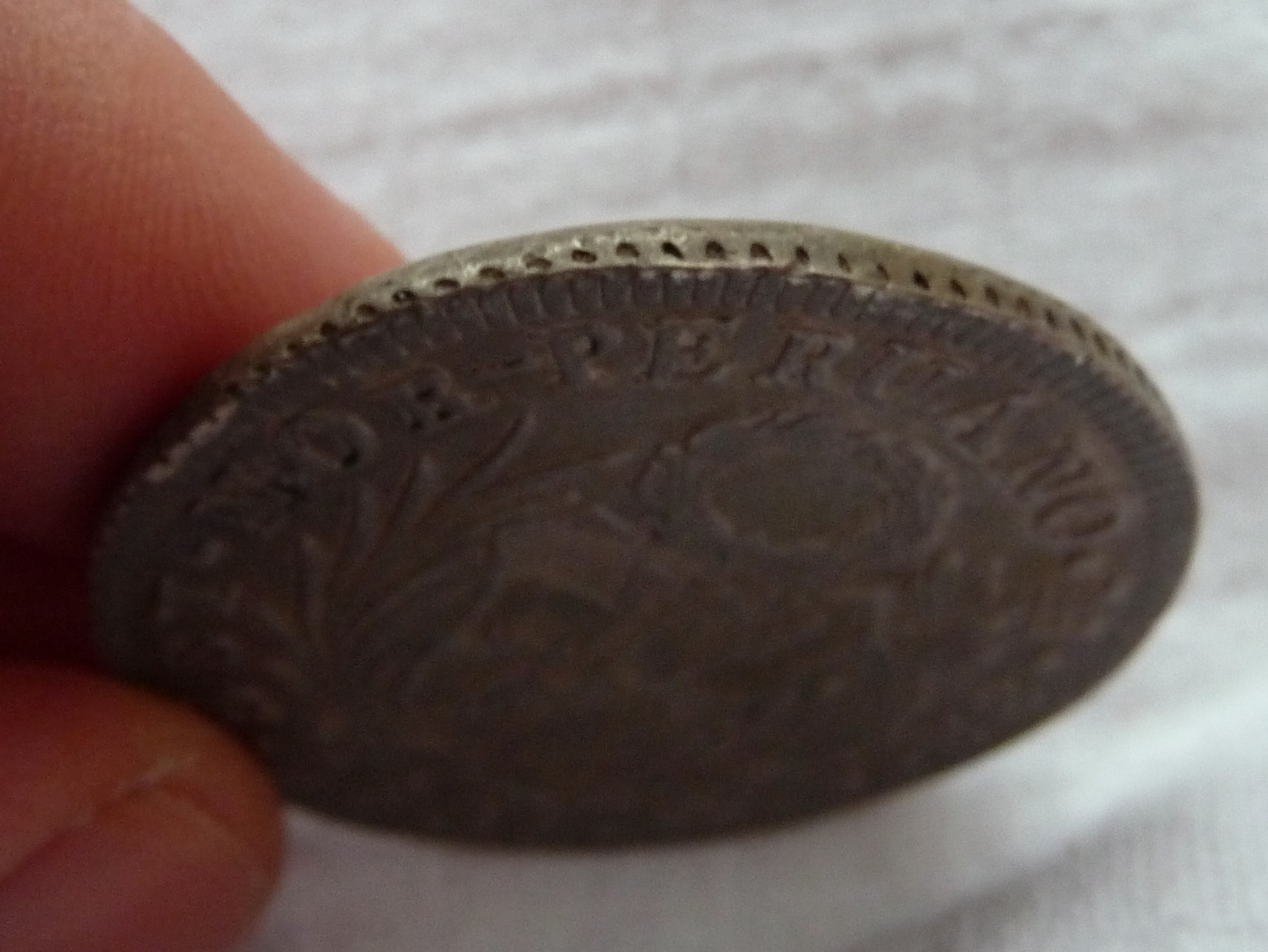 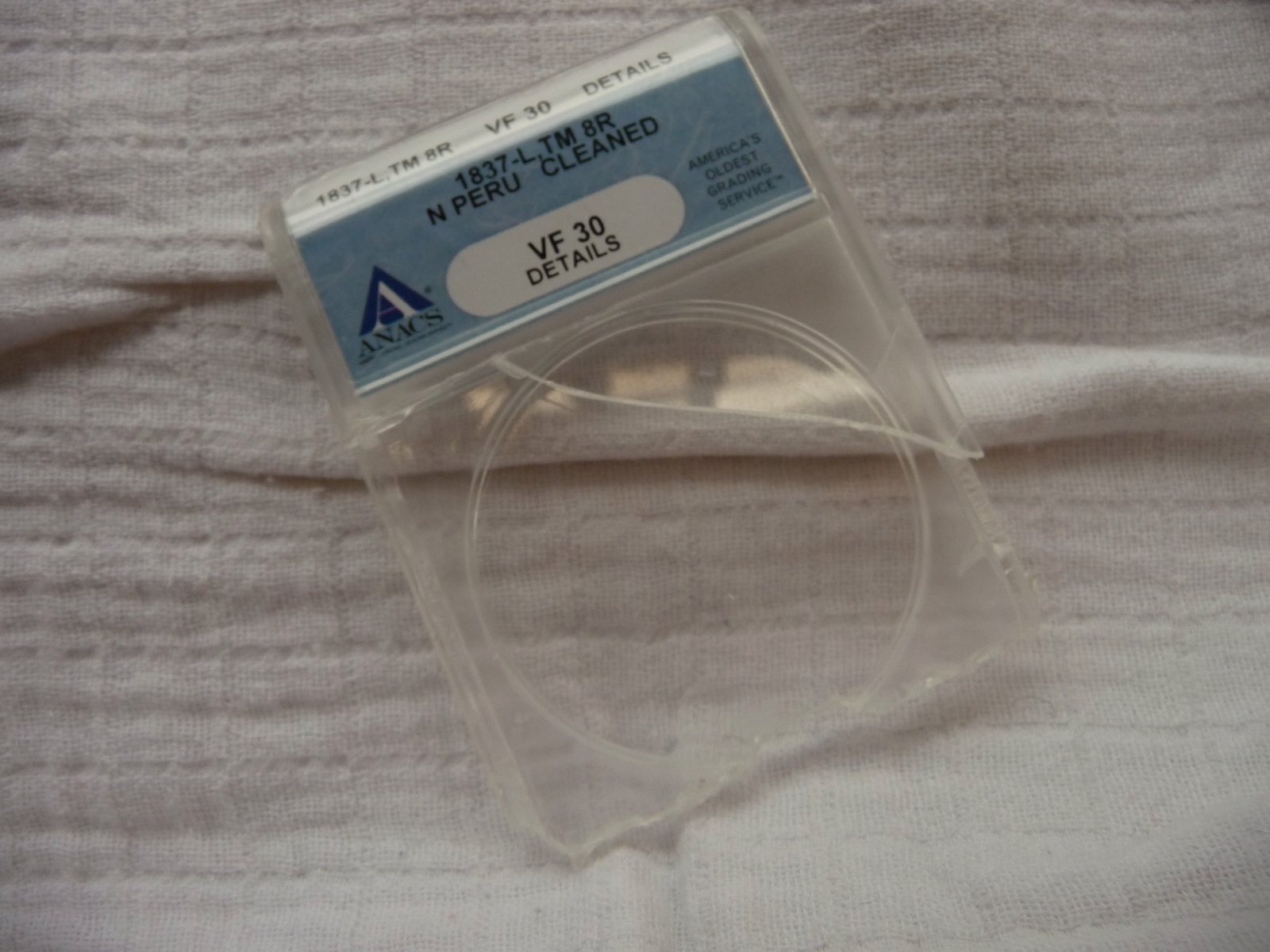 |
|
Pillar of the Community
United States
5362 Posts |
mikelley You say: Quote:
Both coins have the upper right M with a small bar across. Is this the assayers initial? Also both coins show a break in the upper left of the 8 in the date. Both coins appear to be from the same die. The small bar in the upper right M is there because this figure is a Monogram not a letter. It is the monogram used for LIMAE the mint that produced them. The break in the upper loop of the 8 at the left is a feature of the font used. Most Spanish American 8's and 0's have a break in the numeral. In the case of the Zero it distinguishes between the Capital O and the Numeral 0. The appearance of being from the same die is deceiving - check letter positions and you will see they are in fact different. Two dies were used. 
|
| |
Replies: 54 / Views: 17,404 |










 Posted 06/26/2012 06:53 am


