| Author |
 Replies: 14 / Views: 1,682 Replies: 14 / Views: 1,682 |
|
|
Valued Member
United States
230 Posts |
I just received an ebay purchase today and have some concerns after a close look. I'm hoping some more knowledgeable minds will give me an opinion on what concerns me about this 1875S Twenty Cents. First of all, in it's favor, it does weigh in at 4.99 grams on my scale and it ignores my most powerful magnet. But the rim is not smooth. A line goes most of the way around as if it had been sliced in two. I don't think it has but it is a way of describing what I am seeing. 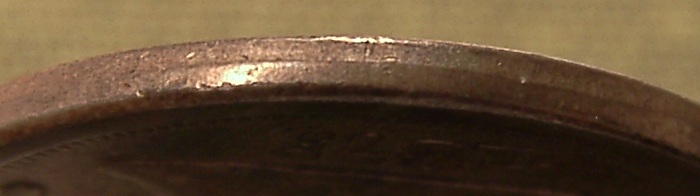 Also on the rim is a place where there are fine lines running the way reeding would. 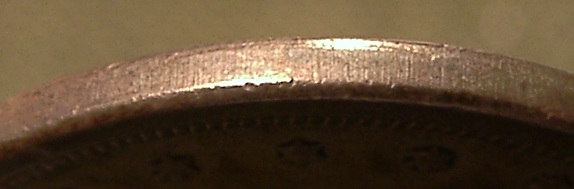 Then on the obverse, there are very fine parallel lines running continuous through both the field and the devices. They were particularly difficult to capture in my photos but I think you can see them well enough running across LIBERTY's lap and feet. One can even be seen on the top part of the 7. 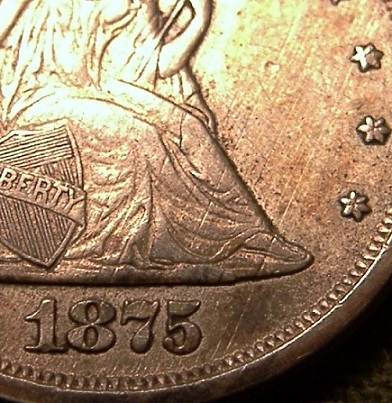 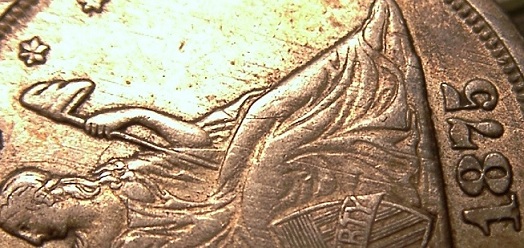 I have seen weak letters on the reverse of other 20 Cent pieces, especially the S in cents, but this one just looks odd. It may just the die crack. 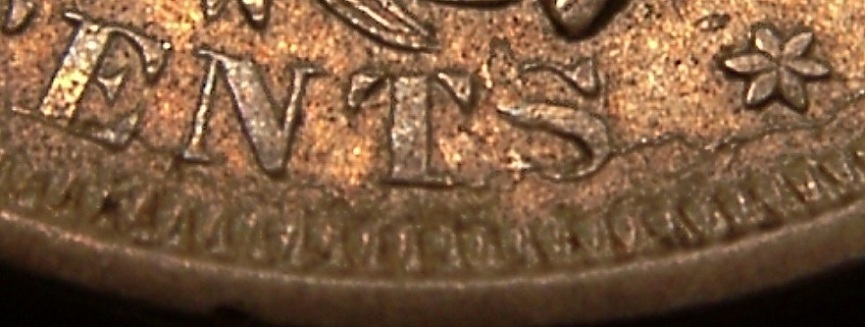 So, what do you think? |
|
|
|
Pillar of the Community
United States
1796 Posts |
The S in "CENTS" looks like others I've seen.
The only thing that strikes me as "odd" is that the tail of the "5" seems a bit fat (unless it's a trick of the lighting).
Could you post some full-face pictures of both the obverse and reverse in stronger light?
|
|
Pillar of the Community
United States
3843 Posts |
I'm just a novice but this coin gives me a lot of red flags suggesting that it could be counterfeit including the striations (the parallel lines on the surface of the coin which are quite noticeable). It also has weaker details in the high points of the drapery than I would suspect on a coin that has a full liberty which is usually one of the fist areas that see considerable wear. If I would guess I would say it is the spark erosion procedure of manufacturing was used due to these elements as well as the rough texture. I'm not completely sure this is not legit although I would stay away from it.
Sincerely,
Joe
Edited by Joe2007
03/14/2012 10:59 pm
|
|
Valued Member
 United States
230 Posts |
Thanks for the replies to my questions. Here are two more photos. I don't have a very sophisticated camera or any photo enhanceing software. These were taken with all the light three lamps could bring. Thanks again! 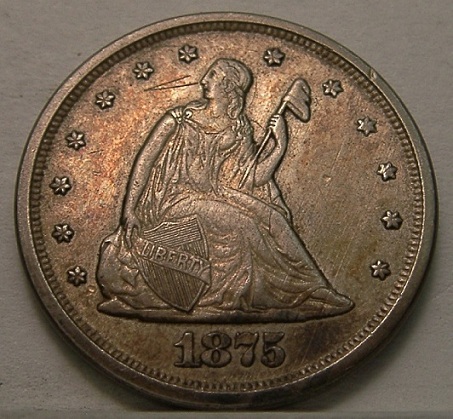 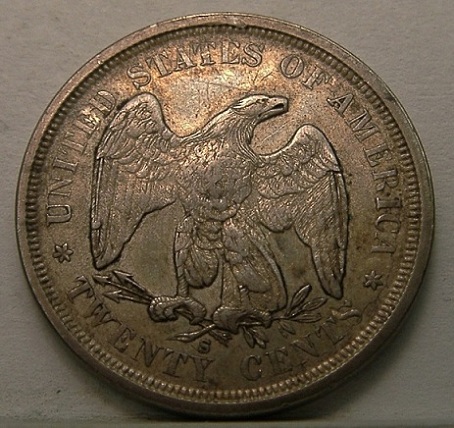 |
|
Valued Member
United States
161 Posts |
*** Edited by Staff - Please Review the rules that you agreed to when you registered. ***
|
|
Valued Member
United States
230 Posts |
*** Edited by Staff - Please Review the rules that you agreed to when you registered. ***How confident are you that it is a counterfeit? What convinces you? I am not skilled enough at Counterfeit Detection to have more than suspicions so I am looking at this as a learning experience. Also, the clock is ticking on my return privilege.
|
|
Valued Member
United States
230 Posts |
|
|
Pillar of the Community
United States
3453 Posts |
Honestly, if it were me, I would return it if there is a question of authenticity. I don't know enough to weigh in on whether it is genuine or not.
|
|
Pillar of the Community
United States
931 Posts |
I am no expert in Counterfeit Detection, but I have no reason to believe this is not genuine. I know all 20 cent piece are high value coins, but why would someone fake the most common date? I have a certified 1875-S in a similar grade and my coin looks very similar to this one. But it does not have the lines on the front or the weak 'S' in 'CENTS'. Nothing stands out to me. The vertical lines on the obverse of this coin could be from prior cleaning. You may not want the coin for this reason. |
|
Valued Member
United States
230 Posts |
Thanks for the reply, perfessor. I think the answer to your question is in the first half the sentence, "all 20 cent piece are high value coins". Yes, it is tempting to fake a rarer, very high value coin but with it comes more expertise, closer examination and the greater risk of detection. The more common, lower value coin is more likely to be sold to someone less suspecting and less qualified to detect the fraud (me!). It might be tempting to sell a fake for 1000 times what it costs to make but 50 times cost is good too, especially if it is a safe profit. The last fake I encountered on ebay was a large cent that, if real, had about a $50 value. It was much more obviously a fake than this coin but the rim had "reeding" lines on the rim just like this coin. |
|
Pillar of the Community
United States
1796 Posts |
Aye, hooligans will counterfeit anything they can turn a profit on. This is why we have fake Sacagawea dollars down in South America and fake common date silver dollars in droves from China. Check for a diamagnetic reaction and if it passes that, I'd send it in to get it authenticated. If it comes back fake, I'm sure there are channels for getting your money back. |
|
Pillar of the Community
1119 Posts |
they are faking common 20c coins from australia, nothing is safe anymore
|
|
Bedrock of the Community
United States
10284 Posts |
The striations on the edge of the coin is always seen on fresh uncirculated nickels. I think I was told many years ago that it is a result of the strips of copper nickel being punched out into planchets. Now I could be wrong, for sure but nickels are pretty hard and that is why those vertical lines remain on them even after they get rolled and struck.I don't know what the coin presses were like in the mid 1800's. I don't know if a partial collar could be created back then, I also don't know if those striations would remain on a softer 90% silver coin like they do on the unc nickels. ( Take a close look at the edge of an unc nickel sometime, this is the first place you will find signs of circulation. ) It appears you won this auction and if genuine you got a great coin for a great price. [eBayItem]330696242127[/eBayItem] I looked at some other images in completed item listings he had of some classic US coins. They looked legit to me as does yours and all sold at rather nice prices. I would lean toward your 20 cent coin being genuine. It should be professionally graded though, since the same questions will arise when you go to sell and I think the cost will easily be made up for once the questions are removed. Contact the seller in ebay's "my messages" and tell him your concerns. You could point him to this thread later too. You have 60 days to leave feedback, so much time to file a dispute, and if it comes back fake, you could ask him to repay your costs and ask for a refund. |
|
Pillar of the Community
United States
3843 Posts |
If you can I think you should take it to a coin dealer to be looked at or email a few of them with your pictures and ask for their professional opinion.
|
|
Valued Member
United States
230 Posts |
Thank you all for your comments. And for the extra research you did NickleGuy. I think you are exactly right about the striations being from being punched into planchets. I don't know how well the edges of coins were rolled in 1875 but I have not seen them on anything but modern nickles. And the fake large cent I mentioned. Actually, I put the coin in the mail late last Friday and am hoping for a smooth refund. I don't think the seller tried a fast one and pending a fast refund, I plan to leave positive feedback. He did honor his return policy and deserves credit for that as it is a very important part of doing business.
|
| |
Replies: 14 / Views: 1,682 |
|










 Posted 03/14/2012 10:57 pm


