| Author |
 Replies: 83 / Views: 10,365 Replies: 83 / Views: 10,365 |
|
Valued Member
Spain
134 Posts |
Hi, I'm new to this forum, and I'm wondering if someone can help me with a couple of coins that look to me rather suspicious. What's puzzling me is that the coins weight, meassure, and even sound exactly as they should; but they don't look right. For example, this 1918 George V Silver Halfcrown: 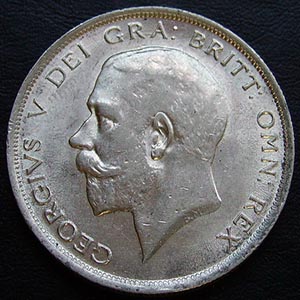 It just doesn't look right; the luster, the details depth, and specially the rim doesn't look like in other similar coins. What do you think? |
|
|
|
Pillar of the Community
United States
648 Posts |
|
|
Moderator
 Australia
16920 Posts |
There are several things that could cause a coin to "look wrong", or at least not look the same as most other similar coins of the same type.
Cleaning is the obvious option. If a coin has been cleaned a while ago and has started to retone naturally, it still won't resemble the way an ordinary coin looks from the combination of age and circulation. Artificially retoning a cleaned coin can also look very wrong, if done badly.
Counterfeits are another possibility. Several times people have posted coins - particularly Chinese dollars and other coins the Chinese like to fake - and the specifications seem good, only the coin "looks wrong" - in such a case, a combination of slight differences in the diework combined with the artificial toning typically seen on Chinese fakes combine to set off warning signals in the minds of experienced coin handlers.
Finally, storage conditions can impart a uniquely different appearance to an otherwise perfectly normal coin. If a coin is stored for a long time in the wrong conditions, like a cheap plastic album, a plastic or leather purse, or even a room with unusual atmospheric contaminants, then odd things can happen to a coin's surface that are uncharacteristic.
Don't say "infinitely" when you mean "very"; otherwise, you'll have no word left when you want to talk about something really infinite. - C. S. Lewis
|
|
Valued Member
 Spain
134 Posts |
Thank you for the welcome and for your help. What I find most suspicious about that coin (I have a couple like that one) is the rim. I'll try to get some close up pictures tomorro morning, but maybe you can see in that one that it's like it was filed. Compare it with this other coin from the same type and of a lower grade: 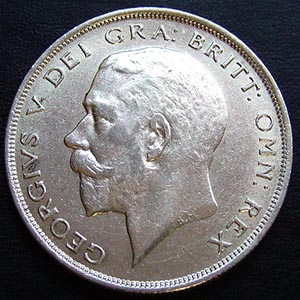 On this coin, even though of a lower grade, shows all the details around the rim on the obverse; unlike the other one. Then the depth of details; they should be greater in the first than in this second picture. |
|
Pillar of the Community
United States
648 Posts |
Not trying to be rude and I'm sure not grader  but the second coin does look higher grade to me  ( the maybe rude part ) who did the grading   |
|
Bedrock of the Community
United States
20753 Posts |
 I really don't know anything about those type of coins so I just wanted to say WELCOME TO THE FORUM. |
|
Valued Member
Spain
134 Posts |
Thank you for the welcome Carl, and thank you for your help tokenmast. In regards to the grading: it might look that the second is of a higher grade due to the higher details, but the luster on the first shows that it saw very little circulation; which is what's puzzling me: how can a coin with much less circulation, and most of its original luster, can have less details than another coins with more circulation and practically none of its luster? Maybe I chose the wrong coin to compare. I took the high res pictures today morning, and I chose another coin for camparison. This is the coin I suspect:  And this is another of the same type, but of a lower grade:  And these are close ups of the rims; on which you appreciate than the one from the first coin is not right:   It looks as if it was smashed or done with with a different die; or even filed (though I can see the distinctive marks). Maybe it's what Sap said, and the high points of the coin had been corroded or smashed during storage. |
|
Valued Member
Spain
134 Posts |
Here is another coin I suspect. This is a Brazilian Silver 500 Reis from 1889; and it also weights and meassures exactly what it should. But it also shows the same problem on the rim at the bottom, and on the top the outermost part seems to come up a bit.  Then the luster doesn't look right to me (and I also found it rather suspicious to finding so much luster in a coin of this age with that wear in the beard and rim); but I guess you can't appreciate it on the pictures. In any case, it also has these sort of rinkles in the field near the portrait. Like this one in the center of the picuture:  I have a couple more coins with these rinkles; are they normal? Have you seen other coins with them? |
|
Valued Member
Spain
134 Posts |
Now, this is a Russian silver 20 Kopeks from 1914. I got various of these coins (also of 10 and 15) and most are off weight -off by 5% to 10% less than they should-. They also show this strange field, which I never saw in any other coins but these Russian ones.  I asked other people, and without even seeing the coins, they told me that there are a lot of Russian fake silver coins around. What do you think? |
|
Pillar of the Community
United States
648 Posts |
 Much better pics, Thank you! Off weight is a " Red flag " ( sorry couldn't resist ) I'm still no expert so I'll just sit here and  |
|
Valued Member
Spain
134 Posts |
I just got another coin that I doubt; and you might be able to help me with this one, since it's a Morgan dollar. The first thing I noticed is that the colour was not exactly the same as my other Morgan dollars; this coin is slightly darker. I guess that doesn't matter much, so I tested for silver and I meassured it. All tests were good (weight thickness, sound), with the exception of the diametre. It seems that this coin is slightly smaller than it should (38.1mm) with a bit less than 38mm. Could this coin be authentic? |
|
Pillar of the Community
United Kingdom
575 Posts |
As they not very valuable I doubt somebody will sell post 1900 Russian silver kopeks copies.
|
|
Moderator
United States
23522 Posts |
Welcome to Coin Community, silvermaniac. You post some interesting and valuable questions, and here are a few thoughts regarding them: The dies used to strike coins have a lifetime, and over their striking career are capable of showing increasing wear. In addition, minute differences in the quality, composition and dimensions of the planchet (the original coin blank) can have a bearing on the look of the final coin. I'm thinking the Halfcrown shows evidence of this - the striations towards the rim are caused by the striking process, and might be more prominent if the die is worn and nearing the end of its' life. So, also, could the planchet contribute to such an appearance. A "fresh" coin struck from a worn die could show less detail than a circulated coin struck from a brand-new die, as a result. Now, regarding the 500 Reis. Occasionally, during the minting process a planchet fails to be fed into the press and the dies come into contact. It's possible when this happens for details of one die to be impressed upon the other, sometimes strongly enough for those details to be passed on to the next few coins fed. This is called clashing, and I believe it's what you're seeing here. The "curl" coming off Pedro II's forehead is a detail from the reverse, transferred to the obverse in a clash. The 20 Kopecks appears to be the result of a very poor die polishing process; polishing impressed lines onto the die strongly enough to be transferred to coins struck by it. This is not uncommon; look closely enough at almost any USA Cent and you'll see what I mean. You have been lucky enough to have seen few coins whose dies received such indifferent treatment, but they are not uncommon. Not all minting operations involved quality control as strict as others, Especially during that time of great tribulation in Russia, I could imagine quality control slipping to the point where off-weight planchets were allowed into the system; it could also (especially if the coins are underweight) be the result of corruption in the system - organized "skimming" of the metal used in the planchet. In summary, there are believable explanations for all these which would indicate all of the coins are real, just having been victimized by various problems inherent in the striking process. Please forgive me if I have been too simplistic in my explanations; I'm also addressing those who read this thread without ever posting in it, who have greater or lesser knowledge of minting operations. |
|
Valued Member
United Kingdom
114 Posts |
A lot of the larger coins of George V suffer from a form of ghosting caused by the design of one side being pushed through to the other side during striking. Most of the post-1926 issues are much better in this respect.
I've just looked at Coincraft 1997 about the George V halfcrowns. This has given me the following: "The George V halfcrowns (also) have a slightly concave or ‘dished' appearance contrasting with the rather ‘flat' look of the Edward VII halfcrowns".
I hope that this might be useful.
Bill.
|
|
Valued Member
Spain
134 Posts |
Yes valdiman; this is one of the first things I think when I doubt if a coin is a fake or not: who would take the trouble to fake a coin that's worth $3? And on top fake different years and face values.
They are probably authentic; but I'm still puzzled about that strange field and the underweight. Could it be that Russia's minting process was somehow bad?
|
|
Valued Member
Spain
134 Posts |
Thank you so much SuperDave, I thought the wear on the dies could be the reason why these coins the lacked details while retaining most of the lustre; but I was looking for someone else to confirmed my guess. I didn't know about your explanation for the 500 Reis; but that will surely give me some peace of mind with regarding other coins that show the same feature. I thought the same about the Russian coins, that the quality of the pre-revolutionary minting process might not be as good as the ones I'm used to (North America and Western Europe). I fact, I just wrote that in my previous post. I really appreciate you help; and I'm really grateful for confirming that those could be endeed perfectly authentic. Did you see my question about the Morgan dollar; could it be authentic and have a diametre 0.2mm shorter due to wear on the rim? It's a 1896 minted in Denver, and about a VF25 grade. I'm also noticing it's far to shinny; probably smoothly polished. Edited by silvermaniac
08/03/2011 7:21 pm
|
| |
Replies: 83 / Views: 10,365 |













 Posted 07/18/2011 5:56 pm


