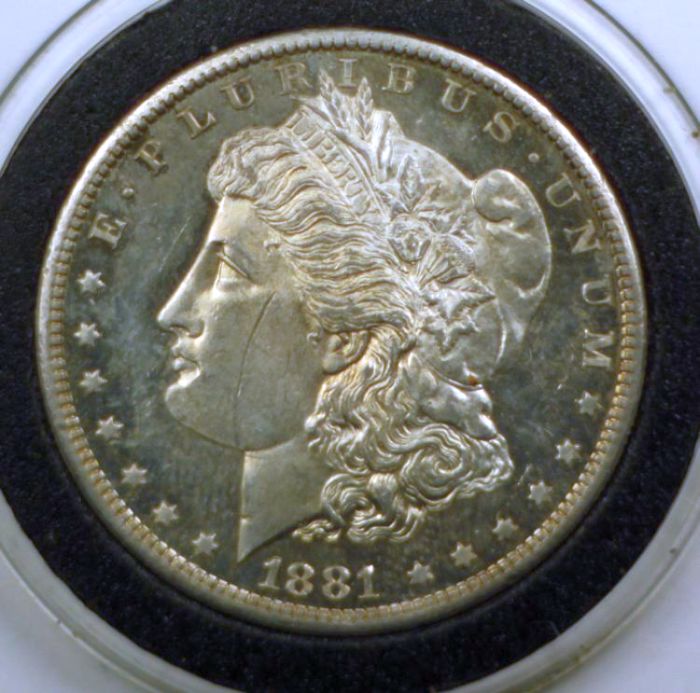
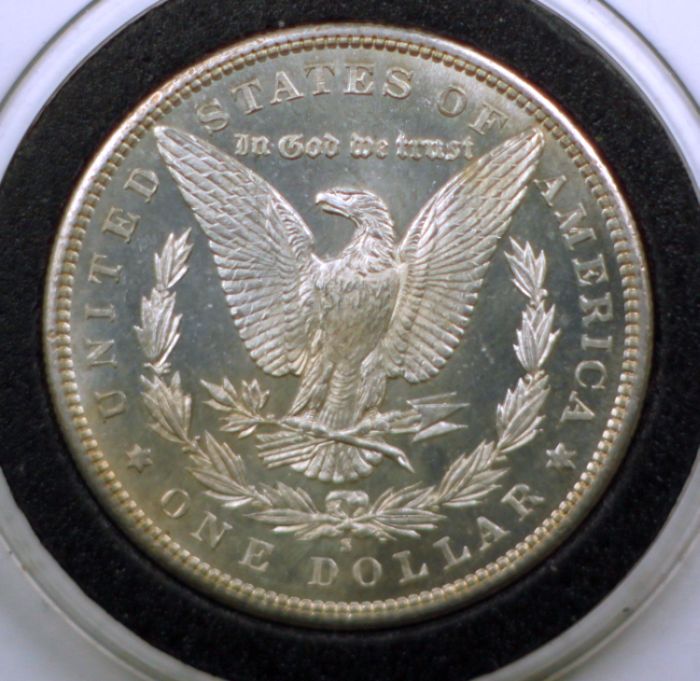
| Author |
 Replies: 528 / Views: 88,183 Replies: 528 / Views: 88,183 |
|
Pillar of the Community

United States
4050 Posts |
|
|
|
|
Pillar of the Community
United States
3076 Posts |
Ray, I've been looking for the the M39 to M42 adapter, I originally bought the 75mm El omegar and found it to be 39MM,
I have the canon adapter for the 42MM screw, will this work?
love to try it on the bellows. Gene
|
|
Pillar of the Community
 United States
4050 Posts |
Gene...Your Canon adapter allows M42 lens to be mounted on Canon bellows? If so, this adapter should work to adapt your M39 lens...Ray
Contact me for photographic equipment or visit my home page at: http://macrocoins.com |
|
Pillar of the Community
United States
3076 Posts |
I picked up the adapter today  , I've been wanting to try this lens out on my bellows...Thanks  Gene |
|
Pillar of the Community
United States
4050 Posts |
Contact me for photographic equipment or visit my home page at: http://macrocoins.comEdited by rmpsrpms
11/12/2011 12:11 am
|
|
Pillar of the Community
United States
3076 Posts |
Ray what is the thread size of the schnider lens?
the listings do not say anything of what you need to mount them, so I'm guessing M39?
|
|
Pillar of the Community
United States
4050 Posts |
I'm not 100% sure but almost all enlarger lenses are M39. There are older ones that are smaller and some of the long focal length ones are larger but most are M39. I'd suggest asking the seller on anything that looks interesting. I do own an older enlarger lens that is an odd size that I can't seem to find an adapter for so it's best to be sure before you buy...Ray
Contact me for photographic equipment or visit my home page at: http://macrocoins.com |
|
Pillar of the Community
United States
4050 Posts |
Well, it wasn't dirt cheap ($39) but I just received a Tominon E36 86mm f/4 today. I'd like to hear from anyone who has info on these interesting little gems. They seem to be fairly apochromatic, and unlike many other Tominon's on the market which have Copal M40 threading the 86/4 has M39 threads. Interestingly, smallest aperture setting is f/8 so I'm assuming these were intended for relatively high resolution work. 86mm is a very nice focal length for bellows as well. Here is my reference 1957D Lincoln Cent Toner taken with this lens:  |
|
Pillar of the Community
United States
3076 Posts |
Ray your photo's and efforts to us all, alway's SUCK the big one....That's a "FANTASTIC SHOT and results.. What in you opinion, how does this compare to the WOW printer lens, I forget the name but you know the ultamite printer lens for say $2500 bucks, versus this lens...This picture is pretty sweet...
|
|
Pillar of the Community
United States
4050 Posts |
Before I answer the question, I have some background explanation... This is a 4x-reduced image from the original 4928x3264 (Nikon D7000) to 1232x816, and then cropped to 800x800. The reduction process increases the apparent resolution of the final image and allows lower quality (and even high quality) lenses to look better. Note however the entire coin looks sharp, not just the center, so this is a testament to the T86 flatness of field. The larger you make the image on the sensor, the more the lens aberrations and flatness of field come into play so even a 4x reduction can't produce a nice image when the lens doesn't focus well at the edges of the coin, or produces off-color. This shot was taken at f/8. Notice the background is reasonably clear, which would not be the case at f4. This reduces aberrations and also helps with field flatness since any flatness issues are mitigated by the increased DOF of the smaller aperture. The reason for stating the above is that in this situation (4x reduction and f/8 aperture) the difference between the Printing-Nikkor and the T86 is very small. Printing-Nikkor color may be a bit more accurate, but the T86 is actually quite good. I see no color fringing when focusing with the T86, so it is very well-corrected. The difference between the lenses becomes apparent at smaller apertures, with no reduction. So for example, if I took the same image at f/4 with both lenses, and instead of reducing the images I looked at fine details on the coin such as the date and mintmark area, the Printing-Nikkor would be sharper than the T86. Also, if I critically-focused both of the lenses on the center of the coin (cheekbone) the Printing-Nikkor would be better focused and sharper on the rims of the coin than the T86. And finally note that the Printing-Nikkor can go to f/2.8, so resolution can be increased even further, though at that aperture you need to focus stack to get good sharpness in the final image. There are always tradeoffs! You can see extensive test results for the 105PN on Mark Goodman's coinimaging.com website. He has been testing a lot of lenses and has a very methodical and of course numismatically-oriented approach. Here's the link: http://coinimaging.com/Lens_tests.html That brings me back to the whole point of this thread: you don't need to spend $2500 (or even $250) on a Macro lens for coin imaging for Web publishing...this $39 T86 lens can produce a remarkably-sharp image at the 800x800 image size that is standard for posts on this forum and many other similar lenses are available with excellent performance. |
|
Pillar of the Community
United States
3076 Posts |
I did some looking for this lens, Most Tominion lens's are really going for big money, the only one's I found that were less were in the MP4 format type lenses...nothing on the E86...yet...
|
|
Pillar of the Community
United States
3076 Posts |
forgot, the adapters I first got were for the M39 to EOS, not a working item at this time, still waiting for the M39 to M42, slow boat from china, maybe next week sometime, and one other adapter for the bellows....or possibly the canon FD to EOS, From what I am seeing, many of these lenses need the use of a bellows, as being directly connected to the camera isn't working,
|
|
Pillar of the Community
United States
4050 Posts |
Glad you brought up the Tominon/Polaroid MP4. Those Tominon lenses are no slouches. I've had great luck with the 35mm for 3x-5x magnification, and the 75mm and 105mm are very good for full-coin imaging. The problem you will have is mounting them since they mount to Copal-0 M40 thread. However, ebay seller jinfinance makes and sells a variety of oddball adapters and has one for these. He does not advertise it for this purpose but I can verify it works perfectly: http://www.ebay.com/itm/Mitutoyo-BD...em2eb5de63e7This adapter makes it possible for coin photographers to easily use the Tominon/Polaroid lenses with standard M39 adapters and systems. The MP4 lenses usually sell for $75-$100 so I did not include them in my El-Cheapo category. However, there is a 75mm for sale right now for $35: http://www.ebay.com/itm/Tominon-75m...em3cbe9ab007Contact me for photographic equipment or visit my home page at: http://macrocoins.com |
|
Pillar of the Community
United States
3076 Posts |
|
|
Pillar of the Community
United States
4050 Posts |
Gene...glad you picked up that Tominon, it was begging for a good home. I don't know if it's so much not being parallel or just not being focused right. What was your aperture setting? Is this full field and downsized or a crop? ...Ray
Contact me for photographic equipment or visit my home page at: http://macrocoins.com |
|
Pillar of the Community
United States
3076 Posts |
Ray, these were full shots with my 55MM Asahi attached to the EOS...with my new adapter cropped down.... Thanks for the tip on the Tominion, would like to find the 105MM of that series.. I bought another cheap lens, for $10bucks..a Vivitar 70-200MM macro zoom...Took some pics, and some with a 2X converter... 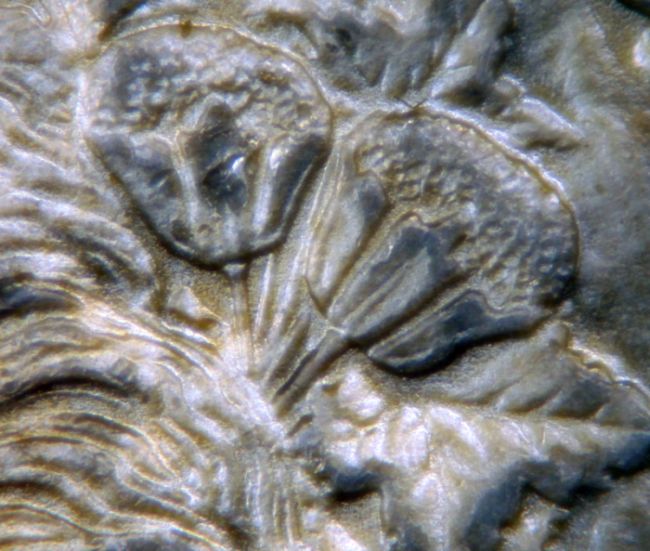 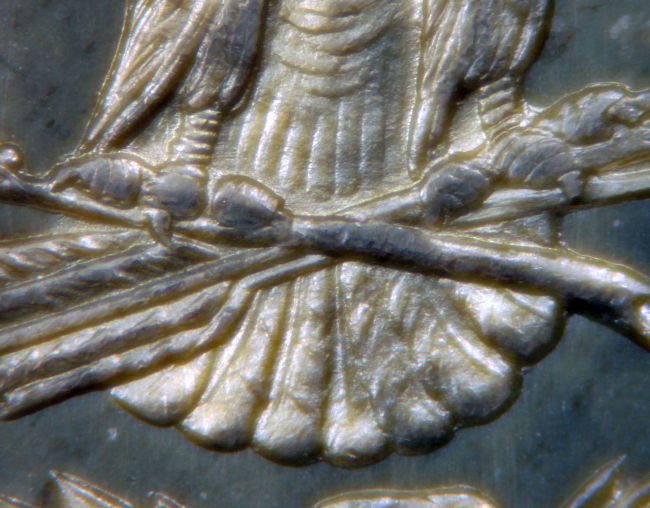 I am wondering, with coins does one need or use the filters that are on the front of the lenses when shooting coins? |
| |
Replies: 528 / Views: 88,183 |









 Posted 11/10/2011 08:51 am