| Author |
 Replies: 44 / Views: 12,336 Replies: 44 / Views: 12,336 |
Page 3 of 3
|
|
|
|
Pillar of the Community
 France
1591 Posts |
|
|
New Member
United States
3 Posts |
I realize this thread is many years old but it is the only one I have found. I have a silver 1813 Eight-Reale that I have had for about 40 years. It looks very similar to the coin that colonialjohn posted several years back. As I am a new user, I am not allowed to email colonialjohn so I will post my pictures here and wonder if I can stir up the debate about its authenticity. 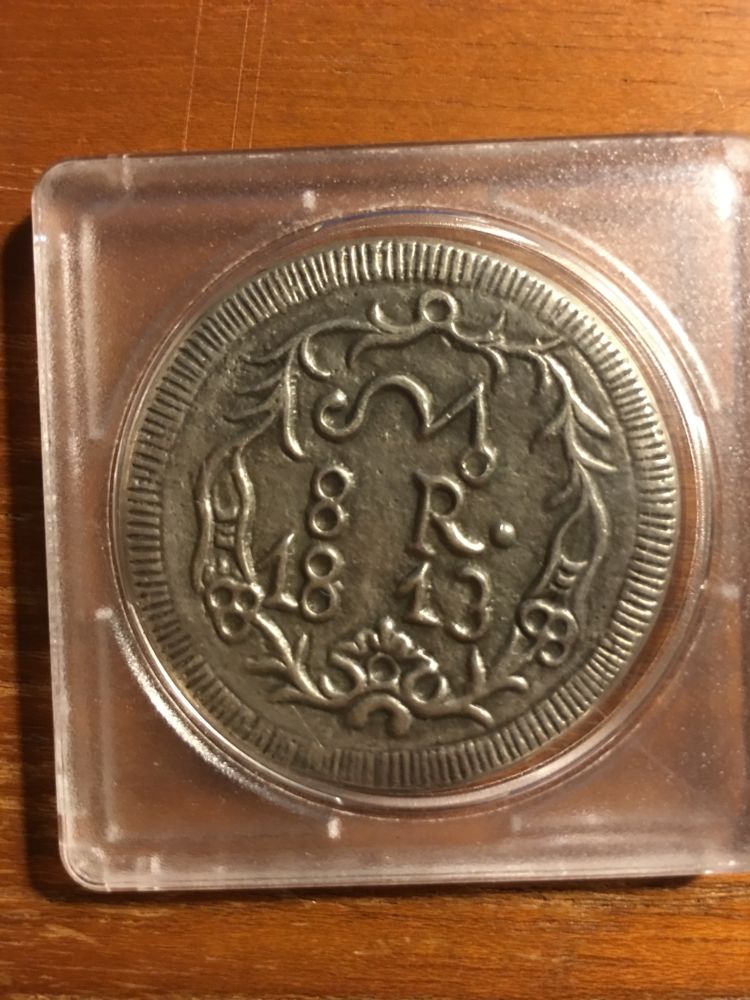 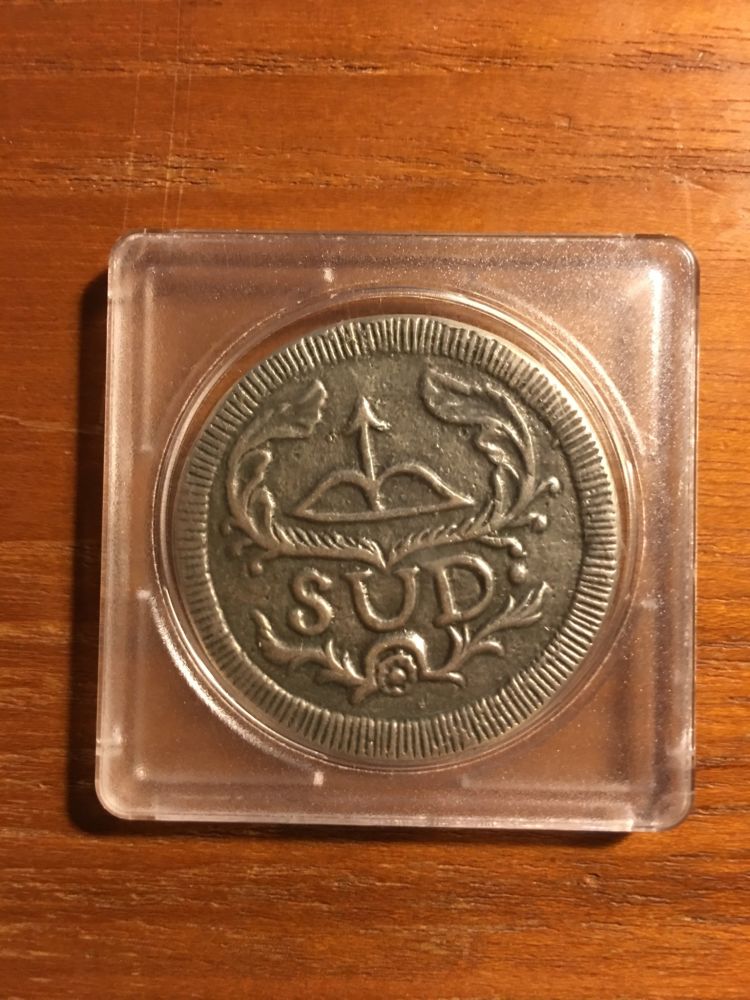 Any help or advice on how to go about appraising this coin would be greatly appreciated. |
|
Pillar of the Community
United States
5362 Posts |
In my opinion the coin you have is also a counterfeit (actually a numismatic forgery). There are several varieties that were made to satisfy collector demand when these became collectable in the 1950s. I have a few of these types including one that belonged to Virgil Hancock which was included in a display he set up at an ANA show in Louisiana in 1964. It came to me it the original display holder from that date. So these are at least 60 years old or older. The type I am referring to all display the same oddly raised fields. Some are clearly made by carving into a flat surface the details of the coin without leveling the fields. This happens when one makes a positive by hand rather than a negative copy. More recently produced examples have improved on that technique. From my examination of the coins I own I presume that the "coin" itself was a carving which was then used to create the molds from which the copies were cast. |
|
Pillar of the Community
United States
1761 Posts |
Here we are again three years later ... say you cut one in half and even from the central core to the edge you perform SEVERAL core to edge microstructure & metal alloy analyses to possibly see how this cast silver was created ... HOWEVER - what is your standard. I own two in PCGS slabs. I will admit ... these are beyond me ... since no one has EVER said here is your standard legitimate example as a starting point.
Consider for example the U.S. Colonial New Hampshire Copper with no records confirming a Mint was ever established but a cast was made and was in the 19thC John Work Garett Collection. Consider also those Texas Jollas. So based on Realeswatcher we could (if possible) trace one back to a 19thC Collection and then use that as a standard to judge all others. Interestingly although probably impossible when silver is rememlted lead is lost in the process but we have no way to know what are some good starting point lead levels. Possibly with time ... its been written that almost all production processes leave a signature microstructure (i.e., how the metals in a alloy shape themselves around each other) may be a possible signature method. Also lead isotopic analysis has shown to be somewhat effective to be used to isolate this analysis to signature ore samples.
In short - this confirmation is probably a generation away from us at this time and these cast silver issues. XRF analysis by itself will tell you nothing ... other than if modern metals appear in the assay. You could always argue real 8 Reales were used in the casting molds.Its here when the lead levels drop BUT what were the values originally. We need more tools like Lead Isotopic Analysis, Microstructure Microgrpahs and a good number of legitimate 19thC? examples from confirmed pedigrees.
BTW - no one has proven to me that the New Hampshire Colonial from JWG or the Texas Jollas are real.
|
|
Pillar of the Community
France
1591 Posts |
colonialjohn : the issue is, how do you determine which coin is genuine - even the sample you mention ?
There were contemporary creation as commemoratives as well .
This is the hardest type to authenticate from that period.
Ralf, if you are around, you could post your new sample here as well :)
This is a long lasting topic, not sure it will ever end (and that's kinda cool actually)
|
|
Pillar of the Community
United States
5362 Posts |
John The silver issues of Morelos first off must have a high gold trace. The raw silver would carry the same or higher gold level than any silver refined in a producing mint at that time. Parting of gold from silver was possible on a macro-scale, but was just not good enough to remove all of the gold leaving at bare minimum the 0.2% trace marker in the mint issues. Laboratory conditions could do better than that but were too costly for industrial scale production. It cost more to remove the last of the gold than the gold was worth. So there simply must be gold present.
Lead presence in these casts would indicate the presence in the melt of silver not native to Mexico (or at least not being refined in 1813). Argentiferous lead was not being refined at that time (at least no record exists that I can find) and an entirely different system of refining would be needed. Lead in silver is very normal for European or English silver but not for Mexican. Lead could also indicate the silver was melted in old crucibles used for lead - perhaps lead shot. So I think lead as a marker is unreliable for the period as proof of originality.
Regarding the "molds" themselves what really bothers me about the majority of castings including the one I got from the collection of V. Hancock are the raised fields. Why would the same issuing authority (Morelos) make copper SUDs by striking with crude dies made more or less correctly and then turn to casting silver with what are in reality childish molds that seem to misunderstand how most coins are produced?
Since I was a child these silver issues were treated as very early fantasy issues - like contemporary counterfeits but which were not made to circulate but were made to commemorate Morelos and the War for Independence. These coins could very well have been made as early as the 1820s. There is one example listed in Riddell's book indicating that they were known in the US before 1845. The Riddell example # 31 appears to have lowered fields because Riddell's tintype copy made by casting does not show fields that are as high as the design tops. It also needs to be noted that the Morelos coin Riddell had was from the U.S. mint cabinet not found in circulation in New Orleans. The coin itself contained 880 fine silver.
The distinction between genuine silver coins issued by Morleos which were likely presentation copies rather than circulating coins and very early unauthorized copies made by followers of Morelos may never be able to be resolved because the metals available were likely identical.
I think in this case it would be far better to study die making techniques for the US mint example and comparing that as standard with the others that have claims to being early via pedigree.
I agree that the subject will not be finally settled for years. In fact it may never be resolved.
|
|
Pillar of the Community
United States
1761 Posts |
If I come across another paper with lead isotopic analysis and its ability to pinpoint a geologic metal ore source with a coin from the same region I will post it here ... read a paper also on how they differentiated cannon balls between the Confederates and Union Soldiers in a Civil War battlefield ... this is a lot tougher than when I proved the copper for Higley's must have been imported due to manufacturing limitations at the time ... in almost all cases multiple analytical techniques are required not just an XRF assay ... but its a good starting point. You will need MORE with this issue ...
JPL
|
|
Pillar of the Community
United States
1962 Posts |
Will read through this more thoroughly later, but I still think the key to these is to study the lesser denominations...
|
|
New Member
United States
3 Posts |
Thank you all for the education and enthusiasm for the truth. I once had the coin tested for silver content about 30 years ago and was excited by the response of pure silver. I am a novice and those words meant a lot to me but I now know...that is only the start of the truth. I like the coin and plan to keep it. At some point in the future I may once again visit this site and see if there has been progress on how to find more information about how and when this coin was made.
Thanks once again!
|
|
Pillar of the Community
United States
5362 Posts |
gymmeebee Pure silver would definitely be odd. How was the test done 30 years ago that resulted in the conclusion of pure silver? The acid on a scratch method is the only one commonly performed back then. Typically the etst was for coin or sterling levels not 999 fine silver.
|
|
New Member
United States
3 Posts |
I have no idea how the test was done. I was in San Angelo, Texas during the run up in silver prices by the Hunt brothers and I went to a collector to ask him to help me figure out what it was worth. I had previously sold him twenty dollars worth of silver quarters that I used to buy a metal detector. He told me the coin was a fake and that he would give me $5 for it. I asked him to test it and left it for the day. When I came back, I remember him telling me it was pure silver so that is what I said here.
If that is not the correct terminology, I can only plead ignorance of accepting what I was told. I always thought that he was telling me the truth because at the time he was buying coins based on silver content (weight) and it basically meant he was telling me it was worth more and would have cost him more instead of trying to low ball me and get it for less.
|
|
Pillar of the Community
United States
5362 Posts |
I bet he was actually indicating that you had coin silver rather than pure silver.
A handheld XRF test would tell you to 1/10th of one percent what it contained.
|
|
Pillar of the Community
United States
5362 Posts |
Oddly I located another example of a silver SUD issue that is far better looking to me. At least the dies are made correctly. However, I would not bet the farm that it is genuine. 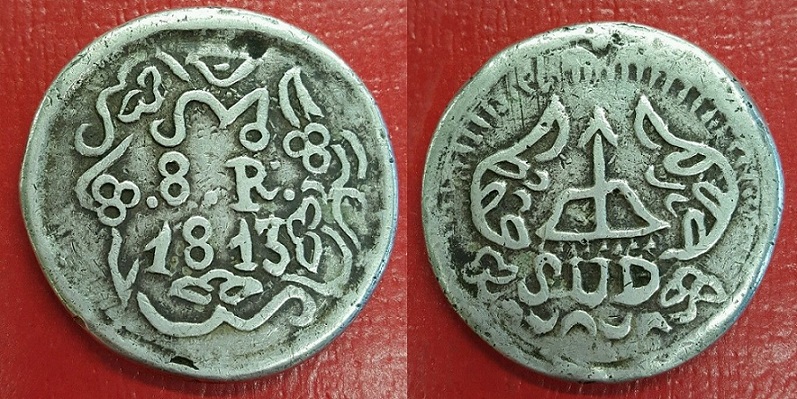 The auction link is: http://www.ebay.com/itm/1813-OAXACA...262304482970 |
|
Pillar of the Community
France
1591 Posts |
swamperbob : there are (supposedly) two types of Morellos silver - a cast type (with the design above), and a struck type. The one you posted is similar to the struck type, but doesn't match the design (it looks more like a mix of the design used on cast copper issues - didn't checked if it was matching). Here is the proper struck design : http://www.acsearch.info/search.html?id=2106245http://www.acsearch.info/search.html?id=2407594To me, you posted a numismatic forgery . |
|
Pillar of the Community
United States
5362 Posts |
I agree it is a copy but an older type. I do not believe you can find a genuine example on ebay. |
|
Page 3 of 3
|
Replies: 44 / Views: 12,336 |
Page 3 of 3
|








 First Page
 Previous Page
 (
( (
(
 Posted 02/22/2016 12:20 am


