| Author |
 Replies: 20 / Views: 3,180 Replies: 20 / Views: 3,180 |
Page 2 of 2
|
|
|
|
Valued Member
United States
83 Posts |
Great photos...nice and clear. But yes, MD. That's a pretty common spot for it with a '64.
|
|
Pillar of the Community
United States
7629 Posts |
This is NOT Machine Doubling. You cannot write off any sort of doubling that's not a doubled die to Machine Doubling. It's just not that simple. This particular coin shows a form of doubling that is not widely understood, the only thing I know about it is that it is very common. It is not a doubled die, and is not collectible as a doubled die, but this form of anomaly exists in abundance from 1956-1965, and is believed to be a form of hand-tooling on the hub to strengthen details. One thing I can say for sure is that this doesn't have ANYTHING to do with the strike of the coin, all of the coins struck by this die show the same anomaly. That means it is NOT Machine Doubling. |
|
Rest in Peace
United States
7075 Posts |
 Geez, just when I think I only have 5 million more things to learn, it turns out to be 5 million and one.  I am curious -- not that I doubt your expertise -- but does this 'doubling' (I don't know what else to call it) appear different that an MD? I'm thinking -- after re-reading the thread -- that the big clue here was that there were so many. If I found just one and it wasn't particularly flat-looking, I'd be taking its picture and posting it here. Or when you wrote that all the coins struck by that die show the same anomaly, did you mean that they all have the exact same 'doubling' in the exact same place? Sorry for the newbie questions.... By the way, I really do appreciate your contributions. I've learned more from you than from all the books I've read. |
|
Pillar of the Community
United States
7629 Posts |
It actually doesn't look like Machine Doubling at all. It is somewhat rounded like a doubled die would be. It does not "match" the area nearby which it would be doubling - this is clue #1 that it is not a true hub doubled die. It also does not 'take up' any of the normal profile, which is clue #1 that it cannot be Machine Doubling. If it were Machine Doubling, other areas would be affected as well, and on these coins this is not the case. I know this is in the die, because I have found it a number of times in multiples in BU rolls and bags. This would not be the case with Machine Doubling - basically this thing HAS to be in the die that minted the coins. Sometimes these anomalous lines run outward from the vest and simply end in the field. Again, a clue that it is not a doubled die, but is also not Machine Doubling. The only thing that strikes me as 'possible' as to what these things are would be some sort of tool work on the die to strengthen the front of the throat after a clash, or the front of the vest after polishing (probably to remove a clash). The only thing that does not warrant suh a suggestion is that these anomalies often show themselves near very strong relief areas that didn't NEED any enhancement. At one time John Wexler was listing these as doubled dies, but I am not certain he is still doing so. Even if he is, I can say that they are not widely accepted as such by the collecting public, and would have a very low - if any - premium value listed as obscure doubled dies. I personally do not agree with calling them doubled dies, because the evidence of hub doubling is simply not there. At any rate, what I do know is that they are common, they are not widely collected, there is very little if any interest in the die variety market for them, they are not very 'characteristic' of a 'wow-neato' coin that people collect BECAUSE they are different (errors, varieties, etc) - so I have by and large simply ignored them over the years. I see them on occasion and skip right by them. I will not attribute them as doubled dies, and give this basic - yet incomplete explanation as to what I think they are when people send them to me. So the ball is up in the air. If anyone CAN give a definitive and comprehensive explanation as to what these are, I would be more than happy to listen. I know much more about what they cannot be than I know about what they actually are. |
|
Valued Member
United States
143 Posts |
I agree with coppercoins on this one. But to name exactly what it is thats the mystery. It definitely has to do with some polishing issues.
|
|
Valued Member
United States
305 Posts |
Hello all, was reading this post and was thinking about the possibility of it being a counter clash mark. It happens on Morgan dollar lips and hair, I'm just not sure if it could happen on other coins. Edward M. |
|
Bedrock of the Community
United States
62064 Posts |
I just check the newest Wexler publication on Lincoln Cents and I see no mention of these in his book. Seems he is up to speed with this now. 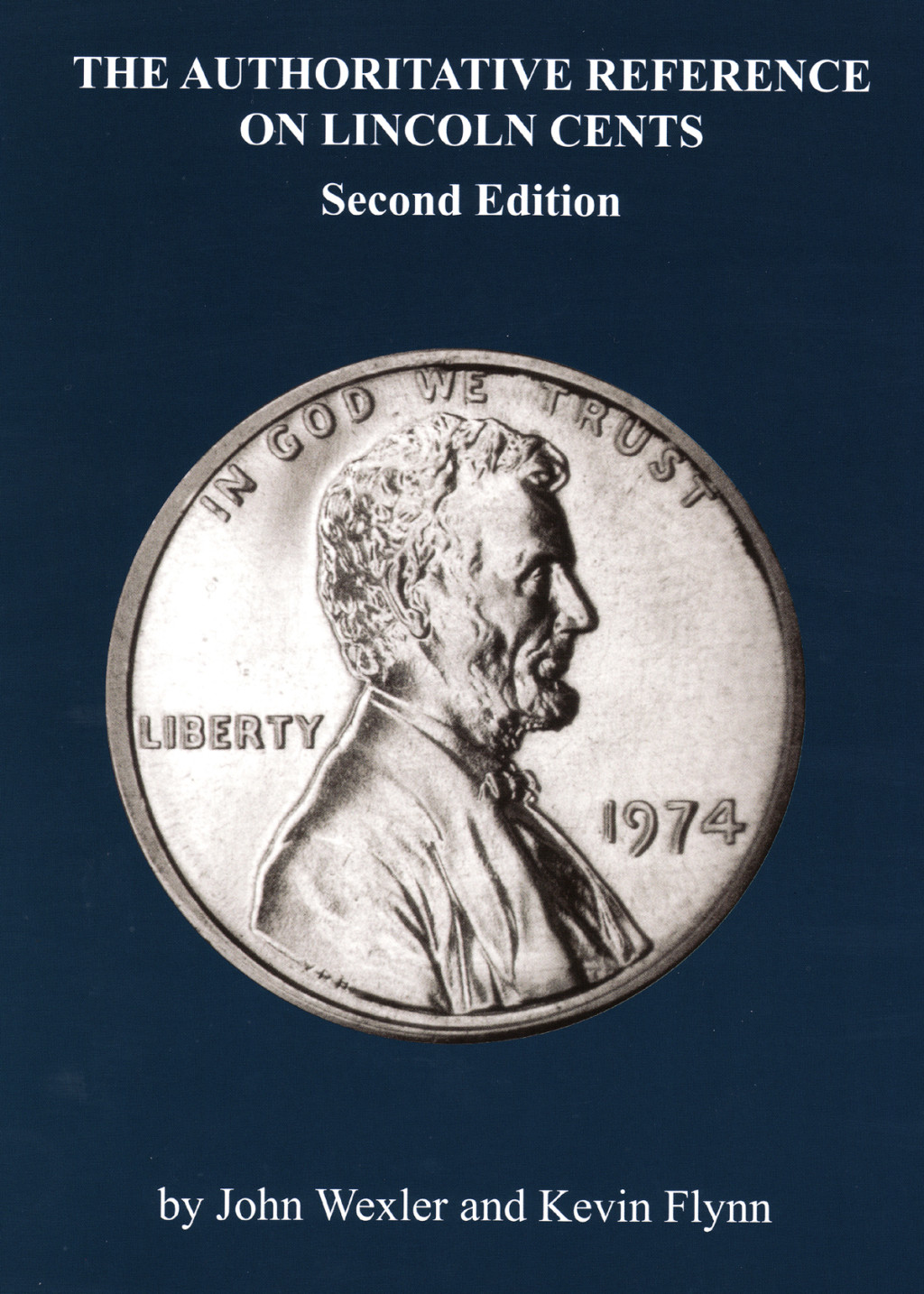 |
|
Valued Member
 474 Posts |
coop: Does that mean the coins are not listed in that reference manual? Is that good or bad? What should I do with the coins?
|
|
Pillar of the Community
United States
4897 Posts |
re-read what coppercoins had to say...
|
|
Pillar of the Community
United States
2624 Posts |
Back in the '80s or '90s I came across the term "recut" referring to the "ONE CENT" on the reverse of some Indian Head cents. Is this the same thing? |
|
Rest in Peace
United States
7075 Posts |
I suppose that the word 'recut' would work, even though it might not be accurate. FlipOfACoin -- I think you could easily sell the coins -- provided each one comes with a reprint of coppercoins explanation. You two work out the details.  It's all about marketing. Thanks to you all for the education! Pretty soon I'm going to start sounding like I know something when I go to my coin club meetings. |
|
Bedrock of the Community
United States
62064 Posts |
Quote:
FlipOfACoin:coop: Does that mean the coins are not listed in that reference manual? Is that good or bad? What should I do with the coins? That's true. I was looking through and it isn't a full reference of all dies. More or less a Greatest finds thing. I was reading through it today and found something interesting in the "Forward". Something I didn't see before. |
|
Valued Member
United States
83 Posts |
coppercoins--you're right, I was calling it MD simply because I know it isn't actual die doubling. That's an error on my part.
Still a mystery though. I would say I find more '64s with the strange doubling than without.
|
|
Pillar of the Community
United States
7629 Posts |
The coins probably WOULD sell...but I would have no part of it. They have no numismatic premium, so I would be against selling them at a premium just because you can. Very few people look for them or collect them, and a lot of us who find them toss them back because they are nothing special.
|
|
Rest in Peace
United States
7075 Posts |
coppercoins I didn't mean to imply that the coins would be worth anything to collectors --- EXCEPT for us newbies. The actual coin -- along with a copy of the explanation -- would be reference materials.
I am certain that I have examples of MD and probably some other common 'errors' or varieties, but I can only compare what I have in hand to photos and I cannot be certain.
I suppose I am a bit impatient as this seems to be taking forever for me to learn. Also, {poor, pitiful me) the only coin that I've ever seen with real doubling is the 1955 cent -- a little out of reach for me (since I blow my coin budget on silver).
Searching for errors and such gives me something fun to do but it isn't easy to learn.
|
|
Page 2 of 2
|
Replies: 20 / Views: 3,180 |
Page 2 of 2
|








 First Page


 Posted 03/25/2012 9:35 pm


