| Author |
 Replies: 21 / Views: 2,302 Replies: 21 / Views: 2,302 |
Page 2 of 2
|
|
|
|
Pillar of the Community
United States
830 Posts |
Well, I was using ANA for circulated coinage, but after reading some information from Susan, I'm going to have to find something more accurate. I try to use EAC standards for early copper, but I'm lousy at it. For MS coins ... I have NO clue. I can't tell the difference between a 67 and a 69. Or between a 63 and a 64. Guess I'll have to go back to RedBook or Photograde. |
|
Pillar of the Community
United States
1203 Posts |
It's relatively easy AuldFartte, it's only a matter of who owns the coin. If you have the coin, it would be either the 67 in the first case, and the 63 in the second case.
You can bet that when the other person gets it, they will be graded 69 and 64 respectively.
|
|
Pillar of the Community
United States
1267 Posts |
I've always tried to follow the Red Book standards. That's what my dad taught me. Take Care Ben |
|
Valued Member
 United States
382 Posts |
Yes RedBook is good too. I like Photograde as you can actually place the coin next to the photo and compare. What gets me is the dealers that overgrade everything in their cases !!!!!!!!!! Tony |
|
Pillar of the Community
Belgium
2078 Posts |
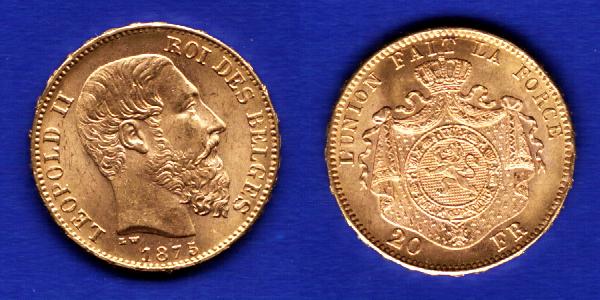
I have been learning to grade for three years now My intrest being AU to MS65 grades in goldcoins For photograding you need to know the high points of the coin and the allowance made by NGC for certain coins because that is were my friend submits A large number of european coins have been in collections glued to paper pages so that is one thing to look for , glue An even larger number have been cleaned at some time ; I have no problem with scans but overlighted photos still throw me off So my method is to play around with contrast , sharpness, colorbalance even go black and white and then use 3 years learning to give a grade If I have the coin in hand it is more simple I scan the coin and if the coinimage comes back dark it is cleaned  |
|
Pillar of the Community
Belgium
2078 Posts |
Coin cleaned 45 years ago I know I cleaned half of the coins and my scanner tells me which half 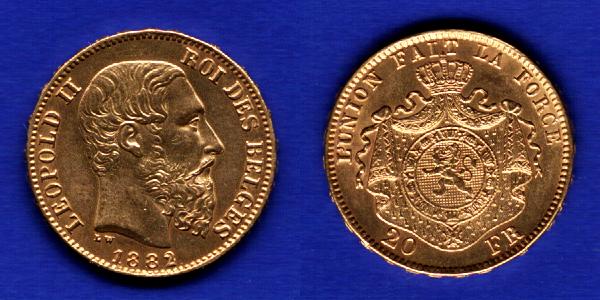 Image: Image:  Leopold II 1882.jpg Leopold II 1882.jpg45.18 KB |
|
Pillar of the Community
Belgium
2078 Posts |
Edited by ageka
03/07/2007 2:02 pm
|
|
Valued Member
United States
256 Posts |
I use the ANA book, Photograde book, "Making the Grade" book, Red Book and I still have trouble with many coins. My hardest part is distinguishing minor wear from weak strikes. |
|
Bedrock of the Community
United States
17884 Posts |
I need that piece, I like it, the price seems reasonable, I buy it.
|
|
Pillar of the Community
United States
1247 Posts |
IMO the only grading guide worth anything is Photograde 1970 issued in hardcover.--and still found on ABE's. The photos in the 1970 edition stand out better because they have a black background. Photograde only goes up to AU. Anything without wear or rubs back then was obviously Unc. I don't think James Ruddy in 1970 figured Uncirculated would become the Tower of Babel that it is. Which is fine by me. I refuse to embrace the suck. I will no longer buy uncirculated coins and for the most part won't by coins at all. I prefer tokens and medals, the grades of which don't require me to: "wheedle a precarious moment's favor from men who held guns."---  see below. "He did not know whether the impossibility of acting had given him the sense of loathing, or whether the loathing had made him lose the desire to act. It's both , he thought; a desire presupposes the possibility of action to achieve it; action presupposes a goal which is worth achieving. If the only goal possible was to wheedle a precarious moment's favor from men who held guns, then neither action nor desire could exist any longer. Character Hank Reardon/Atlas Shrugged by Ayn Rand Edited by longnine009
03/07/2007 7:35 pm
|
|
Pillar of the Community
United States
7629 Posts |
Okay, there's only one standard that should be taken seriously, and that's the PCGS adopted ANA standard. PCGS took ANAs standard and made their own changes to it, but when peanuts come to peanuts, the PCGS standard is the only one that really counts in the market. If a person can grade by PCGS standards they are a heck of a lot farther along than anyone else. My personal method of learning (and teaching) grading was to take 70 points each side and subtract marks, hits, luster and strike imperfections from the 70. Get a final number, 60% obverse and 40% reverse, add together, final grade. This final grade can be adjusted by one point for eye appeal, and once learned will be within one point of PCGS standards. How do I do it now? Takes about three seconds per coin - I glance at them. First glance, first impression. My grading is always no more than a point away from PCGS, and is 80% accurate. Oh...for those who may not know who I am, I have been hired by private buyers to lot view at major shows. I have been approached two times with jobs as a professional grader and turned them both down. I teach Lincoln Cent grading at the ANA Summer Seminar. I am one of the Lincoln Cent specialists chosen by the new PCI grading company. Trust me...what I say about grading and which standard to use is right on the button. |
|
Pillar of the Community
United States
1083 Posts |
I use Photograde for my circulated coins - a dog earred 1972 version. Sometimes I also use the ANA Standards book - again an early copy. For uncirculated coins I sometimes use the huge Heritage Auction archives. They give you large detailed scans of coins slabbed by the major TPGs - mostly ANACS and NGC. That helps me follow trends in grading by the big boys. Of course looking at tons of coins first hand - like at shows, club meetings and at dealers gives you a feel for what is accepted for a grade and who is over grading, what various methods of past cleaning look like, and commonly found damage. It is a long learning curve. ebay is a poor learning tool for grading. Almost all the coins are somewhat over graded and some large dealers, like Ernie, will consistently over grade by two to three levels. Venturing into buying from ebay requires the collector to bring his own expertise, and to o0nly bid on listings that have good scans or pictures and a return policy. Another good way for me to sharpen my skills is to pit myself against the vast experience on this website on the Practice Your Grading Skills topic on this community. I also use it to get second opinions on grade before I buy. Invaluable! Colin |
|
Pillar of the Community
United States
2254 Posts |
quote:
Trust me...what I say about grading and which standard to use is right on the button.
Chuck, I doubt anyone here would question your expertise. I would ask for my own personal curiosity if your grading techniques and standards cover all types of coins. I only ask since you are primarily the Lincoln guru. Although I would assume that these guidelines run the gamut of coins. Oh, and is this adopted ANA standard a book that has been referenced here? Is this the same thing as the ANA grading standard book, or are you referring to something new? Sorry for my ignorance here. |
|
Pillar of the Community
United States
7629 Posts |
The standard works across the board if you consider the softness of different metals, the likelihood of tarnish and discoloration, and the size of the coins. These things change some of the variables from one series to the other. PCGS published a book of their standards some time ago - Coin Grading and Counterfeit Detection. It's far better written and illustrated than the ANA grading guides, but I do not believe it's in print any more. The main differences between their standards and the ANA standards are that there is a lot more leniency in MS grading under PCGS standards, and they also insisted on changing the abbreviation for Extremely Fine from the ANA "EF" to "XF". Many people (including dealers) adopted the "XF" abbreviation and use it regularly, even though all of the ANA grading standard guides specifically note that using "XF" is not correct. Other than that the standards are almost mirror images of one another. All the same numbers and grades are used, as was originally authored by Sheldon - the 70 point grading system. All of the third party grading companies use the 70 point system to one extent or another. Many of them have consistency problems, and a few of them are way too lenient on grading. Some others just guess at the grades. Over the years PCGS has gained a foothold on the market that will likely never go away, primarily because their standard is one of the more consistent in the business. |
|
Pillar of the Community
United States
1267 Posts |
Also forgot to add. I usually grade the coin holding so I can begin looking at it's features from the bottom first, Upside Down. Many may already employ this method, but for me it helps me concentrate on the problems individually and not be distracted by the actual look of the coin. After, I check both sides upside down, then I check it again rightside up. And many times I've found I actually miss little dings and scratches which may be hidden in the corner of the mouth, hair, and around the ears.
Ben
Edited by Bonedigger
03/10/2007 11:45 am
|
|
Page 2 of 2
|
Replies: 21 / Views: 2,302 |
Page 2 of 2
|








 First Page

 Posted 03/07/2007 11:09 am