| Author |
 Replies: 22 / Views: 2,973 Replies: 22 / Views: 2,973 |
Page 2 of 2
|
|
|
|
New Member
 United States
27 Posts |
alright, well, I should have another post coming tomorrow but I first wanted to ask:
A: IF my quarter happens to be missing clad layers, what would it be worth?
B: Is is possible its on a penny planchet? (i doubt this one)
C: What kind of side pic do you want? (the last pic has one)
|
|
Pillar of the Community
United States
7123 Posts |
Hi Tempest
Ok somehow I missed that pic ?
its not possible that it is on a cent planchet.
value for missing clad layer/s could be as high a couple of hundred bucks depending on the grade.
Your pics are not clear enough to grade from ,, can you take it to someone who can look at the coin in hand ?
I still think it looks like it is environmental corrosion of some kind ,but ?
How much smaller is it , what does it weigh ?
Metalman
|
|
New Member
United States
27 Posts |
I'll try to get that weight, Metalman. It IS lighter, but I cant tell how much. One pic shows that its SLIGHTLY smaller than a normal quarter. Q: Isn't there like a press where the metals are pressed together, and when the ends dont come out to the same length, the excess is cut off? Is it possible this is a quarter from that excess metal? Or am I completely wrong here? :p Okay, pics: 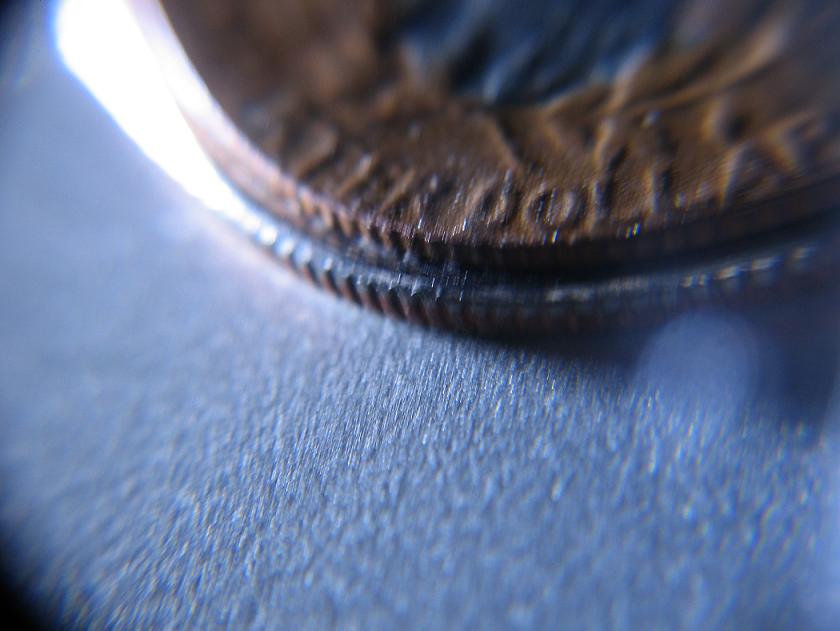 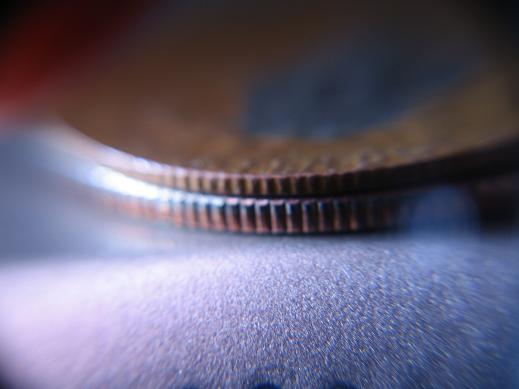 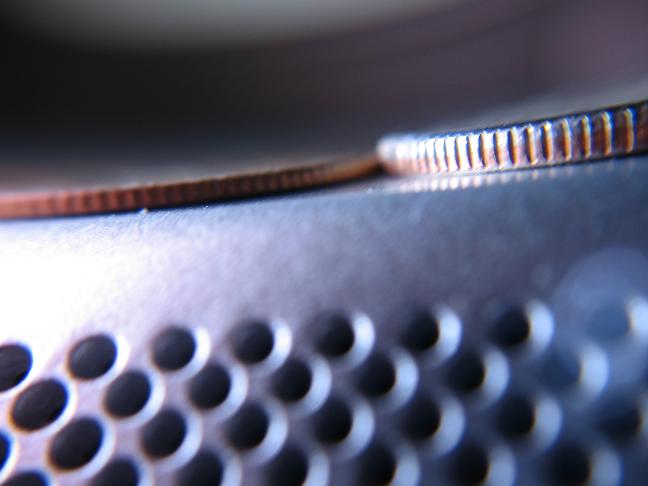 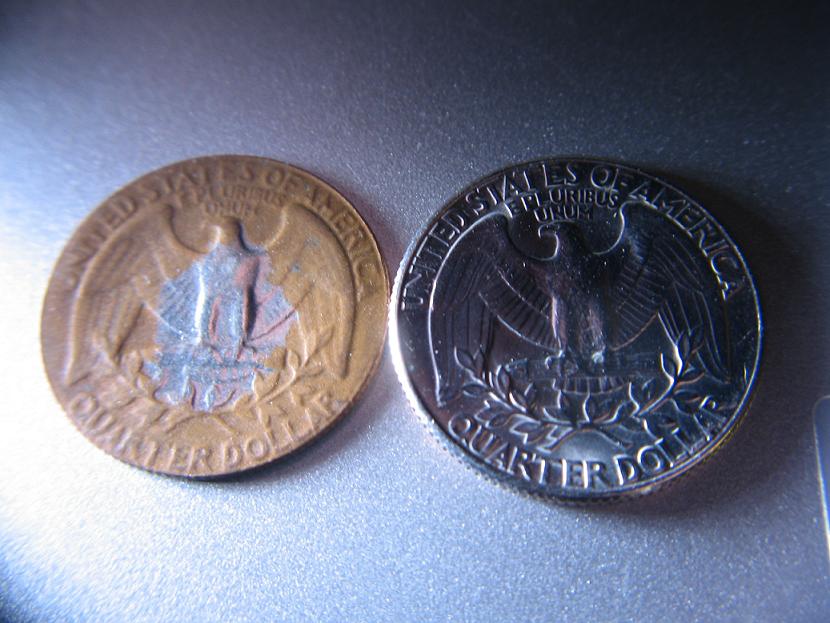 |
|
Pillar of the Community
United States
7123 Posts |
I think the last pictures better represent the coin ,,
the thickness is definitely a plus toward missing clad layers,, determining when that occurred will be key in authenticating the coin as an error.
either send it to anacs for authentication or take it to a coin show where it can be looked at by someone who is knowledgeable in errors .
the two dimensional view we have here is inadequate to authenticate it .
Metalman
|
|
Pillar of the Community
United States
6406 Posts |
FYI, here is the obverse image of the missing-clad-layer quarter I posted previously in this section. This example was authenticated and slabbed by NGC. The copper surface is smooth with no pits or porosity. The diameter matches a regular quarter. As I recall, the weight of the coin was about 4.5 grams, compared to the standard weight for a clad quarter which is 5.67 grams. Regarding Tempest's question, I think the clad layers start out as thick metal strips which are bonded together by rolling under great pressure. The rolling process is continued until the bonded strip reached the right thickness. Then they punch out coin blanks which proceed to the coining stage. If the original strips don't roll out to identical lengths, you have the possiblity of getting missing-layer blanks. If they're not detected, they'll get stamped along with all the normal blanks and may find their way into circulation. That's how I got mine!  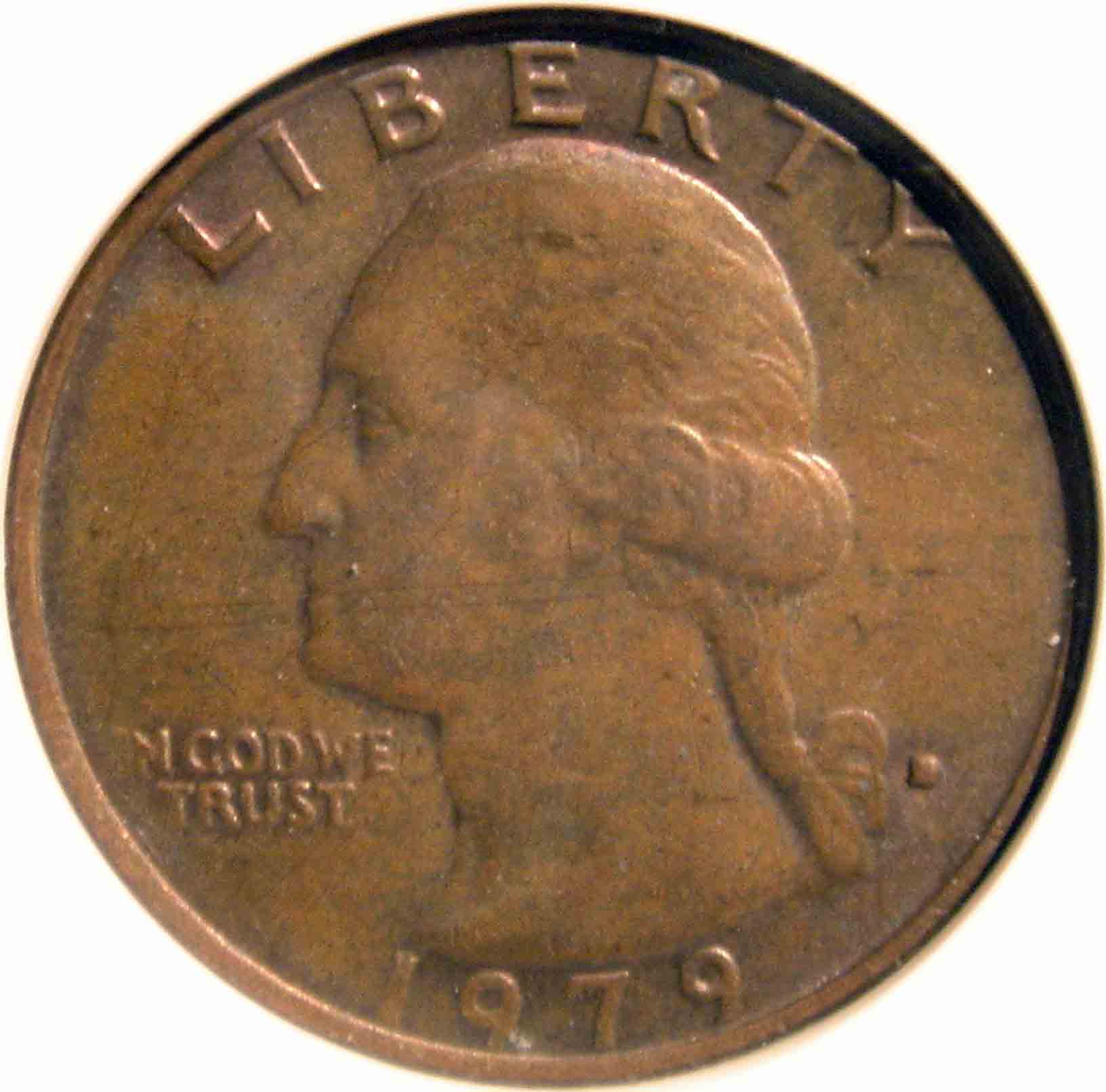 |
|
Pillar of the Community
United States
7123 Posts |
actually the clad layers are bonded to the core by explosion ,dynamite I believe is used since it is techniquely a down pressure explosive .
Metalman
|
|
New Member
United States
27 Posts |
okay, I can send it in to ANACS huh? where do I send it to, and in what? I'm not so sure, I definitely dont want this to 'get lost' in the mail. also: is it odd that both sides of my coin are that color? AND I noticed there was no mint mark. arent quarters from Philly supposed to have a 'P'? Edited by Tempest
05/15/2007 12:06 am
|
|
Pillar of the Community
United States
7123 Posts |
Philly quarters of the date of this coin ,,did not have a mint mark . Here is a link to Anacs,, just follow the outline for submission ,,I think you can even print the submission form from the web page. http://www.anacs.com/Metalman |
|
New Member
United States
27 Posts |
One thing to say: VERY CONFUSING.
and not only that, but they dont say how much it is.
$12 shipping + $10 to verify... how much to grade?
oh well, i'll try asking some other people what they think, and if there's an easier way.
|
|
Pillar of the Community
United States
7123 Posts |
|
|
New Member
United States
27 Posts |
well, as long as I can get insurance on that puppy, i'll be fine.
one last thing: it says to include the value of the coin. but I dont know how much it is. should I put face value, or what?
|
|
New Member
United States
3 Posts |
Is your quarter missing 1 or both layers? So far I have only heard of single layers missing. I have a 1995 P missing both layers. It's much thinner than a dime, copper both sides except for a spot on the face.
|
|
Pillar of the Community
United States
1952 Posts |
I would take it to a dealer before you spend good money for it to come home in a body bag. it still looks just like the coins that we put in acid in school granted that was a very long time ago but if you look in the center of your quarter you will see a very small trace of the nickel layer which tell me that it was set in acid. but it is your coin you do what you want I just hate to see you through away anywhere from 35-45 dollars for them to tell you the same thing.
JMHO
Gary too
|
|
Pillar of the Community
United States
717 Posts |
Tempest, Check out ICG, one of the top four grading services. They will not charge you if your coin is not graded (except for a $5 administration fee). Their price would be $12 for the grading certification & $5 for the error certification=$17. You can call & speak to a customer service rep to verify. They are easy to deal with & have a quick turnaround. http://www.icgcoin.com/ |
|
New Member
United States
27 Posts |
thanks, I might try ICG. Wardaddy- its missing both sides, and it is thinner than a dime. I suspect both layers came off, just leaving a little nickel behind. I finally found one exactly like mine on ebay, except it was a bicentennial. PS: you've only heard of single layers missing, but you have one that has both missing? |
|
Page 2 of 2
|
Replies: 22 / Views: 2,973 |
Page 2 of 2
|








 First Page

 Posted 05/14/2007 12:01 am


