| Author |
 Replies: 20 / Views: 7,736 Replies: 20 / Views: 7,736 |
Page 2 of 2
|
|
|
|
Valued Member
 294 Posts |
ok I never knew that moisture could leak out the silica packs. reminds me I've got one of them at the bottom of my box of coins. going to have to take them all out now. Are ziplocks actually really air-tight once sealed or can air and moisture seep through the joints in the sides?
|
|
Pillar of the Community
United States
1314 Posts |
I've been told that dried rice will absorb moisture. It's cheap and can be stored in small cloth bags. Is this true?
In a drier climate, I like military surplus ammo cans with a good sealing gasket.
|
|
Pillar of the Community
Australia
9810 Posts |
|
|
Valued Member
294 Posts |
haha gee would that do my coins some real justice now. sounds a great idea though, maybe I should buy one of these some day. right now I'm all but broke from buying coins over and over again. can't complain though, I just scored a few lots way below value again.
about dried rice, I've no idea, but given that rice is a staple food in asia and thus for singaporeans, I might give that a try, but I wouldn't bet a penny on it. not my BU's or key dates that is :D
|
|
Bedrock of the Community
United States
17884 Posts |
Quote:
is humidity the main cause of deterioration though? It is a major cause because toning and most forms or corrosion are the result of oxidation-reduction reactions and those require water in some form to proceed. No water, no reaction. |
|
Bedrock of the Community
United States
20043 Posts |
MO LAYERS = MO BETTA!  Lincoln Cent Lover!VERDI-CARE™ INVENTOR https://verdi.care/
|
|
Valued Member
United States
315 Posts |
If I had a better camera, I could show some of the damage I'm seeing from 70s-80s coins stored in hawaii conditions (80 degrees year round, 60-80% humidity.) the worst coins show staining from what appears to be condensation, while others show pinhole corrosion.
Im a newbie, but here's what I learned so far:
1. The only air tight container I've seen is plastic bags, eg the old blister packs from the mint. All other containers aren't air tight or will become compromised by changing temperatures as you've described.
2. Imho, probably the worst thing to do is keep them in a situation where the temperature varies widely. A temperature change leads to warping or condensation.
3. Keep them away from paper or cloth. Silver is ok in a cloth pouch like an old sock. Right now, I'm seeing if the modern coin-specialized plastic pages help.
My advice is to leave them in a cool, dark, dry place with a consistent temperature. Any extreme is bad, low or high. As long as the temperature is consistent, the high humidity shouldn't affect your coins.
|
|
Valued Member
294 Posts |
@badThad as a sidenote, if you wore more layers in our wonderful local climate you'd melt! seriously I just have to sit for a bit and I start perspiring.
@Superhal that's got to stink. hope they weren't expensive, sure wouldn't like to imagine that happening to my collection.
well, the diurnal temperature range here is about 5-8 degrees, but my room doesn't get direct sunlight and I keep the door shut after a night of air-conditioning so I guess that helps a little?
pictures in a bit anyway
|
|
Valued Member
294 Posts |
probably not the best place for some of them but this is what I've been keeping them in until my collection grew too big. it's a pierre cardin box or something. does require a little push to get the lid down tight, lots of air vented out. 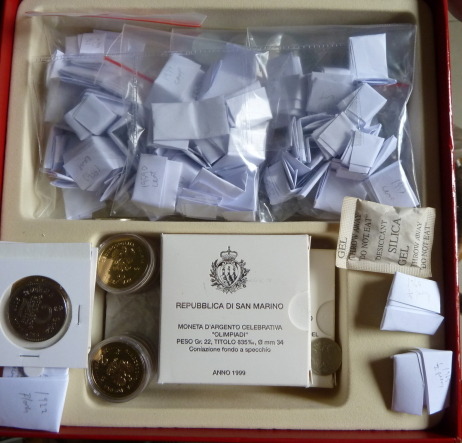 wonder what's in this treasure chest... 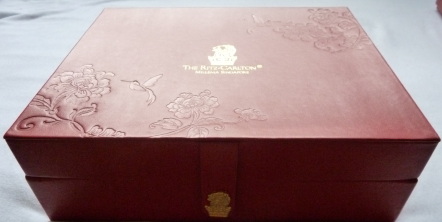 just the 10% of an (humble) iceberg. this box isn't as air-tight, but it'll do for now I suppose. 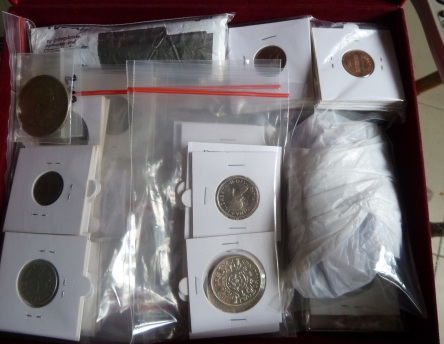 So this is how I store each and every one of them, 2x2's in ziplocks, air sucked out and folded over. I've yet to get a whole lot of LMC's out of the printing paper I wrapped so many coins into until a small lot of 2x2's arrived days ago. really needed them. Any room for improvement so far? :D |
|
Moderator
 United States
23522 Posts |
So far, I'd only worry about what those boxes might/might not be capable of outgassing into their interiors. If they're 5-10 years old, no need to worry. You're aware that Singapore has its' own coins/notes museum, right? http://www.singaporecoinsandnotesmuseum.com/Chances are those guys would have some pretty location-specific ideas. |
|
Valued Member
294 Posts |
I just put the coins in a month ago, maybe even less, so I suppose I should be watching closely then.
to be honest, I've not even given it any thought! perhaps in my abrupt start to the numismatic world not long ago i'd forgotten even about the old local money. Then again Singaporean coinage only started in 1967 and none of the issues save for the new one this year strikes me as beautiful. I'm glad about the redesign actually.
Thanks though, I might pop by some day and talk to them. I'm ashamed as a Singaporean who forgets about his own roots haha
|
|
Pillar of the Community
United States
511 Posts |
I just wanted to reply because I read about the silica gel that "unfortunately they aren't the reusable type".
It is my understanding that they are ALL reusable.
There are certain types that have 'indicator' granules that change color - say from blue to pink, but they are ALL reusable.
The way you reuse or recharge them is to bake them in an oven at above the boiling point of H20 - 212F or 100C. It is possible to do so in a microwave but that is a lot more temperamental (easier to melt the plastics).
If you have an accurate scale you can confirm that you have dried your silica packets by weighing them. Old saturated packets weighing 100 grams may weigh 30-40 grams after baking. The difference is the amount of moisture they have absorbed.
JustCarl is right in that you have to swap them out often or they are not useful.
I would also like to second or third BadThad in that Mo Layers = Mo Betta!
-wheatiefan
|
|
Valued Member
294 Posts |
including those in cloth bags? where I am, the most available form is a $2 , 6 individual cloth bags thing but they seem to absorb all they can in mere minutes. haha, thanks! sure won't forget that. just think more is always better. if it were that easy when it comes to procuring more rare and expensive coins... wishful thinking
|
|
Bedrock of the Community
United States
20753 Posts |
Quote:
ok I never knew that moisture could leak out the silica packs. reminds me I've got one of them at the bottom of my box of coins. going to have to take them all out now. Are ziplocks actually really air-tight once sealed or can air and moisture seep through the joints in the sides? Moisture can seap out of anything. Moisture is just a gas like air. Air can seap in and out of places that many think are air tight. And again, those silica and other moisture absorbing substances are only as good as you remembering them. As they get WET, the stuff that they are contained in, could slowly disentigrate and attach to your coins. As to a Zip Lock Plastic bag, they too are only as good as you. YOU have to press out as much air as possible. YOU must make sure you sealed the Zippin thing. And remember too that the more you open and close one, you allow moisture to go in and out. Some time ago there was a post containing info on those air suckion devices for plastic bags. I've always wondered how those would work. Over the years I've found the best thing is a sort of sealed house with a few really good dehumifiers. My Hygrometer shows from 20 to 30% all the time, all year long. |
|
Valued Member
294 Posts |
yep, sure did, but it just dawned on me that I've a $1 usb vacuum cleaner that i'd totally forgotten about and instead sucked out the air manually before sealing the bags up. need to get the technique sorted out now though, since the nozzle on the vacuum isn't too well designed. Thanks for the helpful advice once again though, I hope such a topic hasn't been oft-repeated.
|
|
Page 2 of 2
|
Replies: 20 / Views: 7,736 |
Page 2 of 2
|








 First Page


 Posted 11/09/2013 07:55 am


