| Author |
 Replies: 22 / Views: 10,257 Replies: 22 / Views: 10,257 |
Page 2 of 2
|
|
|
|
Valued Member
United States
145 Posts |
Though I don't remember the date offhand I have a crippled "R" too. 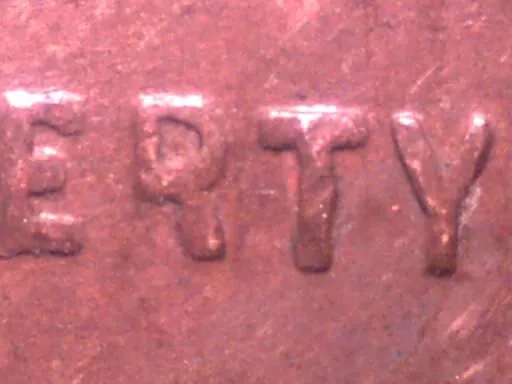 |
|
New Member
 United States
39 Posts |
OK so the broken "R" is a die error then. It looks to be mint damage and that is exactly what I was searching for.....Die damage. Like I said it doesn't look smashed or damaged in that area...just the bottom of the R is missing. The new image is just another shot at the same angle that may better show the error. Mark 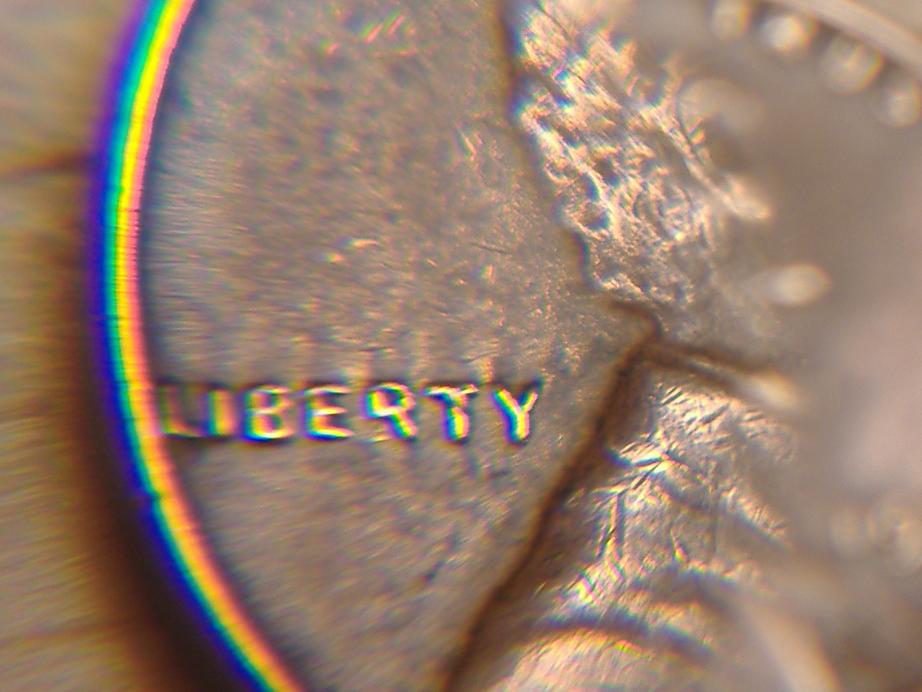 |
|
New Member
United States
39 Posts |
Yep Jorgy that's exactly how it is. Your pic depicts the break much better than my pic.
Mark
|
|
Pillar of the Community
United States
7629 Posts |
Specific terminology...it's a hub break. The hub that created the die broke, so in effect there is no damage to the die - that is how it was made. Because the die was made this way, it is not a die error. But yes, this happened at the mint, and because of the level of process in which this occurred, it is very common and not worth anything over the value of a typical 1936P circulated cent - 3 or 4 cents.
The level at which it occurred - the hub, or the positive impression that makes many working dies, broke due to an accident, too much pressure, improper manufacture, or something - doesn't matter what caused it, the leg of the R broke off the hub. The hub, in turn, makes a number of dies, usually somewhere between 50 and 100 dies. If the R broke off early in the hub's life, this could mean that some 40-60 dies with the broken R evident were made. Each die has an approximate life span of 250,000 - 500,000 coins. Even with both numbers on the low side of the scale, this would mean that 10 million cents with the broken R were minted. That's why broken hub occurrences are generally just a footnote and not seen as anything of importance. Pieces are extremely common for the issue, and are extremely easy to find.
Does this make them "not" errors because there were 10 million plus made? Absolutely not. They are still errors, just minor and very common errors that are not worth anything more than a typical coin.
Edited by coppercoins
08/24/2007 4:40 pm
|
|
Pillar of the Community
United States
2177 Posts |
The ERTY in LIBERTY just look like drunken letters to me.
|
|
Bedrock of the Community
United States
62064 Posts |
I think the same thing happened on the 1956-D Cents. The bottom part of the 6 must have crumbled off the hub as there are several different dies that show the missing part of the 6. Check lower 6 on date.  |
|
Pillar of the Community
United States
7629 Posts |
Yes, this is true. The 1956 "chipped 6" is also a hub break.
|
|
Pillar of the Community
United States
3507 Posts |
Charles,
Thanks for that clarification with respect to the hub on the 1936 cents. Also, It was a good time to point out that 6 on the 1956 D cent. It is so common but it does generate a lot of questions.
Have Fun,
Bill
|
|
New Member
United States
39 Posts |
Yes thanks to all and especially coppercoins I am now educated on the subject of "DIES" and "DIE HUBS", hence the negative effect it has on the coin. Dies will have a positive effect and Hubs will have a negative effect on the finished coin.
Mark
|
|
Pillar of the Community
United States
7629 Posts |
Yes thanks to all and especially coppercoins I am now educated on the subject of "DIES" and "DIE HUBS", hence the negative effect it has on the coin. Dies will have a positive effect and Hubs will have a negative effect on the finished coin.
Mark
None of this is true. Hubs make dies, dies make coins. Hubs do not make coins.
Oh...and there is no such thing as "die hubs". Hubs look like the finished coin and make their impression on the die so it will be reversed. Dies, in turn, make their impression on the coins effectively turning the design back around forward.
Edited by coppercoins
08/25/2007 4:44 pm
|
|
New Member
United States
39 Posts |
Yes I fully understand, I may have got my negative and positive reversed in my post, but I do understand the process now. A depression in the coin is caused by the hub and a raised area is caused by the die. But thanks again for the clarification and for all of your help.
Mark
|
|
Pillar of the Community
United States
2254 Posts |
mcrespo1, I'm pretty sure you still have it wrong. If you read carefully, you will see where you are making the mistake. Bottom line is a hub does not strike a coin. A hub is used to make a die, and the die is placed in the "machine" to make/stamp/press the coin.
The hub is only used to make the dies themselves. Hope this helps.
|
|
New Member
United States
39 Posts |
I fully understand that the hub makes dies and the die strikes coins. It's not that complicated.
|
|
New Member
United States
39 Posts |
Bottom line is that the hub was the root cause of this error, because the hub had an defect on it that made the die that created the error on the coin.
Mark
|
|
Pillar of the Community
United States
7629 Posts |
Yes, that much is correct. The problem was on the hub. Being that it was on the hub, hundreds of thousands to hundreds of millions of coins would have the same effective problem, thus making them valueless as errors.
|
|
Page 2 of 2
|
Replies: 22 / Views: 10,257 |
Page 2 of 2
|








 First Page


 Posted 08/24/2007 2:57 pm


