| Author |
 Replies: 20 / Views: 4,817 Replies: 20 / Views: 4,817 |
Page 2 of 2
|
|
|
|
Valued Member
United States
250 Posts |
English halfpennys and farthings circulated widely in the US colonies as well as other European and Mexican coins. Of course there's no way to prove what circulated where. But for the 2nd link you have above it appears to be a dug coin and the seller is in PA vs overseas. I'd like to think that it circulated over here to some extent and was lost before being found again. Again certainly no way to prove that but it's a valid theory, and at the least you are only out a few dollars for a coin that is almost 300 years old and a neat part of history. I'm far from an expert on colonials but do collect them, this is just my 2 cents...
Edited by kevro22
09/27/2014 09:41 am
|
|
Pillar of the Community
United States
917 Posts |
Something you might want to look into is the post colonial era of coins. Although they are dated after 1776 some of the colonies created their own coinage. The good part is they put the name of the colony on the coin making it easy to identify. There are tons of varieties to be found especially in the Connecticut coins. As others have said they can be very cheap and then varieties can be sold for thousands. Heres an example of a 1788 Vermont copper 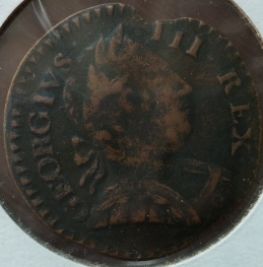 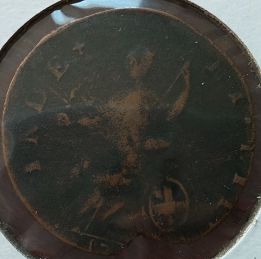 |
|
Bedrock of the Community
United States
20753 Posts |
Also, check out the Red Book by Whitman Publishing. |
|
Pillar of the Community
United States
3229 Posts |
Bowers book published by Whitman is an essential book for colonials and is a great read.
|
|
Valued Member
United States
179 Posts |
This is an area too broad to "collect" without some notion of what you want. Personally, I specialize in two realms, American Plantation Tokens and Vermont Coppers. Reading and research here is equally as important as acquiring coins. Be prepared to work in the 300-2000$ range to get nice coins. Conneticuts can, will and have driven people insane. Tooooooo many varieties!! Vermont Ryder 10 VF about a 600$ coin.   |
|
Pillar of the Community
United States
1211 Posts |
All I can say is... Collecting colonials is an entirely different subset of coin collecting. The rules that most numismatists live by are different in the colonial world. Do some reading and research before you take the plunge. It is rewarding but be prepared to have to "re-learn" the way you collect coins in general.
|
|
Pillar of the Community
United States
4433 Posts |
Quote:
Collecting colonials is an entirely different subset of coin collecting. Certainly true, jerseyben. It took me some time to acquire a genuine appreciation for the colonials with impaired planchets and/or ED. That may sound funny,coming from a guy who likes the counterstamps so much. Ambro51's coin is one that I'd not have given a second look, many years ago. Now, I regard colonials like it as treasure. The more that I study the colonials, the more I appreciate them. I think that they are among the greatest bargains, price-wise, in today's market. Why buy an S-VDB when you can own a decent Fugio for less? If I hit the lottery, I'll be buying early coppers and not gold! |
|
Valued Member
United States
88 Posts |
Here is a must book for the beginning collector that I highly recommend, I've read it 3 times. I have never read a book 3 times, but this one kept me fascinated from cover to cover:
THE LOST COINS OF EARLY AMERICANS!
STILL A SECRET!
by Todd Cook
Xulon Press
Good Hunting!
|
|
Moderator
 United States
16697 Posts |
Quote:
Why buy an S-VDB when you can own a decent Fugio for less? Well, exactly. The simple answer, Colonials are undervalued both by collectors and the market (supply and demand ). Not a huge collector base as well as a weak demand. Fugio Cents are amongst the more available post Colonial coins. Grading also comes into play. swcoin.ecrater.com
|
|
New Member
United States
20 Posts |
Hi scottk,
I came to colonials after collecting large cents and other federal issues. I like the variety of colonial coins and designs, the history, and the relative availability of material in collectable grades. The period from roughly 1500 to 1850 gave rise to so many varied attempts at currencies and money systems in the New World, that it could take a lifetime to lean about them all.
I would echo other people's suggestions to the Whitman's Encyclopedia of Colonial and Early American coins. It is a great place to start learning about colonials.
Another good book is Will Nipper's book called "In Yankee Doodle's Pocket". It is just a wonderful mix of numismatic reference material and history, and makes colonial coins come alive.
But I would also put in a pitch for the Colonial Coin Collector's Club (called C4 for short). C4 has over 300 members and they are a fun bunch. They have an award winning newsletter, an annual convention, and a lending library. There is also a Yahoo Group forum dedicated to colonial coins that a lot of C4 members chat on. I am still kind of new to this CCF forum, so I am not sure if I am allowed to post a link to C4's club page, but if you google Colonial Coin Collector's Club, I am sure it will be the first thing that comes up.
Good luck!
Peter Griffin
|
|
Pillar of the Community
United States
1760 Posts |
Don't forget the 13 colonies depended heavily on Spanish colonial reales for commerce. Most loans and contracts were written in terms of Spanish milled "dollars", or in other words....reales. This was the case when we were colonies of Britain and up until 1857. US federal coinage was mainly used for governmental transactions and bank reserves in the early United States with the bust half being the main bank reserve coin.
In the 13 colonies, our "dime" was the 1 real, the "quarter" was the 2 reales, the "half" was the 4 reales and a "dollar" was the 8 reales.
It must have been amazing to watch commerce transact in Spanish and Mexican reales, US dollars, British pounds, etc. It all revolved around the silver and gold content of the coin, rather than country of origin or currency unit.
Edited by DoubleEagle20
11/09/2014 1:19 pm
|
|
Moderator
United States
16697 Posts |
Many Colonial collectors forget also about the Colonial South and France's Colonization there. This is a 1722 Nine Denier originally coined for use in France but were very unpopular there so many were sent to Louisiana and neighboring Southern States to be used in commerce there.   swcoin.ecrater.com
|
|
Pillar of the Community
United States
6370 Posts |
Quote:
Why buy an S-VDB when you can own a decent Fugio for less?  I deplore "key date" coins as they are over-inflated status symbols. I would rather buy the Benjamin Franklin-designed Fugio cent with a ton of Early American history than buying a highly-faked coin where the mintage figure is just a bit less than other issues of the same series. |
|
Pillar of the Community
United States
4433 Posts |
I don't deplore the modern, key date coins, myself. That's how many a colonial collector began, methinks. I do wish that we see some modern day resurgence of design from the colonial and classic years. IMHO, kids today are generally lacking in a connection to the past, and circulating money, incorporating early design elements, might stimulate more interest in American history.
|
|
Bedrock of the Community
United States
17884 Posts |
Quote:
This is a 1722 Nine Denier originally coined for use in France but were very unpopular there so many were sent to Louisiana and neighboring Southern States to be used in commerce there. Why would you strike a coin for use in France that says French Colonies on it? |
|
Page 2 of 2
|
Replies: 20 / Views: 4,817 |
Page 2 of 2
|








 First Page


 Posted 09/27/2014 5:38 pm


