| Author |
 Replies: 21 / Views: 3,111 Replies: 21 / Views: 3,111 |
Page 2 of 2
|
|
|
|
Pillar of the Community
Puerto Rico
778 Posts |
The cent above is the so called Prisoner cent.
|
|
Pillar of the Community
  United States
1034 Posts |
That's an awesome coin. Thank you for the visual explanation. You can see, it matches up pretty well with coin I posted. Too bad they caught the clash on my coin. It's a good visual teaching coin for others anyhow. Thanks again everybody, great info.
|
|
Bedrock of the Community
United States
62064 Posts |
Here is an image of what they use during the die making process at the SF mint for proof coins: 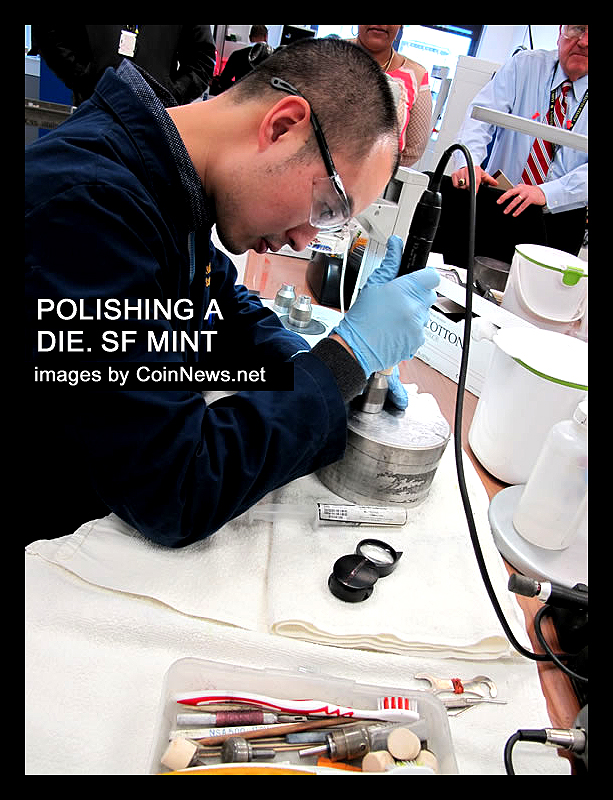 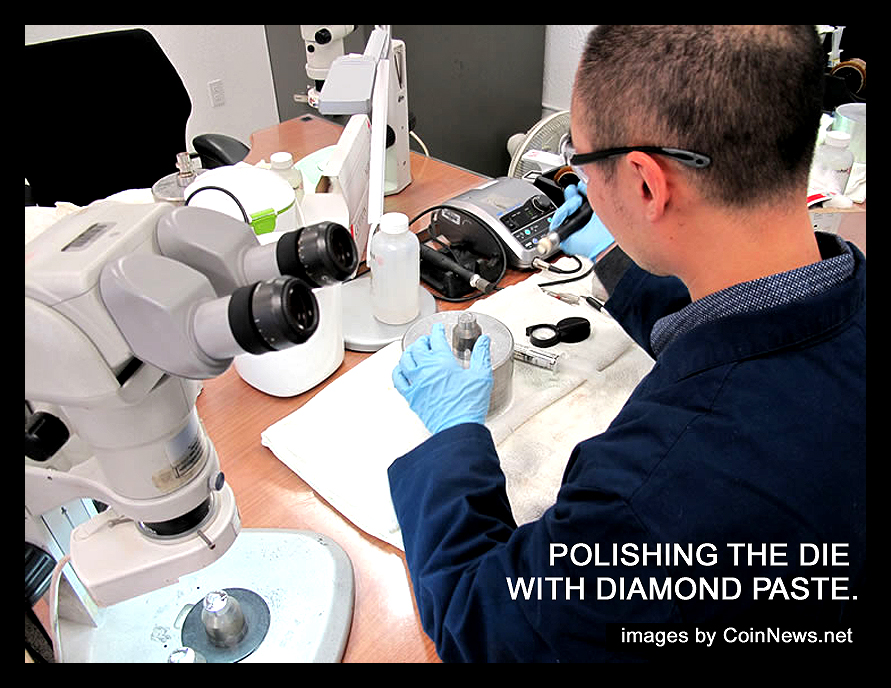 Probably the tool in the first image will have a different attachment to remove clash marks when they happen that will remove the unwanted clash. |
|
Pillar of the Community
United States
1034 Posts |
A little more formal, than I was expecting. Thanks coop. Good stuff.
|
|
Pillar of the Community
United States
4809 Posts |
|
|
Valued Member
United States
272 Posts |
I have one or two of these prisoner cents. How much are they worth usually? for a 1987 and a 1975?
|
|
Pillar of the Community
United States
1034 Posts |
|
|
Pillar of the Community
United States
1034 Posts |
Hey Coop, you said coins like mine are worthless, if I remember right.. did you want this coin, for a teaching piece?
|
|
Bedrock of the Community
United States
62064 Posts |
Thanks, But I keep examples like this already. So it is still a copper planchet coin if your saving these?
|
|
Pillar of the Community
United States
1034 Posts |
I mostly only save the more valuable copper variety years. Like the 1970 s just in case I missed something, I can go back through them later.
|
|
Pillar of the Community
Canada
2533 Posts |
coop, do they use diamond paste too to polish business strike dies? It sounds very expensive to do that.
|
|
Bedrock of the Community
United States
62064 Posts |
I doubt it. That was the information on proof coins from SF. But that is how they do it there. But again they might. Unknown at this time.
|
|
Pillar of the Community
United States
4809 Posts |
Thanks kurdlezuit - I keep the more significant clashes I find. Neat to look at and show my son. When I see abrasions, I tend to inspect for the clash. Often, you can make out the original witness marks obscured a bit by the heavy scratches. Most of the time though, the witness marks are gone altogether or don't hold much interest. Looking in the Memorial bays on 'dressed' specimens often show indications of Lincoln's chin, lips, beard and throat. The T and Y of LIBERTY can sometimes be found in bays 2 and 3 (maybe 4). I suppose some areas are more difficult to remove the witness marks without affecting the design adversely. Just a guess by me.
Regarding the use of diamond paste, it's pretty common stuff around inspection and metallurgical labs. We often used suspended diamond dust in a liquid solution to polish sectioned parts where we were either measuring plating thickness or the contours of a part feature. You can get rough parts to a mirror finish. I suspect that while these items are common in the tool rooms of the mint, they opt for faster and cruder methods for removing witness marks (clashes) on business tools. The heavy scratching I normally see seems to indicate emery cloth or wire brushes.
Happy New Year everyone!!
|
|
Pillar of the Community
United States
1903 Posts |
Slurexe....industrial diamonds are very very inexpensive. They can actually make them synthetically in large quantities quite easily.
|
|
Pillar of the Community
United States
2824 Posts |
you can buy diamond paste very cheap less then $5 a syringe full on Amazon they even got sets of different microns and they use dyes to color code them. |
|
Page 2 of 2
|
Replies: 21 / Views: 3,111 |
Page 2 of 2
|





 First Page


 Posted 12/30/2014 9:04 pm


