| Author |
 Replies: 22 / Views: 7,446 Replies: 22 / Views: 7,446 |
Page 2 of 2
|
|
|
|
Bedrock of the Community
 United States
62064 Posts |
I added them as well, but they also are not hub doubled examples. They are year varieties. As well as the RDVs. But I wanted to keep the thought going about being collectables.
|
|
Pillar of the Community
United States
3656 Posts |
Hi coop earlier in this post you mentioned about the WAM/CAM variety. You said the the 1998-S should be WAM - How about the 1999-S, should it be a WAM or CAM? "Some proof reverses were also incorrect on the 1998 & 1999 proof cents" Thanks |
|
Bedrock of the Community
United States
62064 Posts |
Both should be Wide AM, but a few were hubbed with the Close AM for both years. 1998-S and 1999-S. The 1999-S is more known, but the 98-S are the sleepers. (not many know of this yet) |
|
Pillar of the Community
United States
3656 Posts |
Thanks coop and thanks for sharing the great tip on the proof CAMs.
|
|
Bedrock of the Community
United States
62064 Posts |
Coop thread RSC
Added this to make searching easier.
|
|
Valued Member
United States
173 Posts |
Hello everyone, Joined the forum today and just looking for some advice on coin variety errors. I took a picture of this 1975 D penny because I felt like it showed a lot of errors, but I could be wrong, maybe the coin is just damaged, right? The green lines represent what I believe to be double dies and the red line what I believe it was a weak struck. Any advice is greatly appreciated. Thanks in advance 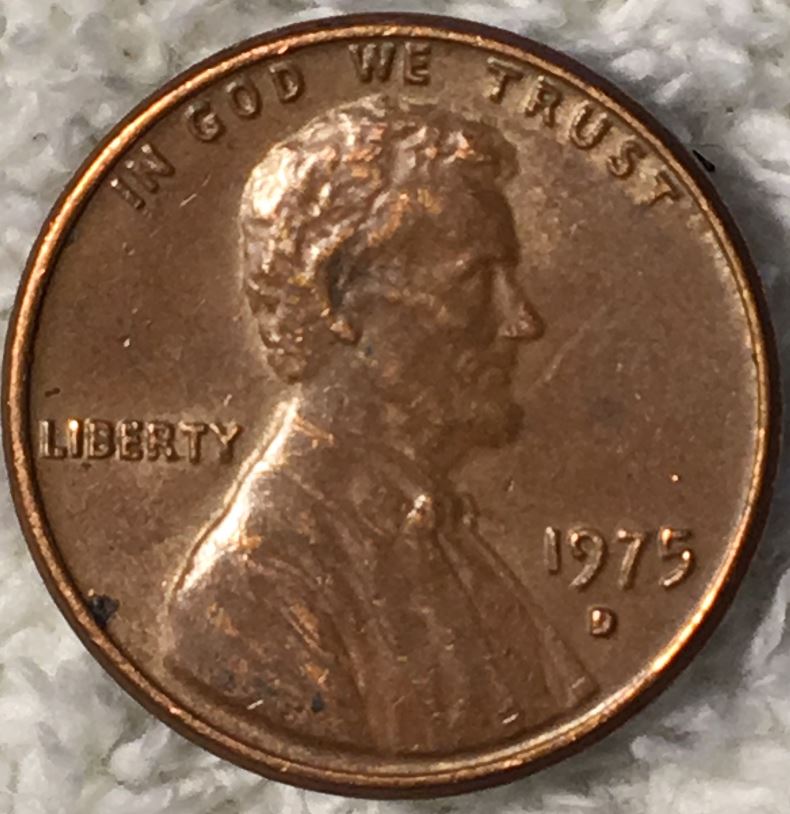 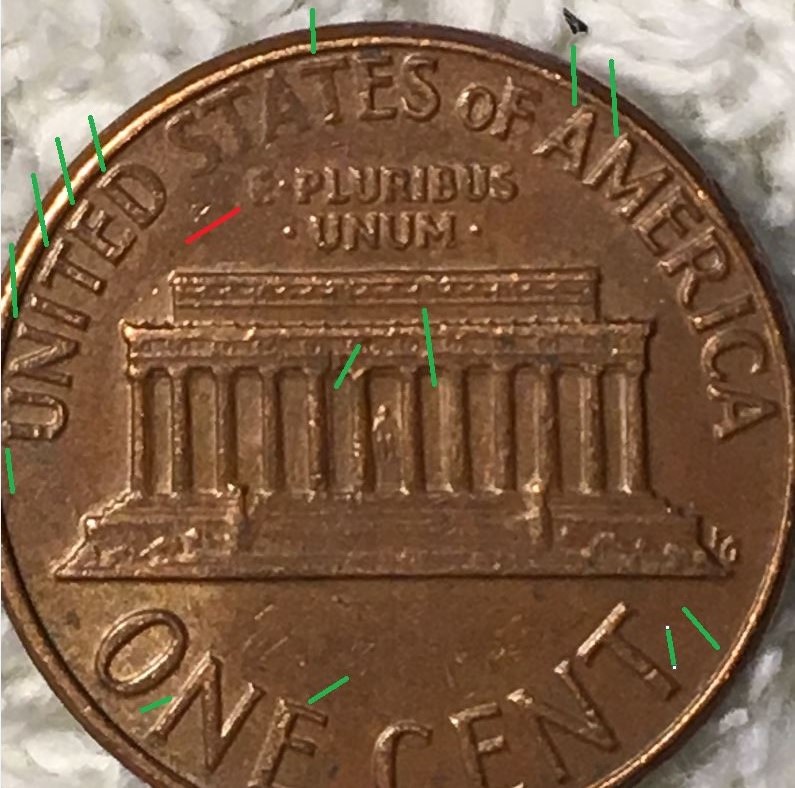 |
|
Bedrock of the Community
United States
62064 Posts |
 Looks like contact marks on the outside devices from circulation. The extra columns bay 5 & 7 are part of the design of the Memorial reverses. 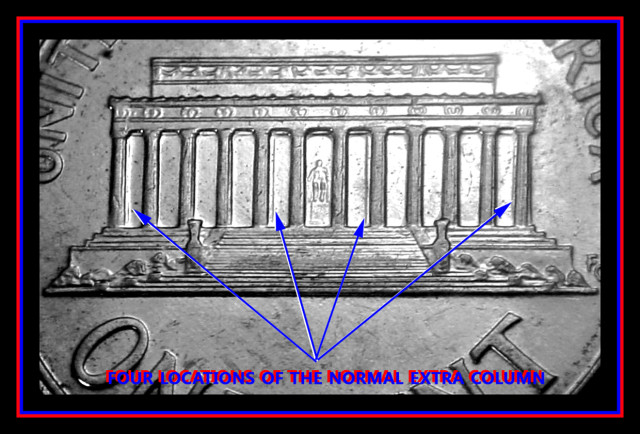 When the dies are polished, this area can be affected by removing parts or all of the extra columns that make the image look 3-D. |
|
Valued Member
United States
173 Posts |
Thank you Mr Coop! I appreciate your assistance and the quick reply. The information contained here is extremely useful, which got me to do more research and came across this website. http://doubleddie.com/1801.htmlIn there I found out about other forms of doubling under "Worthless Doubling", that are considered worthless, and I think it can easily lead someone to think that they have a valuable case of DDO or DDR in their hands, when in fact, it is not. Please see some examples below. Could you please provide more information to help differentiate genuine errors against mechanical, deteriorating dies and abrasion? I can't differentiate most of the pictures shown in the website, especially the mechanical ones. 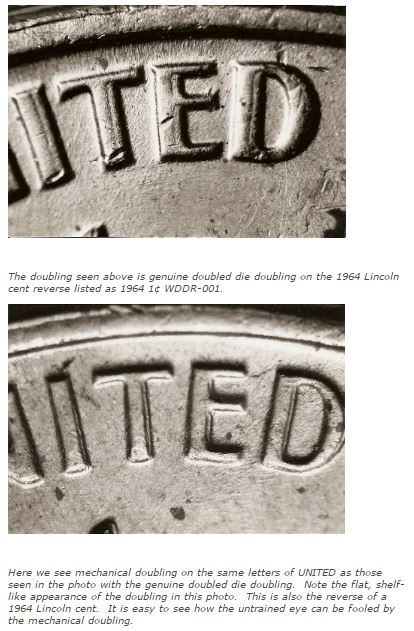 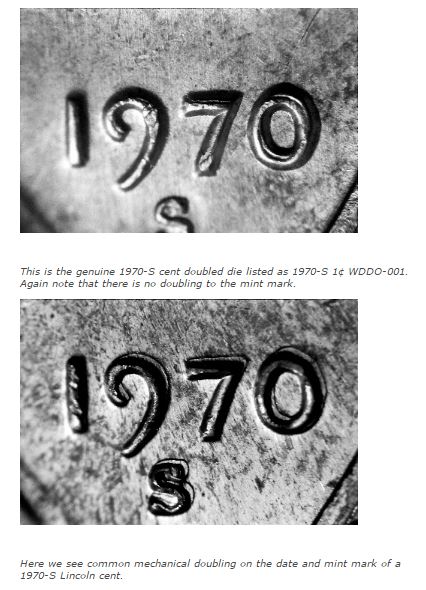 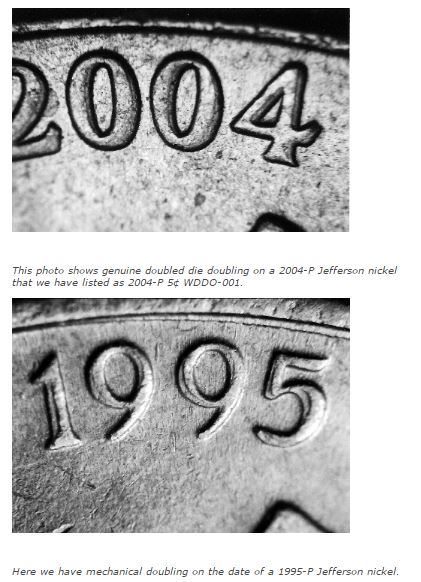 |
|
Bedrock of the Community
United States
62064 Posts |
First pair of images: Note the size of the devices? The spread on the first top image is a lot wider than the example below it. Note the color difference showing the contour fading light to dark. A sure sign of hub doubling on the die. The lower image shows the devices reduced in size because of die movement whacking them after the full strike leaving a single colored reduced area on the devices. They reason there is no contour is that metal was flattened and reduced by the machine damage from the die after the strike. Second pair of images: Note the doubled die, looks like Machine damage? It is not MD, it is a DDO. Note that the bottom of the devices are not affected. Then note the second example of the MD. Note the mint mark? It is showing the same MD in the same direction. A real clue for machine damage. Also note the base of the date devices, they are damaged at the bottom of the devices. Again note the contour color difference between these two coins. The hub doubled example shows it. The MD shows the typical flat, same color on those areas. No contour as the coin was damaged after the strike. Third pair of images: Note the enlarging of the devices on the top example of hub doubling? They are almost out of round. Enlarged. On the lower example, you can see the devices are reduced in size from a normal coins devices. Note how the devices are reduced by what something as doubling, when it is actually an example device reduction, after the strike damaging the devices part way up. (the die may have bounced after the strike, hitting the devices a bit higher. Again note the flatness of the affected areas of the devices, leaving those areas the same color. But on the hub doubled example the contour color of light to dark is shown on those devices. (you can move these definitions under your images if you can edit them before 24 hours) |
|
Bedrock of the Community
United States
62064 Posts |
|
|
Bedrock of the Community
United States
62064 Posts |
Going through my image files, I was transferring them to disks. But going through them, I found an image I had forgot about wondering that I even had it. But I edited it to show how much the alignment can be incorrect during the die creation process of the single squeeze dies. So I added the information and decided to add this information to the threads that alreay exist to keep things a little closer at hand and here is the information: 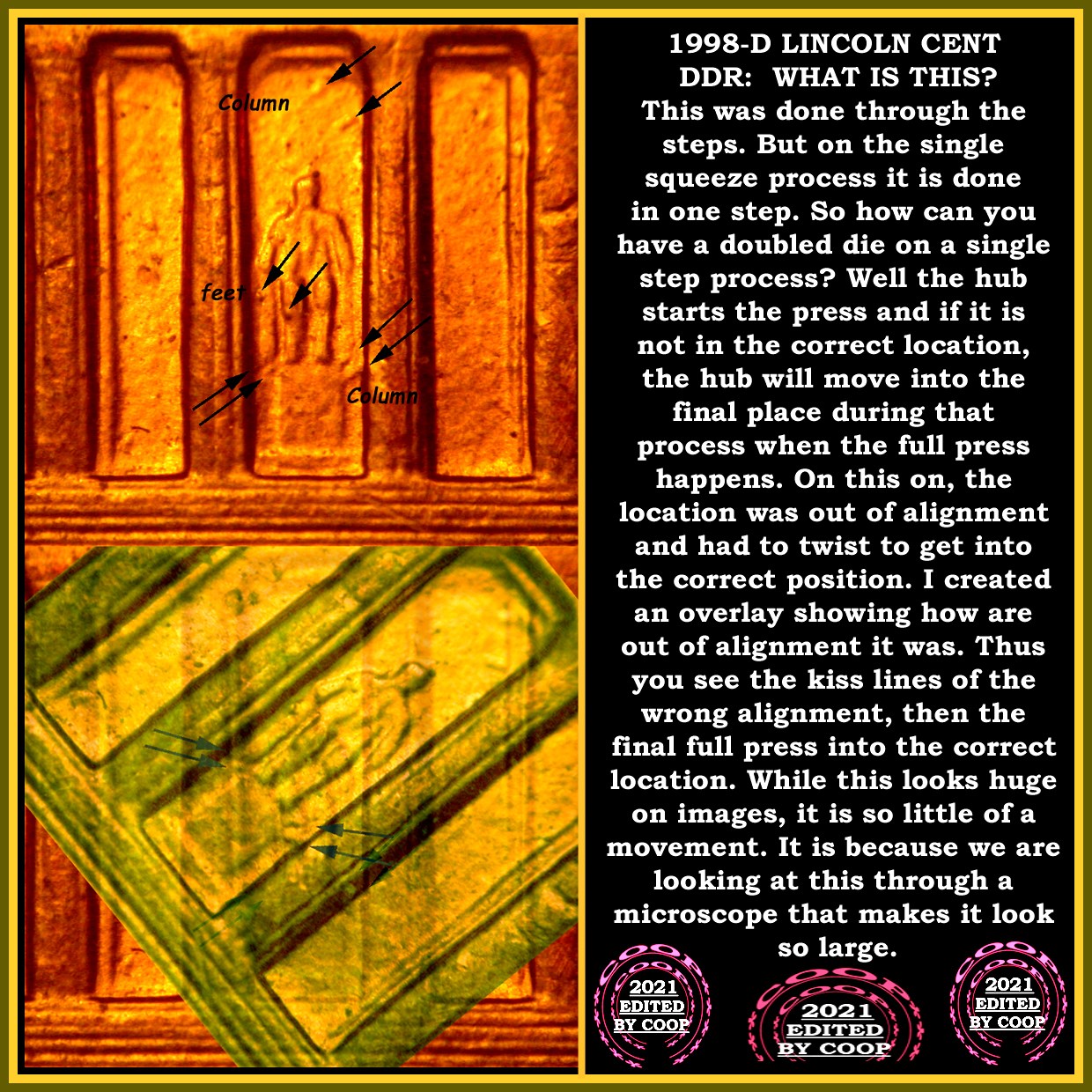 |
|
Valued Member
United States
79 Posts |
You provide such helpful information!!! When you have a chance will you look at this post and tell me what you think, please? I'm trying to figure this out! http://goccf.com/t/409229 |
|
Pillar of the Community
United States
588 Posts |
Hey coop, so is it safe to say if you have notches present, then it can't be Machine Doubling? Or can that sinful, low down, self esteem crushing process also produce notching? |
|
Bedrock of the Community
United States
62064 Posts |
Sometimes two sets of lights can be deceiving, making it look like a notch. But these notches on hub doubling are the hub enlargement of the devices. The corners of some spreads makes these notches. So spread should be seen, creating these notches. No spread (even minute) should make us consider if there is spread, or not? If there is a reduction on the raised devices, it could be Machine Doubling. The MD will ne seen when the contour is removed, (90 degree angles are seen) with reduction of the devices by machine movement. |
|
Pillar of the Community
United States
588 Posts |
Oh I've encountered that Lil fairy tale as well, looking at a coin while at work during the day, set aside due to what I thought were notches and doubling, get a bit excited, then when I get home under some good lighting and magnification, to look at the coin and.........where'd it go? Even went back to truck, looking everywhere, thinking I must've got it mixed up with a diff coin!! That's still not as evil as Machine Doubling, my humble opinion anyways!! |
|
Page 2 of 2
|
Replies: 22 / Views: 7,446 |
Page 2 of 2
|







 First Page


 Posted 05/25/2016 09:09 am





