First Page


 Posted 07/05/2016 1:52 pm


Thank you to everyone that has responded. I have been reading and re-reading the responses and sitting on my thoughts, doing my best to absorb all the information and hopefully learn from the experiences that everyone shared.
> it just must say something about me that I am only happy with the best examples of them.
I can definitely understand that. After reading the book and initially looking at the pictures I probably over-estimated what sort of coins I would get with these uncleaned lots. Now really thinking about it, I realized I have no frame of reference if I got a great deal, standard deal or more of a crappy deal.
I didn't start documenting the coins the moment I got them, but I figure now's as good a time as any to start, while we are still working on the first batch.
The 20 coins we got from Amazon.com were divided into those coins that we thought we saw detail (11 coins) and those that we couldn't make anything out. After we cleaned the "detail visible" coins for a 3rd time (gentle nylon brush) I took pictures of them. The first few seem to me to be of better quality, but most - to my untrained eye - don't appear to be anything I would show off to anyone, as if there is little "wow" factor and more of a "that's it?" factor, if you know what I mean. We haven't really had a chance to do anything with the 2nd batch, We didn't receive the 3rd or 4th batch yet. Depending on what the consensus is of these 11 coins will help me understand what my expectations should be. My first thought was "wow these coins are small..."
This is the first time I setup my camera with my microscope, so sorry if the light is off or if there is something else I should have done differently. I don't mind if anyone can ID any of these
coin 1
no idea, but the letters are worn off, not sure how to ID, I tried to start with the back, looking through VOT legends with wreaths via tesorillo.com, I'm failing miserably :)
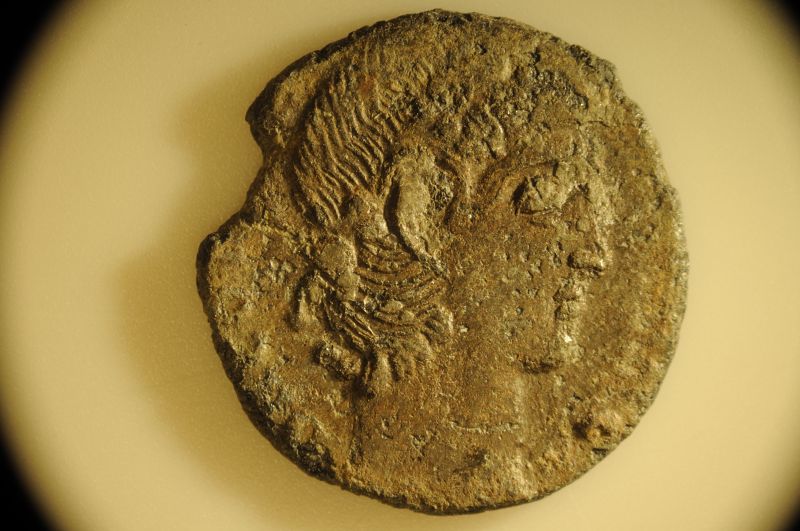
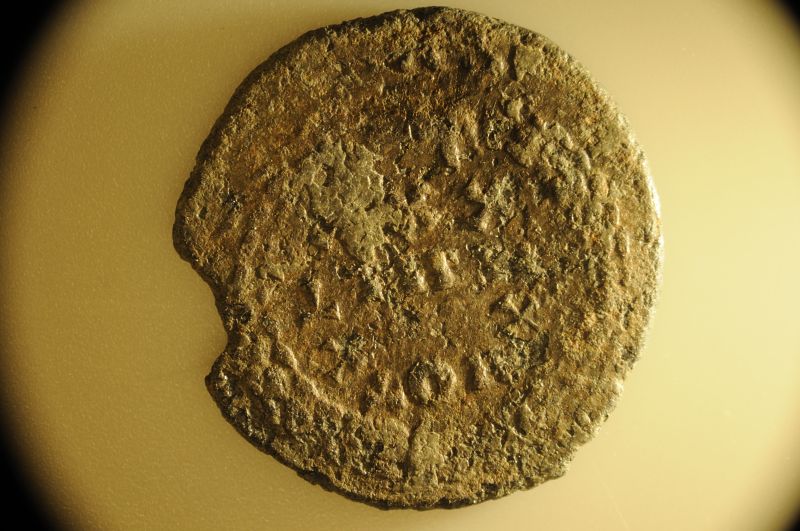
coin 2
hoping I can read the letters sometime soon
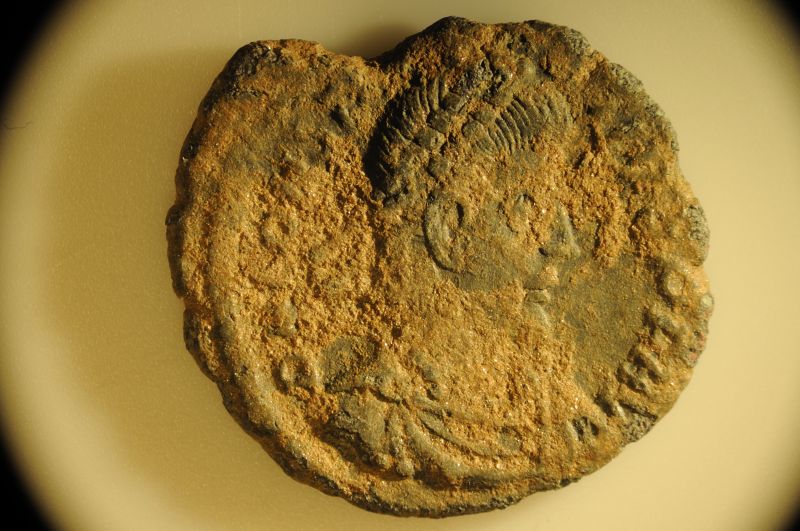
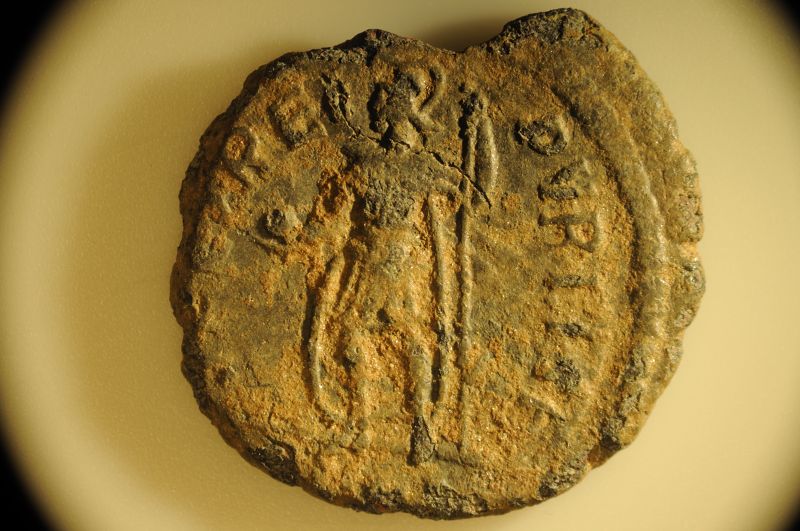
coin 3
Looks like a woman's head, I think it looks very similar to the coin pictured right under "Forgery Touch-up Work" at http://www.calgarycoin.com/referenc.../tooling.htm
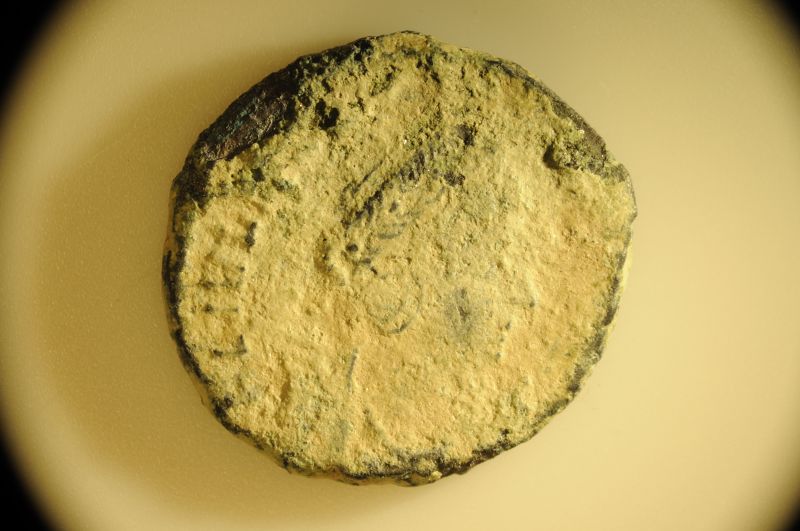
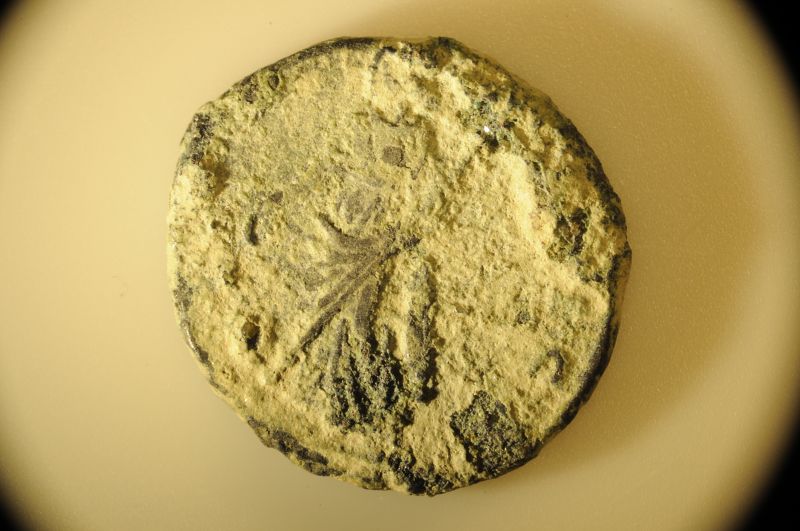
coin 4
no idea
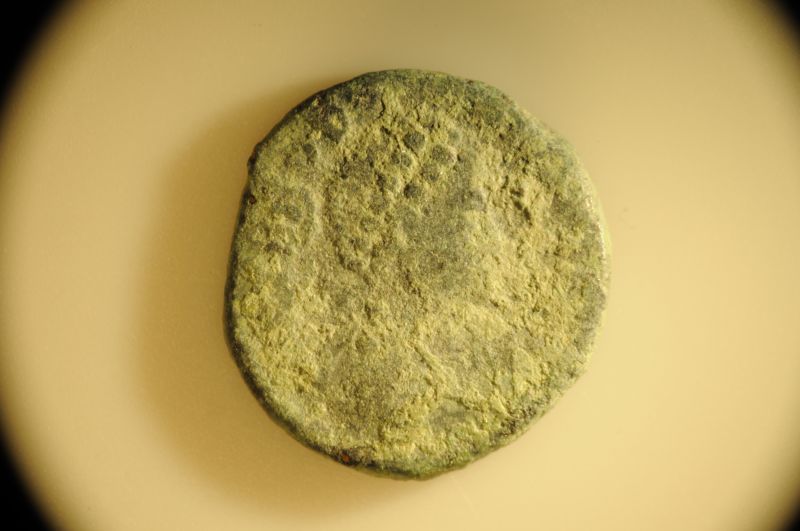
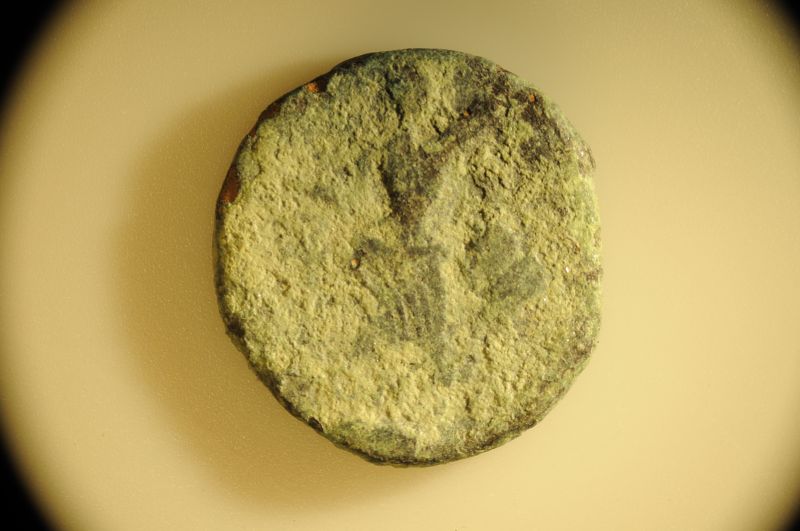
coin 5
no idea, can see some of the head, but it seems the surface of the coin was eaten away
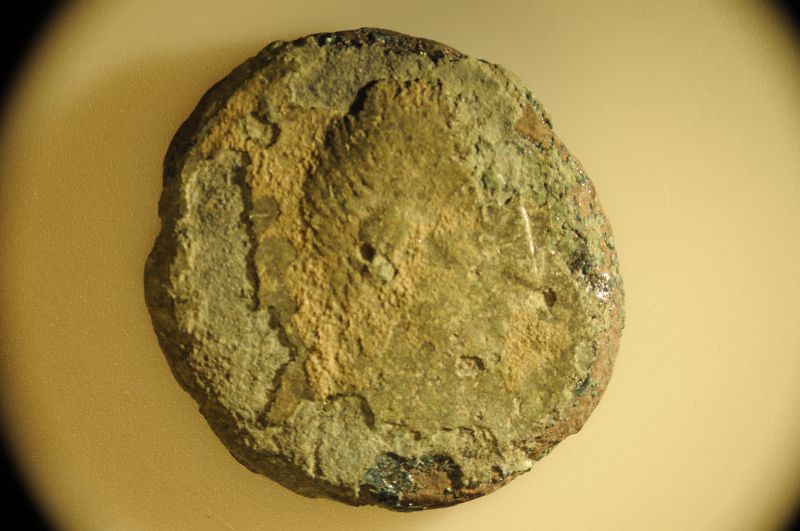
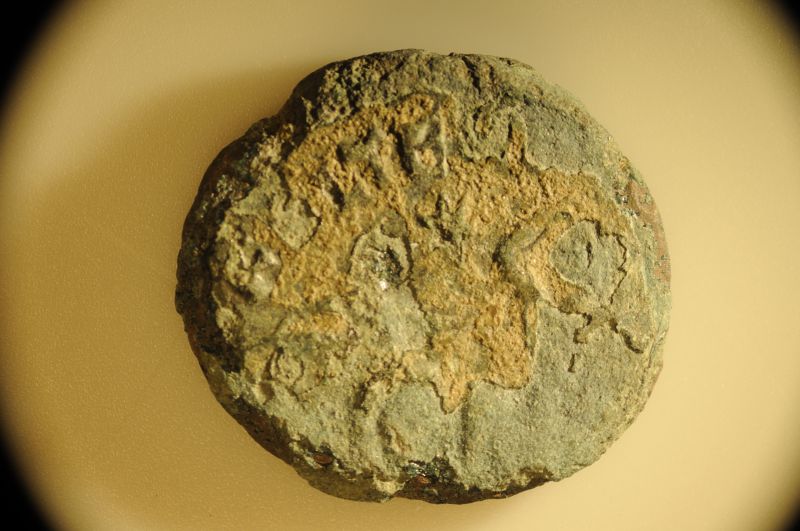
coin 6
I'm not sure if this coin has crud on it or if its a slug with no surface detail anymore
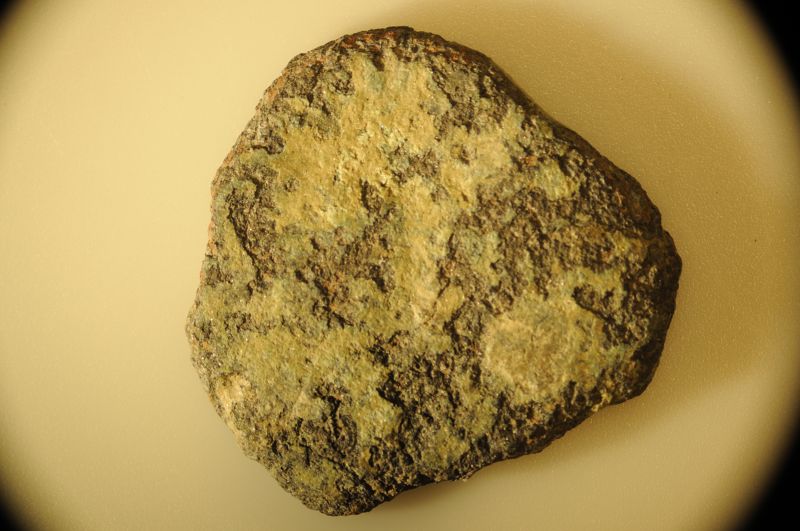
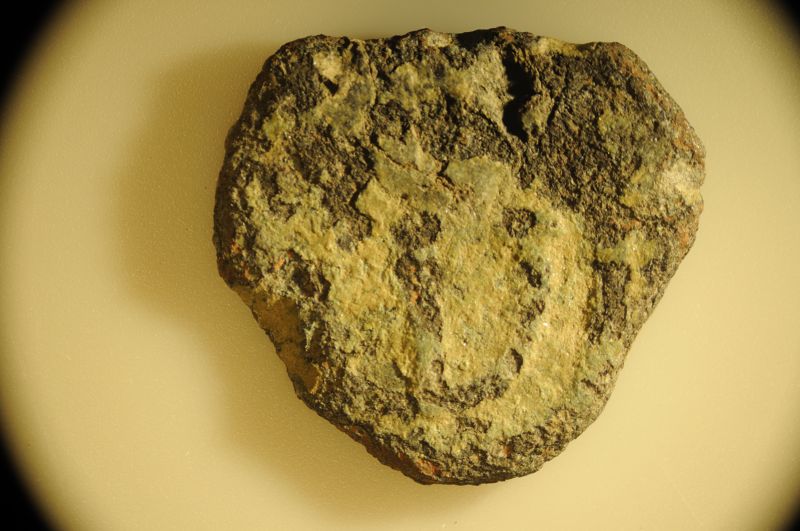
coin 7
slug?
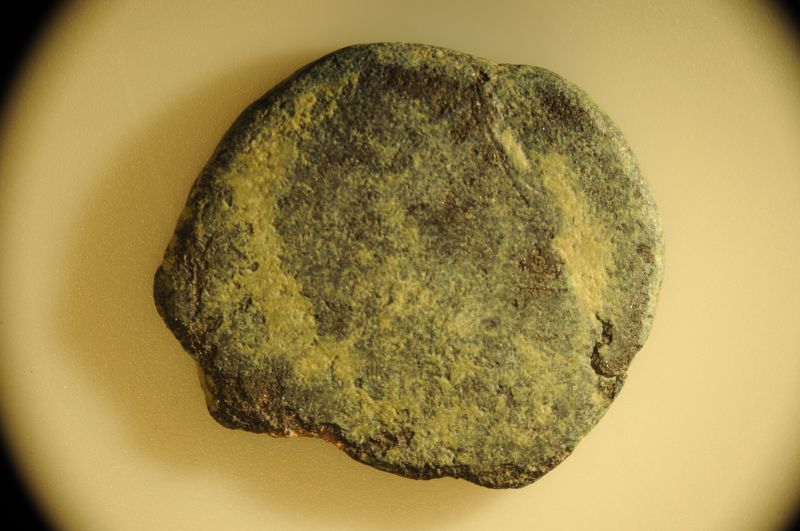
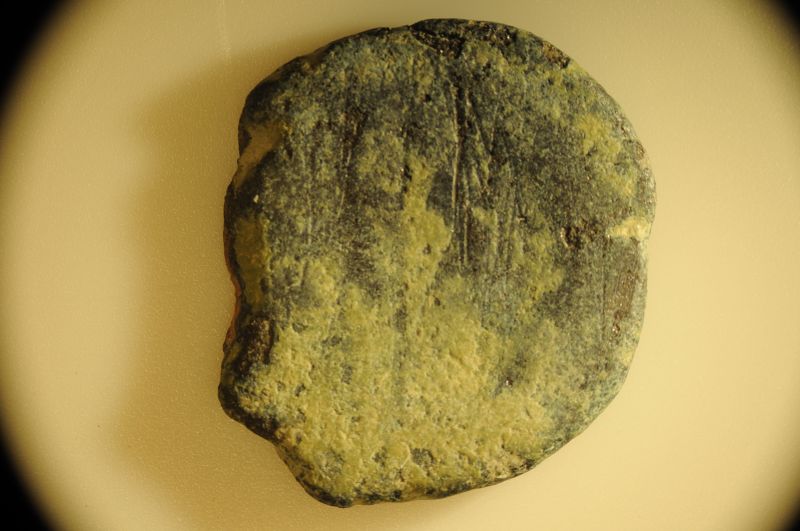
coin 8
Is this the Verdigris that mdpmedia mentioned?
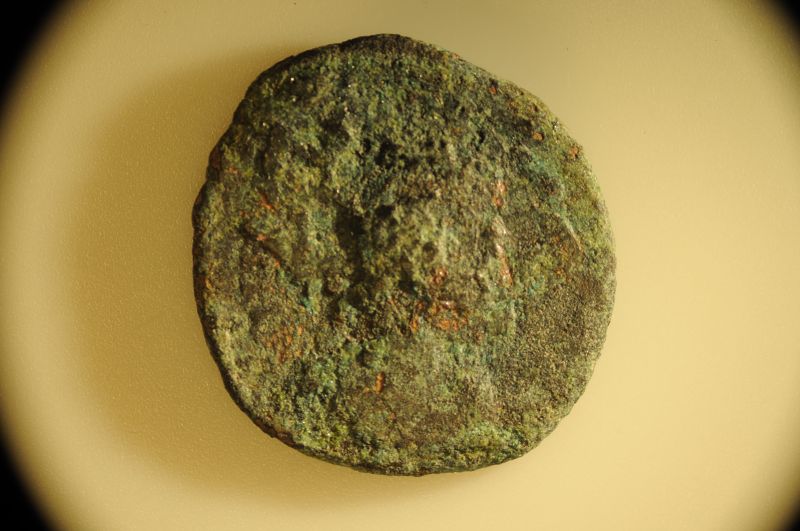
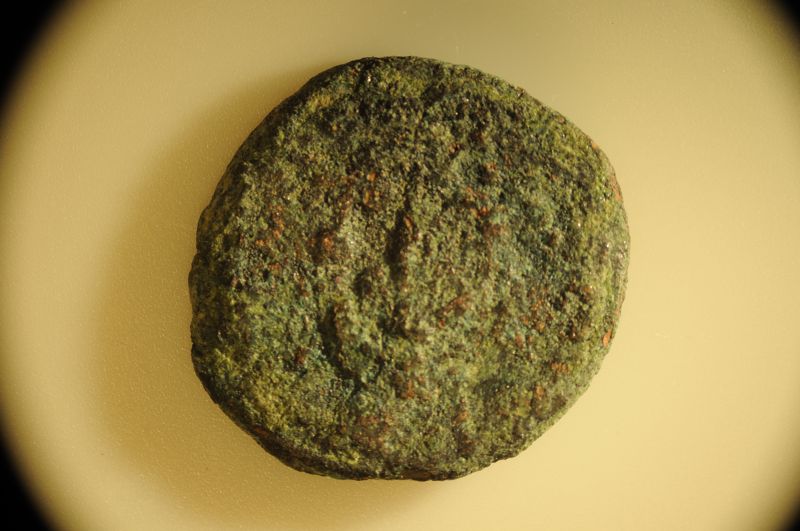
coin 9
I think I got the front and back right, just not sure what's up or down
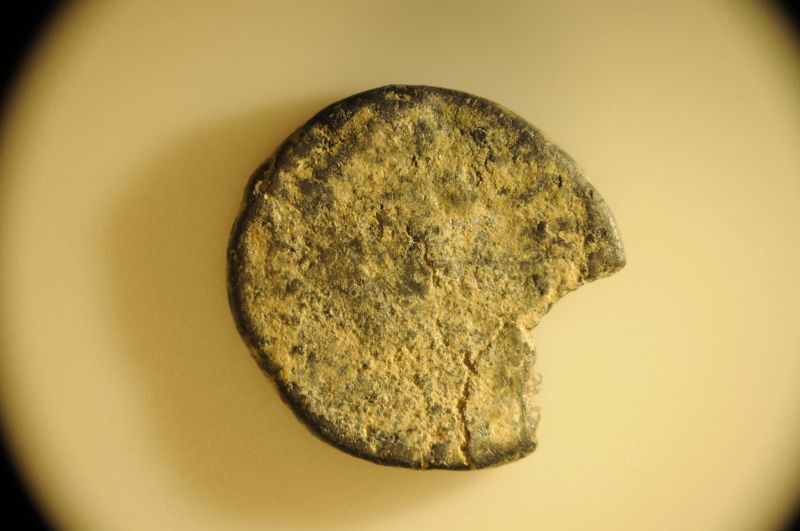
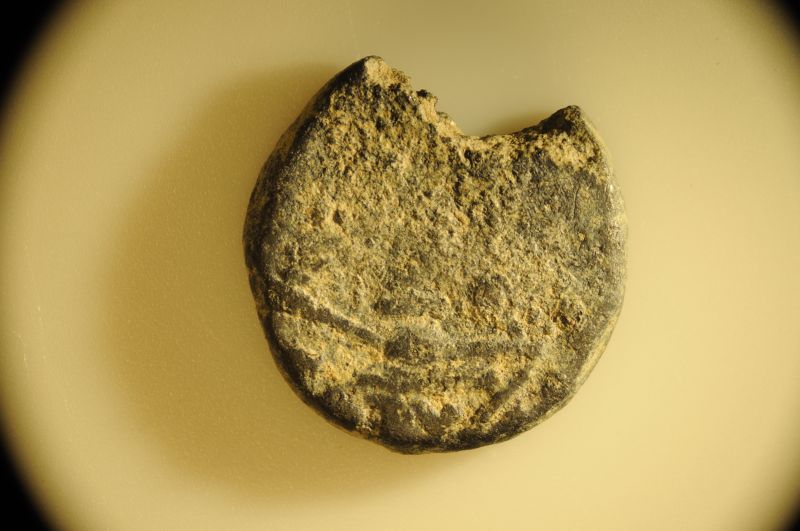
coin 10
not sure what to make of this one - almost seems like a fragment of something bigger
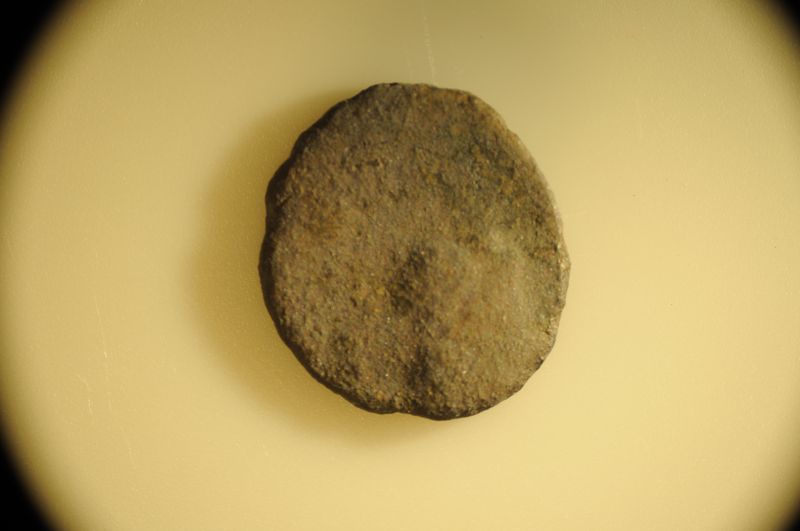
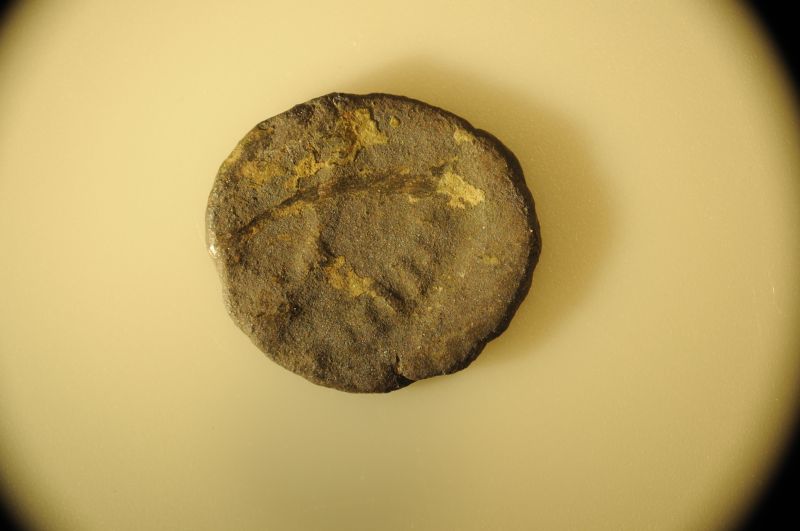
coin 11
not really sure if this is a slug
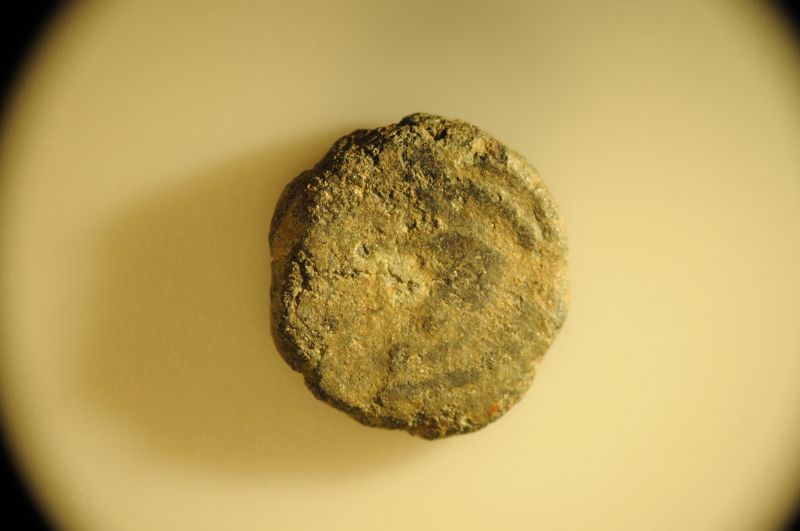
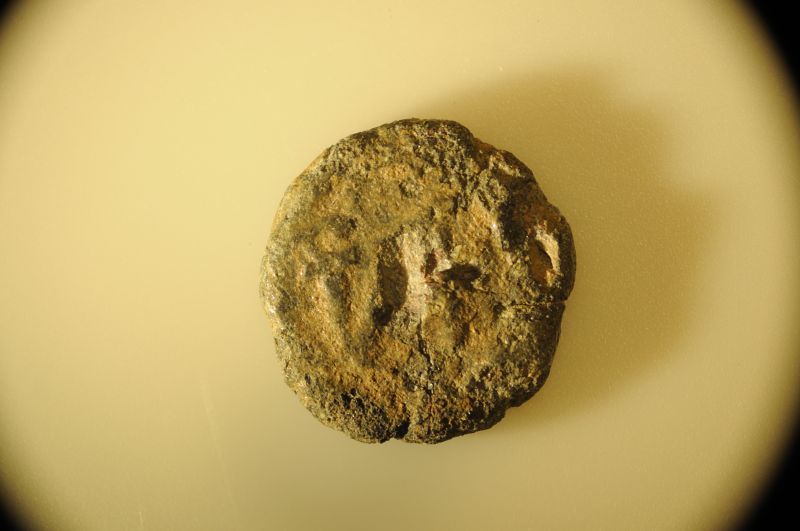
so with the various solvents, let me make sure I understand this -
1. Distilled water is the safest
2. Olive Oil might clean crude faster, but its more acidic and might start pitting the coin if left in the oil for too long (or in the case of Olive Oil that has gone rancid, it will be much more acidic)
3. Hydrogen Peroxide dissolves calcium and helps remove crud. Do a overnight soak, rinse off and do another 24 hour soak, then put in Distilled water or olive oil.
-How can I tell the crud has calcium? A white color?
-Is there any hidden dangers to the coin from soaking in hydrogen peroxide (as was noted about rancid or too acidic olive oil?)
-If there is no hidden danger would a Hydrogen peroxide soak be a first good move?
4. Xylol/Xylene is a good solvent to try first for organic, non-polar residues.
-Same question regarding any hidden dangers or gotchas. I actually have Xylene, I use it to clean oils off optics, and I seem to recall you don't want to get it on plastics, I seem to recall also hearing that about Acetone.
-How could one identify if crud or dirt is an organic, non-polar residue?
5. Acetone is a good final option if all other solvents fail, because it exhibits both polar and non-polar characteristics.
-Same question regarding any hidden dangers or gotchas.
Thank you everyone once again for your time and insight.
Mike
> it just must say something about me that I am only happy with the best examples of them.
I can definitely understand that. After reading the book and initially looking at the pictures I probably over-estimated what sort of coins I would get with these uncleaned lots. Now really thinking about it, I realized I have no frame of reference if I got a great deal, standard deal or more of a crappy deal.
I didn't start documenting the coins the moment I got them, but I figure now's as good a time as any to start, while we are still working on the first batch.
The 20 coins we got from Amazon.com were divided into those coins that we thought we saw detail (11 coins) and those that we couldn't make anything out. After we cleaned the "detail visible" coins for a 3rd time (gentle nylon brush) I took pictures of them. The first few seem to me to be of better quality, but most - to my untrained eye - don't appear to be anything I would show off to anyone, as if there is little "wow" factor and more of a "that's it?" factor, if you know what I mean. We haven't really had a chance to do anything with the 2nd batch, We didn't receive the 3rd or 4th batch yet. Depending on what the consensus is of these 11 coins will help me understand what my expectations should be. My first thought was "wow these coins are small..."
This is the first time I setup my camera with my microscope, so sorry if the light is off or if there is something else I should have done differently. I don't mind if anyone can ID any of these
coin 1
no idea, but the letters are worn off, not sure how to ID, I tried to start with the back, looking through VOT legends with wreaths via tesorillo.com, I'm failing miserably :)
coin 2
hoping I can read the letters sometime soon
coin 3
Looks like a woman's head, I think it looks very similar to the coin pictured right under "Forgery Touch-up Work" at http://www.calgarycoin.com/referenc.../tooling.htm
coin 4
no idea
coin 5
no idea, can see some of the head, but it seems the surface of the coin was eaten away
coin 6
I'm not sure if this coin has crud on it or if its a slug with no surface detail anymore
coin 7
slug?
coin 8
Is this the Verdigris that mdpmedia mentioned?
coin 9
I think I got the front and back right, just not sure what's up or down
coin 10
not sure what to make of this one - almost seems like a fragment of something bigger
coin 11
not really sure if this is a slug
so with the various solvents, let me make sure I understand this -
1. Distilled water is the safest
2. Olive Oil might clean crude faster, but its more acidic and might start pitting the coin if left in the oil for too long (or in the case of Olive Oil that has gone rancid, it will be much more acidic)
3. Hydrogen Peroxide dissolves calcium and helps remove crud. Do a overnight soak, rinse off and do another 24 hour soak, then put in Distilled water or olive oil.
-How can I tell the crud has calcium? A white color?
-Is there any hidden dangers to the coin from soaking in hydrogen peroxide (as was noted about rancid or too acidic olive oil?)
-If there is no hidden danger would a Hydrogen peroxide soak be a first good move?
4. Xylol/Xylene is a good solvent to try first for organic, non-polar residues.
-Same question regarding any hidden dangers or gotchas. I actually have Xylene, I use it to clean oils off optics, and I seem to recall you don't want to get it on plastics, I seem to recall also hearing that about Acetone.
-How could one identify if crud or dirt is an organic, non-polar residue?
5. Acetone is a good final option if all other solvents fail, because it exhibits both polar and non-polar characteristics.
-Same question regarding any hidden dangers or gotchas.
Thank you everyone once again for your time and insight.
Mike