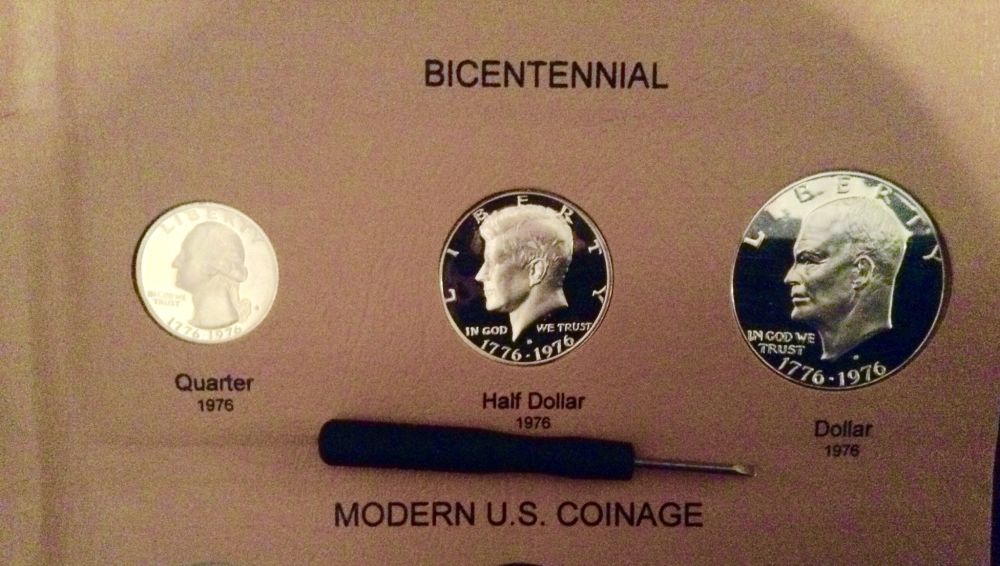
Whenever I want to break a coin out of a holder I put it in a bench vice (eye goggles on) and squeeze until I can get a screwdriver into the seam to pop it. If that fails I have a chainsaw.
Use a thin, sharp, strong Flat bladed knife and work it into the seam then pry apart. Do not use excessive force or you will not only damage the coin there is the chance that the fingers holding the capsule will suffer as well. Be patient on your first attempts until you find out which way works the best for you. I have done this hundreds of times and the capsule will also be reusable if done correctly.
I normally use my finger-nail to separate the air-tite, but you might have to use a knife or small flat-blade screw driver to start it. Once you can get your finger-nail in the gap, put away anything metal.
Fuzzy; good advice, in that video t-bone posted the guy starts out with the point facing in toward the coin... that is a good way to stab yourself if you aren't extremely careful... I use a knife but cannot put into words how I do it, I'd have to make a video
In the future, if you need to crack open sonic seals like slabs or us proof sets....use a flat head screwdriver(with the head being smaller the better)...place right into seam and hit with hammer. Quick easy safe.
Cracking OGP proofs is easy. the lenses used to hold proof coins are not that sturdy. hold one side in right hand; hold other side in left hand. grasp tightly and twist gently. the lens will seam will open up a crack and then just use your hands to open it further.
I have had good luck (seriously) with a hammer and medium sized wood chisel. I place the plastic holder with the narrow end up, exposing the seam. I place the chisel at the corner of the plastic holder on the seam and tap gently, gradually increasing the strength of the tap till the holder begins to separate. I then gently pry the two sides apart. I have a soft surface ready, wear gloves, and transfer the coins to a safe holder.
So far, so good. I have enjoyed the tips, real and tongue in cheek!
I used to crack them out, used a hammer and pliers but the Dremel is the easiest and safest way as far as I'm concerned. Oh wear safety glasses and protect your eyes.
The coins in the picture are the bicentennial silver proofs that come in special individual sonic-sealed airtites that are very difficult to open. Screwdriver will probably not work. Knife will probably not work. The easiest method on these are to take a razor knife and carefully score around the line where the two halves of the capsul come together. Then find a bench vise. Wrap the capsul in a thin towel just for safety and place in the vise. Close slowly until you hear a slight snap of the plastic cracking - don't apply too much pressure - you just want the seal to crack. Rotate coin 90 degrees and close vise again until you hear a soft crack. Rotate 45 degrees and again, then 90 degrees and again. Take the capsul and look and see if there's any separation. If so, use a screwdriver and gently pry the capsul open.
I ruined a set of these before I read this method somewhere else. Since then I've managed to not ruin any.
Remember: these are not normal airtites or modern mint capsules. They are sonically sealed very tight. The normal methods of opening airtites won't work unless you get very very lucky and have a capsule that wasn't sealed properly, which out of the 6 sets I've opened, I've never found.
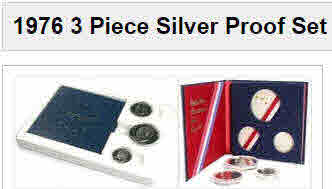
Thanks for the clarification. I had thought they were the normal mint proof set plastic enclosure. I will be on the lookout for this type of enclosure. I have not seen one. How is it different from the one pictured below? Where does it "come from?"
Disclaimer: While a tremendous amount of effort goes into ensuring the accuracy of the information contained in this site, Coin Community assumes no liability for errors. Copyright 2005 - 2026 Coin Community Family- all rights reserved worldwide. Use of any images or content on this website without prior written permission of Coin Community or the original lender is strictly prohibited. Contact Us | Advertise Here | Privacy Policy / Terms of Use








 First Page


 Posted 03/02/2017 7:12 pm