| Author |
 Replies: 24 / Views: 4,547 Replies: 24 / Views: 4,547 |
Page 2 of 2
|
|
|
|
Pillar of the Community
United States
2742 Posts |
Concentric lathe marks have been identified as such in an Indian cent by metallurgist Chris Pilliod. I've also seen them on at least one world coin. The cone-shaped tip of the working die has to be machined into the blank rod of die steel. The machining process leaves concentric lines on the cone, which then needs to be smoothed to a high polish before hubbing. If that step is omitted, or if the polishing is incomplete, then lines remain. Evidently hubbing fails to obliterate those lines. While the reducing lathe could also theoretically produce concentric lines, they would have to be much finer and much closer together. If they were on the master hub, then you'd expect many working dies to show them, which just isn't the case. I would assume that the reducing lathe doesn't actually produce any noticeable lines. If that were the case, then the master hub would have to be polished. That would soften the design and leave lines in the recesses. We've never seen that on any coin. Error coin writer and researcher.
|
|
Pillar of the Community
United States
6326 Posts |
Interesting find !.....and Mike D's detailed info is incredible !
|
|
Pillar of the Community
United States
6406 Posts |
This 1896 Argentina gold piece also has some concentric raised lines, on the obverse only. The lines show on Liberty portrait, mostly on the neck, the hair behind the neck, and below the ear. Could this have been caused by the same process that generated MikeP's nickel? I can't find any lines in the fields, only on the portrait. Can anyone offer a plausible explanation?  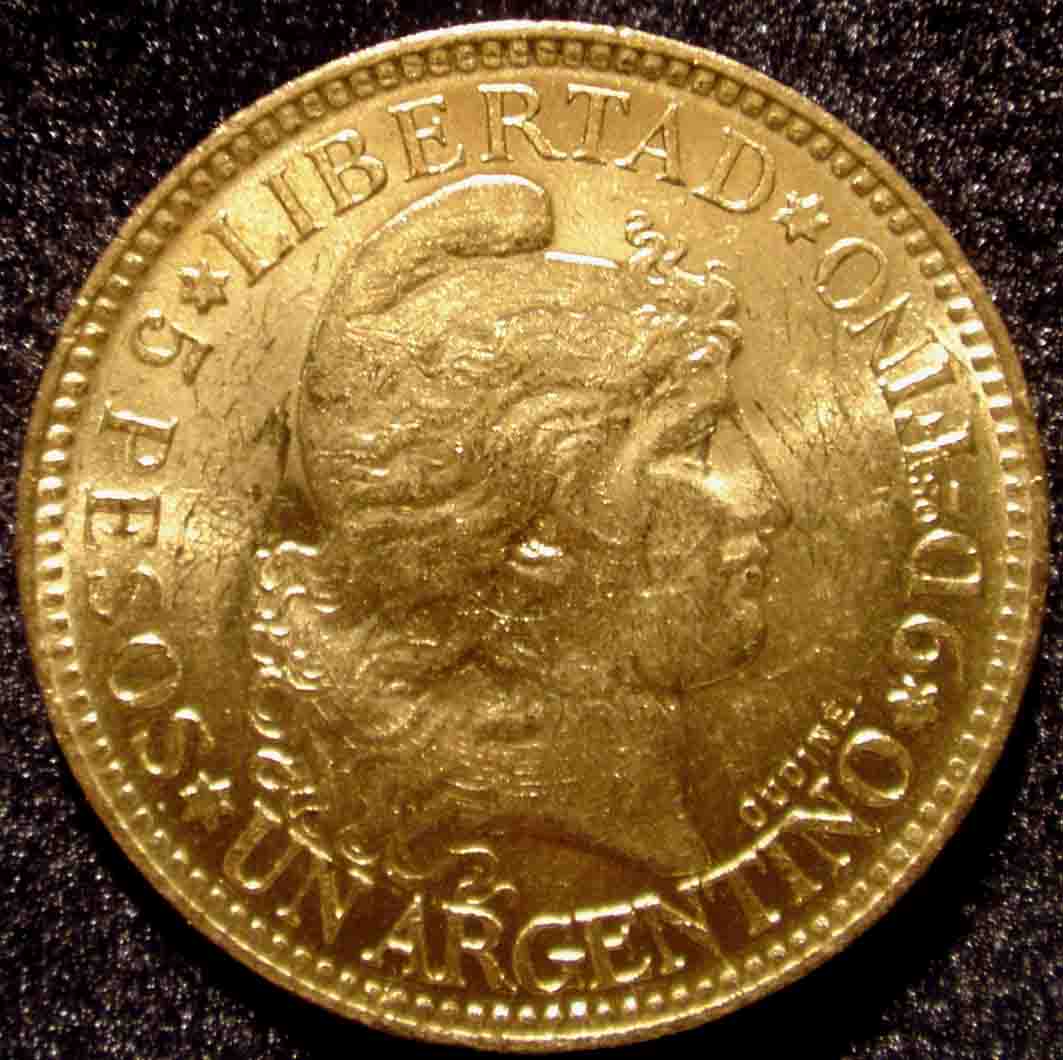 |
|
Pillar of the Community
United States
2742 Posts |
These would also be identified as concentric lathe marks. Perhaps the die was lightly polished after hubbing. This would have removed the circular lines from the field.
Error coin writer and researcher.
|
|
Pillar of the Community
United States
7629 Posts |
Marks like those on that Argentenian gold coin are actually rather common on many dates of Lincoln cents. I have seen hundreds of them and just toss them back. I'll hold a couple out next time I photo one and I'll try to post them in this thread, if I can find it again.
|
|
Pillar of the Community
United States
2742 Posts |
Interesting. I look forward to your photos.
Error coin writer and researcher.
|
|
Pillar of the Community
United States
3507 Posts |
Hi Mike,
That's a great explanation! Thank you!
It also makes perfect sense!
So, Let me see if I have this straight:
A blank die is being machined to impart the conical shape to it prior to hubbing.
The concentric lines are a result of that process. Still, prior to hubbing the blank die, the steel would normally be polished, removing the concentric lines.
The blank die somehow misses that part of the process and goes on to be hubbed.
The hubbing process does not obliterate the concentric lines as the die is being hubbed resulting in a die with concentric lines and a coin struck, like the one above.
I know it may seem repetitive, I just want to get the picture straight in my head:-0
Thanks,
Bill
|
|
Pillar of the Community
United States
2742 Posts |
You've got it.
Error coin writer and researcher.
|
|
Pillar of the Community
United States
3507 Posts |
Hi Mike,
Thank You sir!
Bill
|
|
Valued Member
 United States
322 Posts |
Wow! I can't thank you guys enough for your wealth of information. I just started to collect and I'm ashamed to admit, I don't even really know how a coin is made. May be a good time to learn. Stupid question: If I were to label this coin on a coin holder, should I call it concentric lathe marks?
Thanks Again, Mike
|
|
Pillar of the Community
United States
2742 Posts |
Yes, the generally accepted term is "concentric lathe marks".
Error coin writer and researcher.
|
|
Member
United States
3242 Posts |
 nice find  the only way it could be better is if it were still in a mint set |
|
Valued Member
United States
322 Posts |
Thanks amac44. I was thinking the same thing.
Mike
|
|
Pillar of the Community
United States
1807 Posts |
amac44 said; "the only way it could be better is if it were still in a mint set"
Well I say; "the only way it could be better is if it were still in my set".
Thanks for the info.
|
|
Bedrock of the Community
United States
62064 Posts |
I've alway felt the lathe marks were deeper on the fields because the line are raised when the die material was made. With the marks that didn't get polished out being incuse on the die, the marks would appear raised on the coin. Kind of like why a doubled eyelid remains in the die. The device that formed that was set deeper into the die and the hubbing because of the pattern didn't remove that area. So a deeper hubbed impression would leave a raised area of the coins it creates. That is what I've figured what happened to create them. 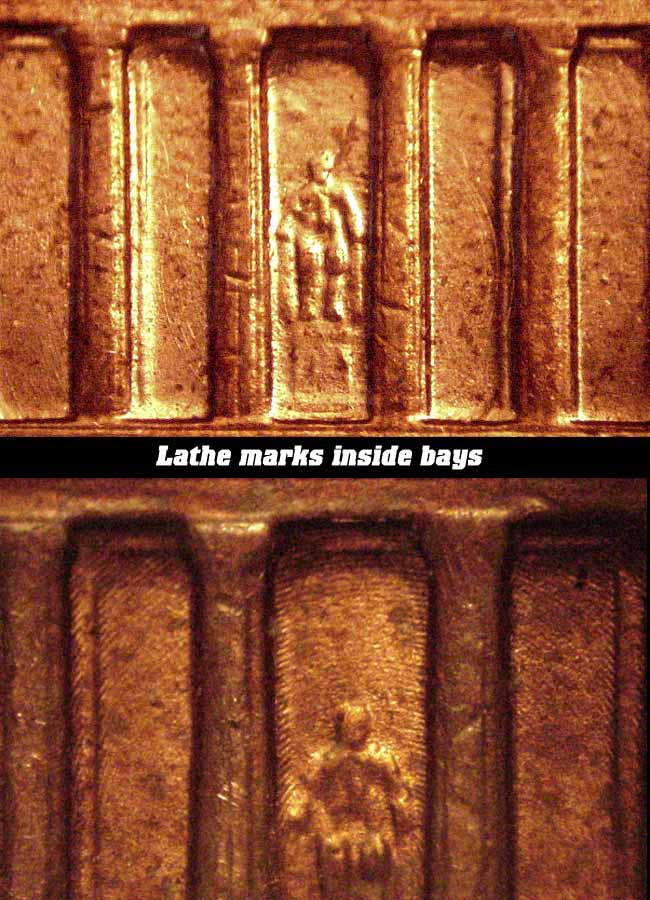 |
|
Page 2 of 2
|
Replies: 24 / Views: 4,547 |
Page 2 of 2
|







 First Page

 Posted 06/27/2008 08:35 am





