| Author |
 Replies: 16 / Views: 3,155 Replies: 16 / Views: 3,155 |
Page 2 of 2
|
|
|
|
Rest in Peace
United States
17900 Posts |
A type set might be suggested. You will learn a tremendous amount assembling such a set, and it's a set you can update later with different dates.
If a Coin is worth $150 or more, you are better off buying it with NGC or PCGS grading, rather than buying it raw (non-TPG) and having it graded.
If you have questions about a Coin show us photos BEFORE YOU BUY IT and we can offer you honest evaluations for free.
Have fun - if it's not fun, don't do it.
|
|
Valued Member
United States
424 Posts |
First of all.  I'd say the first thing you need to do is decide your reasons for collecting. Everybody has their own reasons. Some may do it as an investment, hoping for future profit while others, like myself, enjoy owning a piece of history and the search for new specimens. You may become interested in a certain series or denomination or era ect. The possibilities are endless. Learn to grade your coins yourself. CCF is a great place to do that and everyone here is so willing and helpful that you can't go wrong here. After you get an idea of a coin's grade and value, then you can decide if it's worth it to have it professionally graded or not. Don't be afraid to ask questions and most of all....have fun! |
|
New Member
 United States
34 Posts |
Thanks for all the great advice! One of my biggest fears is having something already that might be nice or on a higher grade scale but I don't know it and might re-buy it. But I have in the past used Village Coin Shop from New Hampshire but it appears the consensus is they over grade things? I just assumed I could trust them because of their website quoting The current President and owner, Domenic J Mangano, has been associated with the selling and buying of rare U.S. and World Coins since 1983. Don is a life Member of American Numismatic Association (#5600). The Village Coin Shop is also a member of the Professional Coin Grading Service (PCGS) and the National Guaranty Corporation (NGC).And I had never heard anything bad about them before.
|
|
New Member
United States
34 Posts |
For an example of my wife just bought this coin recently off Etsy for my birthday. It was listed as AU. And here is its picture: 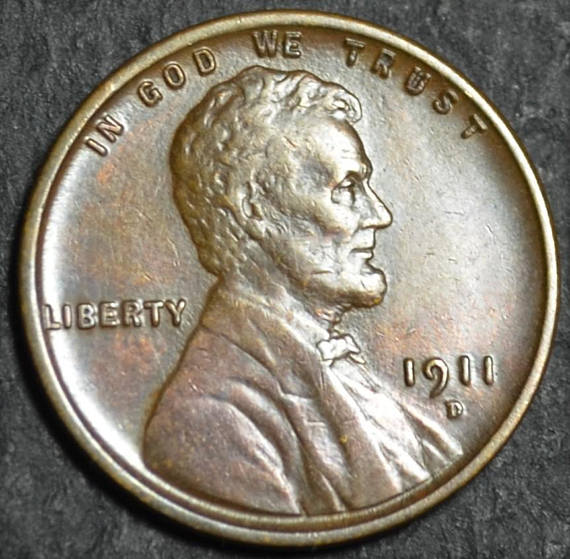 |
|
New Member
United States
34 Posts |
Sorry here is the back of the coin: 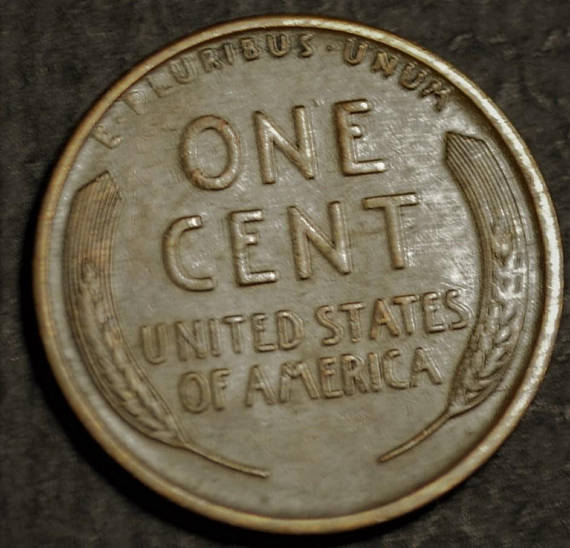 |
|
Pillar of the Community
United States
719 Posts |
Sage advice above! A US Type Set 20th century is how I got back in after getting my Lincoln Cent, Jefferson nickel, Roosie Dimes and Washington quarter Whitmans going again. *Minus the expensive key dates!* During the process I fell in love with the often besmirched Barber coinage. Fill up those old blue Whitman folders with your Lincolns and Jeffersons. That is so much fun. Learn how to photograph coins and post here. 15 years ago, it was a major deal to find correct lighting, etc, even for inexpensive coins. Now, cell phone cameras are amazing at getting the job done on detail. hit and miss on color. **Don't buy anything until you learn to grade. There's just no way around it. I tried to avoid it. You have to learn to grade. There are many great resources for this, and each type of coin has its own quirks with grading. Eventually you will love it, or like boot camp, you won't** **Learn what cleaned coins look like - many types and forms. You want as "original" surfaces as possible. This takes time, practice and likely finding someone near you who can help, especially at local shows. Your local Brick and Mortar coin shop may have a great person, or a shark. It is so individual. But you can also learn here** "Buy the book before buying any coins" will save you so much "tuition money," frustration and waste in the long run. Seriously, don't buy anything for a YEAR (for more than $10) - if you can hold yourself back. Look at every grading thread here in the US and Classical Coin section. Post some pictures, and have an online book or paper book in hand to grade. Sorry about the long post and typos! |
|
Pillar of the Community
United States
3402 Posts |
Go for small size US currency. Great type sets can be made.
KK
|
|
Pillar of the Community
United States
719 Posts |
Quote:For an example of my wife just bought this coin recently off Etsy for my birthday. It was listed as AU. And here is its picture: From the pics, it looks like a nice, problem-free (no major scratches, rim bumps, damage, etc), original surfaces (no signs of obvious cleaning) coin. I don't believe it makes AU, however, more like XF40 - I could see some saying VF35 or XF45. I have no idea on price without looking it up - it is a nice coin and a whole set looking like that will be sweet, but not cheap: the keys and semi-keys in XF are going to be more than chump change. |
|
Pillar of the Community
United States
719 Posts |
Oops, one last thing on advice, develop a budget and stick with it, just like everything in life. Some folks here have $25 / month budget, and others >$1000. As your tastes change and you may want to sell a coin to upgrade, staying budget neutral keeps the household stable and much happier.
|
|
Bedrock of the Community
United States
20753 Posts |
1. Purchase a copy of the Red Book by Whitman Publishing. 2. Attempt to NOT put coins in those things called Foldes. Preferably use Albums. 3. Collect anything and everything you can afford. Many people get rolls of coins from a bank and look through those. 4. Don't buy from any place on the internet until you really know what your doing. 5. Look up coin shows in your area and go to a few of them if possible. 6. Ask friends, relatives and neighbors it they have any old coins laying around they don't want. |
|
Valued Member
United States
175 Posts |
You should consider joining a local coin club if there is one in your area. Check your local library to see if there is a coin club there. You'll be exposed to many different types of collectors who are always willing to give advice. You can usually buy and sell coins at the club if you like. You should go slowly and educate yourself along the way. If you are interested in a particular coin or series check in with ebay to get a sense of their value. Most of all have fun. |
|
Pillar of the Community
United States
6130 Posts |
Also, don't count out non-US coins. US coinage arguably has the biggest market in the world, which means good liquidity, but also steep competition. Ancients are very much growing in popularity, but are mostly quite affordable. My first passion project was a type set of Japanese coins, which I was able to complete about 95% without breaking the bank. You don't yet know your calling, but it doesn't have to be US coinage! Also, IMO you should keep your childhood collection intact. When I started collecting world coins (I toyed with the idea of assembling a couple dozen post-WWII type sets) I mixed my childhood collection with ebay purchases. When I threw in the towel on that project, I couldn't recall which coins I had for 20+ years, and which ones I bought three years ago. |
|
Pillar of the Community
United States
1871 Posts |
to CCF. You have definitely come to the right place! To your questions: 1. Don't buy a coin unless you have seen the exact coin you will receive. Only buy coins with good eye appeal. You might try to convince yourself "that's a good price for the grade besides that one black spot." Just be patient and wait for a better one. It will come. (this is something I only learned after about a year) 2. Yes. Also, there's no reason to get anything you have graded unless you are going to sell, or question the authenticity of, a "better" coin (1914-D LWC for example) 3. Definitely keep your childhood collection! I have a similar collecting history as you as well as being close in age. When I joined CCF and got serious about collecting, I also wondered how to keep my old collection. While most of it is still in the three-ring binders I used as a kid, I have started transferring some to new, labeled 2x2s and bringing them into my new collection. The ones which are from my "original collection" I mark with an "O" on the back along with other short notes if it was a gift from a specific person or whatever. Aditional thoughts: - Don't buy any expensive coins for a while. You will make some mistakes at the beginning (such as buying a cleaned coin). These aren't necessarily bad mistakes if you make them with cheap coins since you will learn from them. - Don't feel like you have to "follow the albums" or put together complete sets. Make up your own collections and "sets." For example, I have a "tiny silver coins" collection with types from all different countries. - Finally, to echo Finn, do not feel like you have to limit yourself to US coins. There's a world of coins out there. I went from exclusively US coins to almost exclusively world coins. I only purchased one US coin in the last year! Just browse the world coin forum and see what might pique your interest. Also, a good way to learn world history. Sorry for the long post, those are just the things I have learned from being in a similar situation. |
|
Pillar of the Community
United States
3402 Posts |
Additionally learn how to grade the coin series (or currency) you will be collecting and buy the coin (currency) not the slab.
KK
|
|
Valued Member
United States
318 Posts |
Brett, I'm also back after about a 30+ year break. Restarted in January and had a whole new system of grading to learn so my perspective is fresh, so maybe similar to yours. The path I took was to purchase coin rolls, and also more recently started to get into cutting up mint sets. Primarily coin rolls labeled as BU for brilliant uncirculated. If I use quarters for example, out of a roll of 40 1988 quarters, only about 3 or 4 will grade at MS65 or better. The rest are too scratched from all the processes before the quarters make it into a roll. My thought on this is that I'm paying around 1.5 to as much as 2 times the face value. Meaning depending on source, I'm paying as little as $15 for a $10 face value roll. If I miss out in that nothing is worth saving in the roll, at least I get $10 to deposit back into my local bank. My risk is really $5 spent. I've been keeping away from the stupid years where everyone wants big dollars, such as 1983 Quarters. On the mint sets, I cleaned your Village Coin Shop out of their late 1960's, 1970's and early 1980's mint sets over the prior few weeks. The prices were decent but these sets are pretty beat up. Even the envelopes were beat up. I am finding a few MS-65 coins in these sets but so far nothing spectacular. Only halfway through at this point. What I'm liking about mint sets is that I'm building a more complete collection of all years and types from pennies all the way up to the big Ike dollars that I thought I would never collect. As others have recommended above, learn the grading system. Get yourself at minimum 5x magnifying glass for starters. Seeing coins at 5x and when it finally hits what is considered MS65 or better, you'll be hooked like no other time in your earlier experiences as a kid. Go watch the PCGS grading video's on youtube -- they have many. What really helped me the most on learning grades was to send a few coins into PCGS. I hit a few really nice scores but also tanked big time on a few. I'm keeping my tanked coins as hands-on reference material. When you can hold a slabbed coin in your hand that didn't grade well, and look at it under 5x, you will learn very quickly why it didn't score well and learn what will have a better chance at scoring higher. I don't consider myself an expert at this point, but that's my 2 cents. I also went way overboard on getting back in so be careful. I know I spent around $5k this year so far and a massive amount of time. At least I put some money out there and gave some smaller coin shops a small bump in sales but wow, my bank account reflects my spending... I'm done for now, I think. |
|
Page 2 of 2
|
Replies: 16 / Views: 3,155 |
Page 2 of 2
|






 First Page


 Posted 07/01/2018 5:57 pm


