| Author |
 Replies: 83 / Views: 13,228 Replies: 83 / Views: 13,228 |
|
|
|
|
Pillar of the Community
 United States
4883 Posts |
|
|
Pillar of the Community
United States
4883 Posts |
Yet another silver dollar sized Apollo 11 medal. The variety of this genre is such that it would seem to pose quite a challenge if someone were to attempt to collect them all. 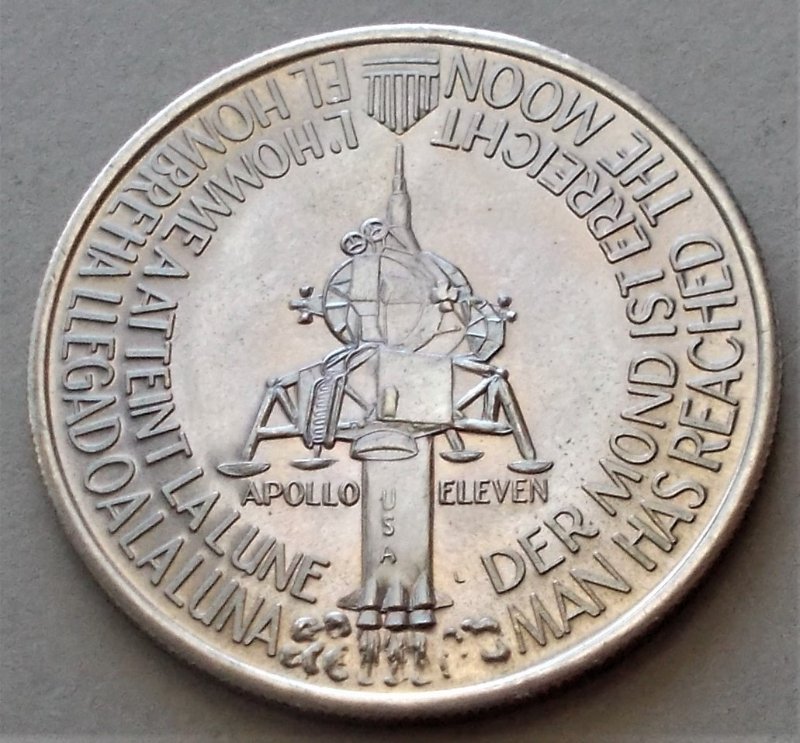 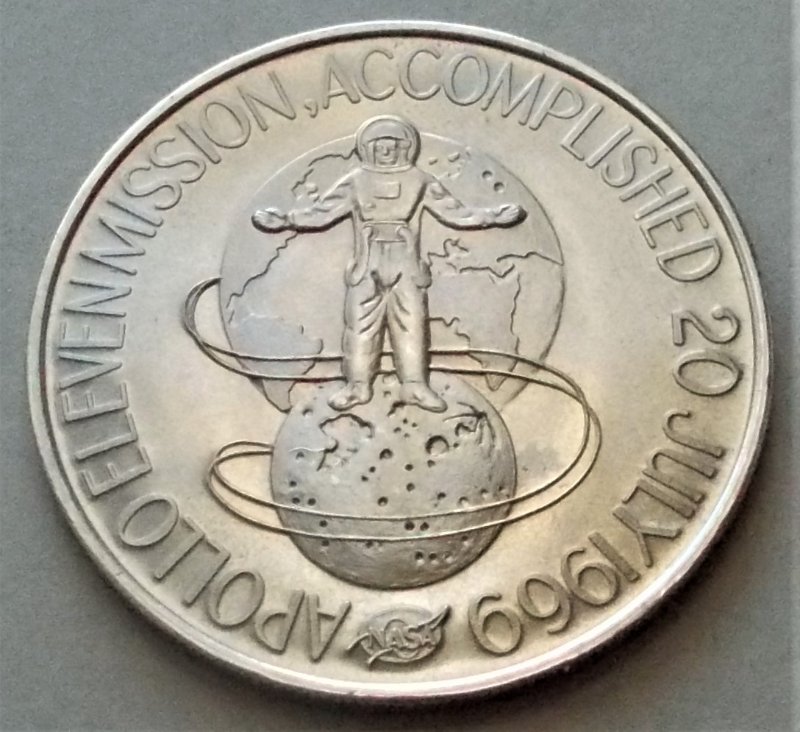 Colligo ergo sum
|
|
Pillar of the Community
 United States
2160 Posts |
1988 Young Astronauts Program Silver Medal 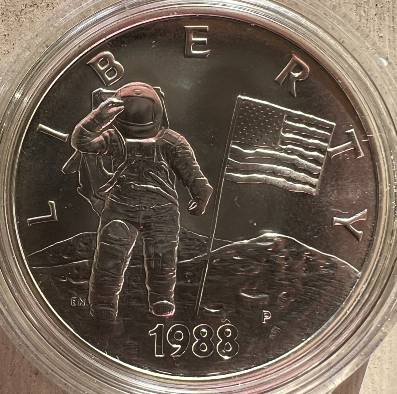 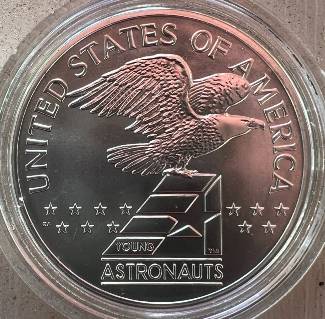 Edited by cptbilly
08/29/2023 10:01 pm
|
|
Moderator
 United States
196572 Posts |
Quote:
Yet another silver dollar sized Apollo 11 medal. Quote:
1988 Young Astronauts Program Silver Medal Outstanding examples!  |
|
Bedrock of the Community
United States
27514 Posts |
Inordinately fascinated by bits of metal with strange markings and figures
|
|
Moderator
United States
196572 Posts |
Quote:
The mate to Chopped Triumph's 50 cent piece. Very nice! |
|
Pillar of the Community
United States
2160 Posts |
Presidental Art Medals' (PAM) workhorse sculptor Ralph J. Menconi provided the artistry to a seven medal series commemorating Apollo Missions 11 to 17. Menconi's previous work for the space program included the models for the Project Mercury monument at Cape Canaveral. The 2.5 inch medals were offered in serially numbered .999 silver, limited to 10,000 pieces, and unnumbered bronze and were struck by the Medallic Art Company. Each medal was accompanied by a pamphlet with mission highlights, flight crew biographical sketches, and descriptions of the obverse and reverse of the medal. [Unless stated otherwise, the quotes in this series of posts are from the pamphlets, whose authors remain anonymous] Apollo 11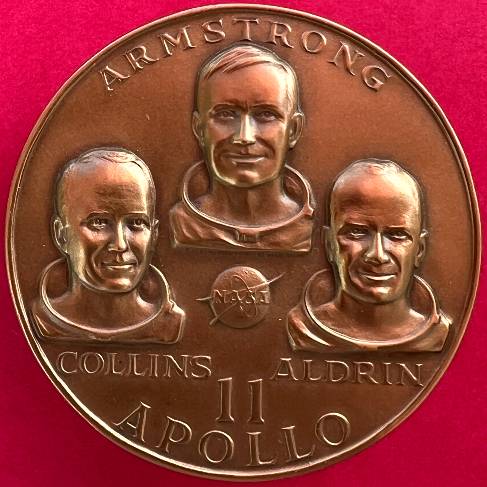 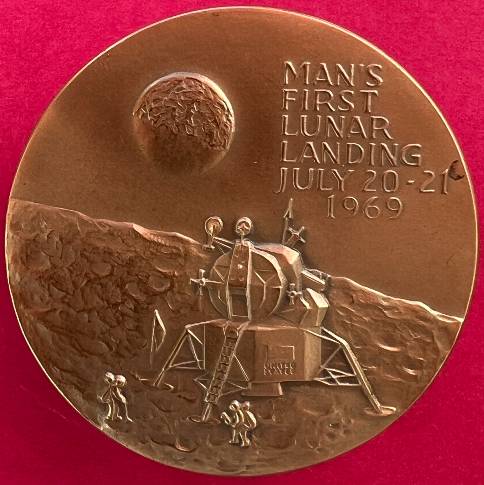 Apollo 11 fulfilled the words of JFK who said on May 25, 1961, before a special joint session of Congress, "I believe this nation should commit itself to achieving the goal, before the decade is out, of landing a man on the Moon and returning him safely to Earth. No single space project in this period will be more impressive to mankind, or more important for the long-range exploration of space; and none will be so difficult or more expensive to accomplish." Medal is dated 1969. Apollo 12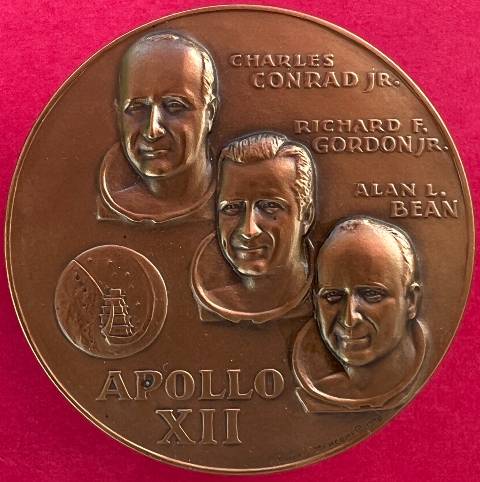 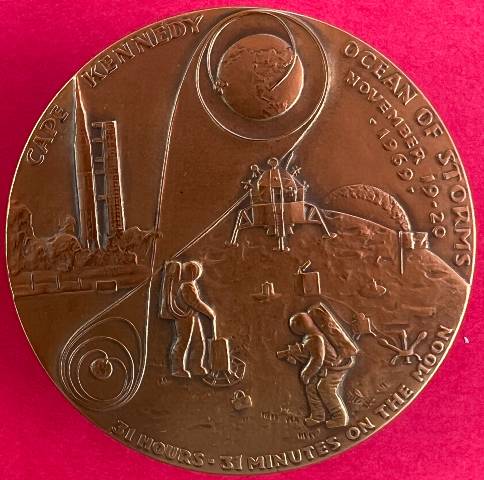 This mission included retrieving components from the unmanned Surveyor III spacecraft which had landed on the moon on April 19, 1967. The reverse of the medal ". . .depicts several facets of the mission, including the moment of lift-off from Cape Kennedy. . .Behind the astronauts can be seen the lunar module Intrepid. The American flag appears on the horizon backed by a glimpse of the Earth." Flight trajectories, the length of stay on the Moon, plus the time and place of the lunar landing are included in the lettering. Medal is dated 1970. Edited by cptbilly
09/18/2023 12:22 am
|
|
Pillar of the Community
United States
2160 Posts |
Apollo 13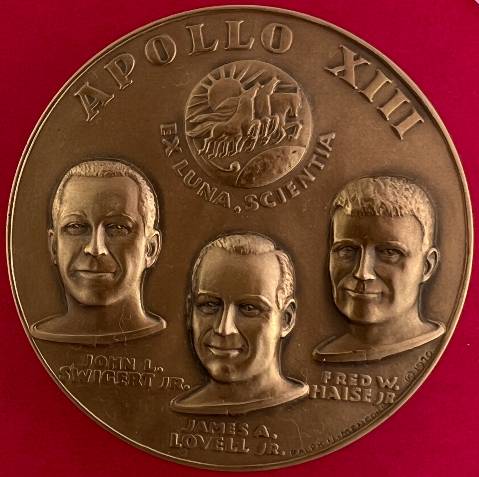 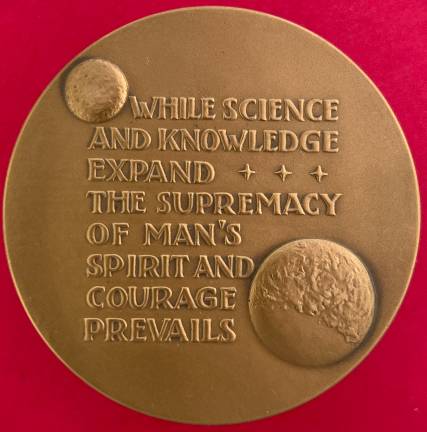 In addition to portraits of the three astronauts, the mission emblem, "Based upon Apollo the Sun god, three horses are shown pulling the Sun chariot from earth to the Moon. The Latin phrase, "Ex Luna, Scienta," means " From the Moon, Knowledge." A service module oxygen tank explosion early in the third day of the flight -- April 13, 1970-- transformed "what had been a routine flight. . .into a potential journey into eternity." As documented in Ron Howard's 1995 film and elsewhere, the astronauts and the NASA ground crew "nursed the stricken space craft back to a climactically safe landing in the South Pacific on April 17. Per the accompanying pamphlet, the reverse of the medal "is a simple tribute to the astronauts and ground crew who prevailed in a time of danger." The medallion is dated 1970 Apollo 14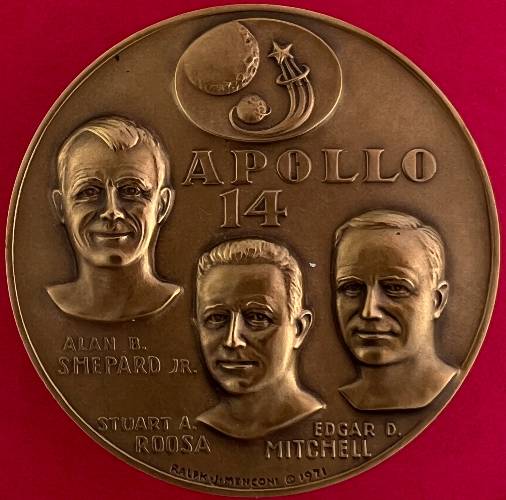 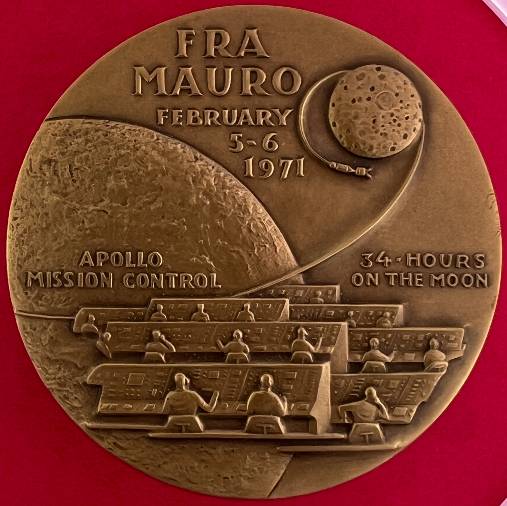 The final day of January, 1971, saw NASA return to space and a commitment to visiting the hilly moon region just north of the Fra Mauro crater-- mentioned on the medal's reverse-- which had been the destination of the aborted Apollo 13 moon landing. Commander Alan Shepard and Lunar Module Pilot Edgar Mitchell's exploration of the terrain "used their Mobile Equipment Transporter (MET) to carry cameras, rock samples, and instruments during their nine-hour stay on the hilly upland region strewn with large blocks of debris marking the Sea of Rains." A photo of the MET is here: https://airandspace.si.edu/collecti...A19730124000. During a second excursion on February 6, Shepard struck one of the most famous shots in golf history, using a sample collector modified with the head of a six iron. (Shepard donated the club to the USGA at the 1974 US Open). The medallion's reverse "depicts Apollo Mission Control as a tribute to the thousands of people on the ground who play a little-publicized role in the success of space flights." The medal is dated 1971. Apollo 15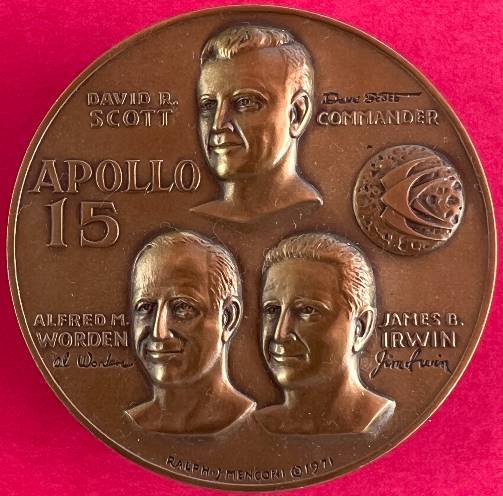 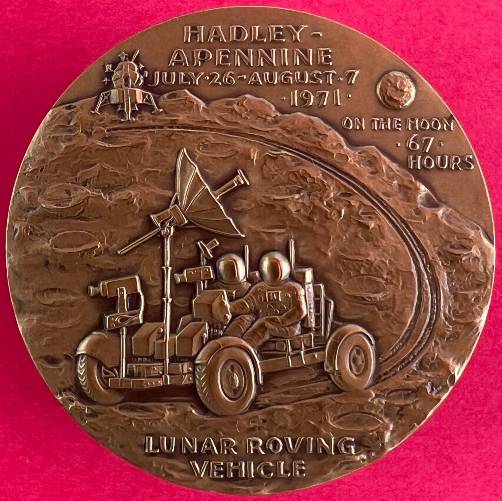 The medal's obverse includes the Mission Patch and - unique to the series-- signatures of the astronauts. Apollo 15 introduced the first wheeled vehicle ever sent to the Moon, Rover 1: 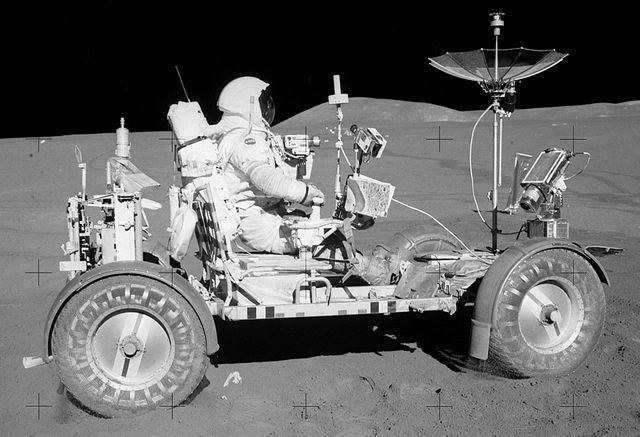 "The sophisticated battery-driven car excited the public's interest with both its exotic design and huge cost, estimated at over eight million dollars." The rover, which weighed 460 pounds on earth, 76 pounds on the Moon, is featured prominently on the reverse. Thanks to the vehicle, Astronauts David Scott and James Irwin traveled 17 miles on the lunar surface, in the Hadley-Apennine region, "making valuable visual and film observations and gathering a large collection of moon rock specimens." Dated 1971.
Edited by cptbilly
09/17/2023 8:14 pm
|
|
Pillar of the Community
United States
2160 Posts |
Apollo 16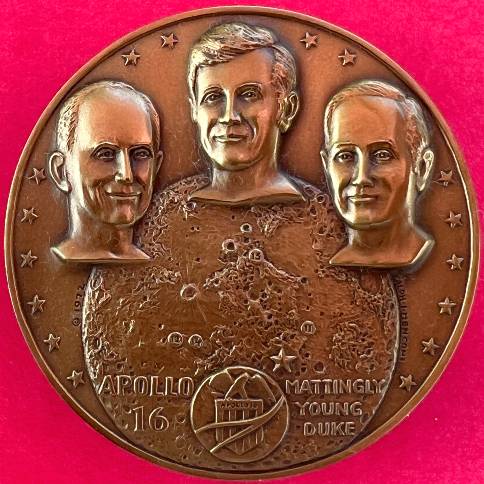 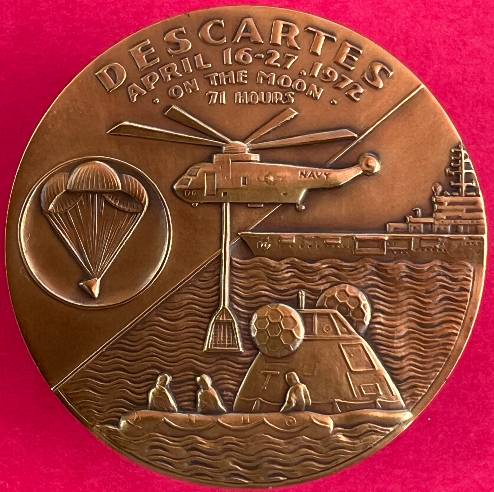 Naval Captain John Young, a veteran of the Gemini program and a member of the Apollo X crew that orbited the Moon in May 1969, was joined on the lunar surface by USAF Lieutenant Colonel Charles Duke at 11:59 a.m., April 21, 1972. Together, they completed a record 20 hours, 14 minutes of "Extra Vehicular Activity" (EVA) in the highland regions near the Crater Descartes, while Lieutenant Commander Thomas K. Mattingly II, orbited above in Casper, the command ship. On the medal's obverse, Menconi's portrait of the moon depicts the landing sites of each of the Apollo missions: 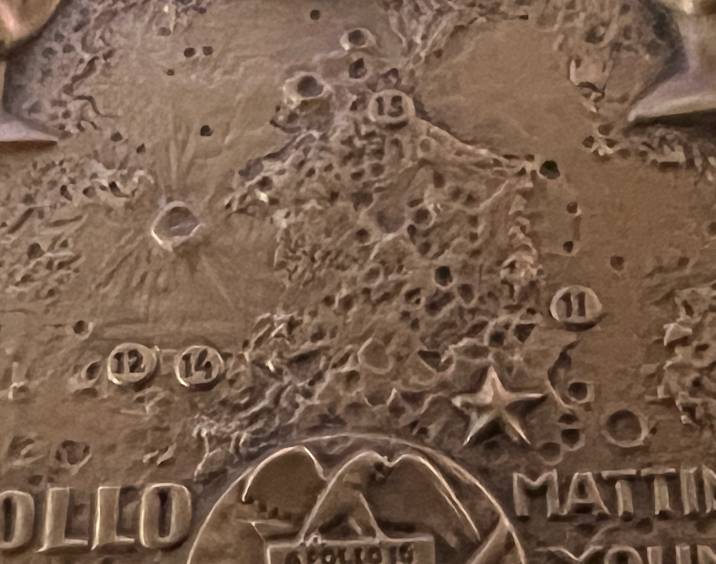 The 16 stars on the outer edge of the total design commemorate the mission flight number. The reverse depicts the recovery team, including the U.S.S. Ticonderoga. Dated 1972. Apollo 17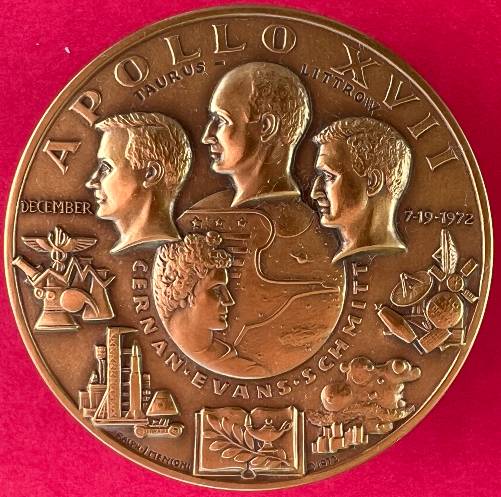 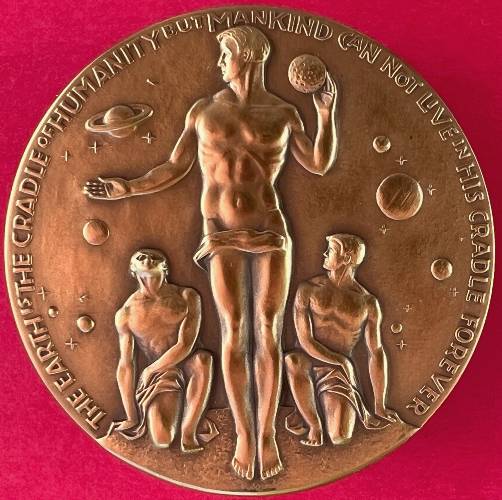 The final Apollo flight in December, 1972, marked the first visit of a civilian scientist-astronaut, geologist Dr. Harrison Schmitt and was led by Navy Captain Eugene Cernan, one of 14 astronauts selected by NASA in October 1963. Like Neil Armstrong, Cernan earned his undergraduate degree at Purdue. Schmitt and Cernan piloted the Lunar Lander Challenger to within 400 ft of their intended target in the Taurus-Littrow valley while Navy Commander Ronald Evans orbited in the command module America above. "Central in the design of the medal's obverse in the Apollo 17 mission patch, which features the head of Apollo superimposed over an American Eagle. The eagle's wing represents the bars of the U.S. flag. . .the eagle's wing partially overlaps the moon, suggesting a body that has been visited, while both Apollo and the eagle point toward Saturn and a galxy, suggesting other space challenges remain." Symbols arrayed around the lower section of the obverse design "signify knowledge gained in the areas of medicine, science, engineering, exploration, navigation, propulsion, communications, geology. . ." "The reverse. . .depicts the interdependence of US spaceflights from Mercury through Gemini and the Apollo series. . .the kneeling figures of Mercury and Gemini are shown striving to break out of Earth orbit while the central figure, Apollo, has achieved and holds the Moon." Lettering on the outer rim quotes Russian rocket scientist Konstatin Tsiolkovsky: "The Earth is the cradle of humanity but mankind can not live in his cradle forever." Medal Date: 1972
Edited by cptbilly
09/18/2023 10:32 am
|
|
Moderator
United States
196572 Posts |
Beautiful examples! |
|
Valued Member
United States
416 Posts |
Just found this yesterday and it seems like a good excuse to revive this thread. Rather large at 36mm. General Dynamics Astronautics worked on the Atlas missile which was used to launch vehicles into space. 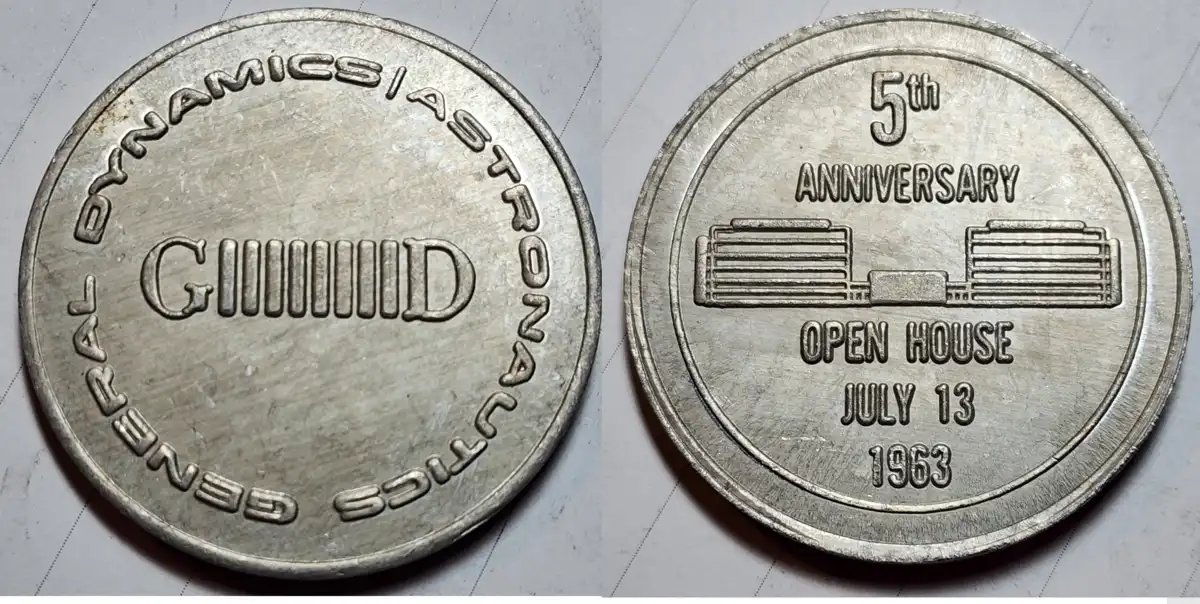 |
|
Bedrock of the Community
United States
79642 Posts |
Nice additions. Errers and Varietys.
|
|
New Member
United States
32 Posts |
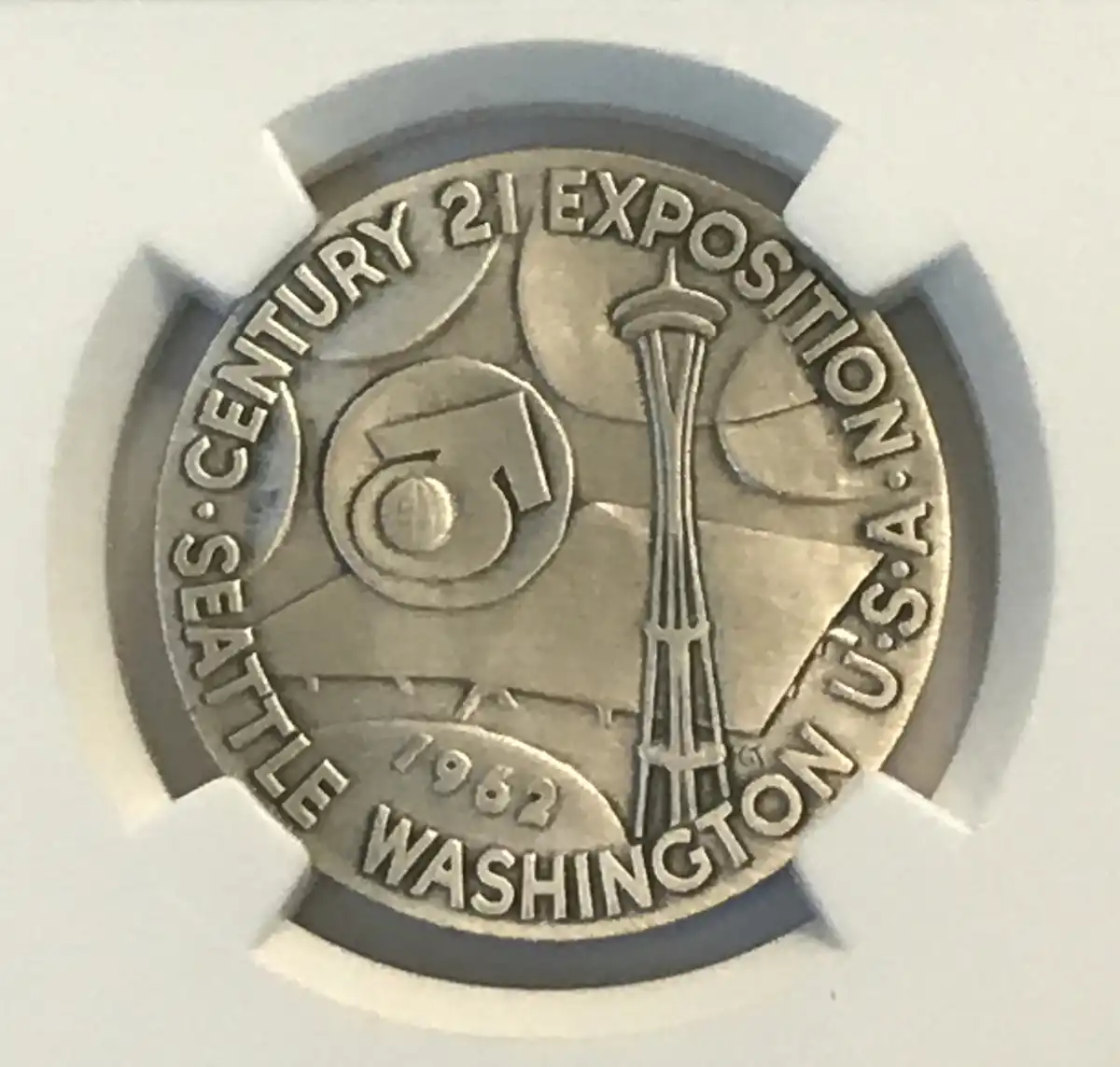 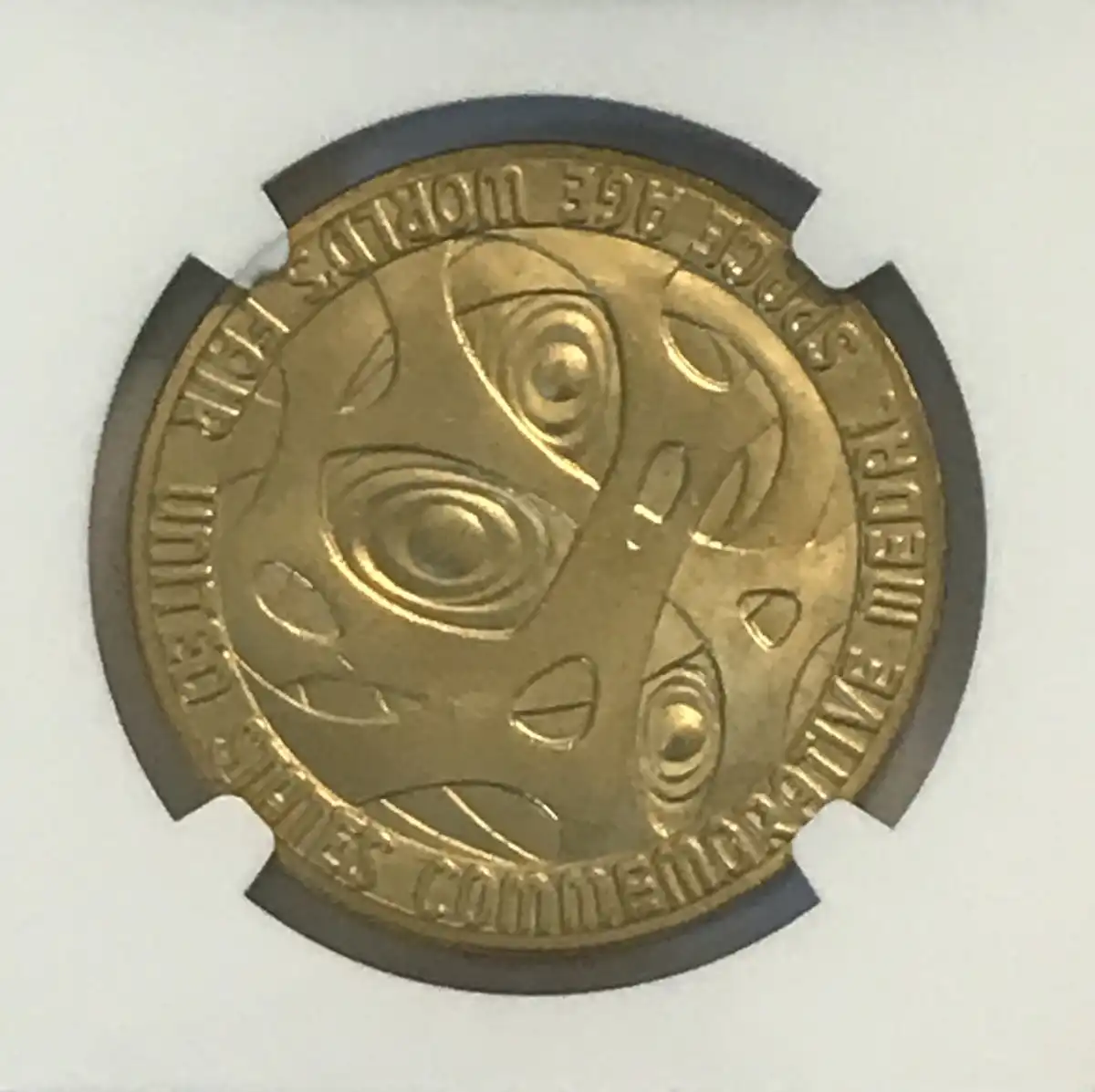 1962 Century 21 Exposition National Commemorative Medal - antiqued .90 silver obverse and bronze reverse. The "space age world's fair." Designed and sculpted by George Tsutakawa. |
|
Bedrock of the Community
United States
79642 Posts |
Nice addition, Some Of It! Errers and Varietys.
|
|
Moderator
United States
196572 Posts |
Nice examples! |
|
|
Replies: 83 / Views: 13,228 |
|







 First Page
 Previous Page

 Posted 08/29/2023 5:56 pm