| Author |
 Replies: 20 / Views: 3,927 Replies: 20 / Views: 3,927 |
Page 2 of 2
|
|
|
|
Pillar of the Community
United States
2529 Posts |
Quote:
A bit of trivia here .... The most expensive U.S. coin to change hands was counterstamped. Can anyone name the coin? A Brasher Doubloon |
|
Pillar of the Community
United States
4432 Posts |
|
|
Moderator
 United States
195470 Posts |
Quote:
I know one member who will disagree. Quote:
With all due respect, this opinion is patently false... And here he is.   |
|
Pillar of the Community
United States
4432 Posts |
|
|
Bedrock of the Community
United States
17884 Posts |
Quote:
A bit of trivia here .... The most expensive U.S. coin to change hands was counterstamped. Can anyone name the coin?
The most expensive US coin to change hands was the SP66 1794 dollar which was NOT counterstamped. The Brasher Doubloon was not a US coin it was a privately made "token", and was "counterstamped" by the same person that made it. I'm not sure I would consider that a true counterstamp. The most expensive counterstamped US coin was the Dexter specimen of the 1804 dollar. |
|
Pillar of the Community
United States
4432 Posts |
@ Conder .... I was unaware of the 1794 coin. Prior to that, 2017, the Brasher Doubloon was the most expensive coin sold. I'm old, and so is my info.  From now on, I'll say that a counterstamped coin was once the most valuable coin sold. Here's the info on the 1794 .... https://www.PCGS.com/news/PCGS-to-d...-dollars-setThe Brasher Doubloon is not a coin? PCGS and the top auction houses refer to it as a coin. It was gold specie, was it not? Doubloons are a denomination .... double dollars. In effect, I can regard these doubloons as pattern coins but coins, nevertheless. Brunk listed Brasher Doubloons in his books on merchant countermarks. The EB, Ephraim Brasher's initials, was his hallmark, recessed and set within an oval. Hallmarks are one form of counterstamp, are they not? There's a school of thought that presumes a coin, once counterstamped, ceases to become a coin and magically becomes a token. The reason I don't subscribe to that "school of thought" is that counterstamped coins continued to circulate, despite the stamp. Indeed, many served as small, circulating billboards for merchants; in effect, generating word-of-mouth advertising. Granted, counterstamped coins are damaged coins, but STILL coins. |
|
Moderator
United States
195470 Posts |
Quote:
Hey jbuck, you now rival Punxsutawney Phil as the prognosticator of prognosticators!  |
|
New Member
 Canada
10 Posts |
Thank you all for your advice and the historical information concerning counterstamps. It seems that this post stirred up and old but very interesting debate. I will advise my niece to keep this particular coin and keep searching her family tree.
Thanks Again
|
|
Pillar of the Community
United States
4432 Posts |
Quote:
I'll check my books and see if I can attach any significance to your piece. I found no listing for the N.C. BAKER counterstamp in Brunk's 2003 book. That's not unusual though. I have many hundreds of as yet unlisted pieces, myself. I did find two directory listings for an N.C. Baker .... links provided .... 1877 Chicago - Baker, N.C., clerkhttps://books.google.com/books?id=o....%22&f=false1871 Whitehall, NY - Baker, N.C., Railroad Agent https://books.google.com/books?id=h....%22&f=falseMany counterstamps were made by machinists who were active in some masonic order. Machinists had the ability to create stamps that "brothers" in the fraternal order might want for personal or business use. Sometimes, a simple pocket piece was wanted for use as a "calling card" to show brother masons. Another use was due to an individual needing a patent stamp. I was unable to locate any patents sought by an "N.C. Baker." I also searched for "Baker, N.C.," "Baker, Nathan C." and "Nathan C. Baker." When searching, I use quotation marks to narrow search results and add the word "PATENT." My inability to locate a patent doesn't rule out that possibility, as I did a cursory search from books in my online Google library. Many books are not yet available in digital form. This holds true for early city directories, too. I tend to lean toward the possibility of the Whitehall railroad agent having use for a counterstamp, as opposed to the Chicago clerk. Many railroad employees secured patents for improvements to that service. They were more likely affiliated with a masonic order than say, a clerk. If this N.C. BAKER counterstamp is to ever be positively attributed, either a product that bears a matching mark or another counterstamped coin that bears additional info like an address or occupation will need be located. While this seems akin to finding the proverbial "needle in a hatstack," I know from experience that this occasionally happens. Given the higher grade of our OP's coin, I would say that this counterstamp does indeed lower the value. That said, if N.C. Baker is discovered, and some meaningful history can be attached to him, the value with the stamp could well exceed that of the coin.  |
|
Bedrock of the Community
United States
17884 Posts |
Quote:
@ Conder .... I was unaware of the 1794 coin. Prior to that, 2017, the Brasher Doubloon was the most expensive coin sold. I'm old, and so is my info. From now on, I'll say that a counterstamped coin was once the most valuable coin sold.
Brasher sold for 7+ million in 2017, the 1794 dollar sold for $10 million in 2014. Quote:
The Brasher Doubloon is not a coin? PCGS and the top auction houses refer to it as a coin. It was gold specie, was it not? Doubloons are a denomination .... double dollars. In effect, I can regard these doubloons as pattern coins but coins, nevertheless. No in my opinion it was not a coin. It was not produced by any governmental authority it was made by a private individual for his own use. To me that makes it a token. It was gold specie but that does not make it a coin anymore than a gold bar is a coin. Doubloon IS a denomination, it is two escudo equal to four spanish milled dollars. The Brasher's weight and size actually makes it a 4 doubloon piece, 8 escudo or 16 dollars. (A common mistake often seen in books, movies, and coin discussions where the gold 8 escudo is referred to as a "doubloon" when it is not.) As the Brasher was not intended to be a model for a future coin but rather a way to get merchants to readily accept the gold piece as an "unfamiliar coin" without a lot of haggling. (Brasher was a "licensed" regulator of gold and possibly silver coins. It was his job to examine coins and adjust their weight up or down to the proper weight, and then counterstamp them to indicate that they were of legal weight. There were at least three or four people licensed to do this officially. By applying his recognised counterstamp to his tokens they would be accepted in commerce without question.) I do not consider it to be a pattern. What I don't really understand is why he went to that design rather than stick to the Lima Style "doubloon" that he made earlier. Quote:
There's a school of thought that presumes a coin, once counterstamped, ceases to become a coin and magically becomes a token. The reason I don't subscribe to that "school of thought" is that counterstamped coins continued to circulate, despite the stamp. I would agree with you on that, a counterstamp does not stop a coin from being a coin. Quote:
Granted, counterstamped coins are damaged coins, but STILL coins.
Agreed, but the Brasher was never a coin to start with. It was a token when Brasher made it, and it was still a token after he counterstamped it. but one that would be widely accepted without question. Edited by Conder101
01/30/2019 4:02 pm
|
|
Pillar of the Community
United States
4432 Posts |
@conder .... Found this at https://sites.google.com/site/moste...-breast-1787 reads as follows .... "Unique 1787 Brasher Doubloon, EB on Breast, Garrett Specimen America's First Gold Coin Struck Pronounced by Numismatic experts as America is most famous and significant coin, this unique doubloon is also widely accepted as the very first gold coin struck by the United States of America. One of only seven examples known, this specimen is unique in that the EB counterstamp (initials of silversmith Ephraim Brasher, who made the coin) is on the shield over the eagles breast. The other six examples carry the EB stamp on the eagles wing. A coin of unparalleled historic importance, this precious rarity has been a classic since the earliest days of coin collecting in the United States." @ conder ... Can you cite any numismatic sources that refer to the Brasher pieces as tokens?  ------------------------------------------------ Note that every numismatic article I've ever encountered on Brasher doubloons refers to them as coins. I've yet to read about a "Brasher token" Indeed, some possess elements of traditional U.S. coins, circulating today. There's the motto, E PLURIBUS UNUM, the eagle, stars and the olive branch. The doubloons had a specie value, too. It can easily argued that Brasher's coin helped set a standard for official U.S. coins that followed. In 1787, there was no mint. Brasher sought approval for his pattern coin in NY State. If I was to accept the belief that "coins" not issued and released for circulation by the U.S. government are really tokens, doesn't that imply that 1913 Liberty "Nickels," 1933 Gold "Double Eagles," 1894-S Barber "Dimes," etc., and all pattern pieces are also tokens, not coins? ------------------------------------------------ IMHO, pattern pieces like the Brasher Doubloons were proposed to circulate as coins, therefore, they're not token issues. Tokens are substitutes for coins. Doubloons, one of which PCGS assigned a $15 denomination, were not coin substitutes. ------------------------------------------------- Quote:
I would agree with you on that, a counterstamp does not stop a coin from being a coin. Glad we can agree on something, I am. Rich Hartzog, God rest his soul, was an expert on exonumia. Rich long held the position that, by "virtue" of being counterstamped, a coin becomes a token and ceases to be a coin. It's been estimated that, during the 1850's, about 10% of then circulating coins were counterstamped. -------------------------------------------------- In looking back to reference what I said, about a Brasher Doubloon once being the most valuable coin sold, it appears that I should've said "gold" coin ....  It's been a long time since I read that, and I'm unable to cite the specific source. Edited by ExoGuy
01/30/2019 7:25 pm
|
|
New Member
Canada
10 Posts |
EXOGUY
Thanks you for all your research. After I spoke to my niece she did some additional searching on her family tree and it appears that there was a Norris C. Baker from around this time. She didn't have any additional info yet but is still looking.
Thank you all again.
|
|
Pillar of the Community
United States
4432 Posts |
Hey Quartergeek .... Happy to help! Given the potential first name, I found the below info. Note that this Norris C. was born in 1853, being the same year as your coin. --------------------------------------------------------- Website: https://www.myheritage.com/names/clara_ormsbyClara O Baker (born Ormsby), 1852 - 1943 Clara O Baker (born Ormsby) was born on month day 1852, at birth place, Vermont, to Dr. John Bliss Ormsby and Malina LeMar Ormsby (born Baker). John was born on January 2 1821, in Corinth, Orange, Vermont, USA. Malina was born on February 13 1825, in Canada. Clara had 3 siblings: Thomas Edwin Ormsby and 2 other siblings. Clara married Norris Calvin Baker on month day 1894, at age 42 at marriage place, Massachusetts.
Norris was born on January 18 1853, in Shipton (Danville) Quebec, Canada.They had one daughter: Doris Juliette Hemminger (born Baker). Clara lived in 1900, at address, Florida. She lived in 1910, at address, Florida. She lived in 1920, at address, Florida. She lived in 1930, at address, Florida. She lived in 1935, at address, Florida. She lived on month day 1940, at address, Florida. Clara passed away on month day 1943, at age 91 at death place, Florida. She was buried at burial place, Florida. ---------------------------------------------------------- If the above NORRIS can be connected to your family, this is about as slam dunk of an attribution that you may get. ------------------------------------------------------- The above Norris is buried in Tampa, FL. Here's a link to his gravesite that also shows a portrait .... https://www.findagrave.com/memorial...calvin-baker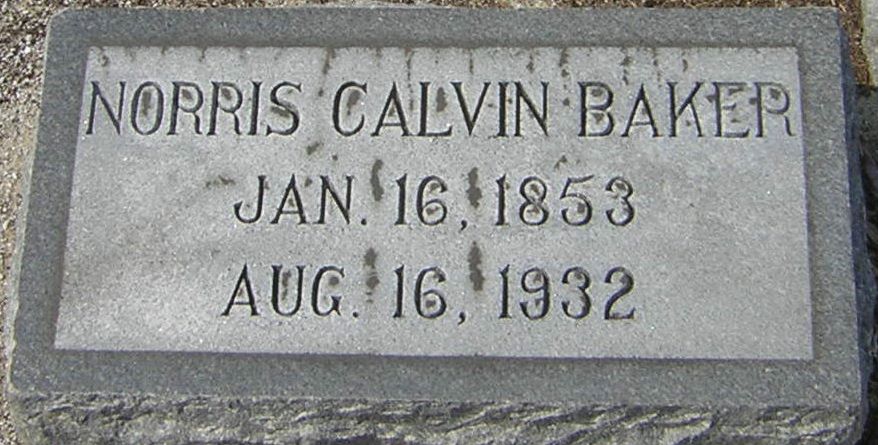 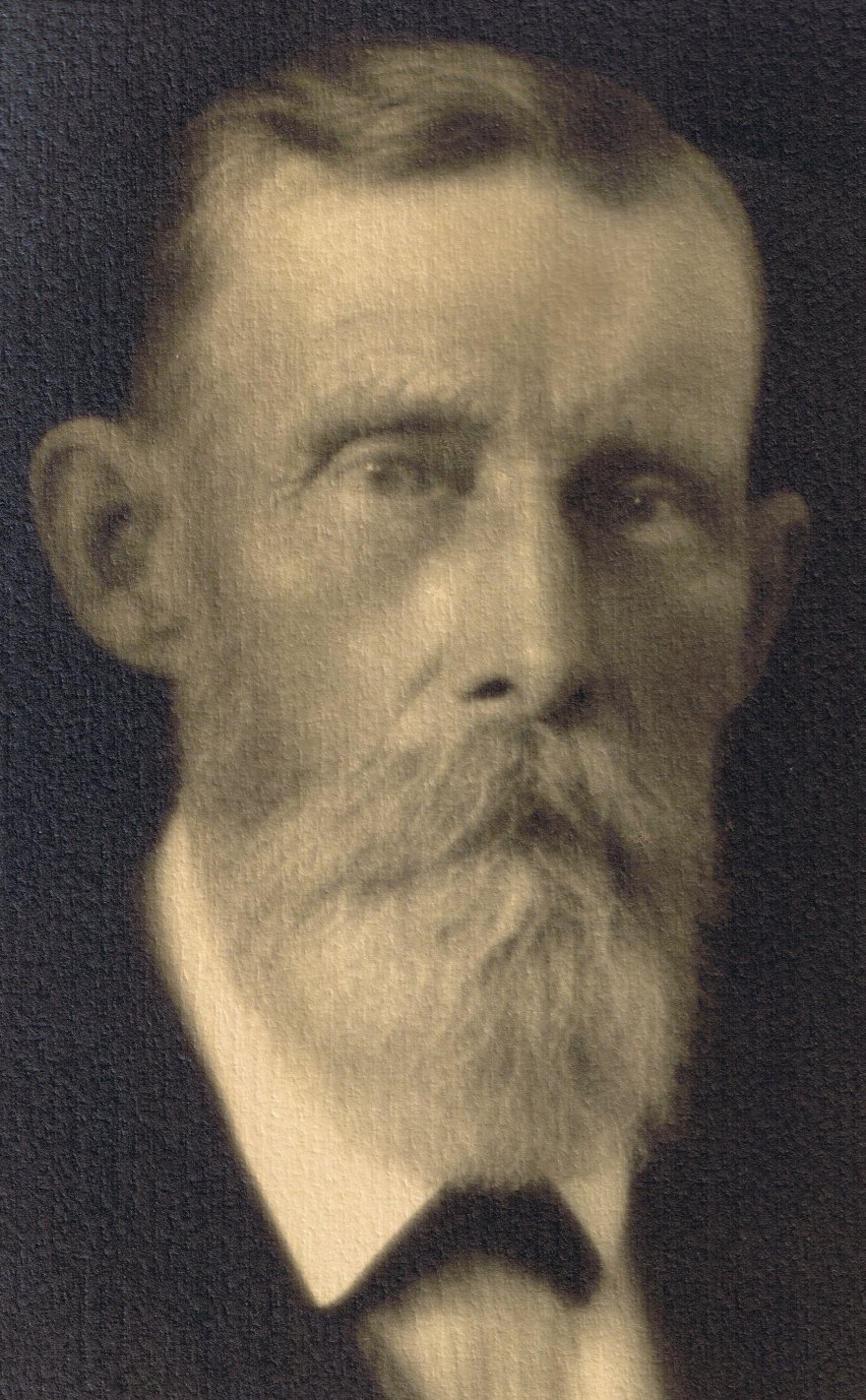 -------------------------------------------------------- I found Norris listed in a 1922 Tampa City directory. Here's his info .... Baker Norris C (Clara), mgr Reliable Seed Co, h R F D 2Here's a link to the directory .... https://archive.org/stream/rlpolkst...lpo_djvu.txt--------------------------------------------------------- Hope this helps nail your counterstamp as a family heirloom! |
|
New Member
Canada
10 Posts |
Thanks ExoGuy
This fits, I know her grandmother's (Bakers) side of the family came from Quebec so I think this is a very good match.
I will forward this info to her.
|
|
Pillar of the Community
United States
4432 Posts |
Thanks for the acknowledgement, Quartergeek. I hope you'll share the results with me. These counterstamp pursuits often prove to be learning experiences for me.
Baker's purposeful stamp may well have been used when was younger. He may have attempted to patent a product in Canada and/or belonged to a masonic order. These are other avenues that might provide added insight.
|
|
Page 2 of 2
|
Replies: 20 / Views: 3,927 |
Page 2 of 2
|
To participate in the forum you must log in or register.
Disclaimer: While a tremendous amount of effort goes into ensuring the accuracy of the information contained in this site, Coin Community assumes no liability for errors. Copyright 2005 - 2026 Coin Community Family- all rights reserved worldwide. Use of any images or content on this website without prior written permission of Coin Community or the original lender is strictly prohibited.
Contact Us | Advertise Here | Privacy Policy / Terms of Use
|
| Coin Community Forum |
© 2005 - 2026 Coin Community Forums |
| It took 0.39 seconds to rattle this change. |
 |
|







 First Page


 Posted 01/28/2019 1:14 pm





