| Author |
 Replies: 36 / Views: 4,765 Replies: 36 / Views: 4,765 |
Page 3 of 3
|
|
|
|
Pillar of the Community
United States
4432 Posts |
Most fakes I've seen from the teens and twenties era have been cast. I've seen mostly cast, fake Barber "coins" and a few, early date Walkers. The "medal alignment" virtually assures this "dollar" is a fake. It'd be interesting to know the weight and conduct a "ping test" (balance it on a finger, strike it with another coin and listen to the sound).
|
|
Valued Member
 Russian Federation
417 Posts |
At this point I should say that seller talks about ping test too - he says coin pass this very good. But what can it mean? Even Chinese fakes have cool strike sound.
|
|
Pillar of the Community
United States
2540 Posts |
Seller thought contemporary means 'now'
Or last week
|
|
Pillar of the Community
United States
1005 Posts |
If the coin passes the ping test, then it's not a contemporary counterfeit, pure and simple. Either seller is half deaf and this is contemporary (looks like it could be), its a modern high quality fake made from silver that would pass the ping test (no way), or this is a crude modern fake that doesn't pass ping test.
My conclusion is your seller is either lying or has a terrible ear
|
|
Bedrock of the Community
United States
17884 Posts |
Quote:
If the coin passes the ping test, then it's not a contemporary counterfeit, pure and simple. The micro o Morgans pass the ping test and they are contemporary counterfeits. |
|
Pillar of the Community
United States
4432 Posts |
Quote:
The micro o Morgans pass the ping test and they are contemporary counterfeits.
Gary Schmidt True .... Good point. There are virtually always exceptions in matters numismatic. I recall having read that many contemporary Bust Half counterfeits also contained varying amounts of silver. Over the years, I've owned a few dozen of these bogus Busties, and some of them passed the ping test. I just double-checked my occasionally faulty memory on having read this .... CONTEMPORARY COUNTERFEIT BUST HALVES AND THEIR COMPOSITION by Harvey Bastacky - August 2015http://www.cccbhcc.com/collectors-c...t%202015%201Edited by ExoGuy
02/14/2019 1:32 pm
|
|
Pillar of the Community
United States
8715 Posts |
I'll bet that it's a modern fake. But I could be wrong.
|
|
Pillar of the Community
United States
1005 Posts |
My point is that, there would be no reason at all for a contemporary counterfeit 1922 peace to be made from 90% silver. The ring, rather than the ping per se is quite a good way to discriminate a coin's composition if you have a good ear
|
|
Pillar of the Community
United States
4233 Posts |
Yet there was really no reason _not_ to make them out of silver in the 1920s. Quote:
With the price of silver on the open market at prices much cheaper than the official price (25-50 cents for much of the first half of the twentieth century versus the official United States rate of $1.29 per ounce), the temptation to produce silver dollars with the "full" amount of silver and pocket the difference was irresistible to someone. In fact, one of the suspect coins was sent for elemental testing and it came back 94% silver and about 6% copper! It contains even more silver than a genuine United States silver dollar. However, even with extra silver and the work needed to create the dies and planchets, the profit from these coins would have been tremendous. Certainly, this was a temptation to hard to resist. (from PCGS regarding micro-O Morgans) Edited by kbbpll
02/14/2019 3:16 pm
|
|
Bedrock of the Community
13014 Posts |
Quote:
The ring, rather than the ping per se is quite a good way to discriminate a coin's composition if you have a good ear The "ping" test is one of the most worthless tests. You can have enough silver without the full amount to get that sound |
|
Pillar of the Community
United States
4432 Posts |
Quote:
The "ping" test is one of the most worthless tests. You can have enough silver without the full amount to get that sound To my experience, this statement doesn't ring true. Some years ago now, I spotted what appeared to be a circa 1795 Conder token at a Florida flea market. It's an ever popular kneeling slave variety. It had the color of silver. The ping test was high pitched, so I bought it. Long story, short, Larry Briggs of SEGS performed a specific gravity test on it, three times. Then, he certified it as silver. I've yet to see another silver one. Had it not been for the ping-ring, I'd not have this rare token. There have been other times when the ping test proved useful to me. Of course, it can't compare to a more scientific method of testing, but it's surely not "worthless" to me. 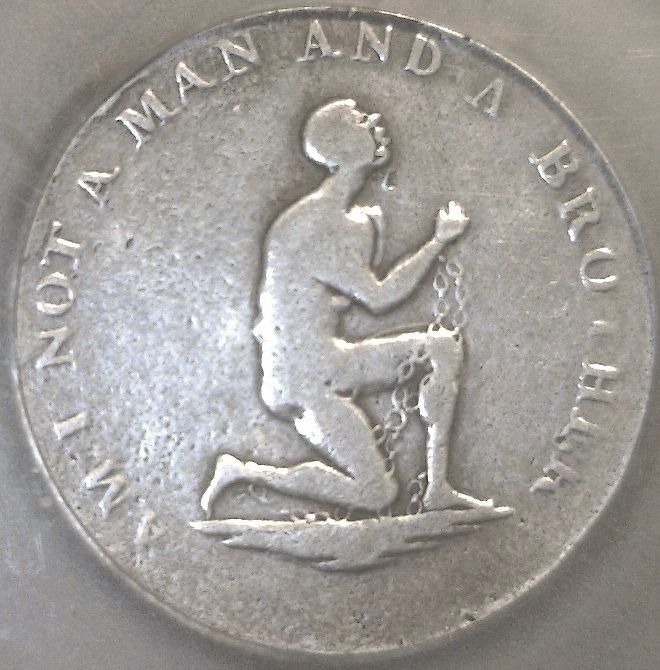 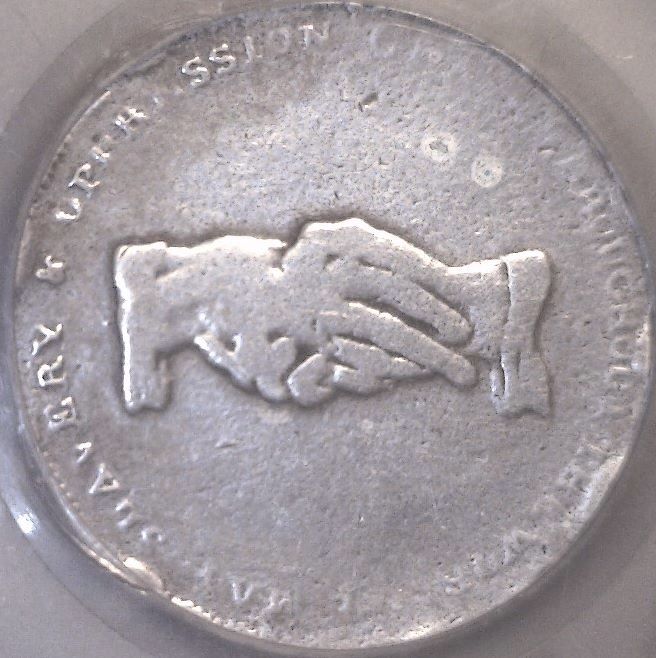 |
|
Pillar of the Community
United States
1005 Posts |
Quote:
The "ping" test is one of the most worthless tests. You can have enough silver without the full amount to get that sound The ring of a coin when flipped depends on several properties of the coin, most chiefly the geometry and the speed of sound in the metal (also a frequency-dependent transmission coefficient into air). This cannot be fully reproduced by a different alloy than the correct one, in the exact proper size+shape of coin. Even enough wear will affect the ring. Sure you can get a silver-like ping when jangling a coin that is not the correct alloy, but that's not what I'm talking about. You flip/ring the question coin and a known true one and listen for differences. There's some variability introduced by the way you strike the coin but in my experience this is a really good way of sorting coins based on alloy and picking out fake copper-cored morgans. |
|
Bedrock of the Community
13014 Posts |
Quote:
This cannot be fully reproduced by a different alloy than the correct one, in the exact proper size+shape of coin. Even enough wear will affect the ring. True, but it really just needs to be close enough. My point was really that it's not a test that should be relied on for authentication or something that should be considered scientific. |
|
Pillar of the Community
United States
1761 Posts |
In my recent book "Forgotten Coins" I do a whole chapter on how to determine a Modern Chinese fake as compared to a contemporary circulating counterfeit of the period. One sign is the weight to regal. Most modern Chinese fakes are Fe/Ni, German Silver (Cu/Zn/Ni) or debased silver from my research on over 100 different pieces of various U.S. series. These will ring DIFFERENTLY than 90% silver such as German Silver having a lower pitch than 90% silver with the ring test. As one post recently suggested in this thread these early CCCs may have been made of tin/Lead (Sn/Pb). Its really a study of each series and then gaining/building a data base and the knowledge to differentiate between these Modern Chinese fakes and CCCs of the period - series by series based on your collecting interests. It can be complex. This appears to be a CCC or a Sn/Pb alloy based on the photo. John Lorenzo.
Edited by colonialjohn
02/17/2019 12:14 am
|
|
Pillar of the Community
United States
3211 Posts |
Edited by Tunnioc
02/17/2019 12:03 am
|
|
Page 3 of 3
|
Replies: 36 / Views: 4,765 |
Page 3 of 3
|







 First Page
 Previous Page


 Posted 02/13/2019 11:05 am





