First Page


 Posted 04/28/2019 11:30 pm


<b>Albert</b> Nice group of Cap and Rays you picked up.
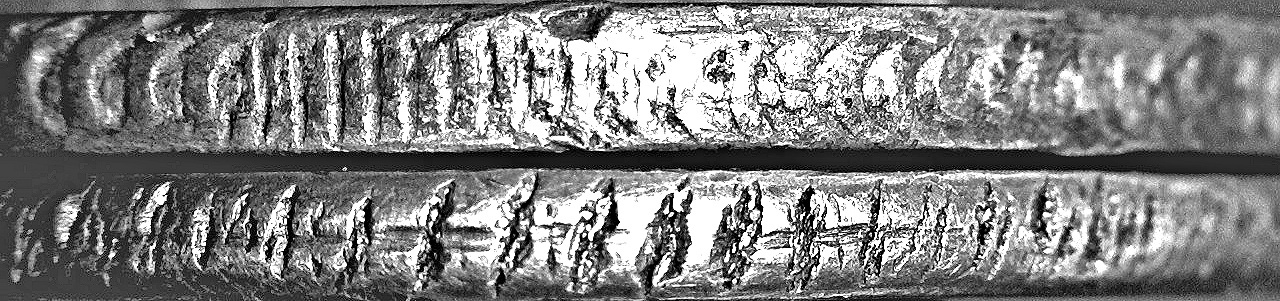
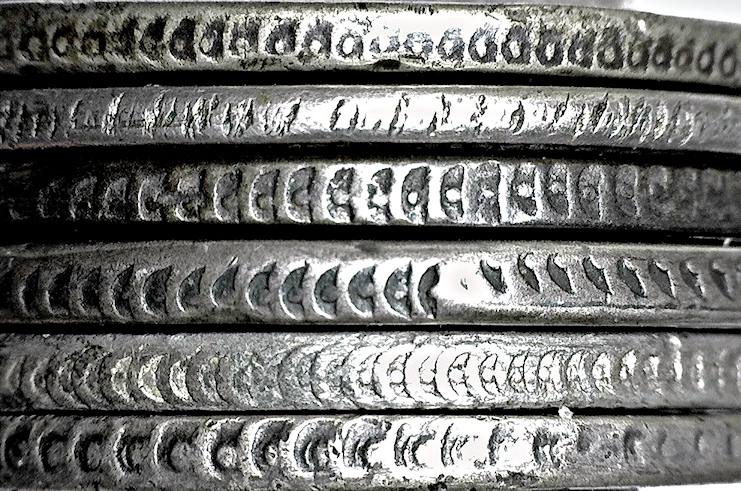
I presume from what you wrote that they were all sold as counterfeit?
I am very familiar with all 6 coins and I own examples of all of them.
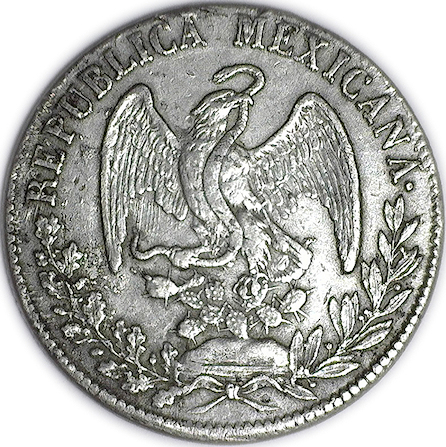
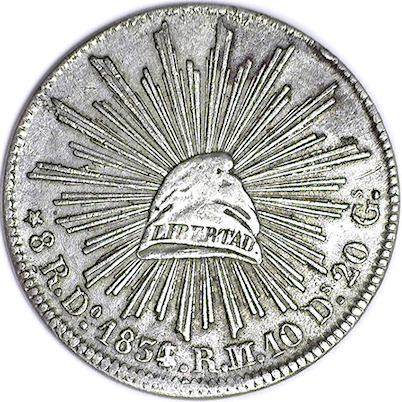
You commented that the 1842 Zs OM does not have the cactus spine through the laurel leaf. That is of course correct because this is a second die pair. For 1842 Zs OM I am aware of over a dozen different varieties. Several of these CCC's are extremely common to common while the other range in scarcity up to unique. Here are a few 1842 Zs OM varieties that I could readily locate.
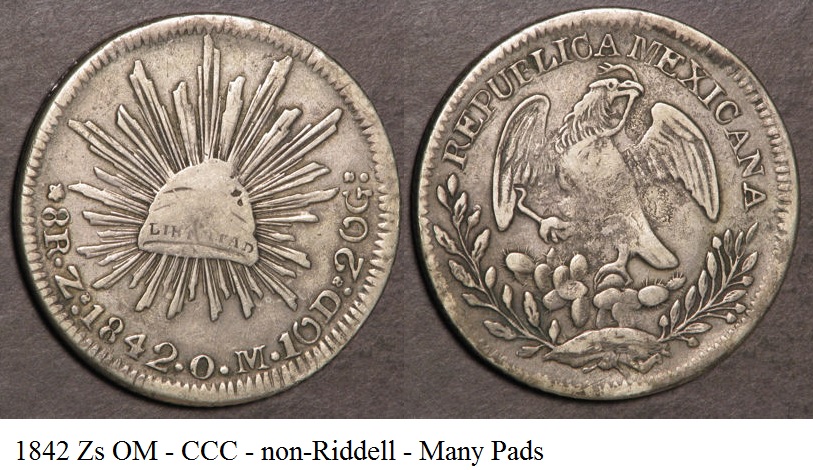
The first is the same die pair as yours, a coin I refer to as Many Pads or Reversed superscripts. It is a common variety which is not listed in Riddell. It is a crudely engraved die pair and clearly a CCC type.
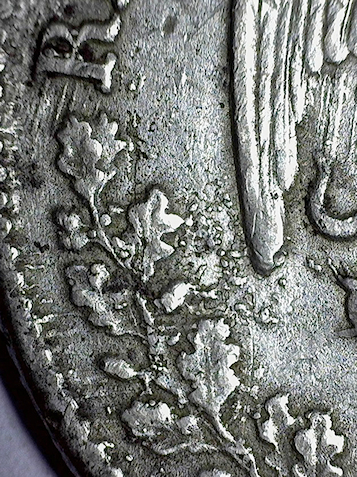
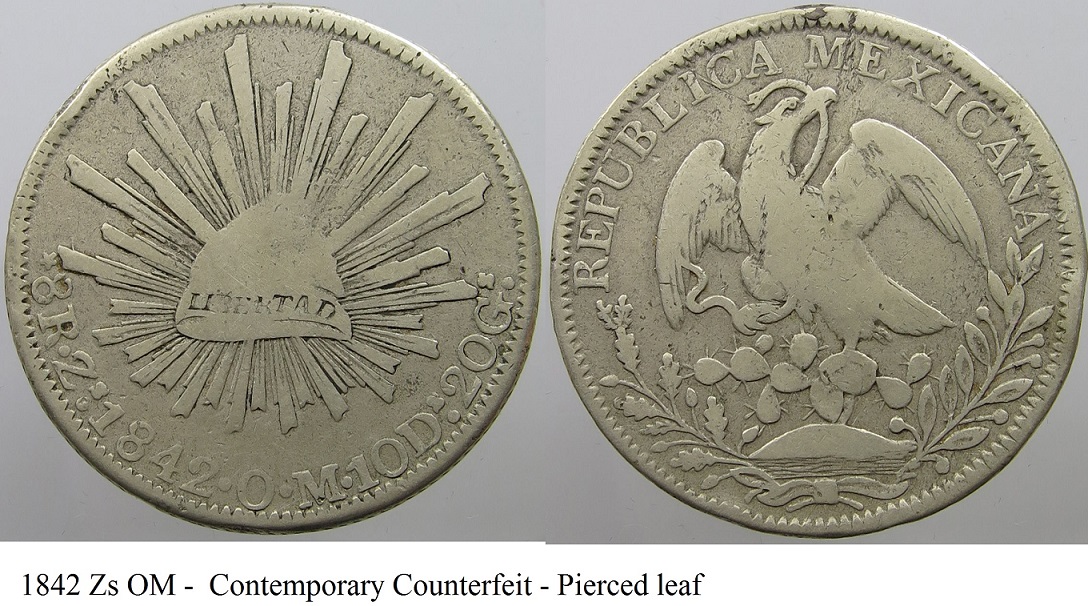
The second is the Pierced Leaf variety you referred to. It is also a common to very common coin that is not listed in Riddell. This coin die was well made, uses a less crude style and could pass as genuine.
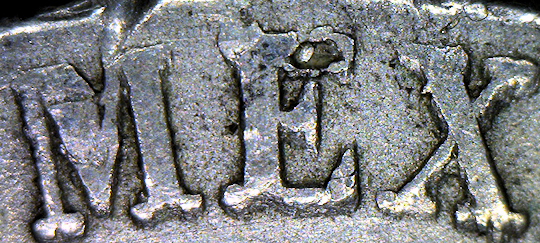
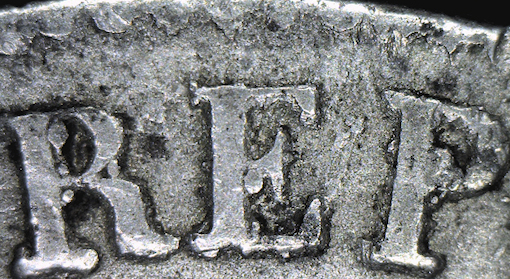
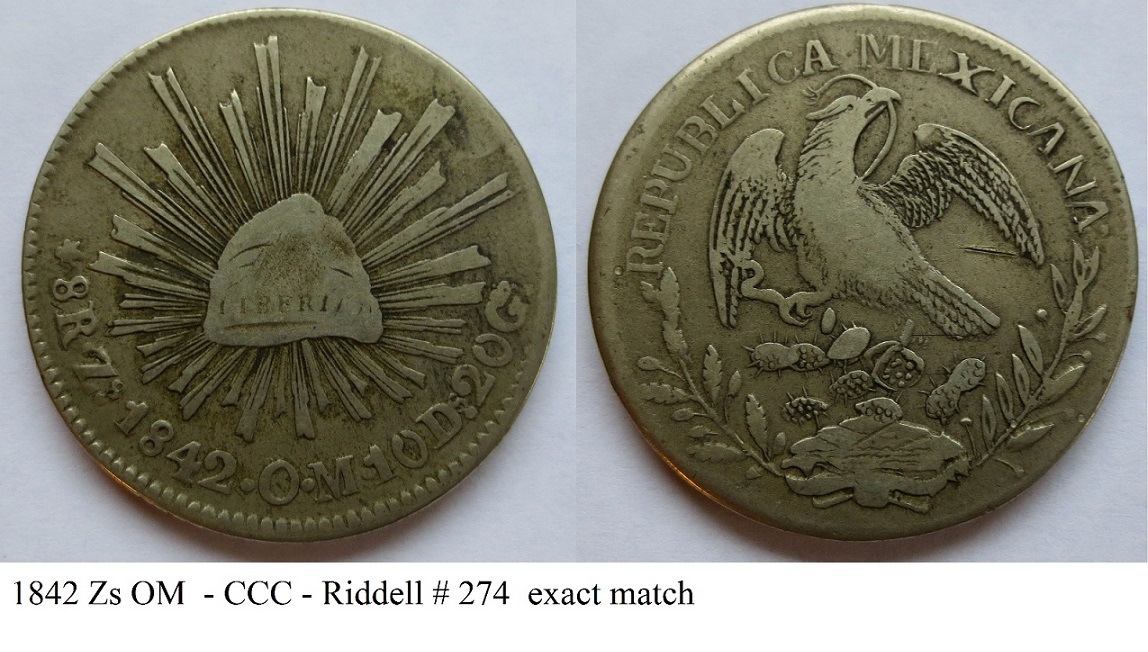
The third variety is the Riddell number 274. This variety is an example of a CCC that has severl related pairs. I am still searching for other members of this family. This family proves that some dies were made using actual punch sets so that similar dies could be prepared. The first picture is of an exact match for the # 274 which I refer to as the Two Toe variety. This is the type that Riddell illustrated.
There is another die pair using many of the same punches which I refer to as the Three Toe version because of the way the foot of the eagle appears to have three toes.
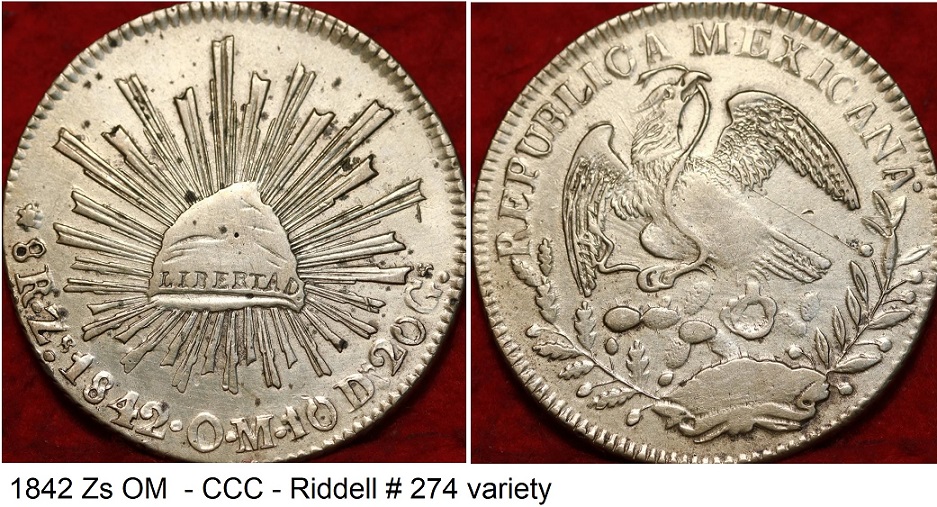
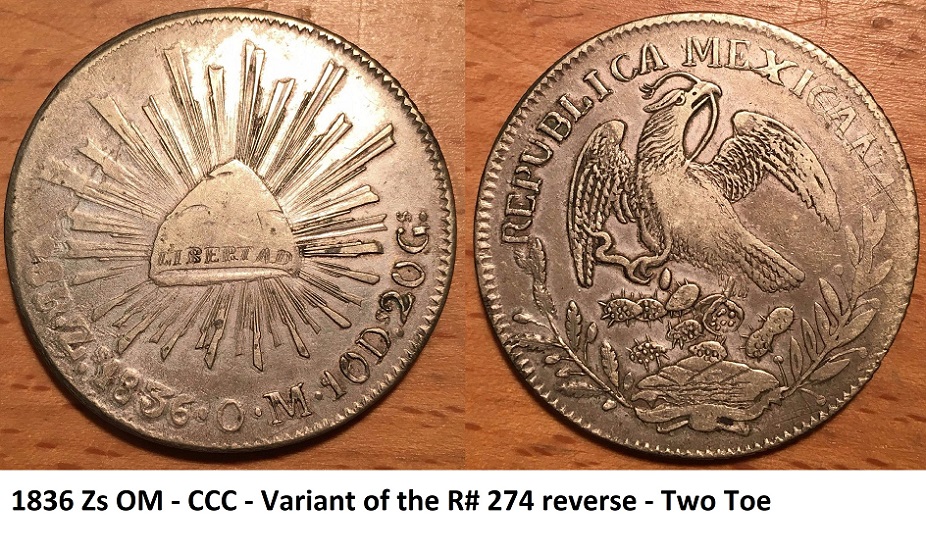
This is a third variety related to the # 274 except that it uses an obverse die dated 1836 Zs OM. In this case the reverse is the 274 Two Toe variety with some aging.
The 1834 Zs OM is an example of the Riddell # 237 which I call the "Chicken Eagle". There is also a version that uses an obverse dated 1842 Zs OM. Both of these are common and easily located (except for silver varieties which are quite rare). There is a second die variety of the 1842 ZS OM in which the eagle die has been re-cut apparently to lengthen its useful life. The recuts include the snake's head and the eagle's right wing which has 3 feathers at the tip.
The 1830 Zs OM is one of the Riddell listed varieties of the # 223 which all use an eagle with a "Broken Toe". The 1830 version is common - the 1832 version is the most common of the redated dies.
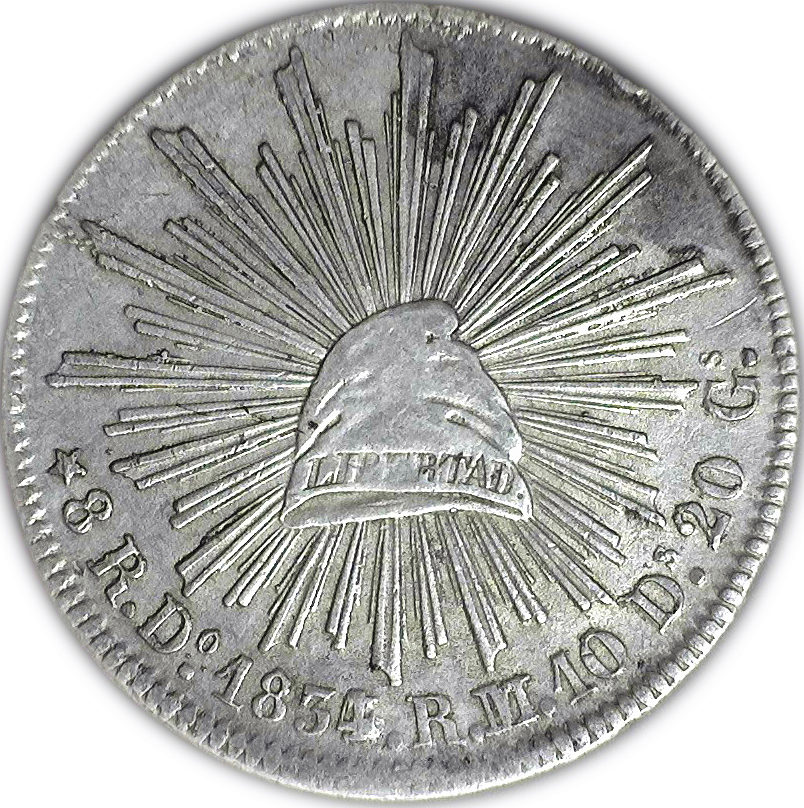
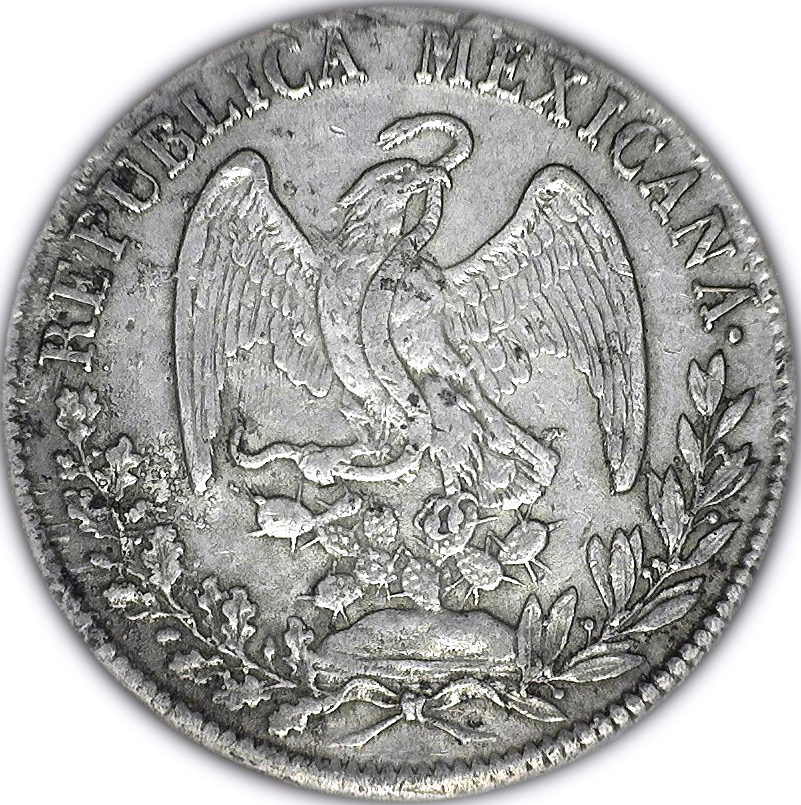
The 1834/3 Do RM appears to be genuine. Both dies match the correct hub and the re-cut date is a feature normally associated with genuine 8Rs not counterfeit versions. So next I have to ask why you and/or the seller believed the coin to be counterfeit?
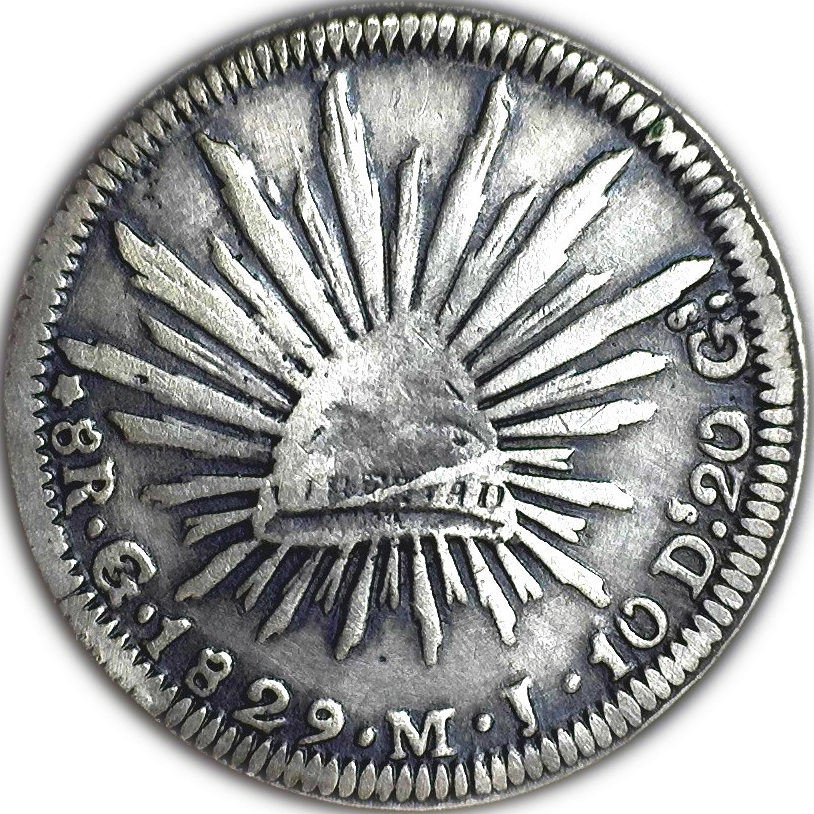
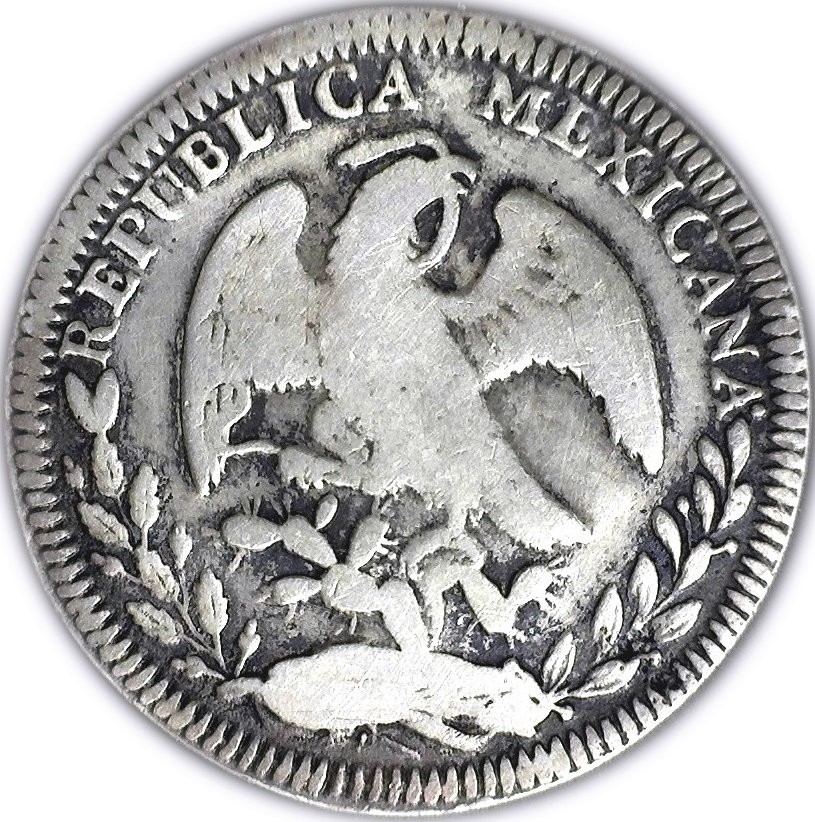
The 1829 Go MJ also appears to match the correct die style for the year. Once again why was it classified as counterfeit?
The 1827 G AO is an example of the Riddell # 406. It is a fantasy mint mark lacking the small o. The reverse is one that I refer to in two ways. There are a number of coins using the elongated beak which resembles an Ibis hence my name "Ibis Eagle". Because the cactus pads are aligned along an arc I refer to the cactus as a "Candelabra type".
This last counterfeit is only somewhat scarce.
I presume from what you wrote that they were all sold as counterfeit?
I am very familiar with all 6 coins and I own examples of all of them.
You commented that the 1842 Zs OM does not have the cactus spine through the laurel leaf. That is of course correct because this is a second die pair. For 1842 Zs OM I am aware of over a dozen different varieties. Several of these CCC's are extremely common to common while the other range in scarcity up to unique. Here are a few 1842 Zs OM varieties that I could readily locate.
The first is the same die pair as yours, a coin I refer to as Many Pads or Reversed superscripts. It is a common variety which is not listed in Riddell. It is a crudely engraved die pair and clearly a CCC type.
The second is the Pierced Leaf variety you referred to. It is also a common to very common coin that is not listed in Riddell. This coin die was well made, uses a less crude style and could pass as genuine.
The third variety is the Riddell number 274. This variety is an example of a CCC that has severl related pairs. I am still searching for other members of this family. This family proves that some dies were made using actual punch sets so that similar dies could be prepared. The first picture is of an exact match for the # 274 which I refer to as the Two Toe variety. This is the type that Riddell illustrated.
There is another die pair using many of the same punches which I refer to as the Three Toe version because of the way the foot of the eagle appears to have three toes.
This is a third variety related to the # 274 except that it uses an obverse die dated 1836 Zs OM. In this case the reverse is the 274 Two Toe variety with some aging.
The 1834 Zs OM is an example of the Riddell # 237 which I call the "Chicken Eagle". There is also a version that uses an obverse dated 1842 Zs OM. Both of these are common and easily located (except for silver varieties which are quite rare). There is a second die variety of the 1842 ZS OM in which the eagle die has been re-cut apparently to lengthen its useful life. The recuts include the snake's head and the eagle's right wing which has 3 feathers at the tip.
The 1830 Zs OM is one of the Riddell listed varieties of the # 223 which all use an eagle with a "Broken Toe". The 1830 version is common - the 1832 version is the most common of the redated dies.
The 1834/3 Do RM appears to be genuine. Both dies match the correct hub and the re-cut date is a feature normally associated with genuine 8Rs not counterfeit versions. So next I have to ask why you and/or the seller believed the coin to be counterfeit?
The 1829 Go MJ also appears to match the correct die style for the year. Once again why was it classified as counterfeit?
The 1827 G AO is an example of the Riddell # 406. It is a fantasy mint mark lacking the small o. The reverse is one that I refer to in two ways. There are a number of coins using the elongated beak which resembles an Ibis hence my name "Ibis Eagle". Because the cactus pads are aligned along an arc I refer to the cactus as a "Candelabra type".
This last counterfeit is only somewhat scarce.