| Author |
 Replies: 22 / Views: 4,740 Replies: 22 / Views: 4,740 |
Page 2 of 2
|
|
|
|
New Member
United Kingdom
13 Posts |
Corresponding IOM Halfpennies: 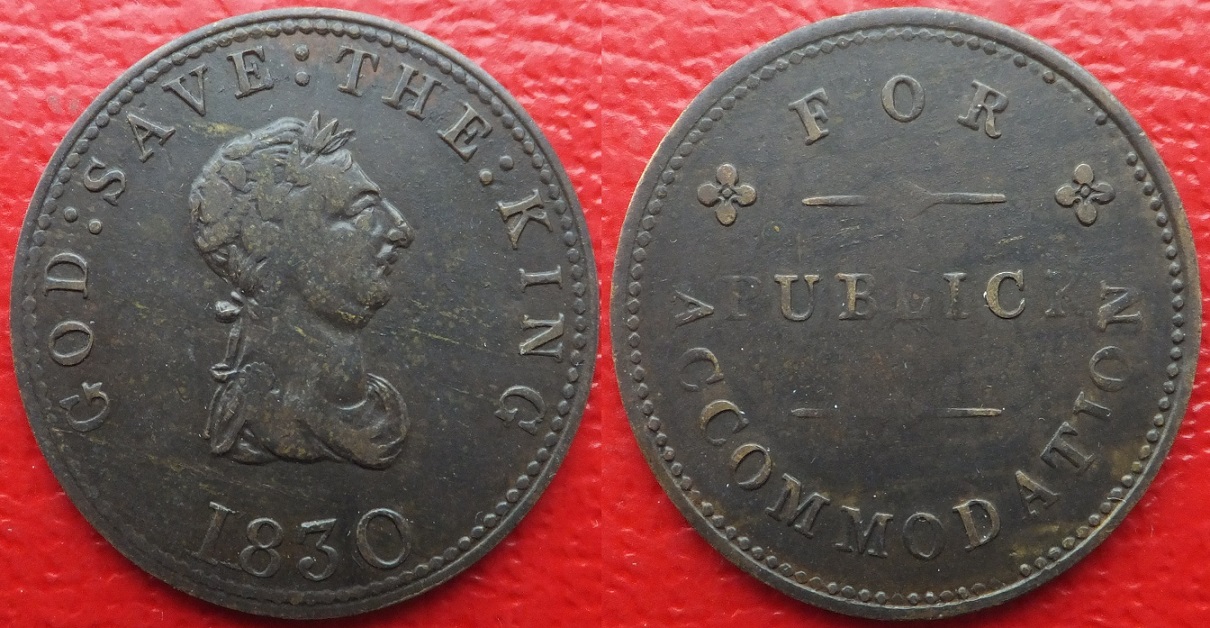 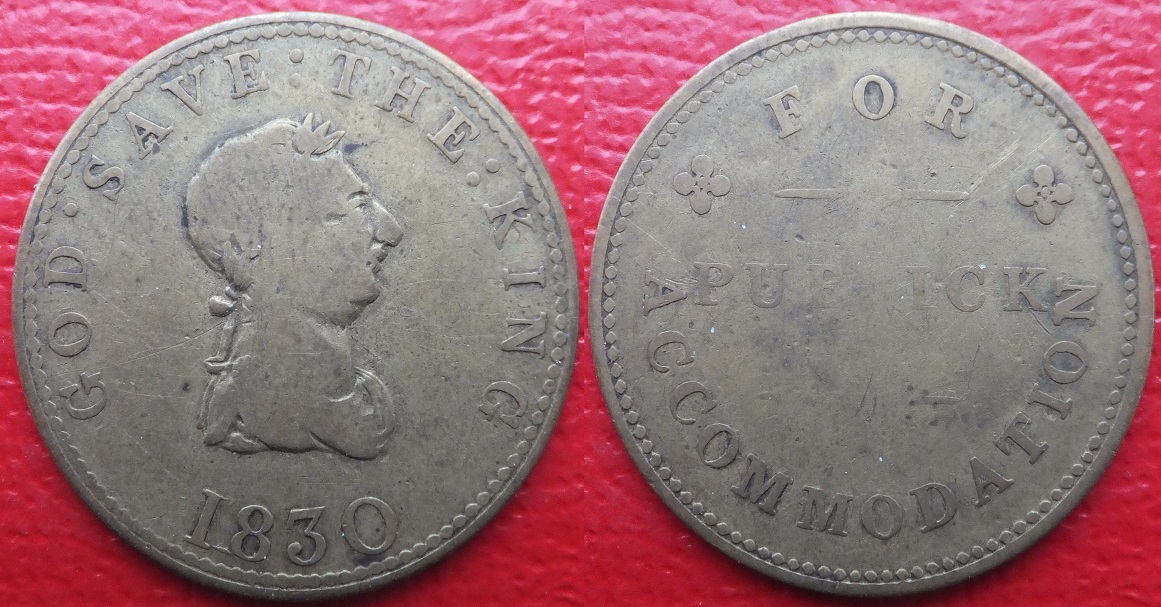 |
|
New Member
United Kingdom
13 Posts |
Pridmore's notes: 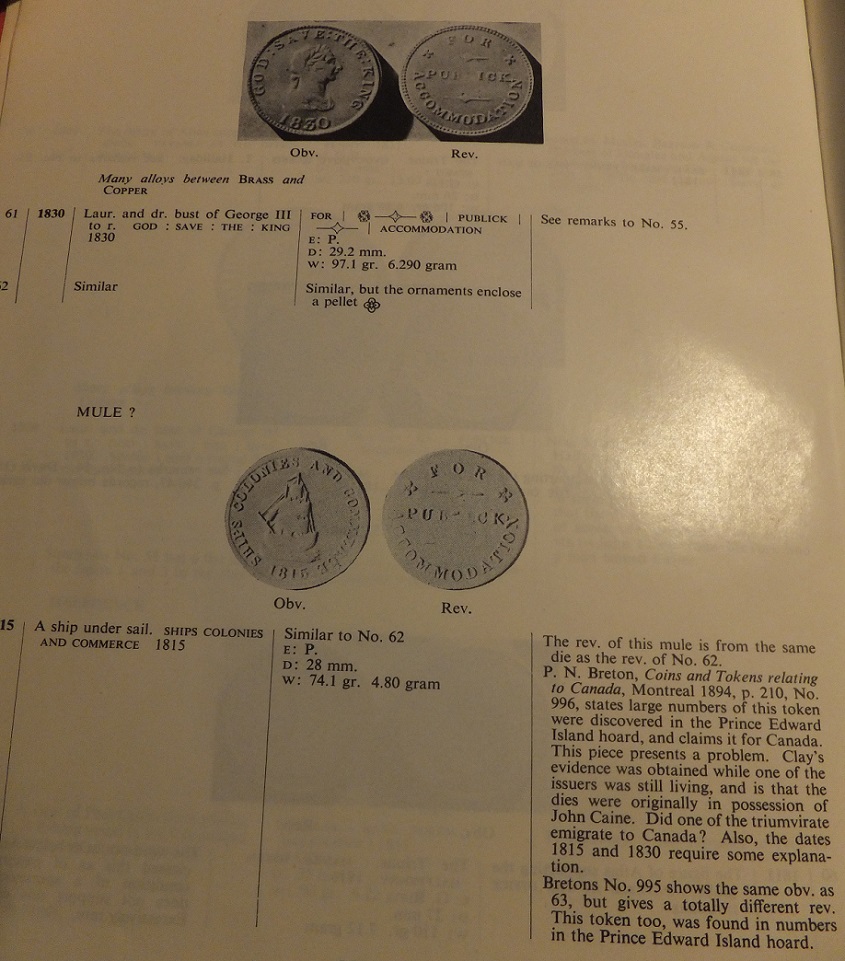 His explanation for the different alloys found: 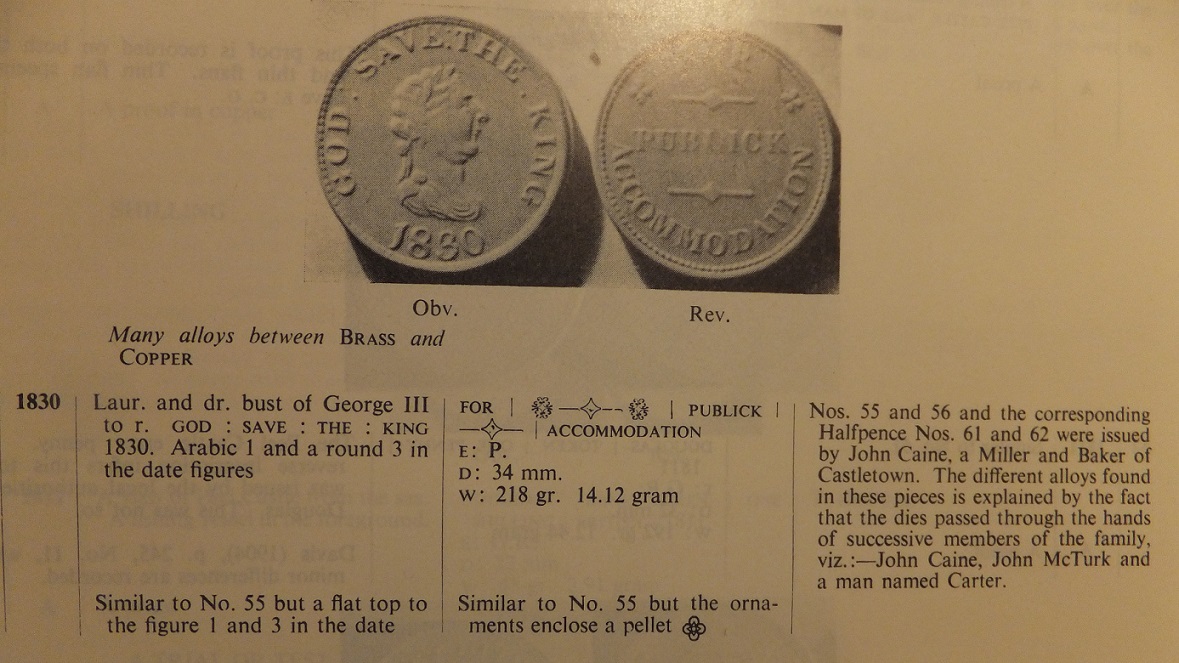 |
|
Pillar of the Community
 United States
1077 Posts |
 mrbadexample mrbadexample, many thanks to you for adding Major Fred's coverage into this discussion. I have all his books except India, and it never crossed my mind for a second to see what he might have to contribute. Are you collecting these from the Davis/Withers side (like me), or from the Charlton side? Happy Holidaze, eyeryone! Tom "If everything seems to be under control, you're just not going fast enough."
--- Mario Andretti
|
|
Valued Member
United States
179 Posts |
mrbadexample, I am fascinated by this token as I find cross-Atlantic mules to be interesting. Thank you for posting the Pridmore reference! I had not come across it before. Is it certain that Pridmore's no. 62 was also issued by John Caine/McTurk? There seems to be a bit of confusion surrounding it; as posted previously in this thread, Davis claims that piece to be a contemporary forgery, whereas Nelson claims it to be a pattern coin. In any case, it was almost certainly struck before the 1815-dated PEI mule since by that time the die is in a more worn state and too large for the flans being used. I was lucky enough to pick up this spectacular example from the recent Doug Robins sale which NGC graded AU58 (but it's mint state in my book!) 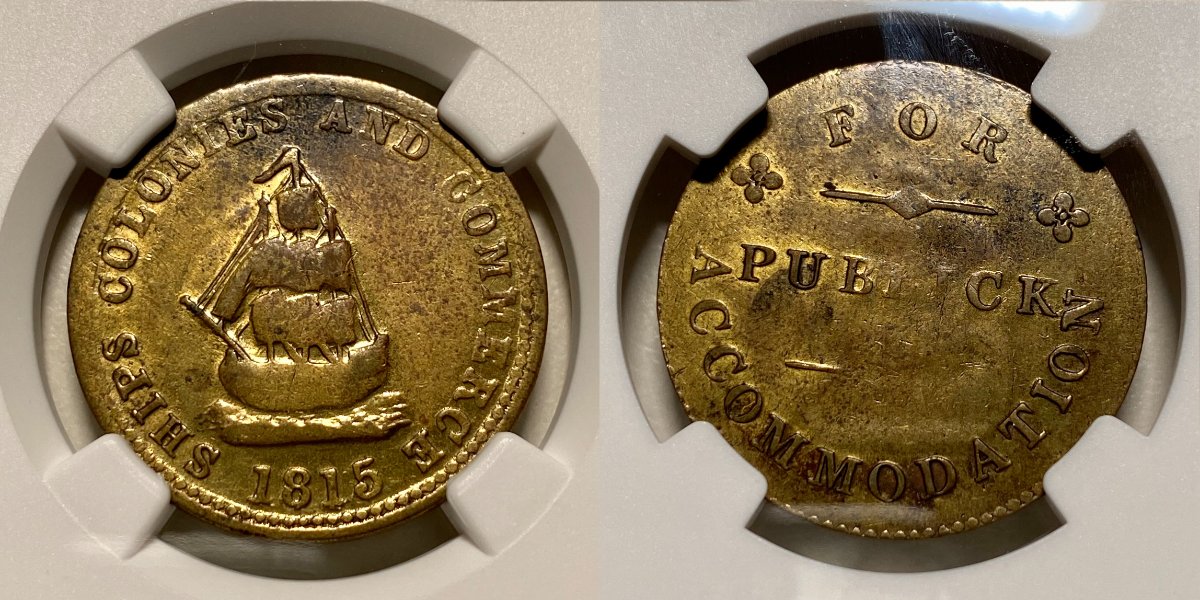 I've been on the hunt for the corresponding IOM coin, but no success thus far... Seems to be pretty difficult to come across.
|
|
New Member
United Kingdom
13 Posts |
Is it my imagination or is there no QUOTE function on this forum?  Tom, I have these as part of an Isle of Man collection. Who is Charlton?  |
|
New Member
United Kingdom
13 Posts |
blargish, that's another lovely token. Better than the Pridmore plate piece I think.
As far as I can see, Pridmore took his information from Clay, who states: "Some time back evidence was furnished me from the daughter and son-in-law of John McTurk (the former parties still living) confirming the above facts"
I think that Clay's (and by extension Pridmore's) explanation of the dies passing through different hands accounts well for the different metals used. I don't believe that the brass 62 I posted above is a contemporary forgery. Nor do I see it as a pattern.
Is it an example of Pridmore 62 that you are looking for?
|
|
Pillar of the Community
United States
1077 Posts |
Quote:
Is it my imagination or is there no QUOTE function on this forum? At the top of the page, mrbadexample, next from the end of the "Format" line of icons, it's the one with the rightward-extending red arrow. I'll get to Charlton in a minute or two... "If everything seems to be under control, you're just not going fast enough."
--- Mario Andretti
|
|
Pillar of the Community
United States
1077 Posts |
...where the two tokens originally under discussion here are listed as PE-9A and PE-9B. The former is the Canadian version mentioned in Pridmore's more as "Bretons No. 995," and the latter is the IOM edition with which I kicked off this topic. First the token, and then the current edition of Charlton: 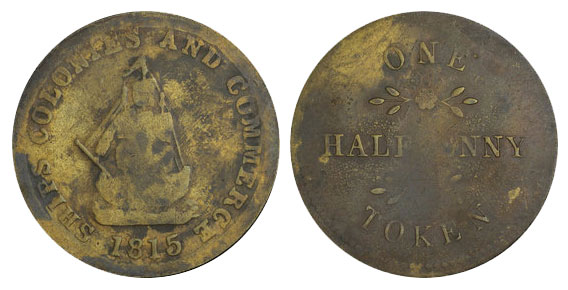 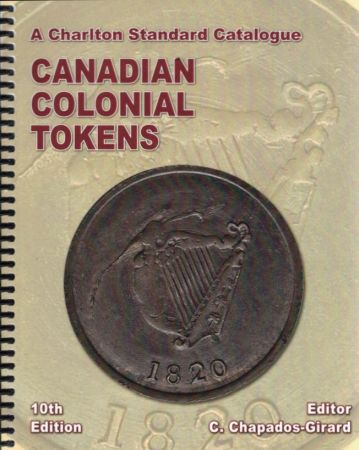 "If everything seems to be under control, you're just not going fast enough."
--- Mario Andretti
|
|
New Member
United Kingdom
13 Posts |
Quote:
At the top of the page, mrbadexample, next from the end of the "Format" line of icons, it's the one with the rightward-extending red arrow. Gotcha. I do have a passing interest in the 1811-1830 tokens too. I saw the Rugeley 2d you posted on another thread. Very nice - Rugeley is about 15 miles from me. :) |
|
Moderator
 United States
195559 Posts |
to the Community, mrbadexample! |
|
Valued Member
United States
179 Posts |
mrbadexample, thank you for the info!
And yes, it's Pridmore 62 that I have scarcely seen, in contrast to 61 which seems to be relatively common. It seems that 62 was the final die used, and only for a short period of time, before its owner (whoever that may be) may have emigrated from IOM to PEI along with the reverse die, as Pridmore suggests.
|
|
Pillar of the Community
United States
1077 Posts |
Hey guys, if I'm not mistaken, this is Pridmore 62, right? 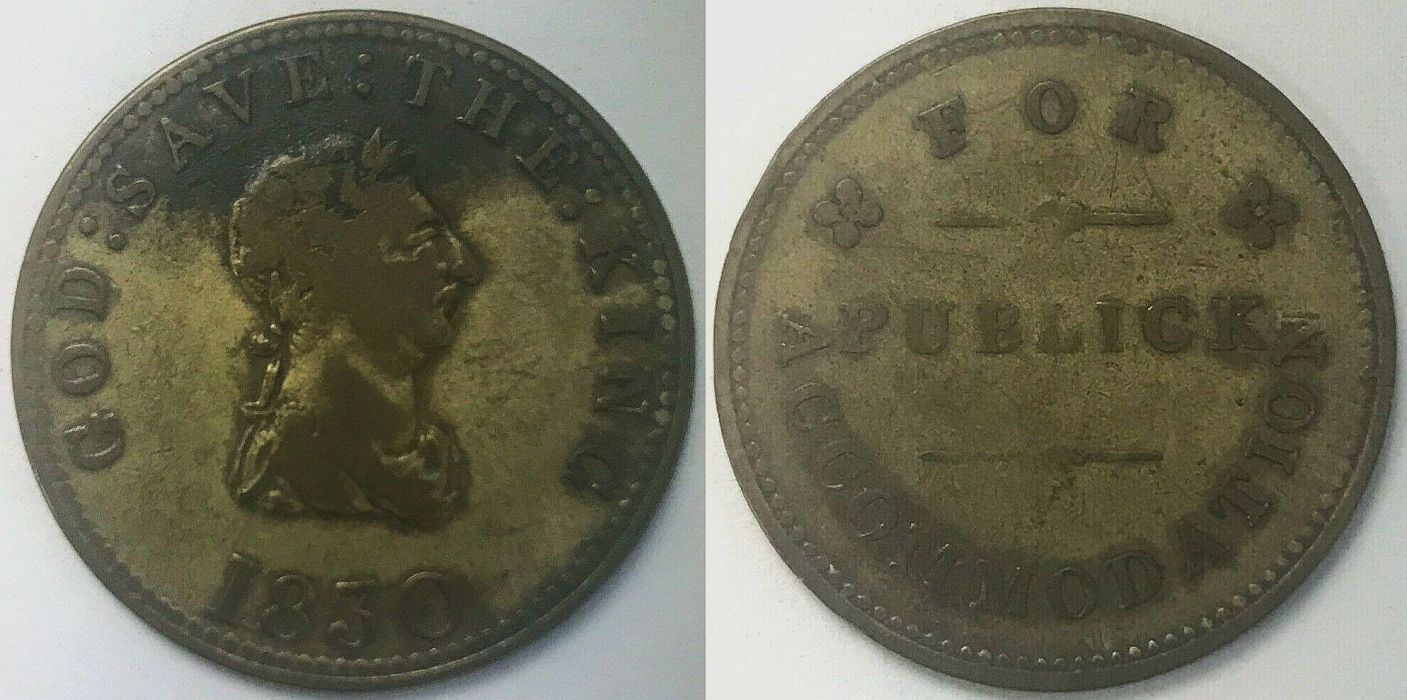 "If everything seems to be under control, you're just not going fast enough."
--- Mario Andretti
|
|
Valued Member
United States
179 Posts |
Yep, that's it daltonista. The diamond in the center of the rosette/quatrefoil thing is the key identifier for me.
Your example appears to be relatively well-struck for the type! The "L" of PUBLICK shows nicely.
|
|
Pillar of the Community
United States
1077 Posts |
blargish, my quick diagnostic (and the one you pointed out months ago, I think) is where the foot of the K falls in relation to the N. Easier to notice in comparison with the variety I originally posted in May.
"If everything seems to be under control, you're just not going fast enough."
--- Mario Andretti
|
|
New Member
United Kingdom
13 Posts |
Quote:
And yes, it's Pridmore 62 that I have scarcely seen, in contrast to 61 which seems to be relatively common. It seems that 62 was the final die used, and only for a short period of time, before its owner (whoever that may be) may have emigrated from IOM to PEI along with the reverse die, as Pridmore suggests. I see. I confess I'd not considered the relative scarcity of 62 v 61 - I got two of each in the same auction lot so never had to search for them individually. I had a bit of a look round last night and as you say, plenty of 61s but not a single 62. Thanks all for the warm welcome. |
|
Page 2 of 2
|
Replies: 22 / Views: 4,740 |
Page 2 of 2
|







 First Page
 Posted 12/21/2020 8:13 pm





