| Author |
 Replies: 31 / Views: 4,689 Replies: 31 / Views: 4,689 |
Page 3 of 3
|
|
|
|
Valued Member
 United States
367 Posts |
Thanks Coop, SilverCents and Tanman 2001. I am out of town this weekend visiting some of my relatives. I continue to believe this is a new DDR. I will take additional photos with my Pluggable USB scope of the coin upon my return and share them with everyone when I return. Hopefully, we will see if there is sufficient evidence of a noteworthy DDR. Thanks for your comments! |
|
Pillar of the Community
United States
3281 Posts |
Quote:
Who did you send them to? John Wexler. The OP seems to have similar equipment to mine, so our cases are most likely similar. |
|
Valued Member
United States
367 Posts |
Here are some additional photos of this coin as promised. After further review of the REV, it appears to me that EPU has the most significant doubling of all of the devices. I have utilized arrows to indicate these areas. Same with UNITED and AMERICA where significant. I have also supplied some better images of the entire REV and OBV. IMHO, reflective lighting is not the cause of these images of separation, splitting serifs and notching of the devices. I have looked at the coin at multiple angles with differing lighting and the images are the same. Thanks for taking a look. I look forward to your comments as to whether this may be a DDR. 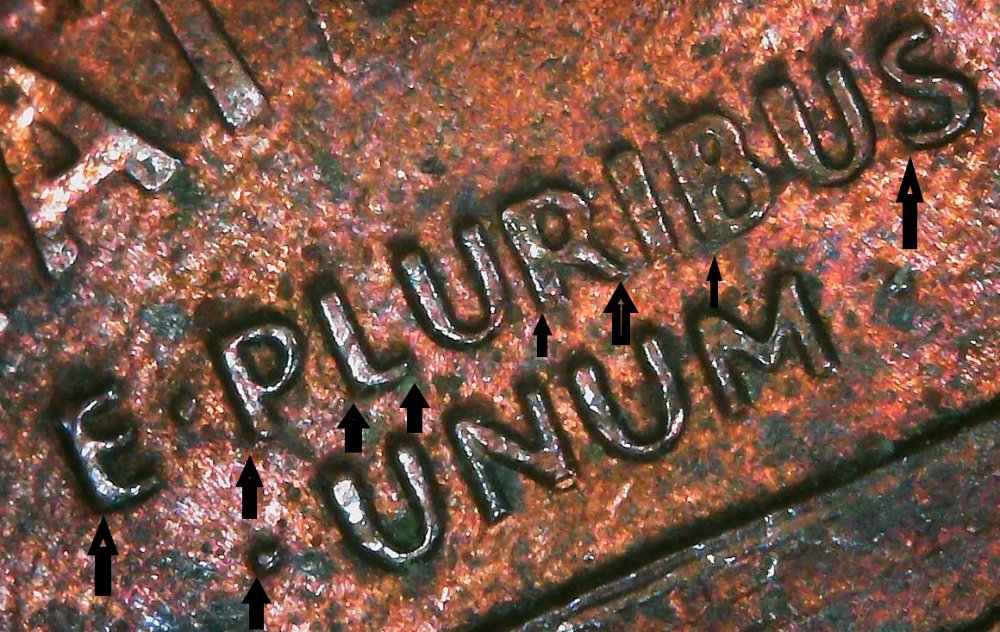 In EPU there is notching on the bottom left of E,P,L and B; there are split serifs on the lower leg of L and on both legs of R, and on the lower portion of S. Additionally, the dot preceding UNUM is split. 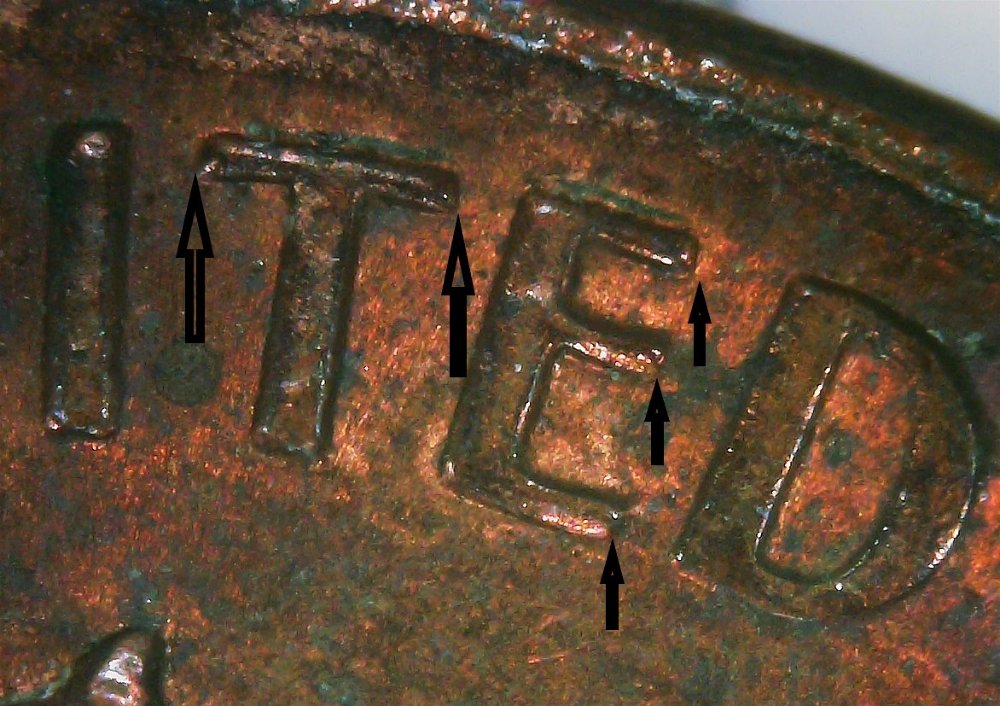 In UNITED, there is notching and splitting on both sides of the top of T; in E there is some splitting and notching on all three of its rightward extensions. 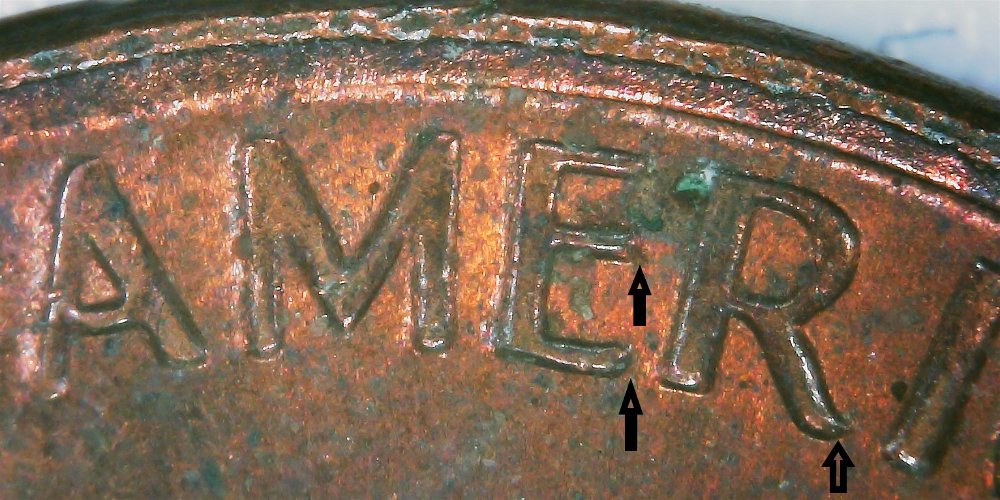 In AMER there is splitting and notching on E; the right leg of R has a split serif. 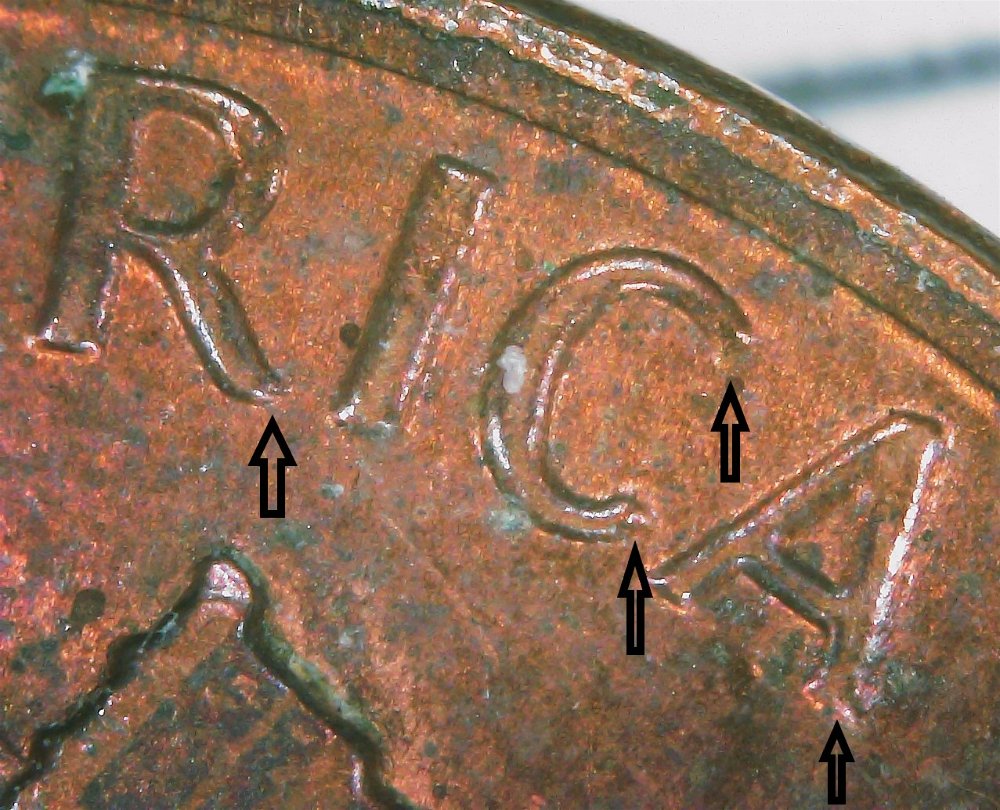 On RICA there is another image of the split serif on the the leg of R; there is a split serif on the upper end of C and notching on the lower end; and on A there is notching on the end of the right leg. 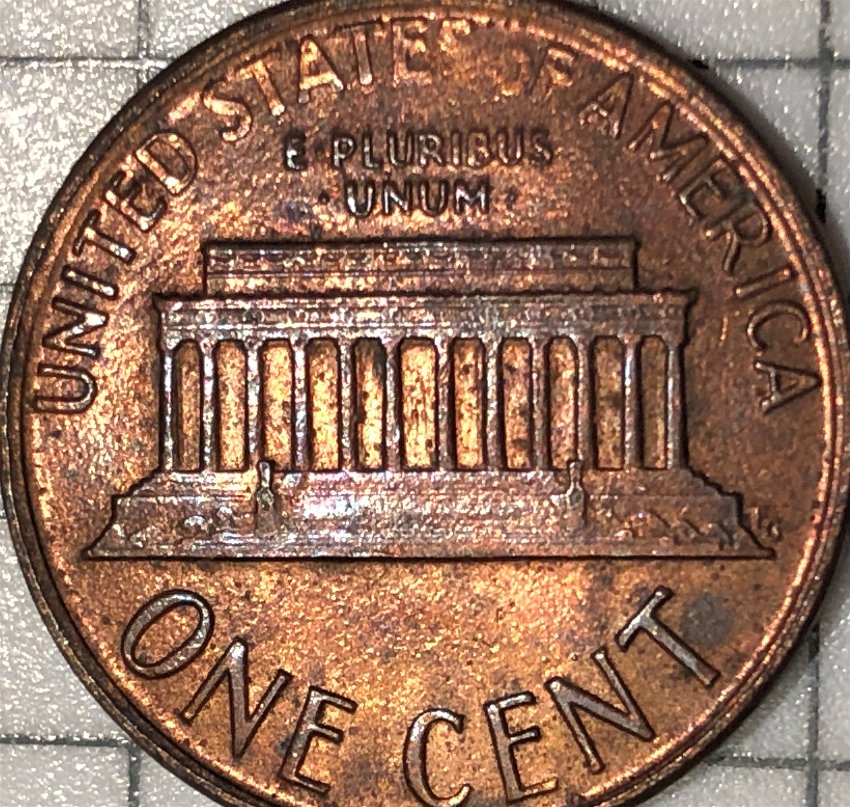 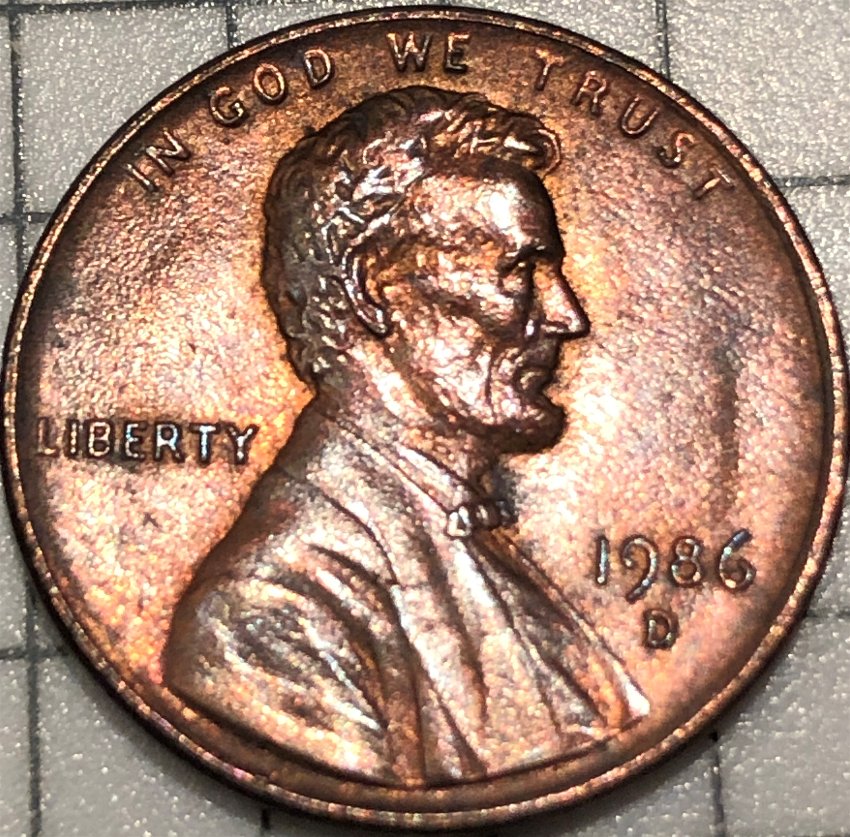 |
|
Bedrock of the Community
United States
62064 Posts |
|
|
Valued Member
United States
367 Posts |
Thanks for taking a look, Coop. Do you have any further comment about doubling of the devices in these new photos, and whether it is DDR? |
|
Bedrock of the Community
United States
62064 Posts |
Well on the 'T' on United, this is another form of Machine Doubling. But with the lack of listing for this year. I feel it is too minor to get listed. We have seen examples from 1983 that looked like something was there, they sent it in, and it was too minor to list. When view of the full areas of each word, you should easily see the doubling. The 1983 DDR's have a strong one and a weaker one: Die DDR-002 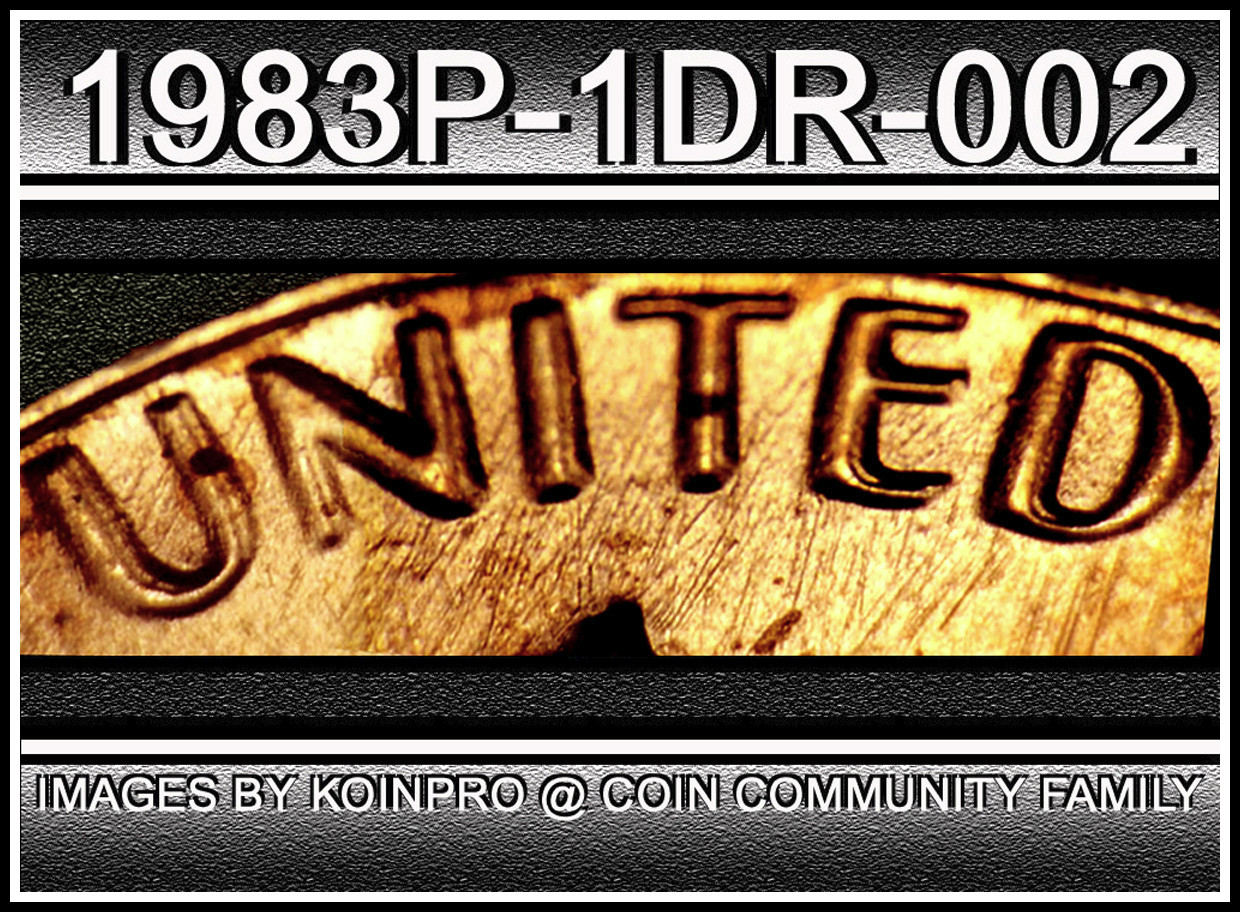 This is the weaker DDR. Here is the stronger DDR-001: 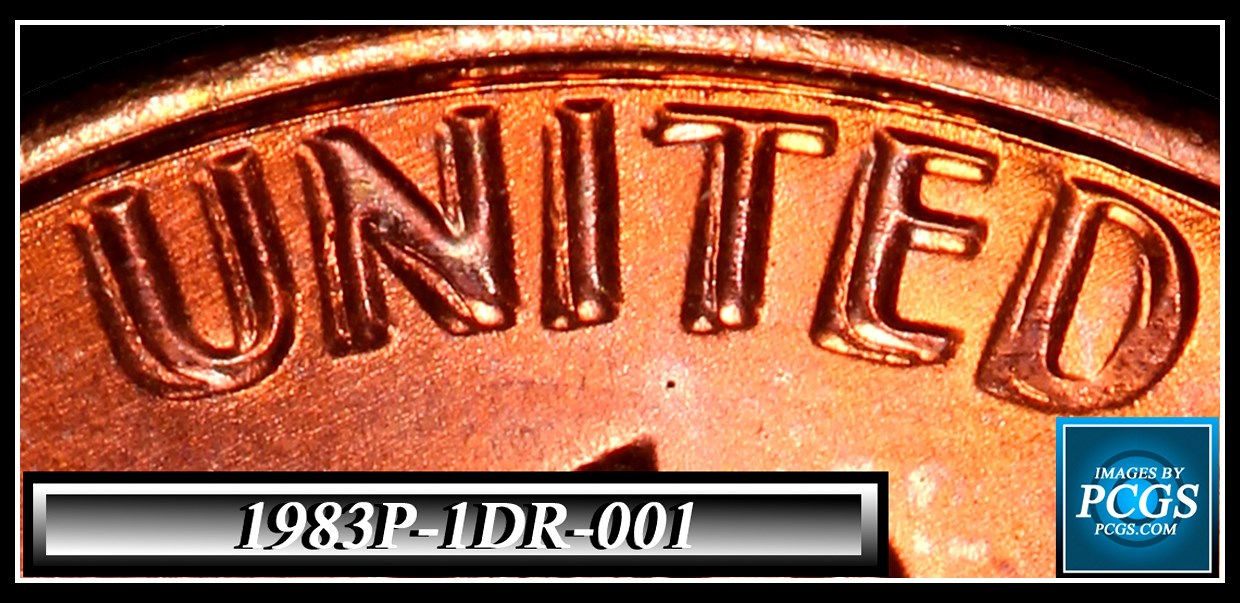 This is what I think of when I see doubling. A spread on the devices, noted widening the devices. I'm just not seeing that on your coin? )).jpg) Note the coin in the middle. That is a normal coin compared with the two known DDRs. Can you see the spread on the DDR's? That is what to look for. There was a third example found that year and it is DDR-003: 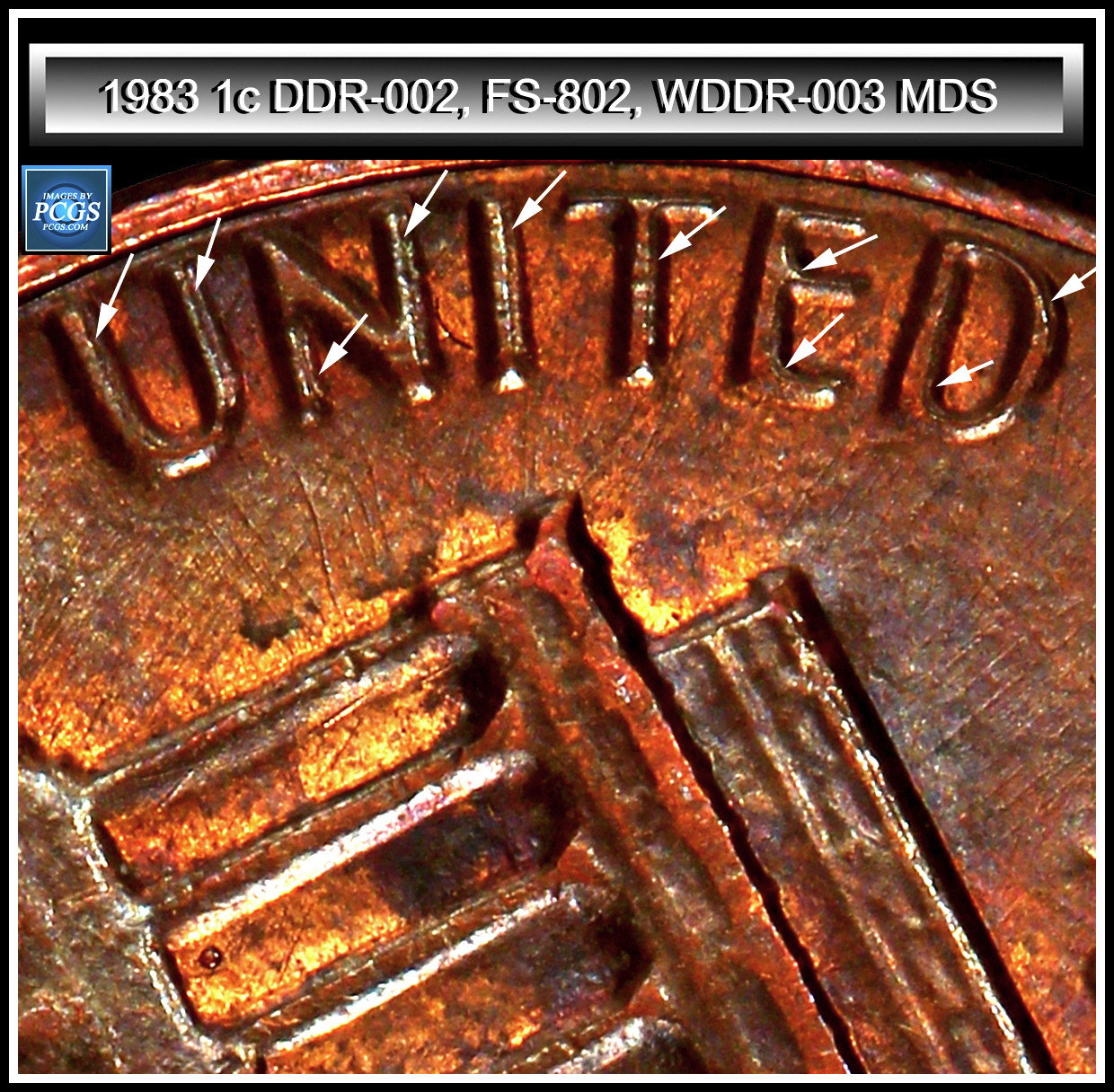 Note the spread on the centers of the devices? That is even less hub doubling. That is what I'm looking to see on a doubled die. Edited by coop
03/22/2021 6:57 pm
|
|
Valued Member
United States
367 Posts |
Coop, thanks for your comments. You provide excellent information. No question that this coin is not a big, sexy DDR. Boy, I wish it were! I keep looking for one of those. But thanks for confirming that it is a minor DDR. Even a minor DDR is worth noting when discovered by new collectors like me. Coppercoins has listed similar minor DDRs, such as 1984P-1DR-001, which is a Class 2 showing "light to moderate spread"; and 1984D-1DR-002, which is a Class 2 plus 6 DDR described as "light extra thickness on AMERICA with some notching on the R of AMERICA." I probably won't submit my minor DDR for a possible listing --- but the coin is a nice addition to my growing LMC collection. |
|
Pillar of the Community
United States
3281 Posts |
|
|
Valued Member
United States
367 Posts |
Thanks for your input SilverCents. Was the professional who examined those Wexler, or someone else? And was an explanation provided as to what they thought was the cause of the anomalies on those two coins?
|
|
Pillar of the Community
United States
3281 Posts |
Yes it was indeed Wexler. He thought it was a lighting trick. I've noticed that when you have your standard (not very expensive) USB microscopes, they can alter the way some doubling looks. He has professional equipment so such an illusion didn't occur with him, and he noticed no legitimate doubling.
|
|
Bedrock of the Community
United States
62064 Posts |
The big thing missing, it the spread. The devices on your coins are showing something on the tops, but not showing spread on the devices.  |
|
Valued Member
United States
367 Posts |
Thanks Coop. Nice visual. But the confusing issue for me is that some of the LMC DDRs listed on Coppercoins do not have a large spread, if really any at all. Look at 1984D-1DR-002. And also look at 1984P-1DR-001. Both of those coins look pretty normal as far as any spread is concerned on the areas where there is notching and split serifs. Is the spread something that is subjective by the evaluator in the determination that it is a DDR? |
|
Bedrock of the Community
United States
62064 Posts |
Let me ask you a question: Who attributes and refuses to attributes dies. The site determines what is what they feel is a doubled die. Have you ever questioned whether on is a doubled die or not? I have. But they are ones that own the site, and choose what they feel is a doubled die. Their choice. I go by the spread, or enlargement of the devices. If they don't show a spread and appears to have notching, then it is pretty minor, to me. If I buying one, I buy it because I enjoy it. Not because it is listed, it has to prove to me it is a doubled die.
|
|
Pillar of the Community
Canada
6244 Posts |
Coop was very deep on what a company do. I invest in companies and I look at the business plan and projections, good. Then I look for short term and long term. If something I do not like they change because the main investors do not like. This it is business. Conclusion it is that what a company say is more direct proportional with the business photos of the business compare with the 100% of the reality. The companies have the main investors guide line which must follows, if not next day they are out. Same thing with certification companies, they follow the guide lines. Competition? Yes, for more customers. Modus operandis? no. No one cross the border lines of the others.
Coop is wright.
|
|
Valued Member
United States
367 Posts |
Thanks Coop. You provided very interesting observations about the listing of varieties. One "professional" can label a coin a "minor" double die, while another can disagree---say with this 1986D penny of mine, for example. That means there is subjectivity in the decision-making---unless the spread and the doubling is so clear that everyone would agree with it being listed as a DDO or DDR. I am sure that there are many in the Coin Community who agree with you. And thanks Silviosi for your comments. |
|
Page 3 of 3
|
Replies: 31 / Views: 4,689 |
Page 3 of 3
|







 First Page
 Previous Page


 Posted 03/20/2021 12:48 am





