| Author |
 Replies: 19 / Views: 2,566 Replies: 19 / Views: 2,566 |
Page 2 of 2
|
|
|
|
New Member
 United States
8 Posts |
|
|
Pillar of the Community
United States
2018 Posts |
Jimmy D nailed it. Spanish Piece of Eight. Hope it is genuine. Member Swamper Bob can help with authentication.
|
|
New Member
United States
8 Posts |
thanks for your welcome wishes!!!
|
|
Valued Member
United States
134 Posts |
Interesting coin. How much does it weigh in grams? It looks suspicious, almost like someone copied a Durango coin and modified the mint mark to Zacatecas. Also, I only see one variety of 1822 Zs coin in Calbeto and this one is very different.
|
|
New Member
United States
8 Posts |
|
|
New Member
United States
8 Posts |
|
|
Pillar of the Community
United States
1962 Posts |
These "I bought this, is it real?" posts are always amusing. Nevertheless, the coin itself is interesting to us Spanish Colonial geeks, so...
Firstly, it's not a modern forgery/fake - it is "of that time". Beyond that, the dies were attractively and capably engraved, but as threefifty touched on, the detail (bust, castles most obviously) isn't quite right for the usual 1822 style seen (far less quantity/variety of that date than for the ubiquitous 1821 dates... whether for genuine, debased, or contemporary counterfeit examples).
And, indeed, the piece is a die match to Riddell #79, which the Monograph... shows as .285 fine. Swamperbob's book/pic files show several examples.
|
|
Pillar of the Community
United States
1962 Posts |
To any moderator... can the title of this be magically changed to "1822 Mexico Zacatecas 8 Reales coin ID" or something similar? This is a useful study piece and doing so would of course help people searching for info on 1822 Zacatecas varieties/contemporary counterfeits find this thread. Google results get bogged down when the important keywords are only in later posts, not the title.
|
|
New Member
United States
8 Posts |
So we think it's a 200 year old coin ?
|
|
Moderator
 Australia
17002 Posts |
We think it's a 200 year old counterfeit coin - that is, a counterfeit coin made sometime shortly after 1822, for the counterfeiter to use as spending money - as opposed to a counterfeit coin made last week in China to try to fool collectors. It is made of debased silver, as opposed to the fine silver that genuine 8 reales coins would have been made of. 1822 was a chaotic year to be in Mexico. The war of independence was mostly over, Spanish loyalists were on the retreat, and Augustin Iturbide had proclaimed himself Emperor of Mexico. In such anarchistic times, real money (from either side of the war) was scarce, so people made their own. It wasn't legal, but the Royalist remnant had more things to worry about than chasing down counterfeiters. This coin claims to be from the Zacatecas mint; that mint in central Mexico (and the nearby gold and silver mine that powered it) hadn't been in Royalist hands since 1811. It should be pointed out that while owning, buying or selling counterfeit coins like this isn't illegal, ebay currently prohibits the sale of all counterfeit coins, even 200 year old ones. I will edit the title as per realeswatcher's request. Don't say "infinitely" when you mean "very"; otherwise, you'll have no word left when you want to talk about something really infinite. - C. S. Lewis
|
|
Moderator
Australia
17002 Posts |
I should also point out that, even though it's a counterfeit and ebay will refuse to let you sell it as a counterfeit, that doesn't mean it's worthless and nobody wants it. Folks like Swamperbob are avid collectors and students of contemporary counterfeit Mexican coinage, and are prepared to pay decent money for "genuine counterfeits". I think $80 would be an extremely fair price for such a piece. Don't say "infinitely" when you mean "very"; otherwise, you'll have no word left when you want to talk about something really infinite. - C. S. Lewis
|
|
New Member
United States
8 Posts |
Dang not exactly what I was hoping to hear but still a cool history on the coin
|
|
New Member
United States
8 Posts |
It also has carvings in the edge all the way around little circles and squares
|
|
Moderator
Australia
17002 Posts |
Quote:
It also has carvings in the edge all the way around little circles and squares Repeating circles-and-rectangles is the standard security edge for Spanish 8 reales coins. The more careful counterfeiters learned to copy the edge passably well. Don't say "infinitely" when you mean "very"; otherwise, you'll have no word left when you want to talk about something really infinite. - C. S. Lewis
|
|
Pillar of the Community
United States
1801 Posts |
Regarding SAP's comment "This coin claims to be from the Zacatecas mint; that mint in central Mexico (and the nearby gold and silver mine that powered it) hadn't been in Royalist hands since 1811."
The Zacatecas mint started as an insurgent mint producing coinage in November 1810, producing the "LVO" style of 1810 and 1811. The insurgents were forced out in February 1811, the Royalist Captain Ochoa had the existing dies altered, replacing the images on the shield, Pomegranates and Castles, with the Royal symbols Lions and Castles. The cross on the "LVO" side was moved to the rear mountain as well (mules exist with the insurgent die on one side and the royalist die on the other).
Insurgents reentered the city in April 1811 but were driven out by May. Coinage was then modified to resemble the standard Royalist issues featuring a bust of Ferdinand VII on the obverse and the Shield on the reverse, similar to the original poster's coin. The mint remained in Royalist hands from then till the end of the War of Independence. Source of this information is from an article by Max Keech of World Numismatics published in the USMexNA Journal March 2021.
Max has been researching War for Independence coinage for an extended period of time and attributes his research to historical mint records and letters between officials during the war.
|
|
Page 2 of 2
|
Replies: 19 / Views: 2,566 |
Page 2 of 2
|






 First Page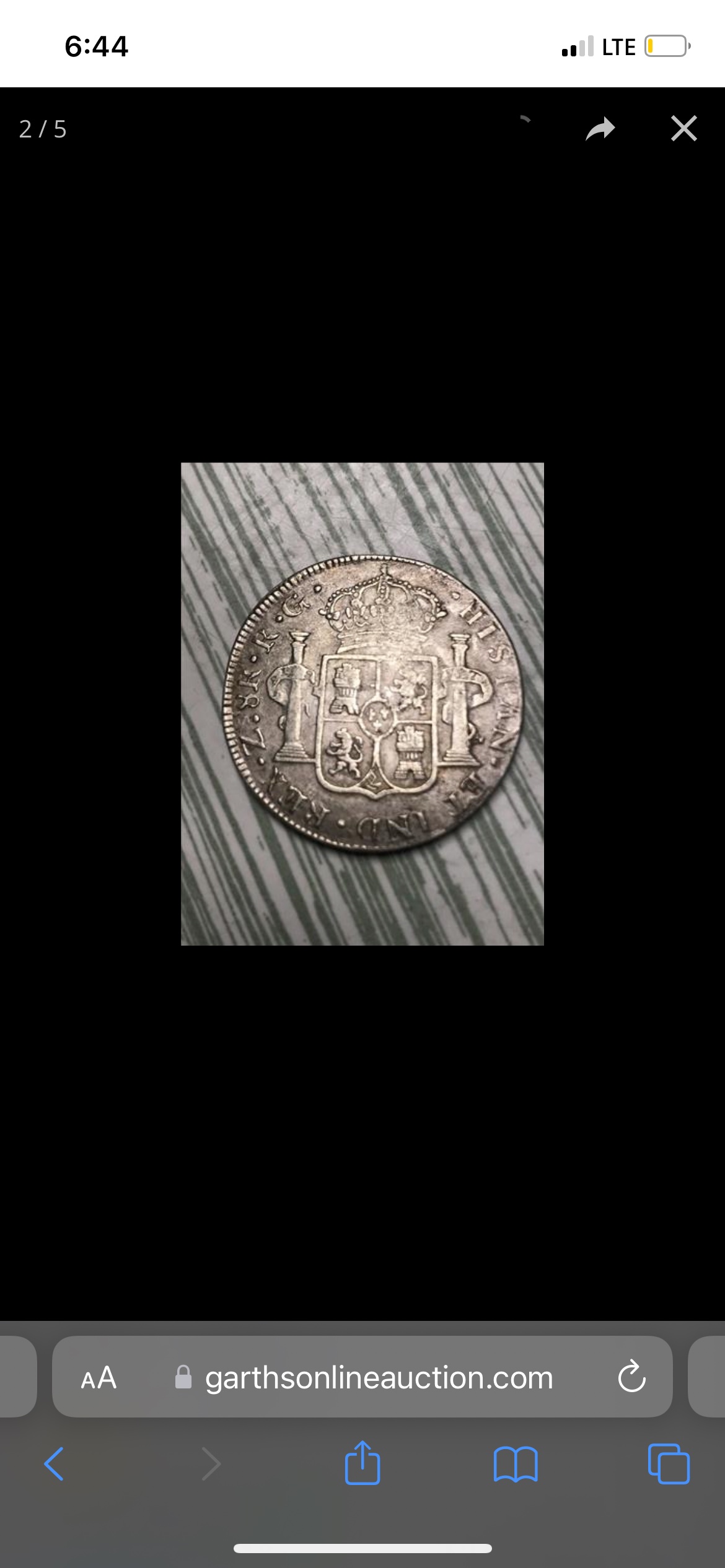


 Posted 03/28/2022 2:06 pm





