| Author |
 Replies: 56 / Views: 4,005 Replies: 56 / Views: 4,005 |
|
|
|
|
Rest in Peace
United States
2684 Posts |
bob, you probably won't read this until you return from your camping trip, but that was a very interesting and informative history of ultra-light counterfeits and the military connection. While I was in Vietnam, I picked up a couple Indochinese coin collections of undetermined significant nor value (some very old oriental coins GLUED into albums), but I didn't happen to come across any US coins, counterfeit or otherwise. That was more a function of my time available to shop around and the rural locations where I was posted since I was either out in the bush or the villages were too small to have street vendors or hole-in-the-wall shops. If I had known such coins, counterfeit they might be, were available, I might have stopped to shop when passing through the larger communities (Danang, Saigon, Cholon were the most likely). Hindsight is always 20/20. Enjoy your camping trip! I've lived under canvas more often in my life than under a roof. Am presently camped in the northern Arizona mountains in Coconino National Forest where I've been for more than three months, will return to my desert camp in another three weeks. Can't beat the great outdoors! Fred |
|
Pillar of the Community
United States
867 Posts |
Sorry- I just now read this post, every time I try to leave for a few days I miss something!  We will take worn coin so long as it is identifiable as to what it once was. The worn coins go into the bags of coin we send in for credit. The bags are weighed, not counted, so it doesn't matter what kind of scudzy stuff is in there. However, we won't take coin that is encrusted with crud or sticky stuff because it will mess up our machine, and that thing has enough trouble already! Worn currency is a different matter. We will take it, as long as it meets certain guidelines. One whole serial number and at least two-thirds of the second must be there. We just take it down to the bigger bank down the street and turn it in for newer bills. We could send it back to the same place we send our coin, but it has to be part of a full strap. That means we'd either have to keep it around until we got a full strap of worn out currency ($2000 in 20s, $1000 in 100s or 50s, $500 in 10s, $100 in 1s and 5s), which would take forever, or we'd send it back as a part of a "good" strap, and we don't ever have any money left over each week to send anything back! Hope this helps! Rachel [:p] |
|
Valued Member
United States
218 Posts |
quote:
Originally posted by texasmick
These are three dollars I bought as bullion. Unfortunately, they don't heft like an ounce of silver. I have yet to buy a numismatic scale (or powder scale ), so I don't know exactly what they weigh.
Well, those three coins only contain 3/4 of an ounce of silver each (when genuine) so I'm not surprised they don't feel like a full ounce. They look genuine to me. |
|
Valued Member
United States
218 Posts |
quote:
Originally posted by crystalk64
They look like the real thing to me as I don't see a counterfeiter wasting his time on common date Morgans or Peace dollars.
There was a fair amount of time (late 1870's-1960's) when silver was less valuable than the dollar coin was so it paid for counterfeiters to make fakes out of the proper composition, and a quality fake could double (or better) the faker's money when spent at face value. |
|
Pillar of the Community
United States
5362 Posts |
I just finished a preliminary study of the three counterfeit dollars at the start of this thread. All three are cast copies. The 1878 is the earliest in my opinion because of the poorly crafted ring die used to apply the reeding and the fact that it was tinned. All three coins have reeds applied with a ring die but the 1878 is different because the reeds are rather variable in thickness and spacing.
All three coins are white metal of various alloys. The 1878 is a tin plated zinc mixture with a "greasy" feel. All three are made from excellent transfer dies - better than most you see today. My opinion is that they were made by "spark erosion" because of the tiny holes in the die surface that cover all portions of the surface - with the exception of the fields that could have been buffed smooth. There is also a feature visible on the 1922 which is seen on some spark erosion dies that is seldom seen on other transfer methods. This feature is a depression below the field level adjacent to HIGH features on the coin. It looks like a channel cut next to the high point.
They are very nice fakes, but in hand they are far too light and do not ring like silver. For people familiar with silver dollars - these coins would be very easy to spot. I believe that they most likely date from about 35 years ago. The 1878 is clearly older and could date back to the original series issued during WWII.
|
|
Rest in Peace
United States
2684 Posts |
Bob, what is spark erosion? I've had a little (very little) metallurgy, have done sand and mould casting (currently .50 calbre bullets from 40/60 solder bars), am somewhat familiar with casting techniques (I can drop an occasional term like "lost wax process"), but without doing a major Google am not familiar with spark erosion.
Are you by some chance in a profession related to metallurgy? Your knowledge is phenomenal!
Fred
|
|
Rest in Peace
United States
2684 Posts |
quote:
Originally posted by TLS5933
Do a search on RCBS powder scales on ebay.You can find them that go to 500 grains for $10-$20.
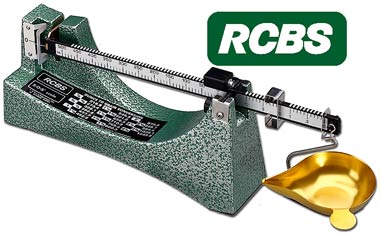
This is almost exactly the same RCBS scale I have except mine is the discontinued Model 5-10 which has the little cylinder adjustment on the pan end which permits measurement to 1/10th grain which, while often critical for reloading is maybe not so critical for coins. I've seen them on ebay for about the same price: $10 to $20 which is a bargain considering the costs for new scales from RCBS ($60 to $125 for comparable scales; I see RCBS sells replacement pans for $12, so not a good idea to try to piece one out. New about 1980, mine was about $30 to $40 IIRC. Inflation runs rampant.) Best I can state about mine is that it is RUGGED. It has to be considering how I've handled and stored it over the years. Fred |
|
Pillar of the Community
United States
5362 Posts |
Morgan Fred - Spark Erosion is as the title implies a process based on getting an electric spark to pass from one electrode (the host coin - the one being copied) onto a second electrode (the metal plate that will be the die or mold face). It is done in an electrolytic solution. The gap between the host coin and the metal plate is very small and the discharge passes from the closest point of "near" contact - eroding both the plate and the host (to a lesser extent). The result is an exact copy of the host with some pitting of surfaces and loss of fine detail. The fields are usually polished to eliminate the pitting but the pits can not be removed from recessed areas of the die/mold.
Classic spark erosion copies were etched into steel plates and the steel dies thus produced were used to strike counterfeits. Several sources point to only small diameter coins being copied by spark erosion techniques, but I am aware of larger coins that have been copied in a similar fashion.
But in this specific case, I believe that the counterfeiters used the same process to produce molds in a softer metal. I don't believe the coins were struck because of the total lack of any flow lines and the obvious casting features visible on the finished product (e.g. the fold near the rim under the date on the 1886). The edge application of the reeds is also more consistant with a post (strike/cast) edging followed by grinding down (chamfering) the sharp corners.
I settled on spark erosion as the methodology used because I am not aware of another transfer method that would produce the surfaces I see here on the details especially the depression mimicing the crown of Liberty's head on the 1922 coin.
I am a retired Structural Engineer and I did take courses in metals and materials in college - but most of my knowledge of metalurgy with regards to counterfeiting is self taught. There are numerous very good publications on metals and metal working - some of which relate specifically to coinage while others cover general metal manufacturing techniques. Of particular interest given my area of concern are the publications dealing with the history of metalworking. For instance if you know that German Silver was introduced about 1835 in the US - and you have a German Silver forgery of a 1770s coin - you know it was not made contemporaneously. Likewise, the fact that simple electroplating is a technology never used prior to about 1840 limits which coins can be believable as contemporary issues.
Larson's recent book on forgery is a good starting point for learning the various techniques forgers employ to transfer an image.
|
|
Pillar of the Community
United States
1247 Posts |
quote:
Originally by swamperbob
Larson's recent book on forgery is a good starting point for learning the various techniques forgers employ to transfer an image.
Swamperbob are there any other books out there that you recommend? I have Larson's book. I think Lonesome John wrote a couple of books about counterfeit gold coins but I think they're out of print. I don't like the idea of being at the mercy of TPG's for authentication. But there doesn't seem to be much out there in the way of books. |
|
Pillar of the Community
United States
5362 Posts |
Hancock and Spanbaur did a book back in the 1970s I believe which is interesting because of the stories he tells. But as far as techniques used in Forgery - Larson is best.
|
|
Rest in Peace
United States
2684 Posts |
Bob, I don't see any need to buy such books when we have you!  On spark erosion, I can now envision how it works. It's not unlike a very sophisticated version of arc welding in which metal is transferred from the cathode (rod) to the target anode (the metal to be welded). I had just never considered using the same principle to make a die for coin forgeries. However, since the process is sacrificial for the coin to be copied, I don't think I'll be cracking out of their slabs any of my Mint State Carson City Morgans any time soon.   Many, many thanks for sharing with us your knowledge. I'm trying to soak it up as fast as you dish it out. I took a course in "Farm Metal Working" as an elective at Cornell many (too many) years ago, so I understand the basics, but the application of such techniques boggles my mind. Fred |
|
Pillar of the Community
United States
1247 Posts |
I like Larson's book. It's different than a guide book in that he writes it from the point of view of the forger. So the things that the forger is trying cover up or avoid all together, like vacuuming plaster to get air bubbles out, become the things that the coin collector will look for. The only thing about the book is if you don't really understand how coins are made--hubs and dies, your going to be lost. There's were a few times where I had to draw out the process to understand what he was talking about. He tells how forgers can make a mintmark punch with a nail that I just couldn't get until I drew it out--mintmark cut into piece of metal must be incuse negative, becomes raised positive on nail, becomes incuse negative in die, becomes raised positive on coin... I'm not complaining here about that. It's probably necessary to understand dies in order to understand how coins can be forged. It's a good book and it will scare you when you see just how cleaver these people can be.  |
|
Pillar of the Community
United States
5362 Posts |
Morgan Fred - thanks for the complement. I can help when I can, but every collector needs to gain a degree of understanding in the area of forgery so that they can protect themselves against being scammed. This is especially true at coin shows. I don't know about anyone else but carrying guide books (or a guy like me) to shows is a real pain. I carry just a 10X loupe and rely on my understanding of how coins are made to carry me through. I hope I can help by answering any questions members have.
Spark erosion does cause some loss of metal in the host coin but not as much as you might imagine. The end result looks like it was harshly cleaned.
longnine009 - I agree that you do need to understand the mechanics of how coins are made to appreciate how forgers work - but once you work out the piece parts it all does fit together rather nicely. It also become "second nature" after a time and you will be shocked at how it will just suddenly become so clear and easy to do. Just keep drwaing out the steps so that you can conceptualize what is happening.
|
|
Pillar of the Community
 United States
751 Posts |
Well, I definitely got my money's worth from this particular tuition payment. Thank you so much, Bob et al.
I'm glad to see the class had many auditors who also benefited.
|
|
Pillar of the Community
United States
1247 Posts |
Texasmick, I guess this is easy to say since I'm not the one taking a loss, but there is a benefit to mistakes. It's the only real way to learn. Coin collecting is becoming too protective. Organisations, such as the ANA are trying to be cops. Good intents, I suppose, but with bad consquences. IMO, all they are doing is teaching people how to be afraid. Maybe you got burned, but at least you weren't afraid to try. |
|
|
Replies: 56 / Views: 4,005 |
|








 First Page
 Previous Page


 Posted 08/13/2006 3:02 pm


