| Author |
 Replies: 20 / Views: 4,967 Replies: 20 / Views: 4,967 |
Page 2 of 2
|
|
|
|
Pillar of the Community
United States
3640 Posts |
Sorry, I really do not see it here.
See some possible polish lines also nearby.
|
|
Valued Member
United States
341 Posts |
|
|
Pillar of the Community
United States
2224 Posts |
There is a well known variety of this coin that has a die chip in the exact spot your coin does. It fools a number of people. Your pictured coin is not the 1943/2.
|
|
Valued Member
United States
123 Posts |
Thanks all and the nice image coop and coppernickeldaddy description of die crack, flowing. I was here and got busy, now I think I'm back.  I tried to PM or EM "thank you", but I'm too new. |
|
Pillar of the Community
United States
2824 Posts |
here is close up of a heavy circulated one I got awhile back top photo. 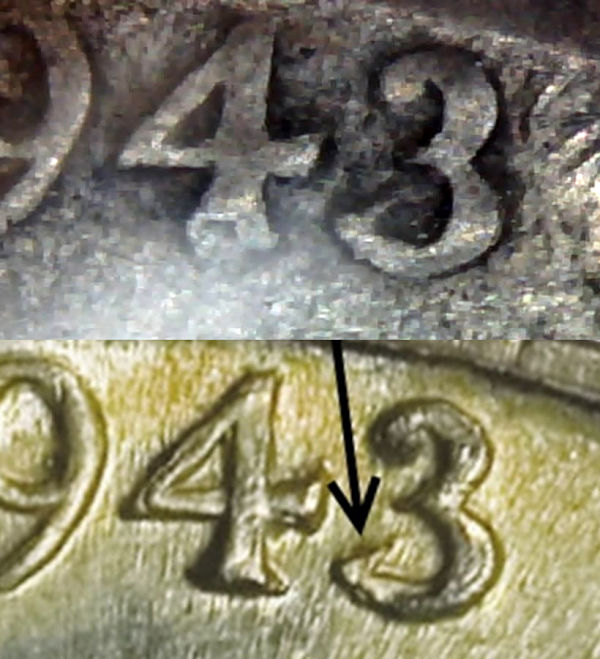 the variety is actually a doubled die first hub is a 1942 second is the 1943 hub not a re-punched dated the real one point to inside of the the loop of the bottom three there is a similar looking die break; but the die break points past the inside of the bottom 3 loop 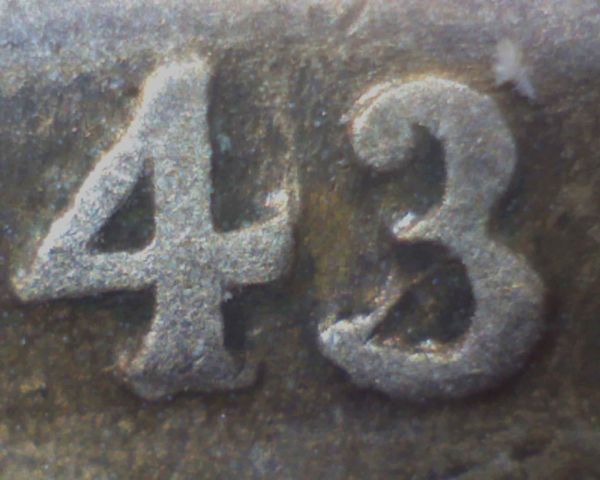 Edited by OcalaFlorida
10/01/2014 1:19 pm
|
|
Bedrock of the Community
United States
62064 Posts |
Here is what to look for on this variety. The angles of the 2 in the date. The angle and the horizontal that is flat on that device.  |
|
Valued Member
United States
123 Posts |
I thought I understood, now I'm more confused than ever.
The example of the "similar looking die break; but the die break points past the inside of the bottom 3 loop" by OcalaFlorida is the same image as "The angles of the 2 in the date. The angle and the horizontal that is flat on that device."
It's the same image! Look at the nick in the bottom of the stem on the 4. Or did I read the replies wrong.
|
|
Pillar of the Community
United States
2824 Posts |
yes they are the same. I dont own the die break that is similar. Was only saying how to determine between the two. This die break is not the variety and is commonly mistaken 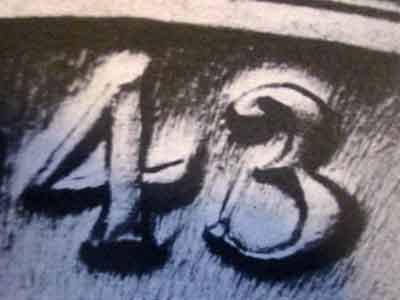 Note the angle of the die break point outside the loop 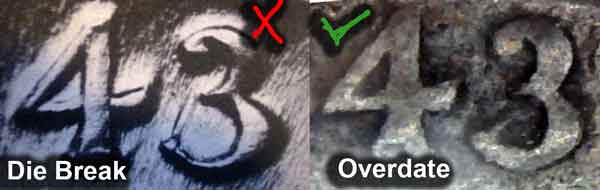 Edited by OcalaFlorida
10/01/2014 5:20 pm
|
|
Bedrock of the Community
United States
62064 Posts |
I don't think I would call that a die break. It looks more like die flow lines toward the rim. Note the 4 shows this at well on all corners. VLDS die on the normal nickel with the "X".
|
|
Pillar of the Community
United States
2824 Posts |
that is the coin that some references refer too watch out for and to not confuse with the over date Bernard Nagengast called it a spur like die break or die break in the reference Major Variety and Oddity Guide of United States coins from Frank G. Spadone in 1964 .. I am not sure what spur like die break means and but I agree it does not look like die break.. Hopefully this wont add to the confusion lol |
|
Bedrock of the Community
United States
62064 Posts |
Here is another classic example of a VLDS die coin: 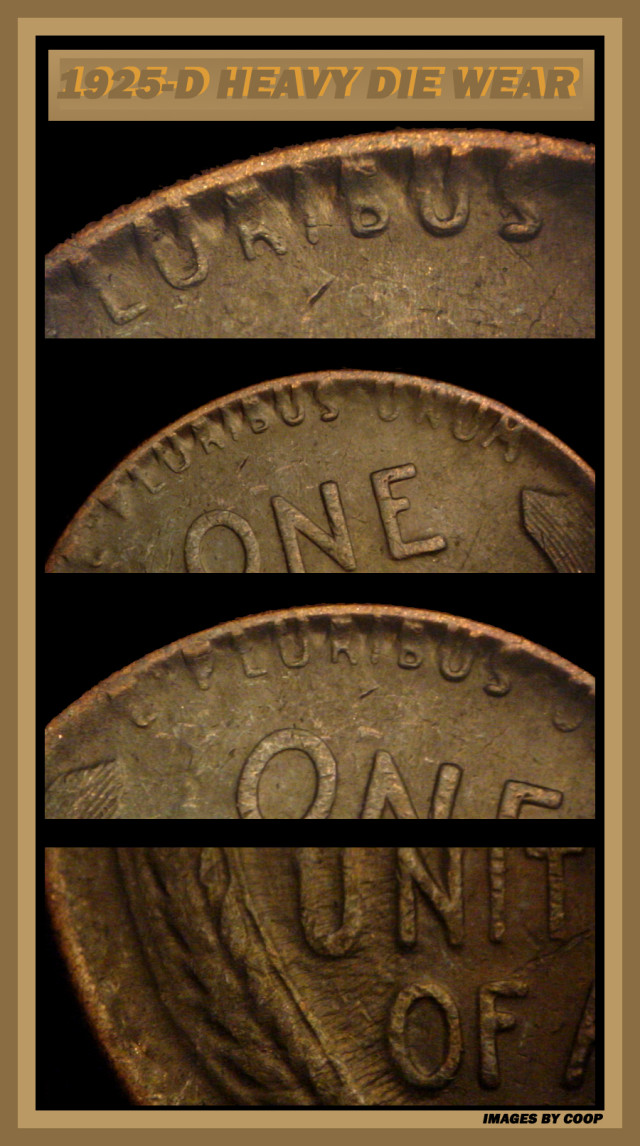 So the example above is just showing extreme die wear on the non 43/2 nickel. |
|
Pillar of the Community
United States
2824 Posts |
I assume you are correct Coop I have learned more here then in the books I have read or use as reference. the picture was bad example I posted was from a book on attribution of 1943/2 nickels here is a better one posted here by coinman1974 of the same type of coin some confuse with it. just for example of the most common non 1943/2 https://goccf.com/t/182704Edited by OcalaFlorida
10/01/2014 9:31 pm
|
|
Valued Member
United States
123 Posts |
Thanks guys for putting up with me and being new at this die break vs overdate. Heck, it took me until I read here to understand what "full steps" and 5 steps meant, even though I'd heard the term. The photo examples and the explanation was perfect! OK so is this is, or is this ain't... a 3 over 2?  (sorry for borrowing from song lyrics) 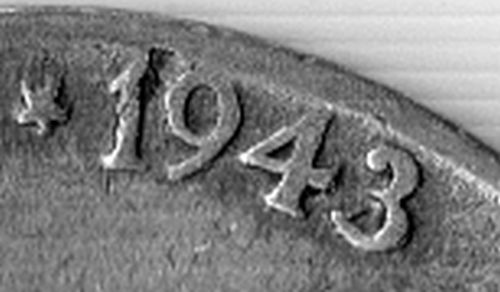 The way I can easily spot the standard issue 1943 is the ball on the end of the 3, which is missing from the die break and the re-punched overdate. |
|
Bedrock of the Community
United States
62064 Posts |
In different die states the ball there or the one behind the upper loop is all up to the die state of the die that created your coin. The two angles I posted in an image are present on your coin, so it is that die variety. Nice find. Re-posting this image to show what I mean. When eyes see them side by side, then they are ready to start searching for them. |
|
Valued Member
United States
123 Posts |
Now I can move on to 1942 D/D, 1949 D/S, 1954 D/S and S/D and finally a 1955 D/S. All about the hunt, not the values.
|
|
Page 2 of 2
|
Replies: 20 / Views: 4,967 |
Page 2 of 2
|







 First Page

 Posted 10/30/2012 9:08 pm





