First Page


 Posted 07/17/2011 11:32 pm


Quote:
what if two blanks went in to the press, one on top of the other, resulting in two uniface coins - one observe and one reverse? stranger things have happened...
what if two blanks went in to the press, one on top of the other, resulting in two uniface coins - one observe and one reverse? stranger things have happened...
Quote:
no, just imagine, 2 coins, twice the normal width of a normal coin, for one, the strike would be HAMMERED, and there would be serious deformation with either coin, and the coins will most likely be fused.
no, just imagine, 2 coins, twice the normal width of a normal coin, for one, the strike would be HAMMERED, and there would be serious deformation with either coin, and the coins will most likely be fused.
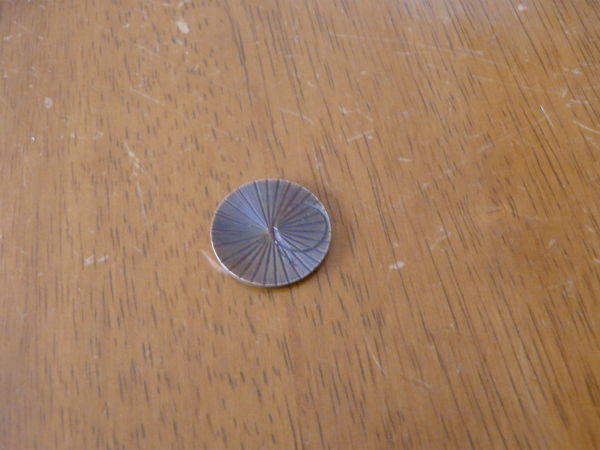
Adam is correct. If two blanks came out at the same time, it would be twice the thickness the collar would be expecting - they wouldn't both fit, so one or both of the blanks would bounce out; the best you could hope for in such a circumstance is a partial strike on one coin and a big piece missing on the other. If by some miracle both blanks stayed in place exactly centred while the dies came together, you'd get fusion, and while they might be re-separable again with some effort you'd get coins that looked more like split planchets (except they'd weigh the same as a normal coin), and probably some secondary damage caused by whatever tool you'd have used to pry them apart.
The much more likely result is a capped die, as the mangled mess sticks to one die or the other and more blanks get added to the mix.
What you certainly will not get, in such a situation, is a coin (or two coins) that look like they have only been struck on one side. Such a coin could only be made in the mint if somebody put a blank die into the press - and blank dies never go anywhere near the coining room.
By far the most likely explanation is that someone has sanded off the obverse. Next most likely explanation is the split planchet I mentioned earlier.
If it weighs about half of what a normal 2 cent should weigh and the "blank" side is rough and striated, then it's a split planchet. If it weighs only slightly less than a normal 2 cent and the blank side is perfectly smooth, then it's a grinder job. Only if it weighs exactly what a normal 2 cent should weigh should a stranger explanation be sought.
Don't say "infinitely" when you mean "very"; otherwise, you'll have no word left when you want to talk about something really infinite. - C. S. Lewis


 to CC forum