| Author |
 Replies: 77 / Views: 61,209 Replies: 77 / Views: 61,209 |
|
|
|
|
New Member
New Zealand
1 Posts |
I hope this works. Had this coin for a few years now came from my wife's grandfather's collection it was in a match box with some random coins I'm guessing it's fake finally decided to find out. Thanks for any help in advance 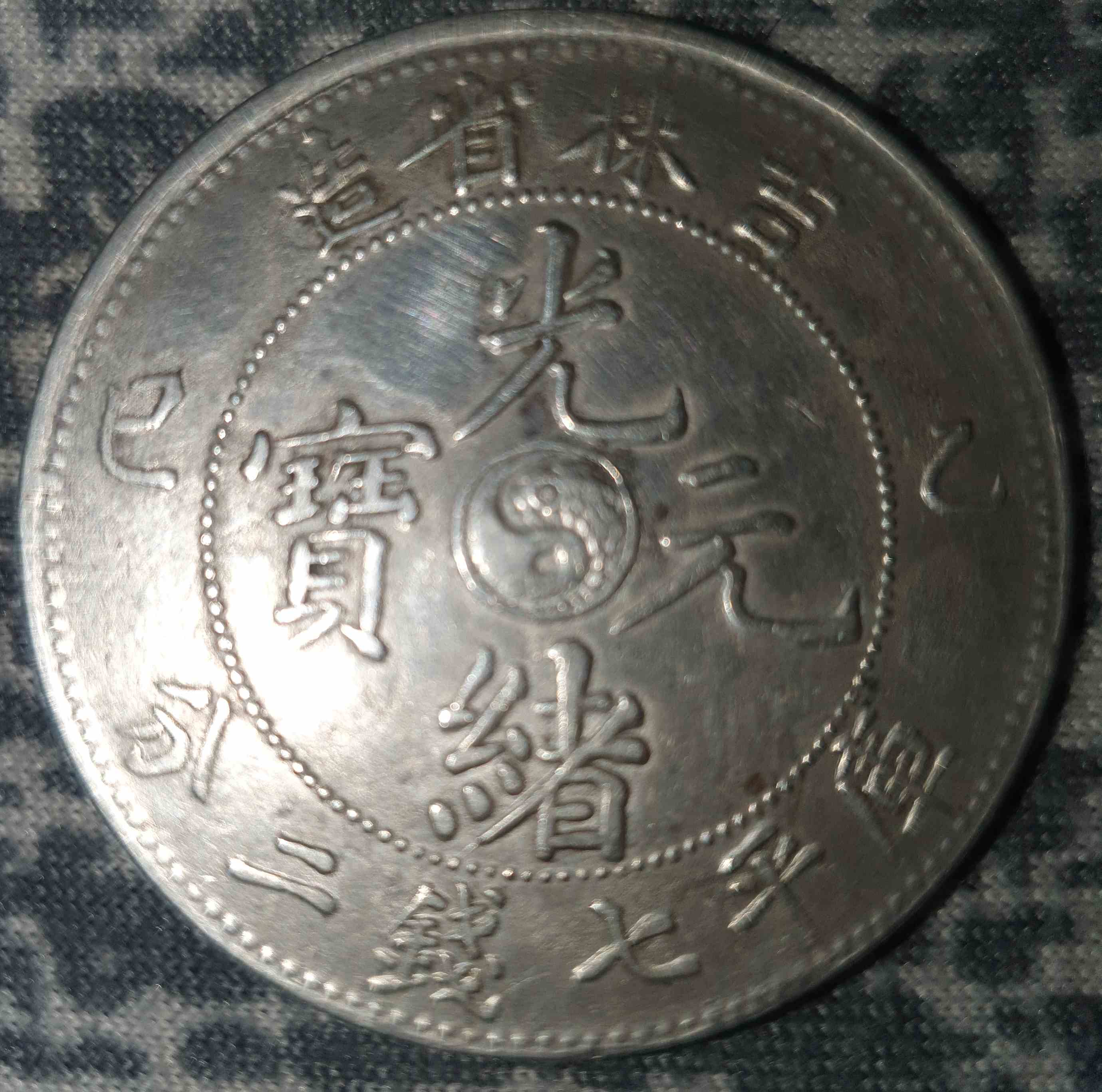 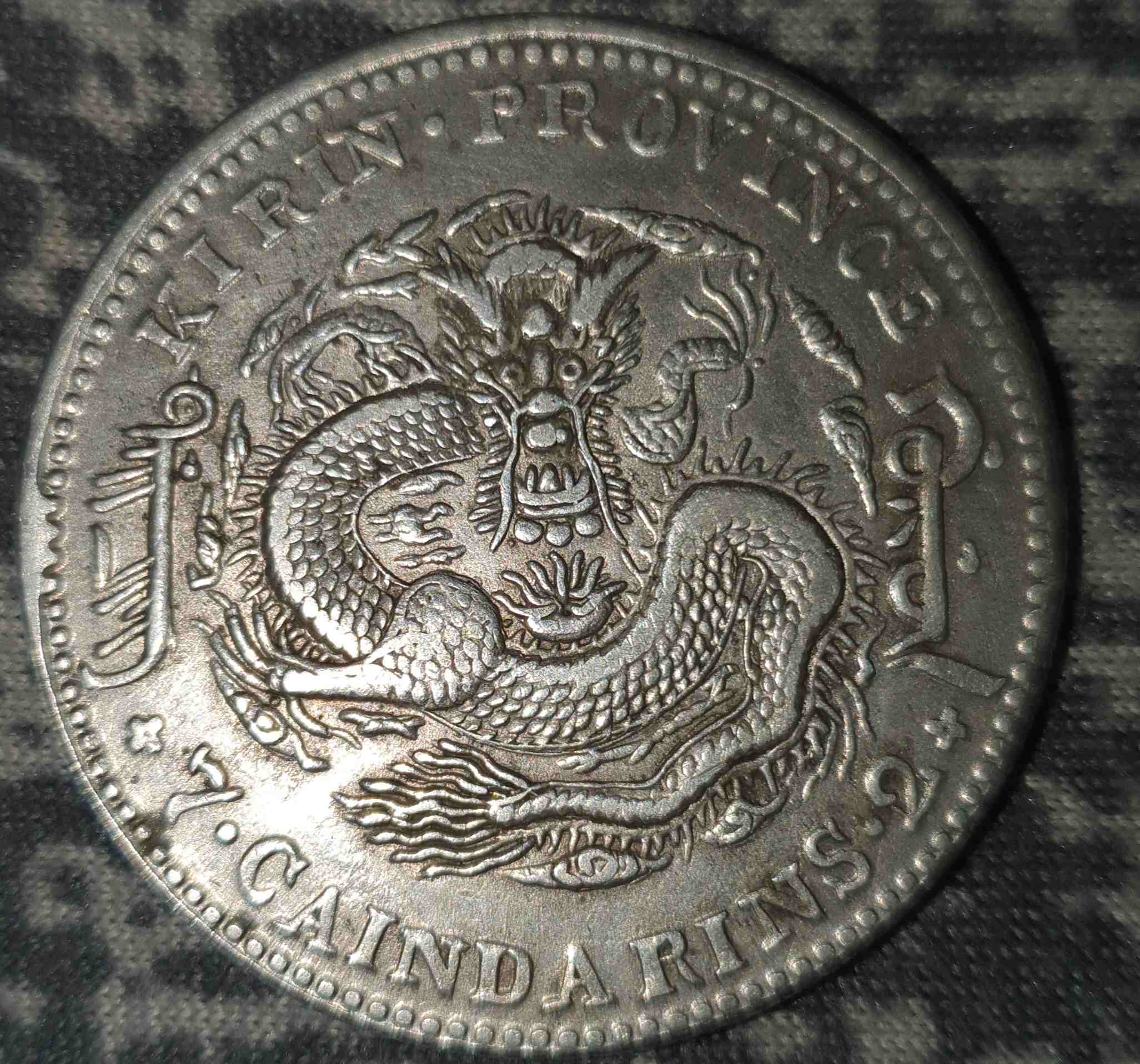 |
|
Bedrock of the Community
Canada
21928 Posts |
 to the CCF Sorry but it is another counterfeit. |
|
Moderator
 United States
196572 Posts |
to the Community, Kiwicoins! |
|
New Member
United States
1 Posts |
|
|
Pillar of the Community
United States
5362 Posts |
I have noticed several of the people posting on this threat got the coins from a grandfather. This makes perfect sense if those grandfathers were service men in WWII. There are stories from the time that US GI's were targeted by locals who sold counterfeit coins for 10 cents each. The GI's knew a silver US dollar coin was worth a buck and many were taken in thinking they were taking advantage of a dumb kid.
Most of these counterfeits are still worth about a dime.
|
|
Moderator
United States
196572 Posts |
to the Community, Aferg! |
|
New Member
United States
32 Posts |
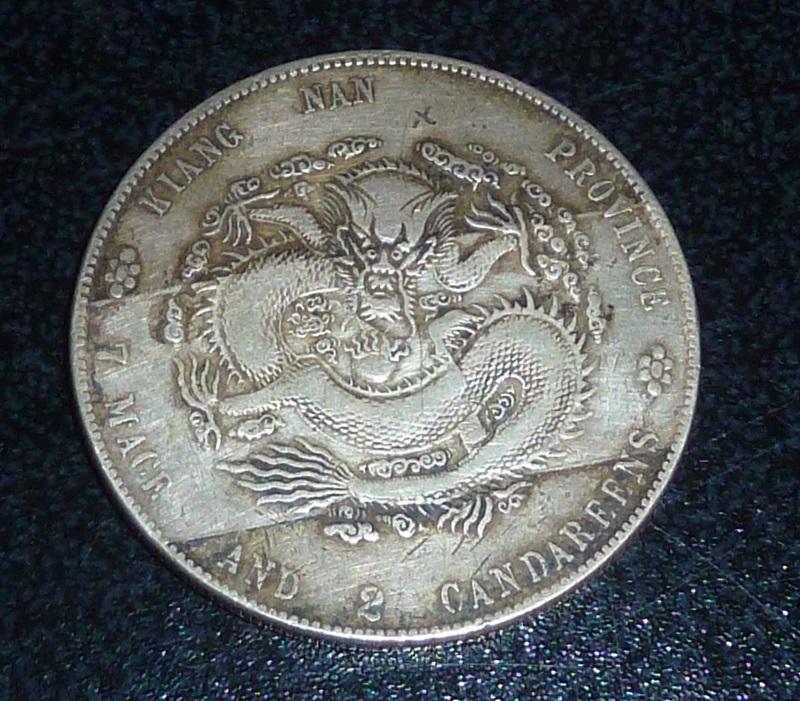
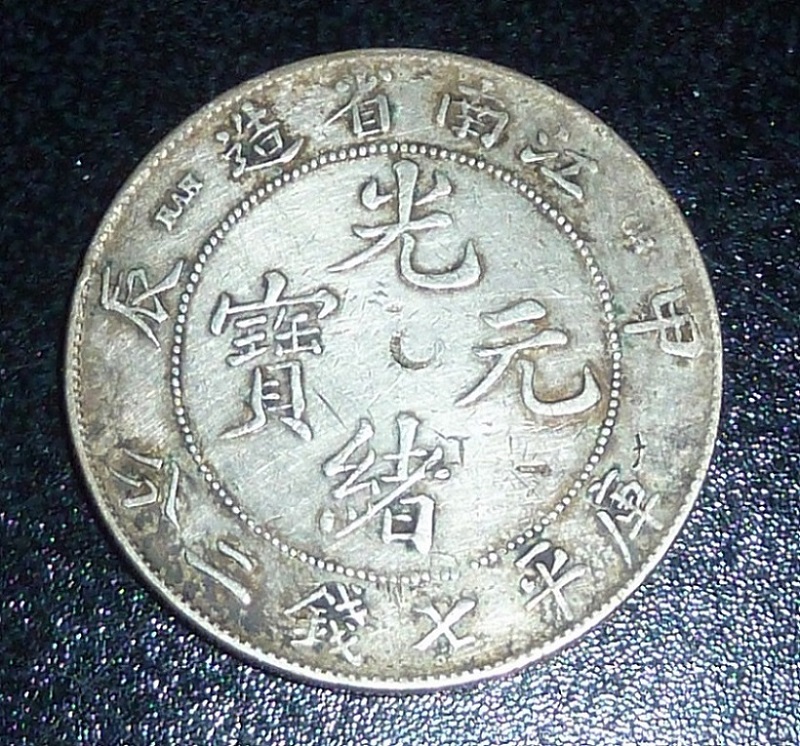
Hi, Sorry for Another Hu-Peh Province 7 Mace And 2 Candareens Chinese Coin post. I did review many other posts but didn't see any examples matching this coin. I think it's a reproduction/fake/counterfeit because of the HAH on the reverse side (the side without the dragon). This is my first post on these forums and a new collector, of sorts, so be kind please. I know these are counterfeited a lot. Thank you in advance for your time. Weight: 26g/9oz Edge has ridges Does not react to magnet The coin looks more silver than the photos I snapped below. 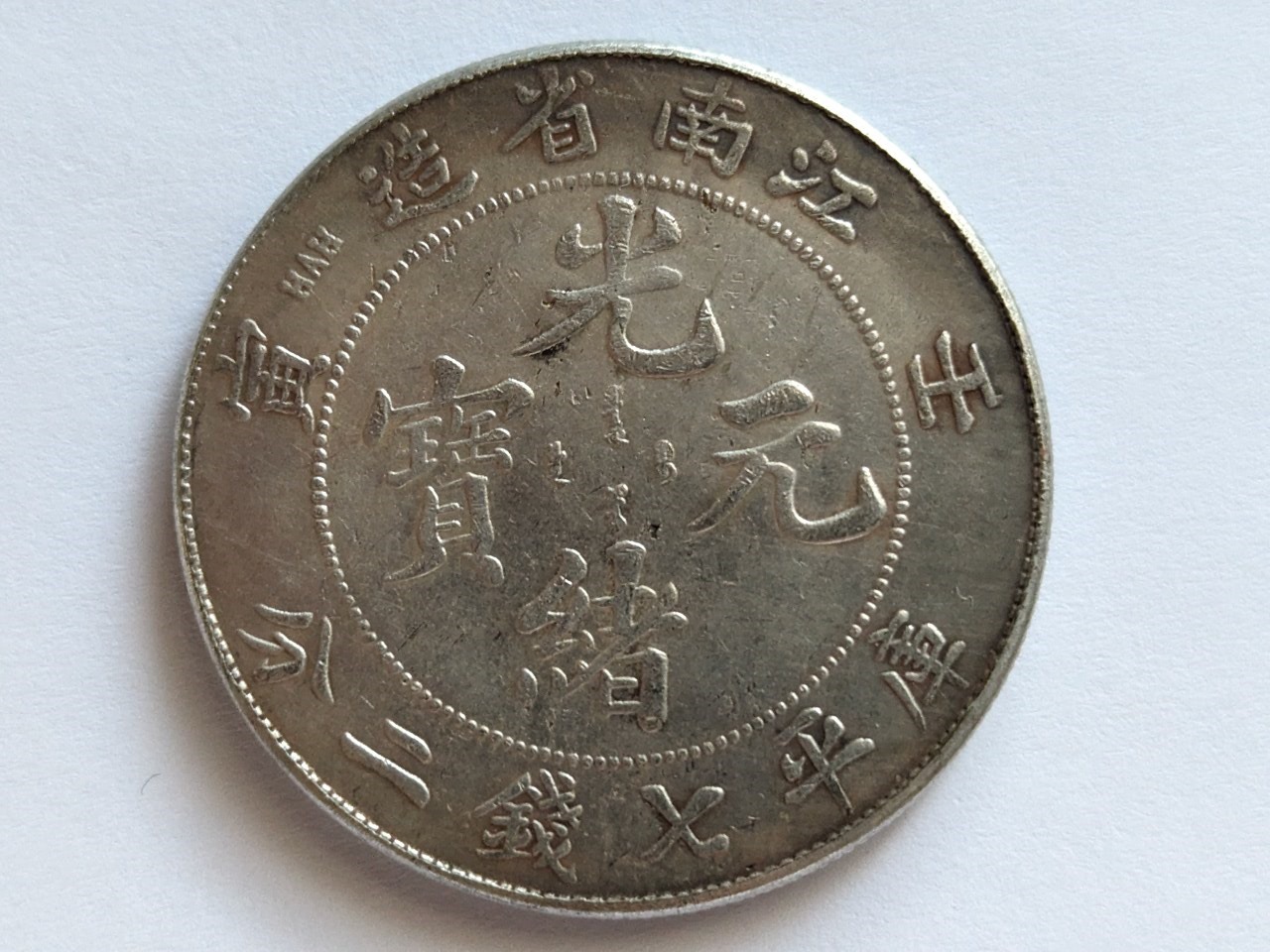 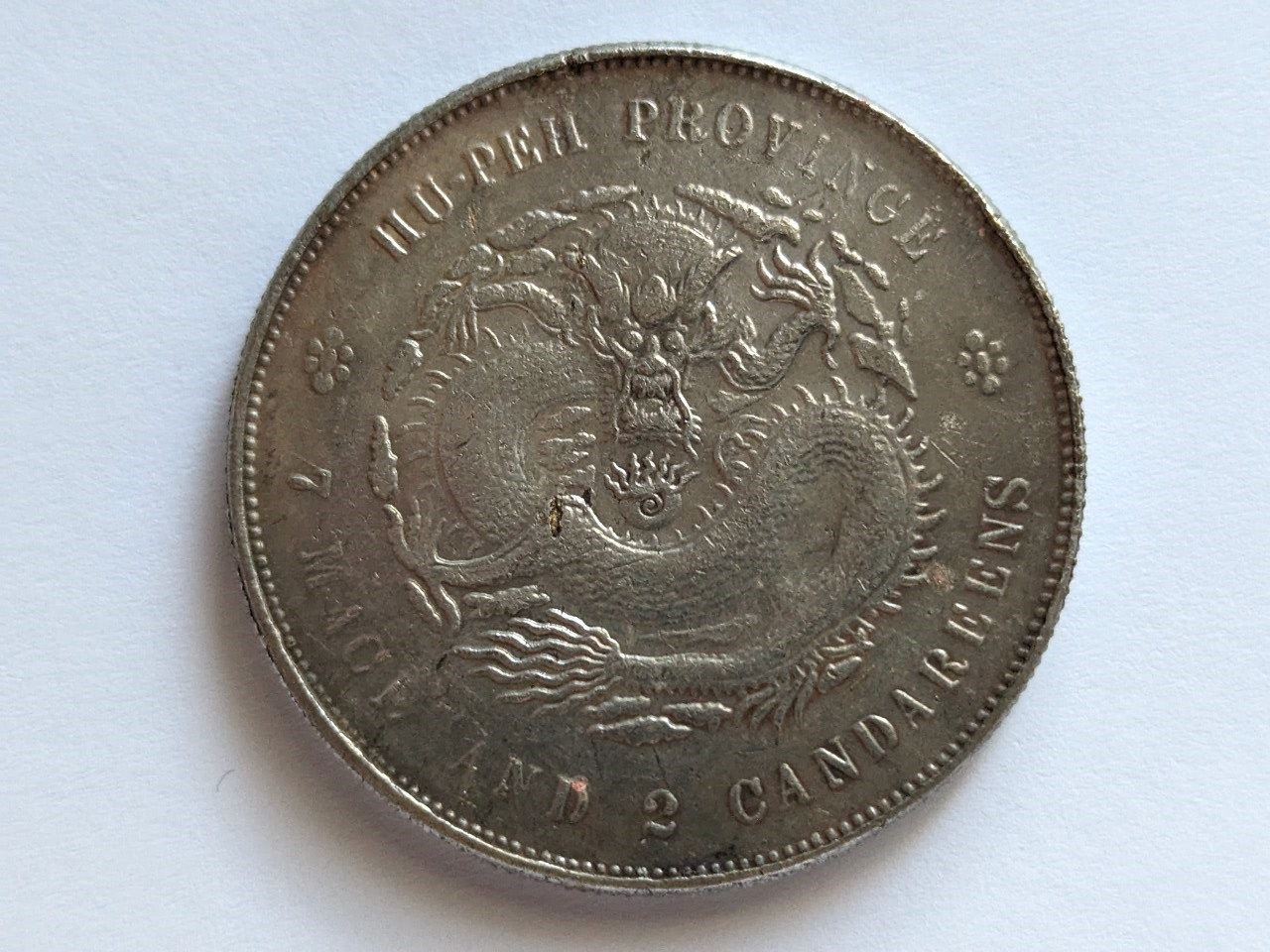 |
|
Pillar of the Community
United States
1915 Posts |
I have doubts- let's see what others say about it.
|
|
Pillar of the Community
United States
5362 Posts |
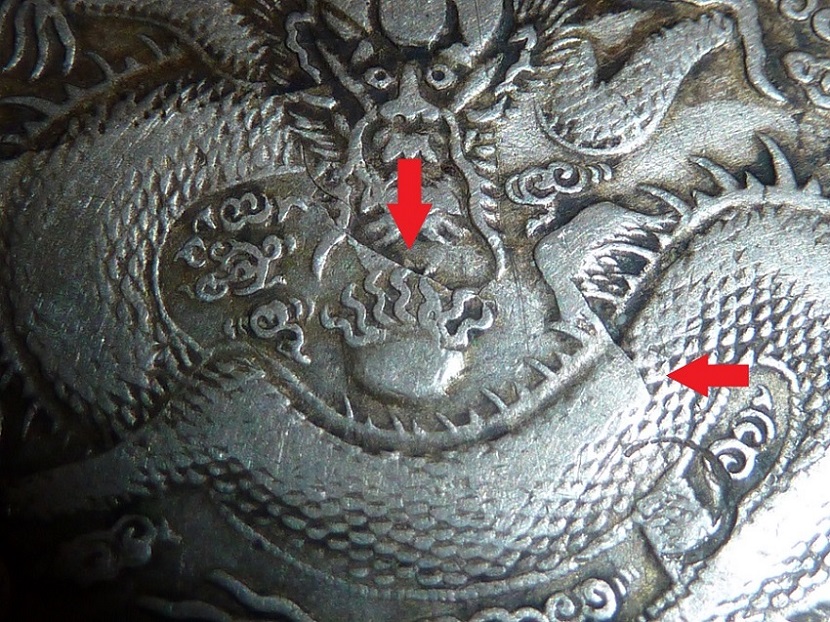
hello sherwood315 It is always a good practice to start at the beginning, so I will here. What do you mean by "the edge has ridges"? If you are referring to reeding like you see on modern US coins of 25 cents and above. There are many clues to look for. Most forgers do not have access to a modern press that can apply the edge reeds at the same time that the faces are struck. Forgers normally use a two-step operation. This leaves clues. I believe I can see that the corners of the coin have been ground away. This is often done to remove the sharp sprues of metal left by the edging die. There have been many descriptions of this process. I would advise you to read other posts on Chinese forgeries. You can also do a simple density test if you have a scale that reads to 0.1 gram accurately. Weigh the coin in air first. Then suspend the coin in water and see how much weight is lost. The weight lost in grams is the volume of the coin in cubic centimeters. Divide the weight in air by the volume and the result is the density of the coin. It should be 10.3. That is the best and simplest test to perform. |
|
Moderator
United States
196572 Posts |
to the Community, sherwood315! |
|
New Member
United States
32 Posts |
This is fun and I'm looking forward to investigating these other coins I have. @swamperbob - yes, I mean the reeding. It clearly looks to me like the reeding is not rounded and instead straight and the edges have been filed. 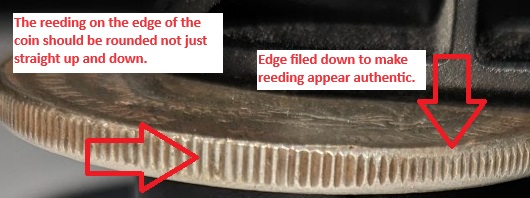 Also, I ran the REVERSE side image through Google lens and it translated the Chinese which shows "Nanjiang" instead of "Hu-Peh" 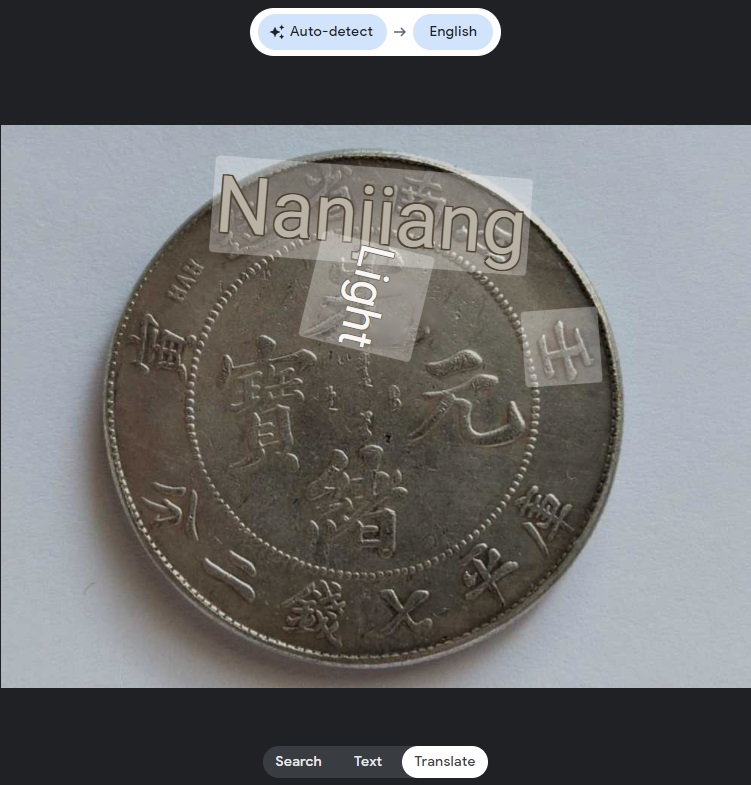 |
|
Pillar of the Community
United States
1915 Posts |
Isn't there something odd about the province name on each side of the coin?
Anyone looking into this?
|
|
New Member
United Kingdom
1 Posts |
|
|
Moderator
United States
196572 Posts |
to the Community, rayvenini! |
|
Pillar of the Community
United States
7396 Posts |
|
|
|
Replies: 77 / Views: 61,209 |
|







 First Page
 Previous Page

 Posted 08/29/2022 09:48 am