Tonight we have a look at the half-dollar struck to commemorate the 300th anniversary of the landing of Swedish settlers in present-day Delaware. The coin is presented via an example in PCGS MS-66.
Under the leadership of Peter Minuit, two ships left Sweden in December 1637 bound for the New World to establish New Sweden. The larger of the two ships was the
Kalmar Nyckel, with the smaller being the
Fogel Grip. The ships arrived in March 1638, sailing first through Delaware Bay and up the Delaware River, and then up a smaller river on the Delaware's western shore that they would name the Christina River in honor of Queen Christina of Sweden. They landed at a rock outcropping a couple of miles from the mouth of the river in what is today Wilmington, Delaware. From the local Native Americans, the Lenni-Lenape, Peter Minuit purchased the "land from the Christina River down to Bombay Hook" (roughly the northern half of present-day Delaware) and claimed it for Sweden -- it was the start of the colony of New Sweden.
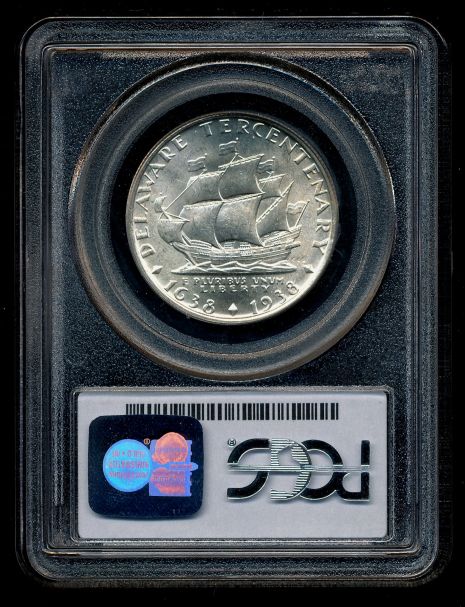
Read More: Commems CollectionThe coin was designed by Carl Schmitz; he won an open competition sponsored by the Delaware Tercentenary Commission with a prize of $500. On its obverse is seen the Old Swedes Church (built in 1698 and still in use today as a house of worship) and on its reverse is the sailing ship the
Kalmar Nyckel. Schmitz used a photograph of a scale model of the ship that was located in Sweden as the basis for his work on the reverse, and a photograph of the actual Swedes Church for his obverse. The designs were well-received by the Commission of Fine Arts, with the most notable requested revision being the roofline of the church -- Schmitz originally had the ridge line of the roof straight from front to back vs. the roof line of the actual church which is angled at the rear (as seen on the coin).
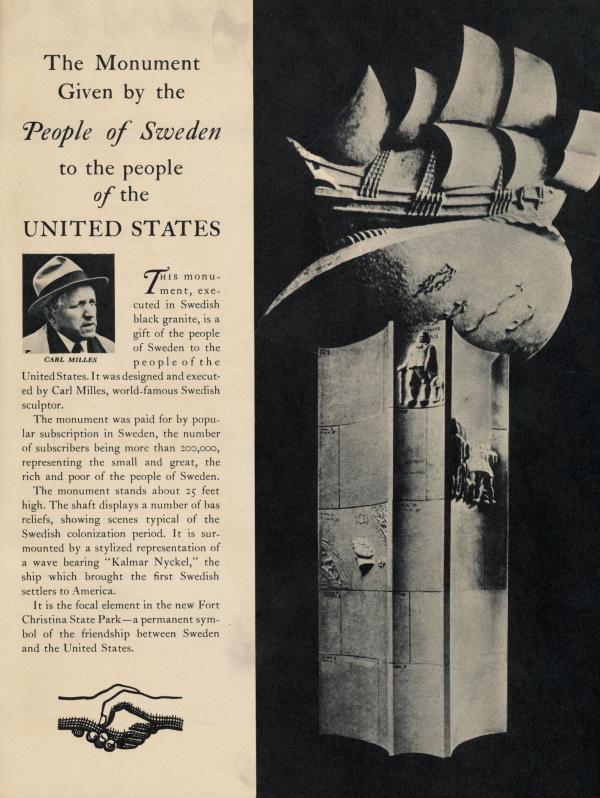
As part of the Tercentenary celebrations in 1938, the people of Sweden donated a black granite monument designed and executed by Swedish sculptor Carl Milles. The 25-foot tall monument features a stylized representation of the
Kalmar Nyckel at its top; the monument is located in Fort Christina State Park. Unfortunately, the park is closed at present so the statue cannot be visited up close; it can be seen from nearby vantage points, however. I tried to visit the park a couple of years ago, but was unsuccessful. I did, however, get a chance to tour the re-creation of the
Kalmar Nyckel that is docked near the park.
The net mintage of the coin is about 21,000 (roughly 4,000 coins of the 25,000 struck were returned to the Mint for melting). Nice examples in higher mint state grades are reasonably common and therefore available at reasonable prices. As always, the trick is to find a quality coin for the grade purchased. The coin shown is a nice, flashy white coin with a good strike.
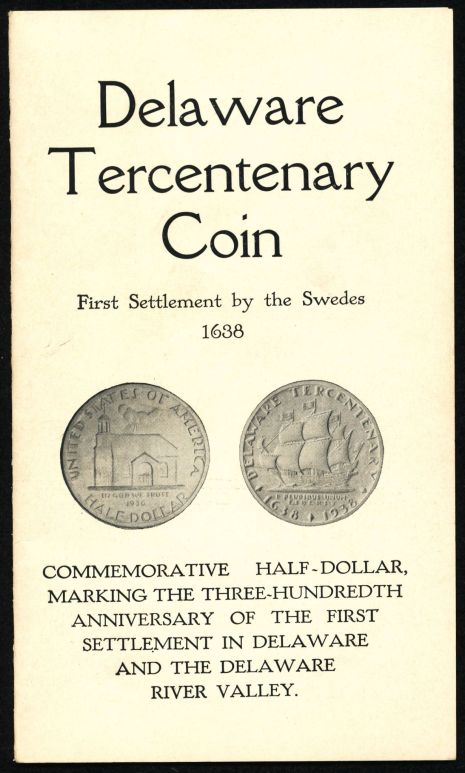
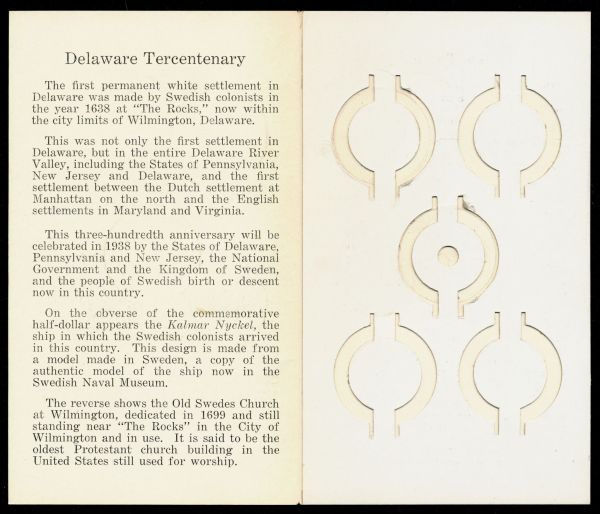
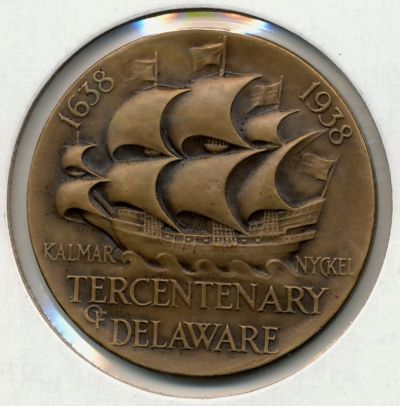
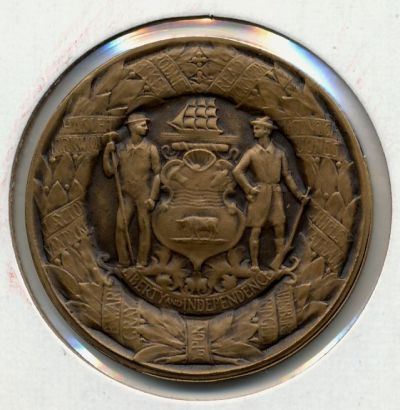
Over the years, I have collected quite a few items related to the Delaware Tercentenary. For show here, I've included images of the original mailer/holder for the coin along with the official commemorative medal in bronze (shown is a small bronze, I also have the medal in large bronze and silver).
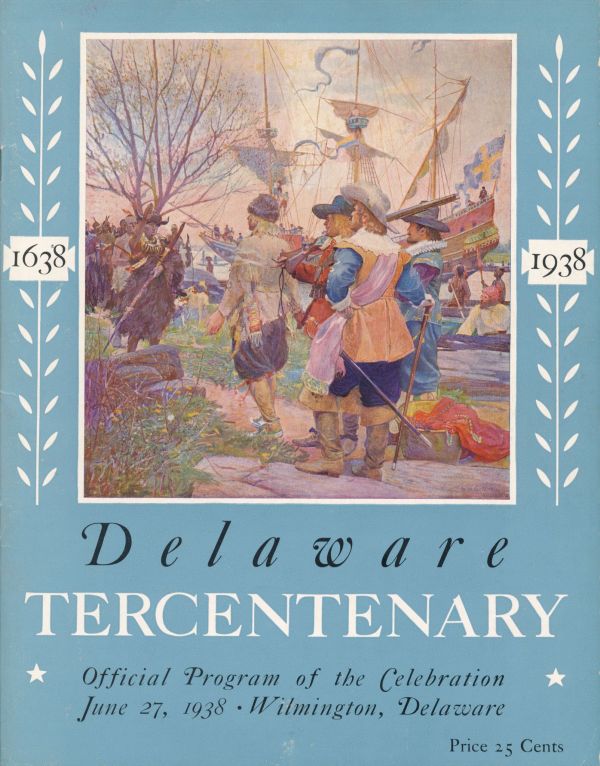
Also featured are a few images from the Official Program of the Tercentenary, including one showing the six commemorative plates put out by the Commission -- I have all six! (Sometimes my commemorative collecting knows no bounds!)
I have a few other scarce Delaware Tercentenary-related items that I will post separately in the coming weeks.
Enjoy!
1938 Delaware Tercentenary Half-Dollar -- Obverse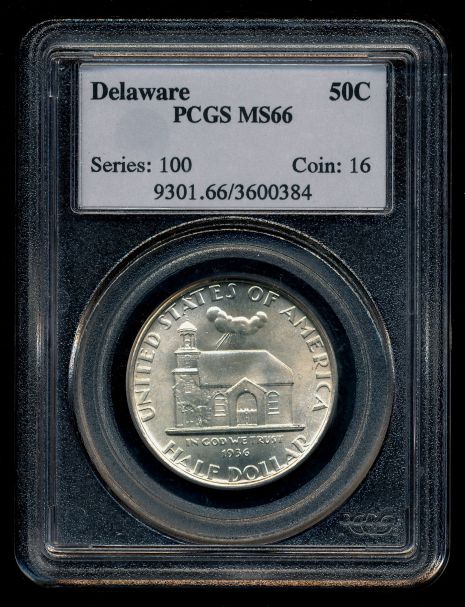 1938 Delaware Tercentenary Half-Dollar - Reverse
 1938 Delaware Tercentenary Half-Dollar Mailer/Holder - Front
 1938 Delaware Tercentenary Half-Dollar Mailer/Holder - Interior
 1938 Delaware Tercentenary Commemorative Medal - Obverse
 1938 Delaware Tercentenary Commemorative Medal -- Reverse
 1938 Delaware Tercentenary Celebration Program -- Cover
 1938 Delaware Tercentenary Celebration Program -- Monument Page
 1938 Delaware Tercentenary Celebration Program -- Commem Page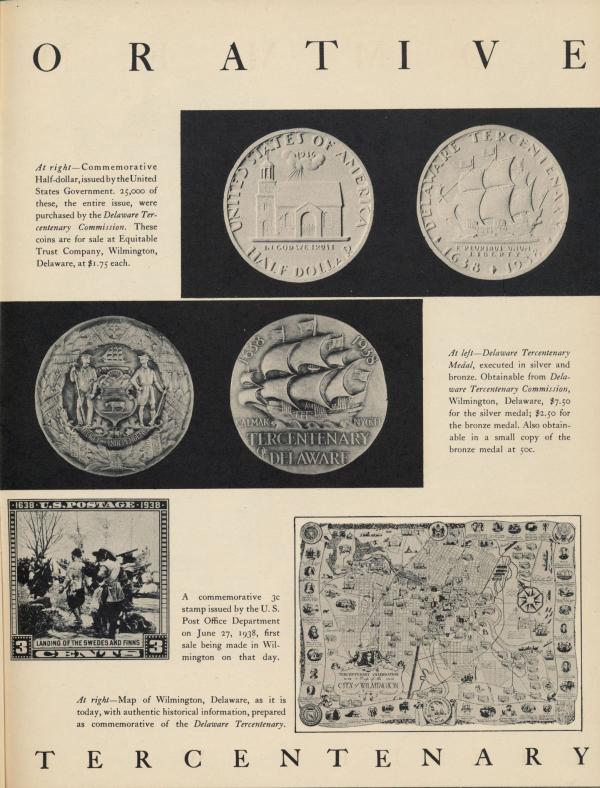
19
38 Delaware Tercentenary Celebration Program -- Commem Plates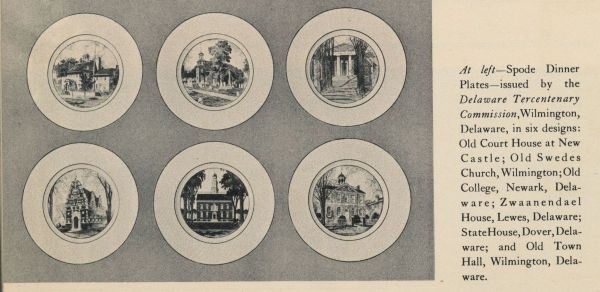








 Posted 05/10/2012 9:26 pm


