| Author |
 Replies: 9 / Views: 1,439 Replies: 9 / Views: 1,439 |
|
|
New Member
United States
11 Posts |
Hello All, I have a fantastic story. One that's hard to put any credence to, but nevertheless, true to the best of my knowledge. I've come into 18 ancient coins this past week. The past two days, I've read one book, "Reading And Dating Roman Imperial Coins" by Zander Klawans c.1959 and fell that I have identified 4 of the most legible coins in the collection. 1 is giving me particular trouble and perhaps the members here could be so kind to help me identify it. Here is the coin 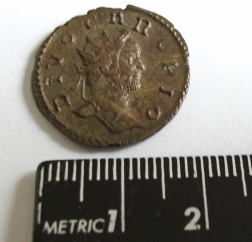 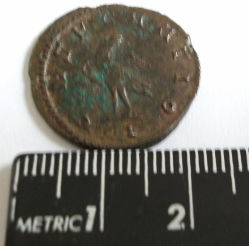 Edited by Versipelis
08/25/2012 12:13 am
|
|
|
|
Pillar of the Community
United States
549 Posts |
It is a coin of Carus, emperor 282-283, issued inn his honor after he died by his sons. The legend is DIVO CARO PIO and
"DIVO" refers to the Roman sort of deification of recently deceased emperors. -- Warren
|
|
Pillar of the Community
United States
4253 Posts |
The coin is Carus. I wish you had posted the reverse so that it could be fully attributed. It looks like a very nice coin.
Welcome here to CCF.
Regards,
JW
|
|
Pillar of the Community
United States
4253 Posts |
Ah, now I see the reverse image. I will see if I can attribute this for you
|
|
Pillar of the Community
United States
4253 Posts |
RIC 29 I: Divus Carus AE Antoninianus. Lyons mint. DIVO CARO PIO, radiate head right / CONSECRATIO, Eagle standing left, head right, officina mark I in ex.
|
|
New Member
 United States
11 Posts |
I have to re-size my images... So please be patient. You might check the original post again...I've edited and added images once they're resized.
|
|
New Member
United States
11 Posts |
Thank you for the welcome. I have more images of my coins that I'd like to share. Thus far, the first 5 are very legible (although I have a hard time getting all the letters correct), I think I have a good idea of the identity. Just in case I missed something, I'd like to double check. You guys know your coins.
|
|
New Member
United States
11 Posts |
Where did you get the "AE" and "Lyons mint" from?
AE Antoninianus. Lyons mint.
And what does this mean?
officina mark I in ex
|
|
Valued Member
Netherlands
409 Posts |
Your coin was minted in Lugdunum( Lyon)as a special condecratio emission at the end of 284.
At that time Lugdunum had four officinea, A-B-C-D. These marks you will find on the antoniniani of the Carus family.
Officina A and B for Carus, and B and C for Numerian,A and D for Carinus.(sometimes retrogarde B,C,D)
Only for this special 10th emission the officinae marks I-II-III-IIII instead of the regular A-B-C-D.
This type, RIC29, was also struck without a mintmark.
|
|
Pillar of the Community
United States
1549 Posts |
AE is a shorthand collectors use to indicate a base metal coin. It comes from Latin Aes for bronze but is used to indicate copper, brass and, as here, even very low content billon silver coins. Don't think it in any way distinguished one copper allow from another. When new, many coins we now call AE were silver washed so they looked silver but this coating survives the centuries only on a few coins.
Scholars have attributed various issues to specific mints although they occasionally disagree on some. Lugdunum often numbered the workshops with Roman numerals but the practice was not consistent or limited to them so you have to read up on each coin to see where it fits in the game plan.
Rulers who died in the good graces of their successors often received a death commemorative issue marked with the title 'divine'. Carus was succeeded by his two sons so his consecration was pretty automatic.
|
| |
Replies: 9 / Views: 1,439 |
|







 Posted 08/25/2012 12:15 am





