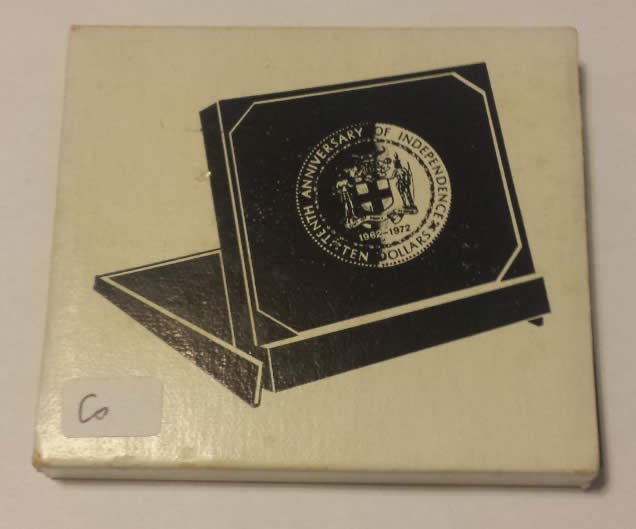
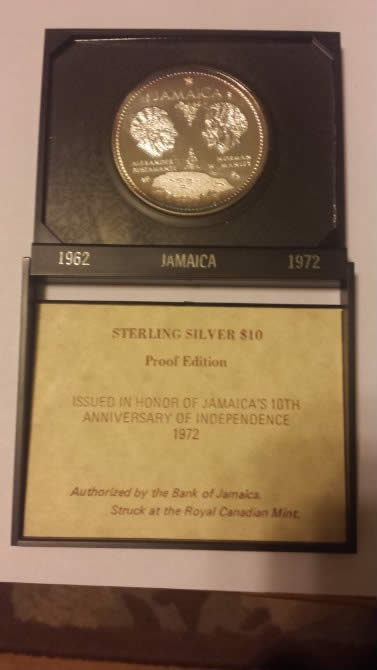
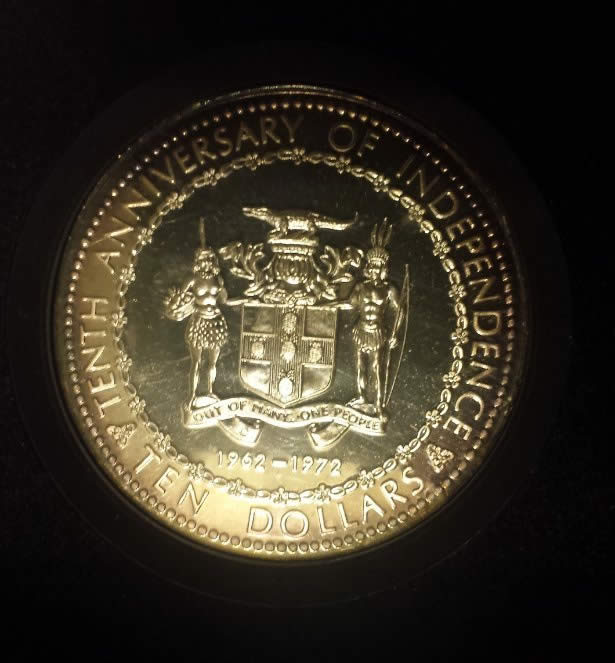
As things are rather slow around here, I thought I would offer up a post on a pair of commemorative coins produced by the
Royal Canadian Mint (
RCM) back in 1972 for Jamaica. The coins were issued to celebrate Jamaica's 10th anniversary of independence. At the time, the
RCM was aggressively pursuing foreign coinage contracts - for coin blanks, circulation coins and collector coins.
The coins - a silver $10 and a gold $20 - were designed by
RCM Chief Engraver Patrick Brindley. Brindley was also responsible for the commemorative reverse design of the 1971 British Columbia silver dollar (among other coins during his
RCM tenure).
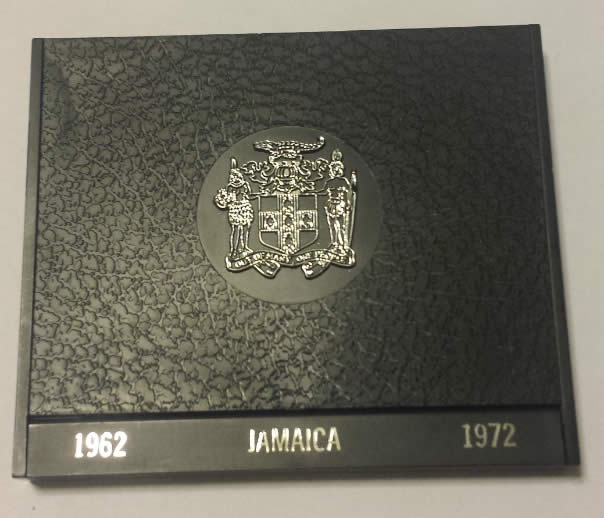
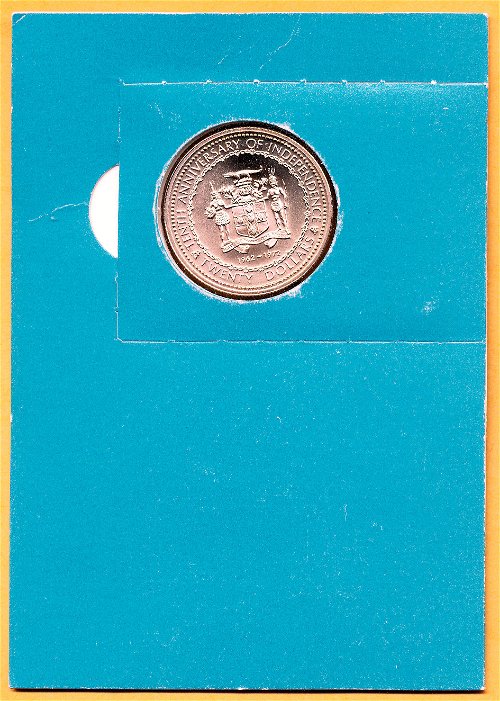
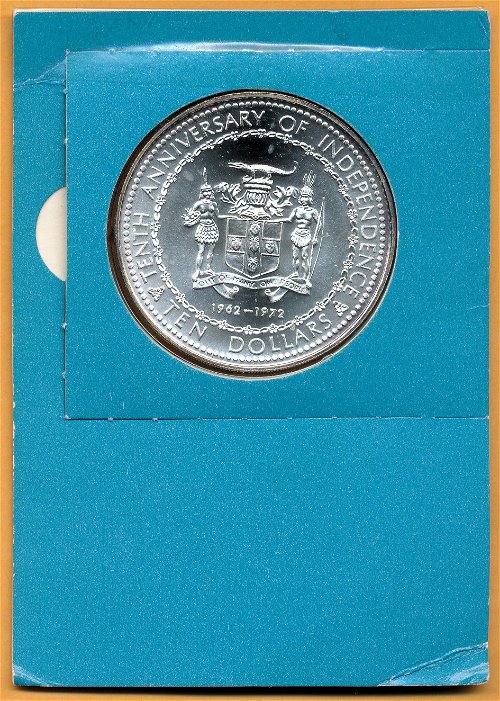
Each of the coins features the Coat-of-Arms (CoA) of Jamaica, the original version of which dates to 1661, on its obverse. The CoA features a female (left) and male member of the Taino tribe as its flanking standards for the central shield; the Taino inhabited Jamaica at the time of Columbus' arrival in 1494, they came to the island from Venezuela beginning in about 650 AD. The shield features a red cross adorned with five golden pineapples; the fruit was brought to the island from South America but quickly took root throughout the island. Above the shield is the Royal Helmet of the British Monarchy which is surmounted by a crocodile.
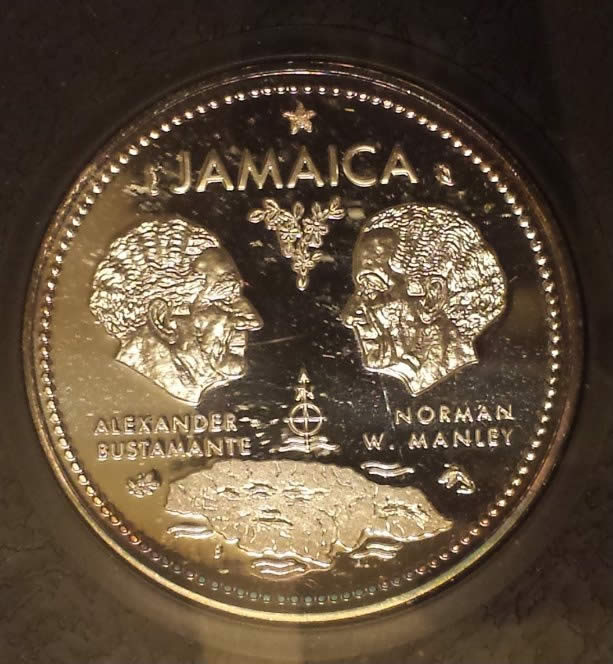
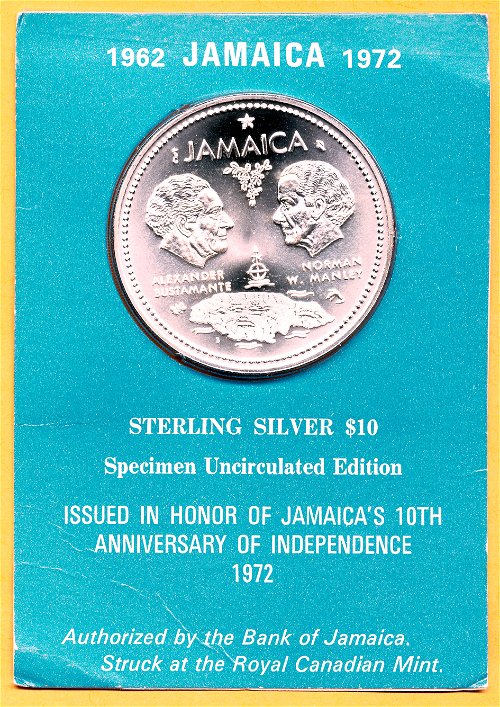
The reverse of the $10 coin features facing busts of Alexander Bustamante (left) and Norma W. Manley. Bustamante was the first Prime Minister of Jamaica (1962-67), Manley was the first Premier (1959-62). Both were key figures in the drive for Jamaica to become an independent nation - something it achieved on August 6, 1962. Bustamante and Manley are each officially recognized as a National Hero of Jamaica. Below the busts is seen a map of the island of Jamaica.
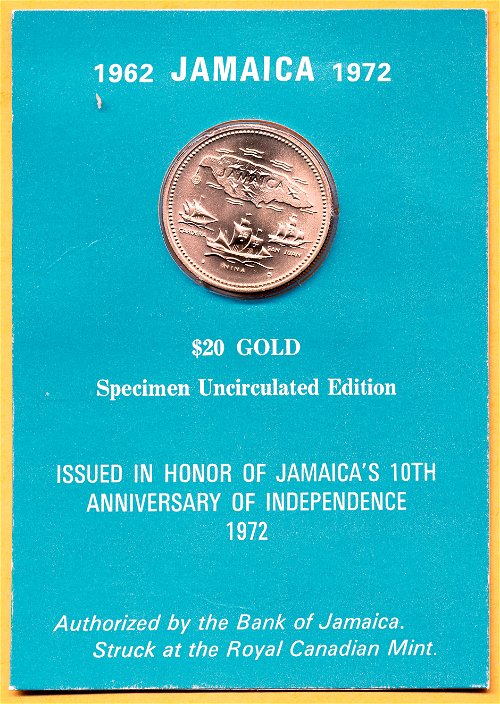
The reverse of the $20 gold coin features a map of Jamaica at the top with three sailing ships important to Jamaica's history below. The ships, the
Cardera, the
Nina and the
San Juan are the three caravels used by Christopher Columbus during his second voyage to the New World - Columbus visited and first went ashore on the island on May 4, 1494.
The coins were struck for circulation in Jamaica as well as for collectors; proof versions of each were available. The specimen quality coins were available for face value plus $1.00 handling - that meant $12.50 CAD for the $10 silver coin and $25.00 for the gold $20 coin. The proof coins were available for $16.00 and $32.00, respectively.
It's unclear how many of these silver and gold coins actually circulated at the time - not many being the most likely answer - but as precious metal coins had essentially disappeared from circulation around the world by 1972 they would definitely have been pulled from circulation almost instantly by those encountering them.
I could go on, but I'll leave it at that for now. I'm happy to answer questions.
Below are specimen examples of each of the coins in their original display cards.









 Posted 10/25/2018 5:15 pm