|
This page may contain links that result in small commissions to keep this free site up and running.

Welcome Guest! Registering and/or logging in will remove the anchor (bottom) ads. It's Free!
To participate in the forum you must log in or register. | Author |
 Replies: 638 / Views: 59,832 Replies: 638 / Views: 59,832 |
|
|
|
Pillar of the Community
United States
7067 Posts |
Quote:
The latest addition to the menagerie...  |
|
Pillar of the Community
 United Kingdom
1168 Posts |
Thanks, Bob. There have been a few interesting (to me) animal coins appearing recently, and I was lucky enough to win this tiny coin from Mytilene in Lesbos with a calf's head reverse. How an early engraver could put so much detail on a coin of 8mm diameter shows amazing skill. A 'net search indicated that the calf head provides an insight into the island's agrarian roots and the importance of nature within its culture. There is a brief description and a map for Mytilene on page 23 of this thread. 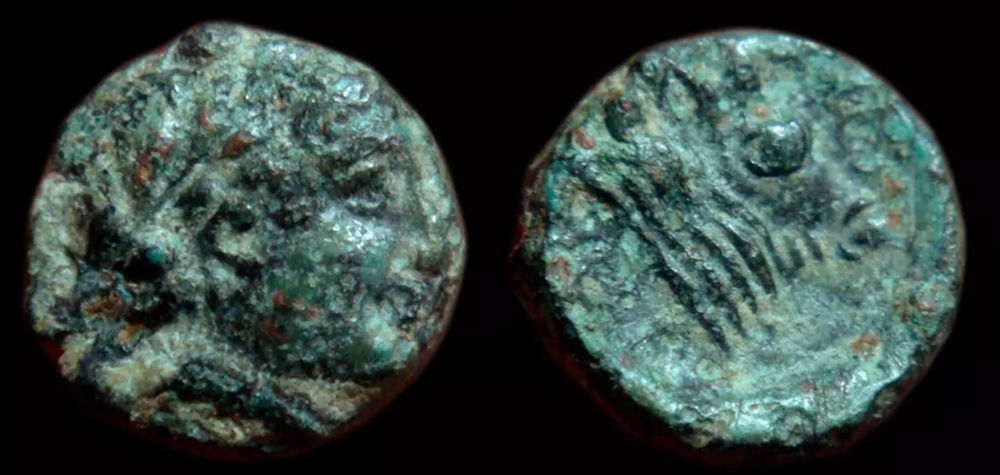 Mytilene, Lesbos. 400-350 BC. Obverse: Laureate head of Apollo right. Reverse: Calf's head right, Kerykeion (caduceus) to left. Reverse Inscription: MY. Bronze. Diameter: 8 mm. Weight: 0.7 gr Reference: BMC 20; SNG Cop 373. |
|
Pillar of the Community
United States
7067 Posts |
|
|
Pillar of the Community
United Kingdom
1168 Posts |
Quote:
8 mm. Just incredible. It certainly is, Bob The reverse of this Philip I coin from Hieropolis with Atargatis seated on a lion caught my eye as I had not heard of Atargatis previously. Atargatis (known as Derceto by the Greeks) was the chief goddess of northern Syria in Classical antiquity. Primarily she was a fertility goddess, but, as the baalat ("mistress") of her city and people, she was also responsible for their protection and well-being. Her nature closely resembled that of her Phoenician counterpart, Astarte, and after spreading to various other parts of the Greek world she was generally regarded as a form of Aphrodite. She was commonly portrayed wearing the mural crown and holding a sheaf of grain, while the lions who support her throne suggest her strength and her power over nature. Often shown with the tail of a fish, she was possibly the first recorded mermaid. 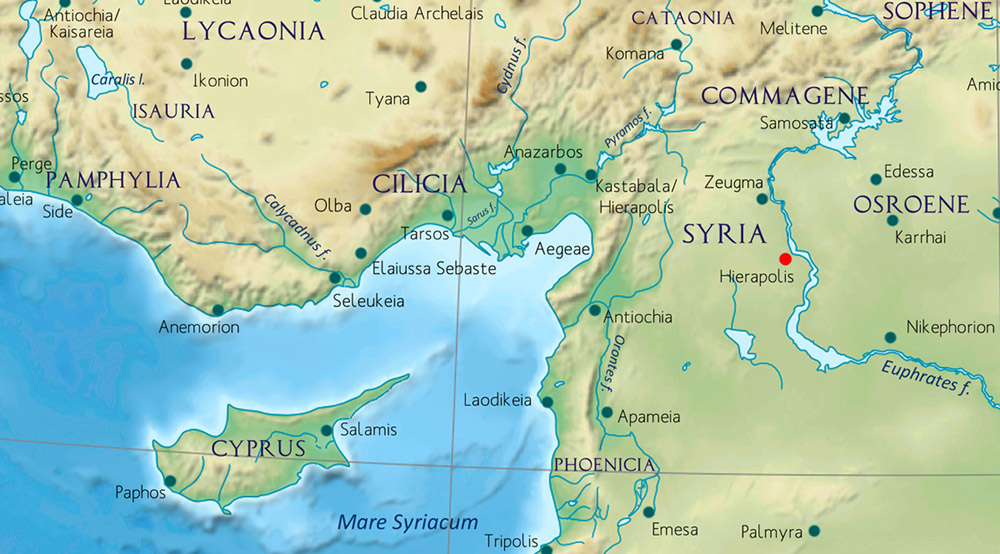 From the Dictionary of Greek and Roman Geography (1854): HIERA´POLIS, the "Sacred City" of Cyrrhestica in Syria, situated on the high road from Antioch to Mesopotamia, 24 M. P. to the W. of the Euphrates and 36 M. P. to the SW. of Zeugma, 2 1/2 days' journey from Beroea, and 5 days' from Antioch. Hierapolis, or Hieropolis as it is called always on coins and in Stephanus of Byzantium, obtained its Hellenic name from Seleucus Nicator, owing to the circumstance of BAMBYCE, as it was called by the natives, being the chief seat of the worship of the "Syrian goddess" Astarte, or personification of the passive powers of Nature. Atargatis, from an Oxford Classical Dictionary entry by Francis Redding Walton and Antony Spawforth: Atargatis (Aramaic 'Atar-'Ata), the goddess of Hierapolis-Bambyce in Syria whose usual name among Greeks and Romans was the 'Syrian goddess'; a mother-goddess, giver of fertility. Her temple, rebuilt c.300 BC by Stratonice, wife of Seleucus I, was plundered by Antiochus IV and by Crassus, but was still in Lucian's day one of the greatest and holiest in Syria; its site has yet to be found. Her consort was Hadad; his throne was flanked by bulls, that of Atargatis by lions. At Ascalon, Atargatis was represented as half woman, half fish. Fish and doves were sacred to her; the myth records that, having fallen into a lake, Atargatis was saved by the fish, or, in another version, that Atargatis was changed into a fish, and her daughter Semiramis into a dove. A more fanciful story goes - Atargatis fell in love with a mortal shepherd whose name was Adad and they had a daughter together called Semiramis who later became the queen of Assyria. Atargatis caused the death of her husband by accident and so drowned herself in the lake due to the guilt. She was still beautiful in death and the waters transformed her into a woman with the tail of a fish, she had now become a mermaid. 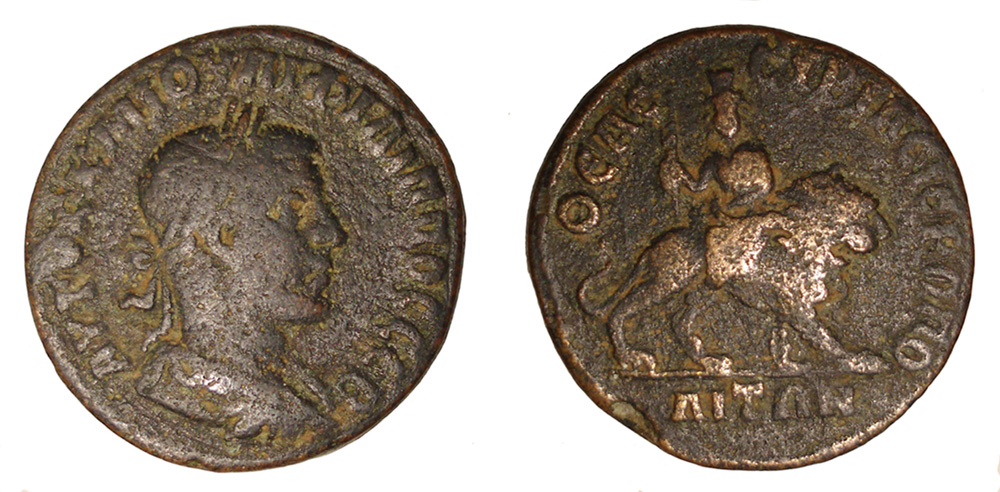 Philip I of Hierapolis in Cyrrhestica (Syria). 244-249 AD. Obverse; laureate draped and cuirassed bust of Philip I right. Obverse legend; AYTOK K M IOYΛI ΦIΛIΠΠOC CEB. Reverse; Atargatis seated on lion walking right, holding sceptre in right hand. Reverse legend; ΘEAC CYPIAC IEPOΠOΛITΩN. Bronze. Diameter: 27 mm. Weight: 14.69 gr. Reference: RPC CRS 64a; SNG Cop 63; BMC 57v. Note: The distance given in the second paragraph as m.p. (milia passuum or mille), consisted of a thousand paces as measured by every other step - as in the total distance of the left foot hitting the ground 1,000 times. When Roman legionaries were well-fed and harshly driven in good weather, they created longer miles. Edited by Novicius
06/10/2024 09:01 am
|
|
Pillar of the Community
 Sweden
2124 Posts |
Quote:
Mytilene, Lesbos. 400-350 BC. Fantastic detail on that little coin! Quote:
The reverse of this Philip I coin from Hieropolis with Atargatis seated on a lion caught my eye as I had not heard of Atargatis previously. Can't say I had either, but now I know! Nice coin too! |
|
Pillar of the Community
United Kingdom
1168 Posts |
Thanks, Erafjel. There are some interesting bronzes popping up just now. Having an interest in ships and in wildlife, this coin from Megara was clearly suitable for the collection. Dolphins can be pretty friendly towards humans, and having the prow on the obverse and two dolphins on the reverse reminded me of interactions witnessed in the Falkland Islands. Each time when entering the south end of Falkland Sound we would see a pod of Commerson's dolphins swimming quickly towards us. They would swim and play from side to side of the ship's bow, apparently enjoying the pressure wave from the bow wave. After a short period of play they would swim off again. Interestingly Megara was also the name of the wife of Heracles. As a reward for defeating Orchomenos, King Creon of Thebes gave his daughter Megara to Heracles in marriage, and Megara bore him three sons. 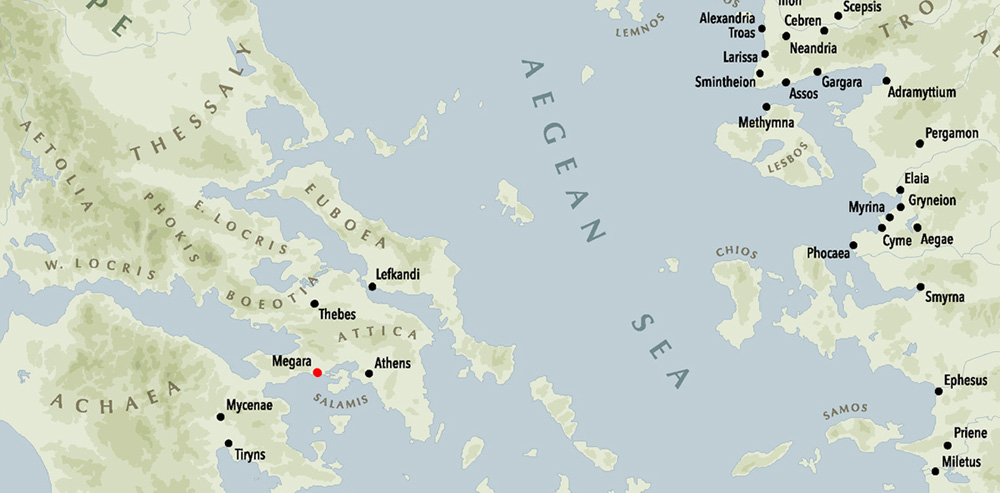 Much has been written about Megara, but a condensed history is shown below, extracted from the informative "classicalbackpacking" web site. Officially part of Attica today, Megara has historically been an enemy of Athens. The plain of Megara is not extensively arable. There exists around 100 sq. kilometers of good farmland which was most likely devoted fully to wheat and barley during the city's early existence. It forms roughly a triangle shape, widest as the plain reaches the sea, though there are no rivers that drain it. The plain lies between the Cerata/Pateras mountain range to the east and the Gerania range to the west. These ranges defined the political boundaries of Megara, although in the archaic period the Sanctuary of Hera at Perachora, and even the entire Perachora peninsula, fell under the control of Megara (it later became a Corinthian possession and today it is officially part of the prefecture of Corinth). During that same period of time, Megara may have controlled the plain to the west of Gerania all the way to the isthmus. Population estimates of ancient Megara at its height (during the fifth century BC) place the number of inhabitants at not over 40,000. The plain would have been able to supply food for a little over half that number and the rest would have been fed using imported grain. The number of citizens that Megara could have supported was dwarfed by the other states around it: Corinth, Boeotia, Athens. It would have made Megara one of the smallest city-states of Greece. The only natural resources from the area were the deposits of salt found on its south coast. Megara may have been under Athens' control in the Bronze Age. Homer listed them together in his catalogue of ships. But in the Geometric period it was independent. Megara was well known for its numerous colonies that included Chalcedon and Byzantium. The city hotly contested the island of Salamis with Athens and in c 570 BC lost it to the tyrants of Athens. About the same time Perachora was lost to Corinth. The Megarians fought at Plataea, sending 3000 troops, and it was at Megara that the Persians stopped, unable to continue past the Isthmus. Before the Peloponnesian War, Megara sided with Athens and the Athenians built long walls from the town down to the port of Nisaea. But they soon turned on the Athenians and in 432 Pericles' famous Megarian Decree helped to cause the war by keeping all Megarians from Attic markets and harbors. During the war, the Athenians invaded Megara's lands often and even blockaded the city from the sea. Though the Athenians managed to take the port of Nisaea, they never managed to break into the city itself. In the fourth century, Megara was in control of the port of Aigosthena, well north of the city. Throughout Antiquity, Megara was not thought very highly of. Pausanias said that they were the only Greek people whom even the emperor Hadrian could not make thrive. Strabo said that the soil was very sterile. Theophrastus said the land around it was poor. Isocrates even said that the Megarians "farmed rocks." But the city retained its fortifications until the 5th C AD. Megara was also the birthplace of both Theognis the elegiac poet and Eukleides the sophist. 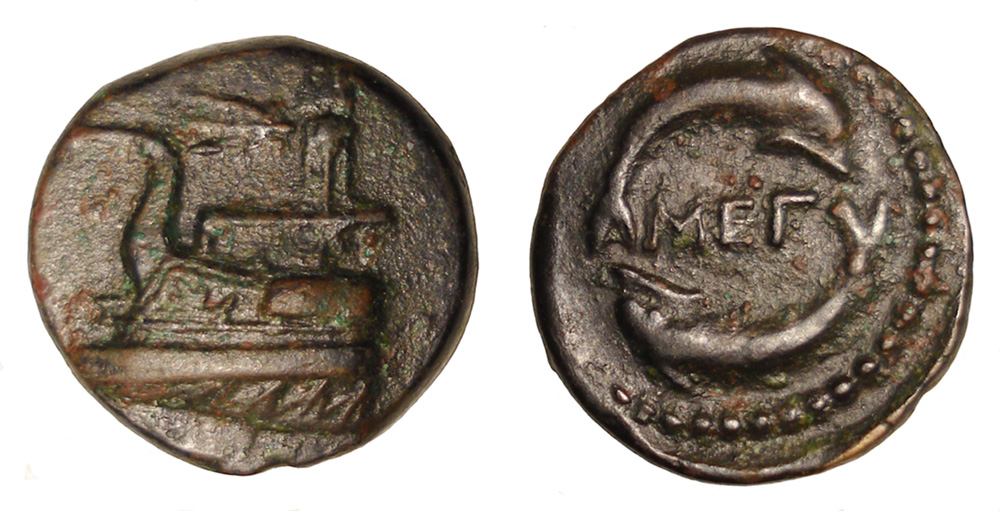 Megaris, Megara. c. 307-243 BC. Obverse; Prow left, surmounted by tripod on forecastle, trident in field above. Reverse; MEΓ between two dolphins swimming clockwise. Bronze. Diameter: 16 mm. Weight: 2.79 gr. Reference: SNG Cop 480, S-2590. |
|
Pillar of the Community
Sweden
2124 Posts |
A nice bronze, indeed. And always interesting to see contemporary depictions of antique vessels.
|
|
Pillar of the Community
United Kingdom
1168 Posts |
Quote:
And always interesting to see contemporary depictions of antique vessels. Indeed. I was really pleased to see how much detail there actually was on the coin when it arrived. |
|
Pillar of the Community
United Kingdom
1168 Posts |
This Roman provincial coin from Teos in Ionia caught my eye as it has a griffin on the reverse. It is only tiny but it is a griffin, located on the left at Dionysus' feet. The province is Asia, and the subprovince the Conventus of Smyrna. The reign is uncertain, but possibly from the Flavian period. It is in very good condition for this unusual type, so worth sharing. A brief description and map of Ionia with Teos is on page 21 of this thread. 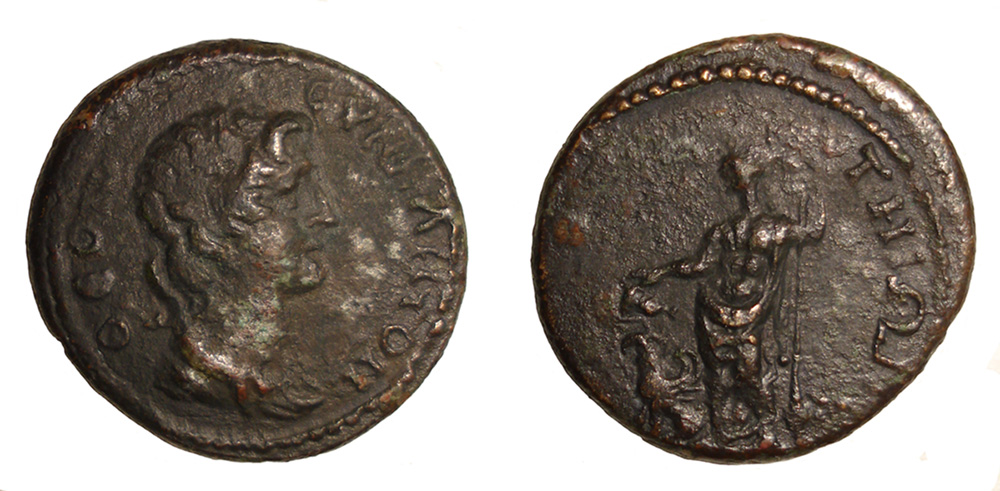 Ionia, Teos. c 2nd to 3rd Century AD. Obverse: Laureate draped youthful bust of the Senate, right. Obverse legend: ΘEON CYNKΛHTON. Reverse: Dinoysus, wearing long robe, standing left, holding cantharus and leaning on thyrsus, griffin sitting left at feet. Reverse legend: THIΩN. Bronze. Diameter: 20 mm. Weight: 4.64 gr. Reference: RPC II 1042. https://rpc.ashmus.ox.ac.uk/coins/2/1042 |
|
Pillar of the Community
United Kingdom
1168 Posts |
I hadn't seen this combination of young Herakles and a lion on a coin from Lysimachos/Lysimacheia before. ACSearch turned up two specimens, but the engraver may have been having a bad day with this coin as the ΛY of ΛY ΣIMA is retrograde. 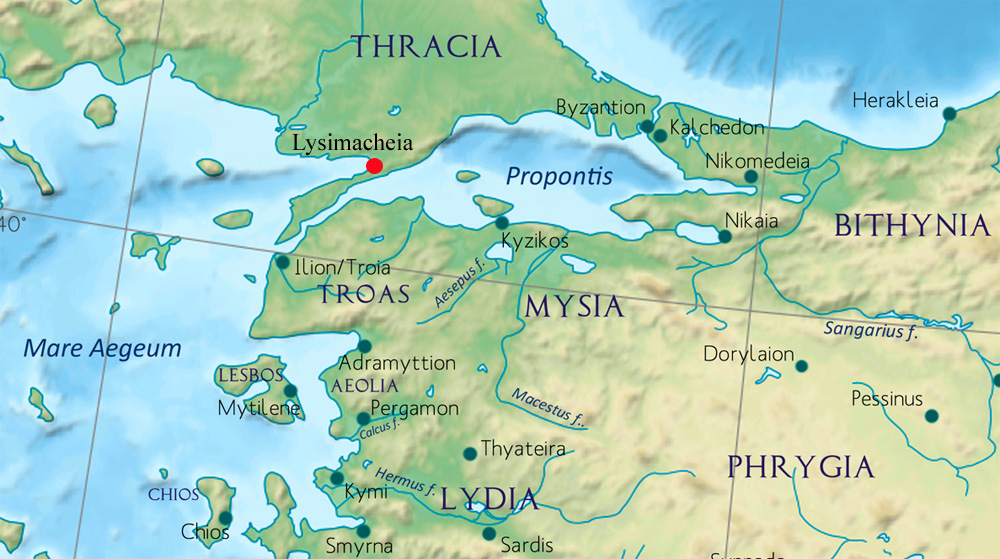 Another oddity for the menagerie. 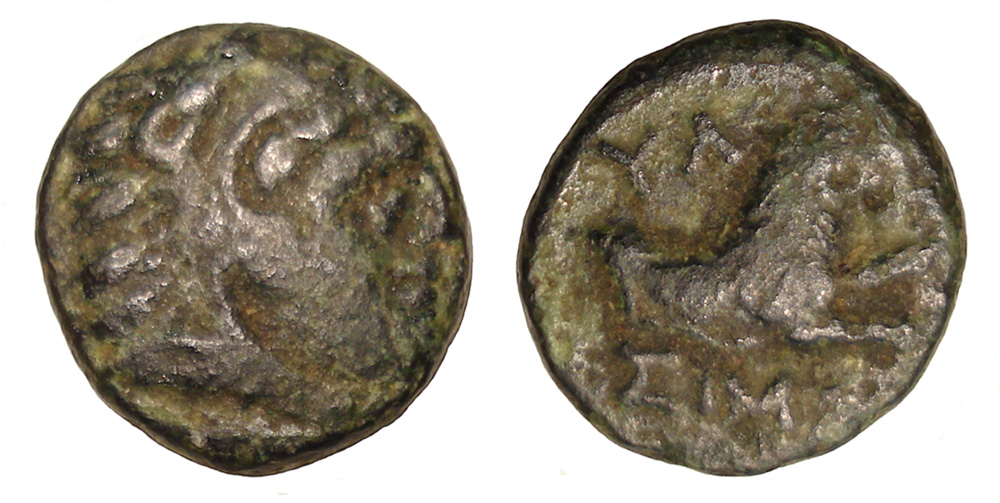 Lysimachos, Thrace. circa 309-281BC Obverse; Head of young Herakles right, clad in lion's skin. Reverse; Forepart of a lion lying right, left foreleg raised. Reverse legend; YΛ (ΛY retrograde) / ΣIM(A) above and below forepart. Bronze. Diameter: 13 mm. Weight: 1.78 gr. Reference: Coryssa ID 1747043 From ACSearch; "Unpublished in the standard references; for obv., cf. HGC 3.2, 1761; for rev., cf. HGC 3.2, 1760" Link to the two coins on ACSearch. https://www.acsearch.info/search.ht...=usd&order=0Coins 2 and 3 are the same coin. |
|
Pillar of the Community
United Kingdom
1168 Posts |
It has been a while since I picked up an animal coin, so was tempted by this one with Neptune/Poseidon holding a dolphin from Berytus (Beirut). The obverse portrait of Antoninus Pius is not great, though the reverse still retains reasonable detail. On checking the RPC page there were 26 coins listed but only 5 with images. It appeared that this one compared favourably with some of the others, so the coin images were uploaded and have been added as number 27. https://rpc.ashmus.ox.ac.uk/coin/481751The son of Cronus and Rhea, Poseidon had two brothers Zeus and Hades, and three sisters, Hera, Demeter and Hestia. His wife, Amphitrite, being the goddess of the sea. It brings back memories of my "Crossing the Line" ceremony many many years ago, where I was taken before King Neptune (actually the ship's Chief Engineer dressed as Neptune) and his court (other officers dressed for the part). After asking King Neptune for permission to cross the Equator and asking for his protection, there followed the actual ceremony. A list of my "crimes" was read out and various penalties (humiliations) were imposed to atone for said "crimes". The ceremony ended with me being thrown unceremoniously into the swimming pool. It would never happen again as I was now a "shellback" and had the certificate to prove it. 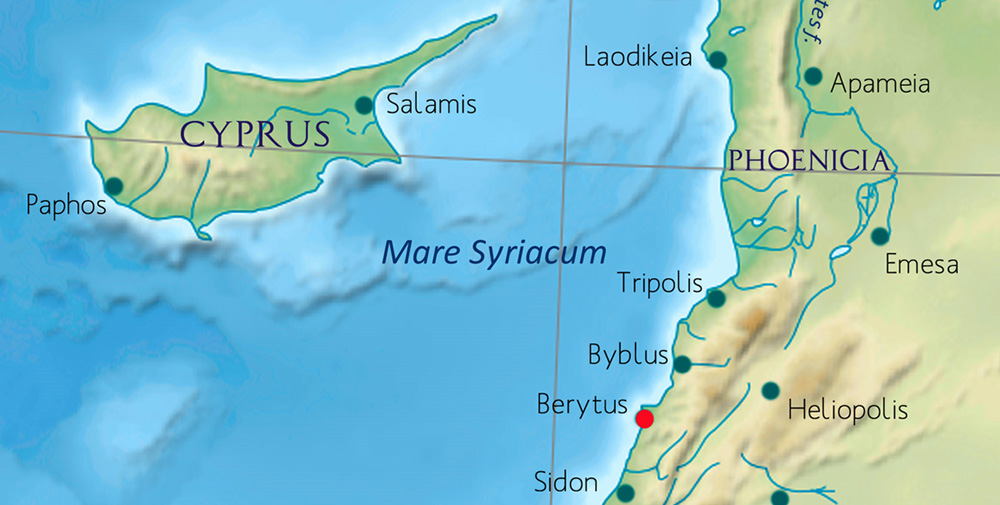 These ceremonies in various forms are carried out on navy and merchant navy ships, and as passenger entertainment on cruise ships. This is where the link to Phoenicia comes in, as it is thought that the practice goes back as far as 700 BC. From the Canadian navalandmilitarymuseum org site: "The custom of marking a sailor's first passage across important geographical parallels with a special ceremony is ancient. So ancient, in fact, that the origins of these early line crossing rites are hard to trace.
As early as 700 BC, those master mariners the Phoenicians celebrated such crossings. Human sacrifice may have formed part of their ritual, to please the sea god and ensure a safe voyage.
The ducking of initiates in water, now such an important feature of Crossing the Line festivities, may have roots in the practice of tossing a sacrificial victim overboard at moments of danger.
It is not known whether sailors who took part in these early crossing the line ceremonies received any kind of symbolic token. What is certain is that as the custom evolved over time, a tradition developed of providing participants with a keepsake to mark the event. These keepsakes not only commemorated an important occasion, but also served as proof that the recipient was tough enough to endure the hardships and hazards of life at sea.
In the Canadian Navy, one of the most tangible symbols of this rite of passage is the Crossing the Line certificate. Sons and daughters of Neptune (or shellbacks, as the initiated are known) prize these certificates since they document success in completing an important career milestone.
Modern Crossing the Line certificates are computer-generated and are not especially attractive, or memorable.
In the past, they were often beautifully illustrated and individually coloured by hand. The result was a souvenir that could later be framed and displayed with pride."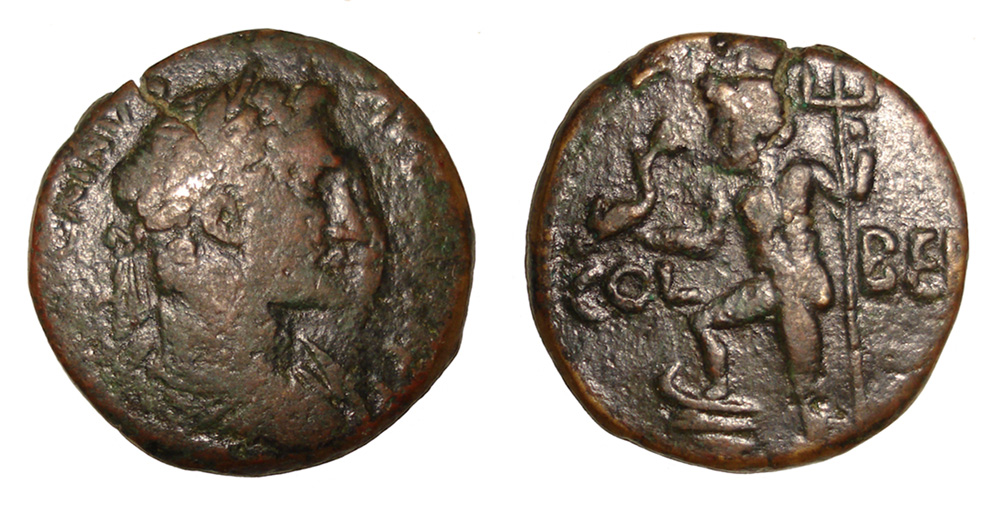 Antoninus Pius (138-161 CE). Berytus Phoenicia. Obverse: Laureate bust of Antoninus Pius right, wearing cuirass and paludementum. Obverse Inscription: [ANT]ONINVS AVG [PIVS P P] T P. Reverse: Naked Neptune/Poseidon standing left, with foot on prow, holding dolphin and trident. Reverse Inscription: COL / BER. Bronze. Diameter: 24 mm. Weight: 11.92 gr. |
|
Pillar of the Community
Sweden
2124 Posts |
Great coin, lots of detail on that well preserved reverse. |
|
Moderator
 United States
195559 Posts |
Nice example! |
|
Pillar of the Community
United Kingdom
1168 Posts |
Thanks @erafjel and @jbuck. Quote:
lots of detail on that well preserved reverse. It is the best representation of Neptune/Poseidon in the collection so far.  |
|
Pillar of the Community
United Kingdom
1168 Posts |
Again it has been a while since I posted an animal coin, and this camel (dromedary) reverse from Bostra/Bosra recently caught my eye. It does not appear to be in great shape, but in comparison to others of the type it is quite acceptible. https://rpc.ashmus.ox.ac.uk/coins/4/3983 Though the portrait is of Commodus, the reverse refers to the new Bostra of Trajan. (In 105/106 AD it was given the designation Nova Trajana Bostra.) 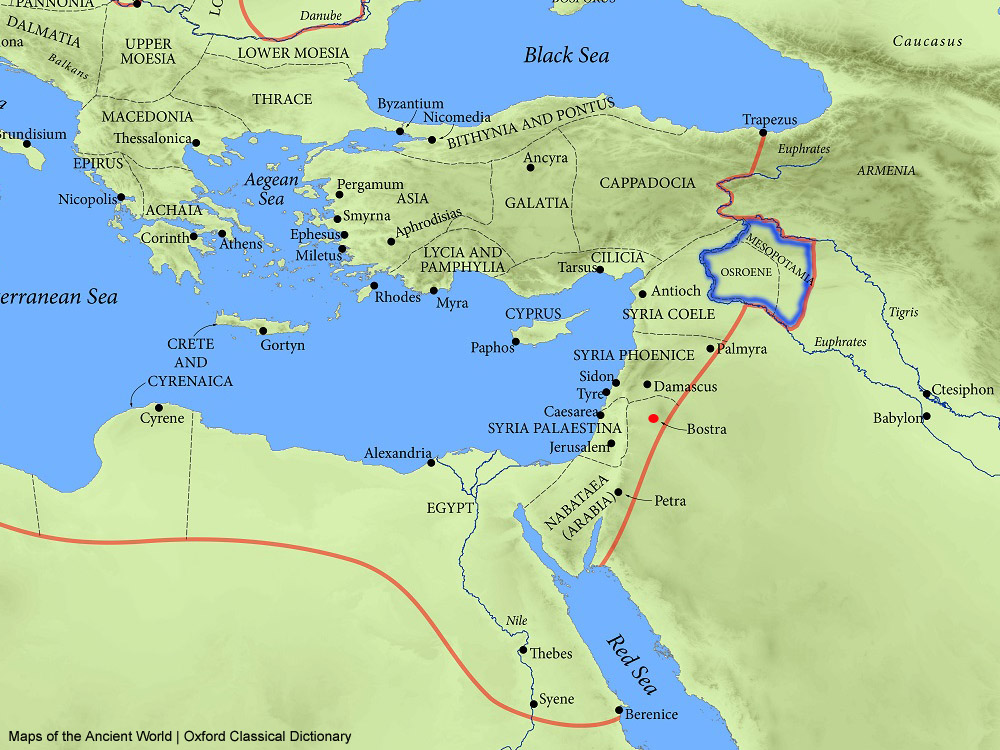 A brief extract from the UNESCO World Heritage Convention site - Ancient City of Bosra: Bosra, once the capital of the Roman province of Arabia, was an important stopover on the ancient caravan route to Mecca. A magnificent 2nd-century Roman theatre, early Christian ruins and several mosques are found within its great walls. The name of Bosra occurs in the precious Tell el-Amarna tablets in Egypt, which date from the 14th century B.C. and represent royal correspondence between the Pharaohs and the Phoenician and Amorite kings. It became the northern capital of the Nabataean kingdom. In the year of 106 A.D, a new era began for Bosra when it was incorporated into the Roman Empire. Alexander Severus gave it the title Colonian Bostra and Philip the Arab minted currency especially for it. During Byzantine times, Bosra was a major frontier market where Arab caravans came to stock up and its bishops took part in the Council of Antioch. Bosra was the first Byzantine city which the Arabs entered in 634 in the phase of Islamic expansion. Today, Bosra is a major archaeological site, containing ruins from Roman, Byzantine, and Muslim times. Further, Nabataean and Roman monuments, Christian churches, mosques and Madrasas are present within the city. Its main feature is the second century Roman Theatre, constructed probably under Trajan, which has been integrally preserved. It was fortified between 481 and 1251 AD. Al-Omari Mosque is one of the oldest surviving mosques in Islamic history, and the Madrasah Mabrak al-Naqua is one of the oldest and most celebrated of Islam. The Cathedral of Bosra is also a building of considerable importance in the annals of early Christian architecture. Bosra survived about 2500 years inhabited and almost intact. The Nabataeans, Romans, Byzantines and Umayyad, all left traces in the city, which is an open museum associated with significant episodes in the history of ideas and beliefs. 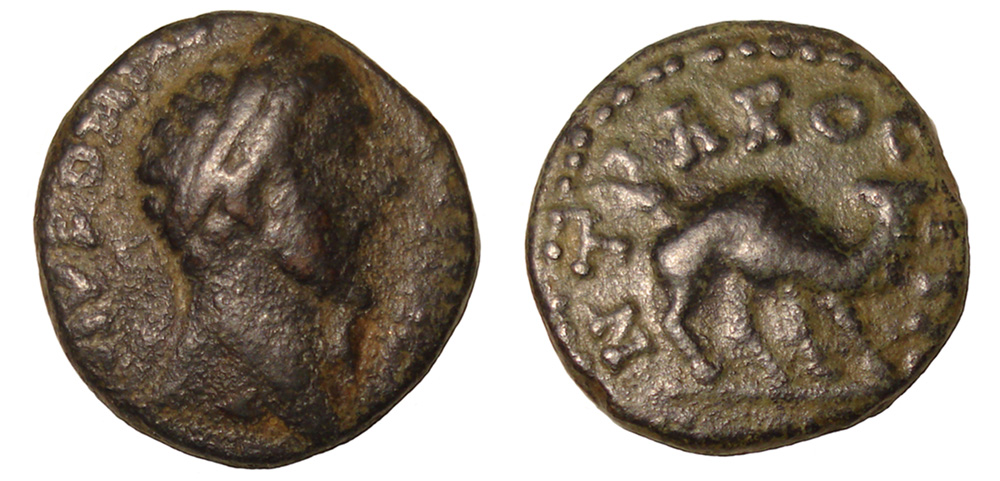 Bostra, Arabia. Commodus. 177-192 AD. Obverse: Laureate head of Commodus right. Obverse Inscription: AV KOMMO[Δ] ANTUN[INO]. Reverse: Camel standing right. Reverse Inscription: N TPA BOCTPA. Bronze. Diameter: 15 mm. Weight: 2.82 gr. Reference: RPC IV.3, 3983 (temporary). |
| |
Replies: 638 / Views: 59,832 |
To participate in the forum you must log in or register.
Disclaimer: While a tremendous amount of effort goes into ensuring the accuracy of the information contained in this site, Coin Community assumes no liability for errors. Copyright 2005 - 2026 Coin Community Family- all rights reserved worldwide. Use of any images or content on this website without prior written permission of Coin Community or the original lender is strictly prohibited.
Contact Us | Advertise Here | Privacy Policy / Terms of Use
|
| Coin Community Forum |
© 2005 - 2026 Coin Community Forums |
| It took 0.5 seconds to rattle this change. |
 |
|
| |
| |







 First Page
 Previous Page


 Posted 06/03/2024 9:27 pm


