| Author |
 Replies: 41 / Views: 4,320 Replies: 41 / Views: 4,320 |
|
|
|
New Member
 25 Posts |
|
|
New Member
25 Posts |
|
|
New Member
25 Posts |
|
|
New Member
25 Posts |
|
|
New Member
25 Posts |
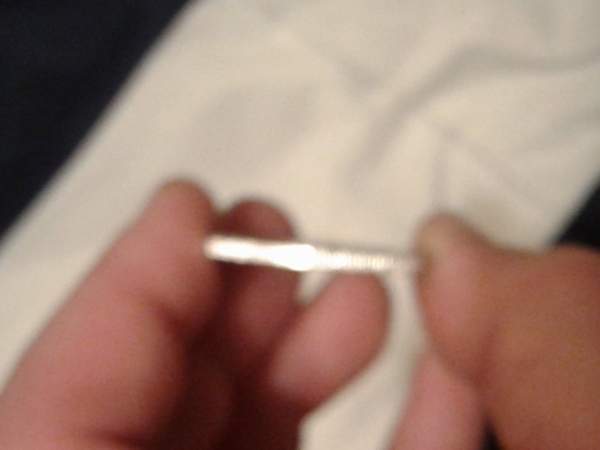
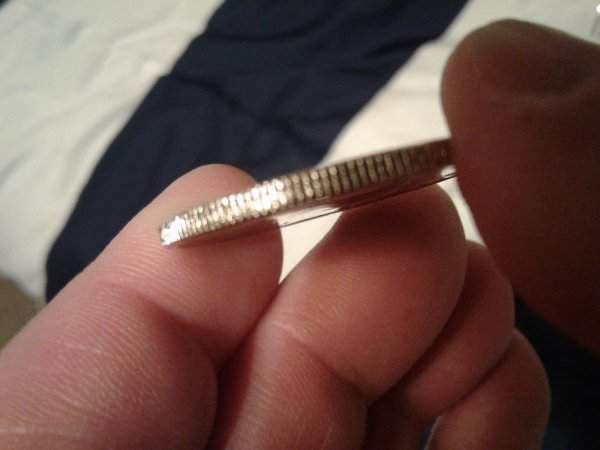
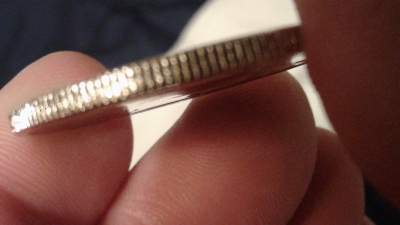
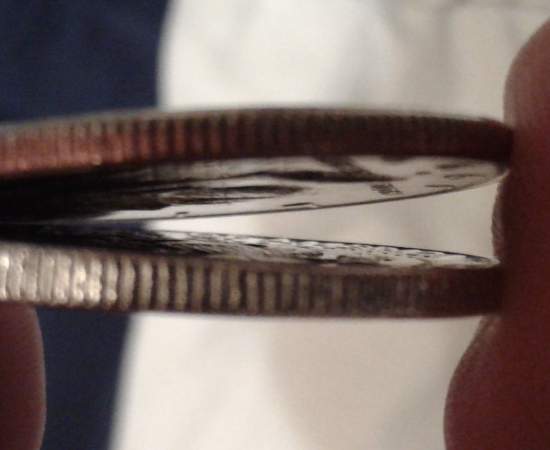
It's not a proof with a D mintmark right? Even if it was proof it would still show clad on the side right? Anyone have an idea what this Is?
|
|
New Member
25 Posts |
John1...what am I looking at in your humble opinion?
|
|
Forum Dad
 United States
24232 Posts |
Please be patient. No need to keep posting again and again.
|
|
Moderator
United States
34562 Posts |
@jrv, it might have been plated and that covered up the normally-visible copper along the edge.
"If you climb a good tree, you get a push."
-----Ghanaian proverb
"The danger we all now face is distinguishing between what is authentic and what is performed."
-----King Adz
|
|
Moderator
United States
56855 Posts |
|
|
Pillar of the Community
United States
1543 Posts |
Most likely it is plated, though you cannot tell if it is silver by the weight, It's specific gravity should be different though, or you could get an xrf analysis.
|
|
Pillar of the Community
United States
1285 Posts |
doesn't look silver to me. shiny != silver
Edited by machine20
07/25/2020 10:26 pm
|
|
Pillar of the Community
United States
600 Posts |
Agree with others that specific gravity or xrf are the only ways to know for sure. Standard clad planchet should be 11.34 grams and the 40% silver planchet would be 11.44 grams. Unfortunately, the tolerance is ± 0.454 grams (but usually much closer), so weight isn't 100% reliable. Also unfortunately, there are 302 million clad examples and (so far) 1 silver example found, so it is best to not get your hopes up. If it was me, and the weight was 11.3 grams, I might hold on to the coin but probably wouldn't spend money on getting it tested.
Edited by captaincoffee
07/25/2020 10:40 pm
|
|
Bedrock of the Community
United States
17884 Posts |
Weight isn't reliable as stated because the tolerance ranges for clad and 40% have a HUGE overlap. Chances are good it has been plated.
As mentioned specific gravity or an XRF gun test are going to be the only conclusive tests. SG of clad is 8.92 SG of 405 silver is 9.53 (SG tests should be done carefully because if you rush them it is easy to get and error, and they should be performed several times to make sure you are getting consistent results. that will help eliminate errors.)
An XRF test should be able to shoot through a silver plating so the key is going to be the amount of nickel it reports. It is anymore than just a mere trace you have a clad coin. A 40% silver coin could show a trace of nickel from being in contact with so many clad coins but the silver reading will be close to 80%. A plated clad coin could still show a high silver reading because most of what is read will be the plating, but if it penetrates the plating you should still get a reading of at least several % nickel. If it is not plated it should read 25% nickel.
Edited by Conder101
07/26/2020 6:15 pm
|
|
Pillar of the Community
United States
4680 Posts |
A nice clear photo of the obverse and reverse wouldn't hurt either  |
|
Pillar of the Community
United States
2287 Posts |
It could be 40% silver but it's a long shot.
That first picture looks clad.
Time don't fly, it bounds and leaps.
|
| |
Replies: 41 / Views: 4,320 |







 First Page


 Posted 07/25/2020 3:47 pm