The legality of a "living person" being depicted on a US coin is a topic that comes up with some frequency. It is often stated that it has long been against US law for its coins to feature a depiction of a living person. Prior to the 1997 law that authorized the
Statehood Quarters Program (it specifically prohibited the depiction of a living person) and the 2005 law that authorized the Presidential $1 coins (it includes language regarding no living presidents being included), there was, in fact, no law on the books that prevented depictions of living people on
US coins.
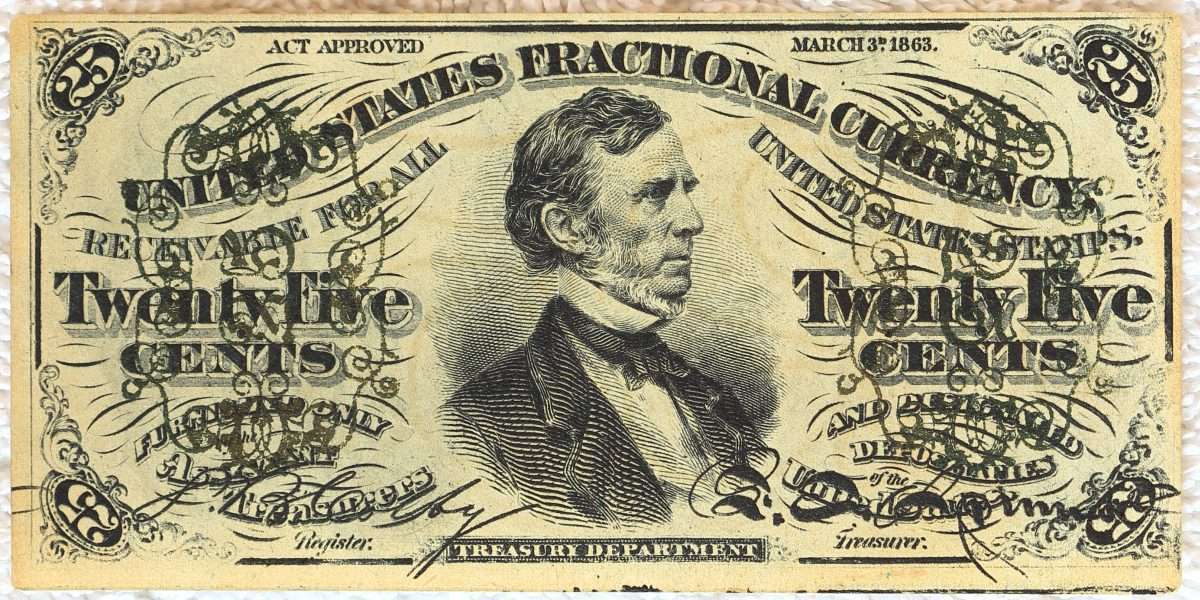
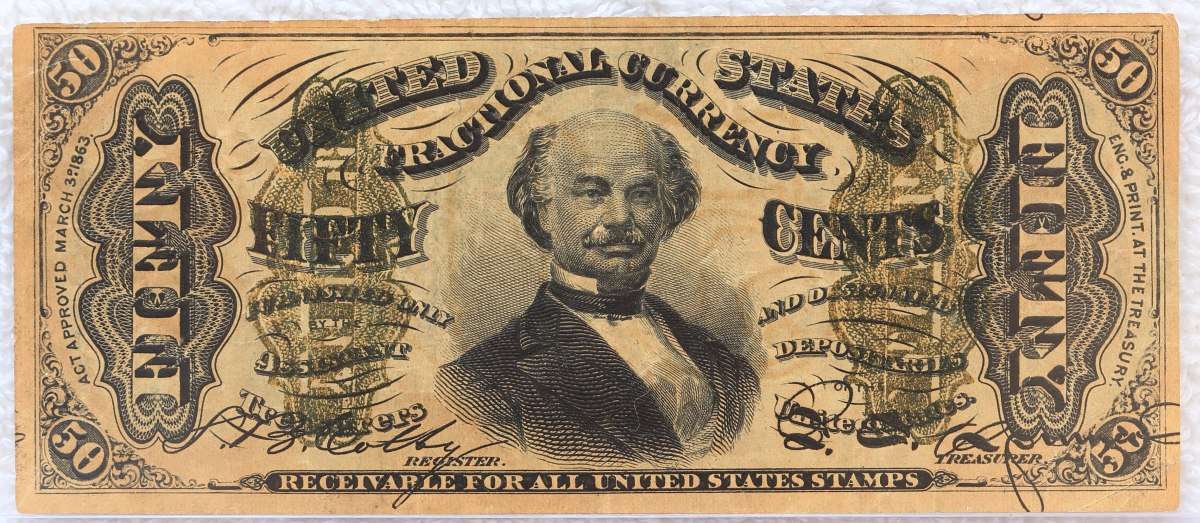
It is true, however, that US Code does include a law that prevents the use of a portrait of a living person on certain financial instruments of the US; the law has been in place since 1866. The law states "no portrait or likeness of any living person shall be engraved or placed upon any of the bonds, securities, notes, or postal currency of the United States." The law says nothing about the nation's coinage, however, and thus created wiggle room that was taken advantage of by sponsors/designers of US commemorative coins several times.
So, it has been more of a long-standing tradition rather than law that
US coins - at least circulating
US coins - do not bear the portrait of a living person.
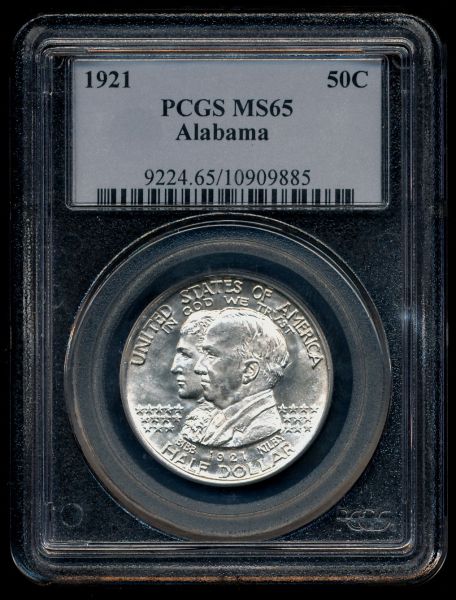
It's reasonably common knowledge that the first time a living person was featured on a US coin was on the 1921 Alabama commemorative half dollar (contrary to what is stated on more than one misinformed web site). The coin featured conjoined portraits of William Wyatt Bibb, the governor at the time the State of Alabama entered into the Union in 1819 and a portrait of the very-much-alive Thomas Erby Kilby, Sr., the Alabama governor in 1919 at the time of the state's centennial.
I've read that President William McKinley was slated to be the first living person depicted on a US coin - the 1903 Louisiana Purchase Exposition gold $1 coin. I'm not convinced, however, as the facts say differently.
The 57th US Congress began its session at the same time McKinley began his second term, on March 4, 1901. McKinley was assassinated while attending the Pan-American Exposition in Buffalo, NY; he was shot by Leon Czolgosz on September 6, 1901 and died roughly a week later on September 14th. McKinley's second term and the 57th Congress overlapped for about six months.
The gold $1 coins for the Louisiana Purchase Exposition (LPE) were authorized by the 57th Congress as part of a much larger sundry civil expenses bill that was signed into law on June 28, 1902. Aside from the fact that the bill did not include language specifying what or who was to appear on the gold coins, the bill was not approved until months after McKinley's death and the coins were not struck until 1903 - more than a year after his assassination.
I think it is very likely that McKinley's portrait was included on the LPE coin as a tribute to him and that, if he were still alive at the time of the coin's development, a different design would have been created.
What other
US coins have featured living people?
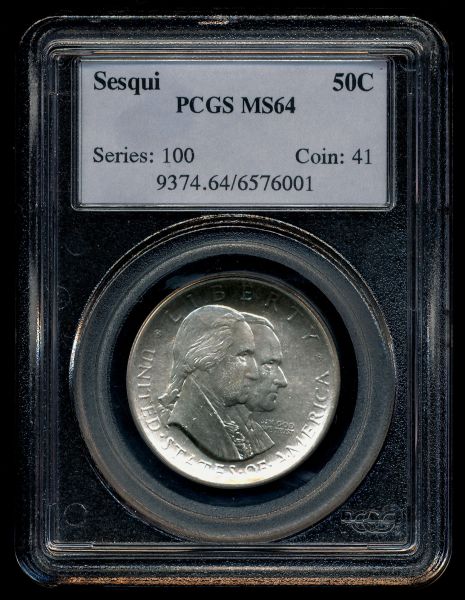
From the classic commemorative coin era:- 1926 Sesquicentennial of American Independence silver half dollar - it includes a portrait of Calvin Coolidge who was the current US president at the time.
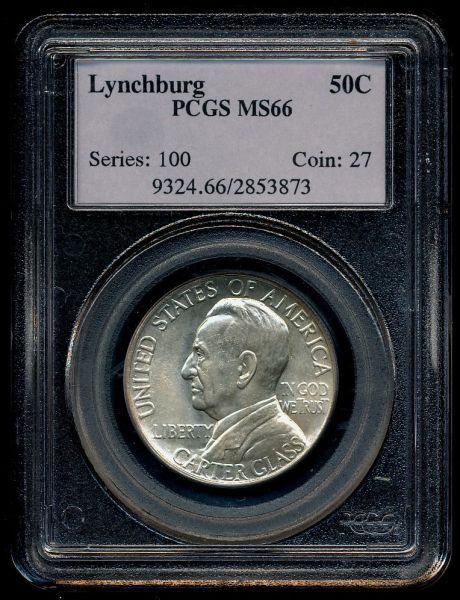
- 1936 Sesquicentennial of Lynchburg, Virginia half dollar - it features a portrait of then-Senator Carter Glass who was opposed to having his portrait on the coin but was overruled.
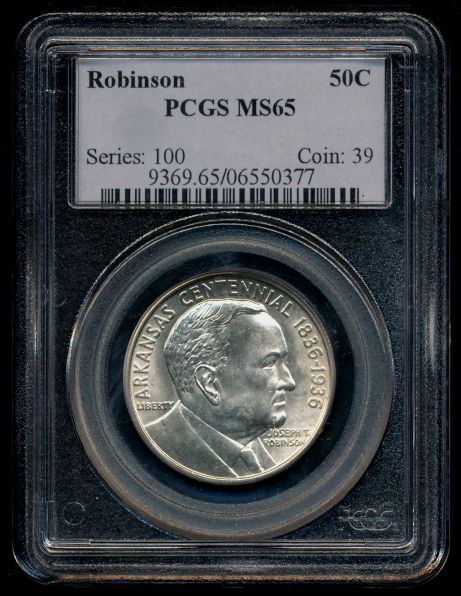
- 1936 Robinson-Arkansas Statehood Centennial half dollar - it depicts Senator Joseph Robinson, the Democrat Senator from Arkansas who was the Senate majority leader at the time the coin was issued. Robinson died in 1937 after suffering a fatal heart attack.
 From the same era - the US coinage for the Philippines series (while the Philippine Islands were a Territory/Commonwealth of the US):
- 1935 Commonwealth Commemorative 50 Centavos - it depicts Manuel Quezon (the first president of the Philippines Commonwealth) and Frank Murphy (the last Governor-General of the Philippines Territory); both were alive at the time
- 1935 Commonwealth Commemorative One Peso #1 - it presents conjoined portraits of Manuel Quezon and Frank Murphy
- 1935 Commonwealth Commemorative One Peso #2 - it depicts conjoined portraits of Manuel Quezon and then-current US President Franklin Delano Roosevelt
(You can read more about these coins here:
US-PI Commonwealth Commemorative Coins)
From the modern US commemorative coin era:- 1995 Special Olympics World Games Commemorative silver dollar which features a left-facing portrait of Eunice Kennedy Shriver, the founder of the Special Olympics. Shriver died in 2009. Eunice was not the most attractive woman and the silver dollar depicting her is often criticized for its lack of pleasing aesthetics, but there is no arguing her vital role in the Special Olympics organization. (How's that for sensitive treatment of a tough subject!)
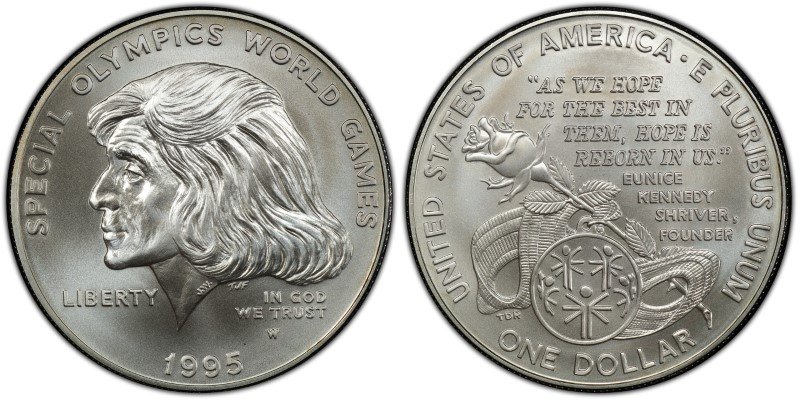 image courtesy of PCGS CoinFacts at http://www.PCGS.com.
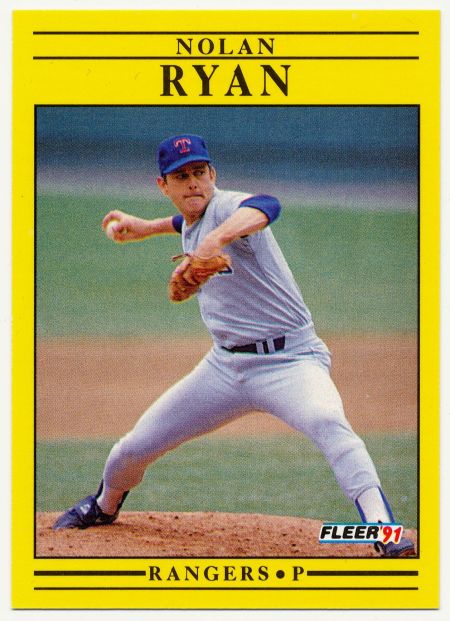
- Some would also make the argument that Nolan Ryan is shown on the 1992 Olympics silver dollar. The Mint's official position, however, is that it is not actually Ryan, but a composite representation of a pitcher that happens to resemble him - strongly IMO!
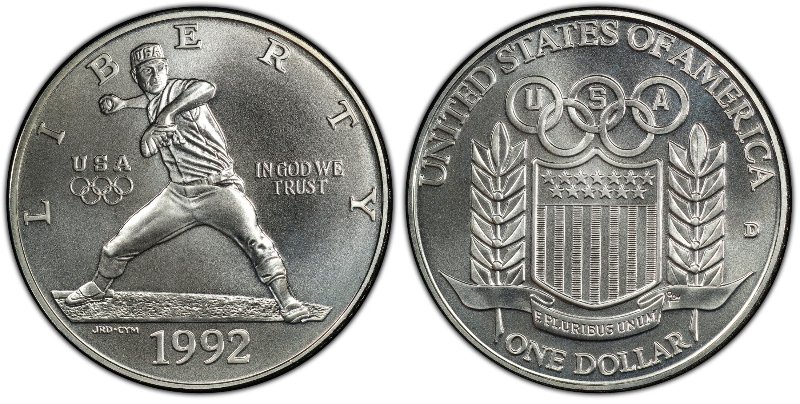 image courtesy of PCGS CoinFacts at http://www.PCGS.com.
Here's Ryan's Fleer baseball card from 1991 - you be the judge.
Nancy Reagan came close to being the second living woman to appear on a US coin, but she died a few months before her portrait debuted on the Nancy Reagan First Spouse Gold $10 coin in conjunction with the Ronald Reagan Presidential $1 coin. Nancy died on March 6, 2016, the gold $10 was released on July 1, 2016.
Read More: Commems Collection










 Posted 11/05/2020 9:55 pm


