| Author |
 Replies: 50 / Views: 5,453 Replies: 50 / Views: 5,453 |
|
|
|
Pillar of the Community
United States
3237 Posts |
@silviosi keep the change is a member who has posted a lot of good error and variety coins here and knows what he's talking about. I think you're being far too dismissive. I won't pretend I know whether or not this is an error or PMD, but pretending that it would be "easy" to do something like this without the coin coming out of round or flattening the design is ridiculous. It's either a mint error or a very peculiar and unusual case of PMD. |
|
Pillar of the Community
United States
591 Posts |
Put me in the PMD camp. I think the flexed metal theory explains the visual evidence the best. The taper of the crack rules out a sawing mechanism and the fact that one side sits higher than the other indicates some amount of force has been applied to one side that was not applied equally to the other. Also, someone earlier observed that the break at the rim shows evidence of flattening, so a cut there makes sense. Make that cut, put it into a padded vise (to avoid leaving obvious marks) and then gently apply back and forth pressure and I suspect you'll end up with a similar crack. NOT intending to suggest any nefarious intent by the OP by the way, just offering thoughts as to how the effect was created. |
|
Valued Member
United States
356 Posts |
I have to admit, I am really enjoying the plausible explanations and speculations from everyone on this one. I've looked at your pics for the last hour trying to figure this one out from my perspective. I am NO expert but these type of things really get my mind working overtime thinking how it did or didn't happen at the mint and at the same time wondering how this could be explained as PMD. Very good input from everyone's opinions so far. When opinions sit atop the fence at 50/50 on a coin, then you know you may or may not have something worthwhile but then again maybe not. My opinion which really doesn't matter but thought I'd give it anyway. -I am assuming, and seeing from your lighting angles and shadows, that there is not a gap in the metal other than what looks like a small gap adjacent to the edge and rim where the split begins. -To me, it looks like a possible small defect on the edge of the coin, potentially leading to a fracture, where it starts to crack which over time (as said earlier in another reply) could possibly lead to continued fracturing and/or splitting. -The obverse split appears to be less linear than the extremely straight reverse split. I assume this is a result due to more design elements on the vest causing visual distortion as opposed to the more prominent flat fields on the reverse which make the split appear dead straight. -I personally am not seeing an discernible signs of applied downward pressure by any type of tool, knife, razor, shears, etc... that would surely have caused an inward depression along either side of the faces of the coin, depending on which side it was cut from if that even is the case, which IMHO I don't believe is the case. It would take a considerable amount of pressure to make a cut this clean, albeit it is copper and not the hardest metal, which would most definitely show prominent signs of damage. Sorry to get long winded but I thought I'd throw my opinion out there as well. Just my observations and 2 cents worth but I believe what this is started out as a defective planchant and has turned into what we are looking at now....... Phew....... I'm done now....  |
|
Pillar of the Community
United States
5904 Posts |
I certainly don't understand metallurgy, but what fortcollins said about the shell casting being reused to mint cents for within these years. I'd almost think this can be done with deliberate cracking with heat and cold techniques, that's why I'm seeing two different pattern of stress cracks on the obverse and reverse.
Or I'm out of line with what I'm thinking?
|
|
Pillar of the Community
United States
3745 Posts |
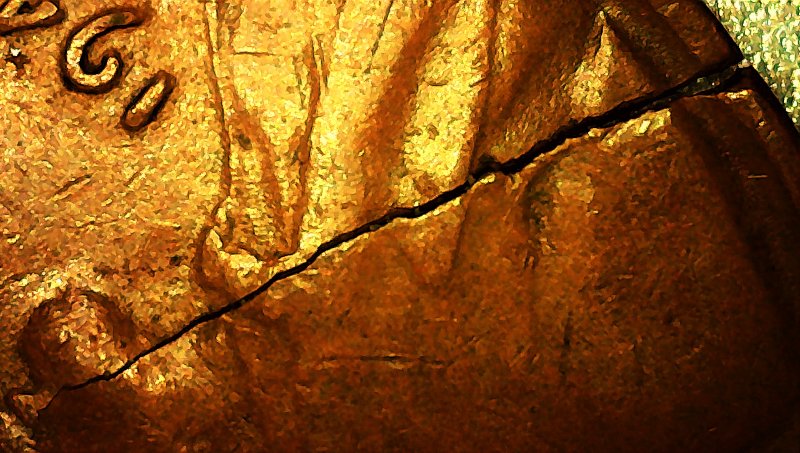
This coin could be anywhere on the spectrum from a pre-strike metal crack to PMD. Metal fatigue can be subtle (until it isn't). Remember that the shell casing cents had pretty bad alloy issues. The shell casings had fairly wide tolerance for the composition. Consider the high occurrence of woodies and laminations in these years, and the wide variance in the color of UNC cents. The yellowish orange color of many of these cents is due to higher proportions of Zn. The mints were far less concerned with quality control than with having something - anything - to replace the steel cents, while meeting production goals in the middle of a world war. It's not inconceivable that the bending and flexing of the sheet metal during (1) the rolling process, (2) the blanking press and (3) the upsetting mill could have created or worsened a stress crack. Since the coin is slightly bent, and the fracture is visible from one angle, a clear shot of the actual fracture could be a strong clue. |
|
Bedrock of the Community
United States
62064 Posts |
That would show either sawing marks or split metal. It has to be one or the other.
|
|
Pillar of the Community
United States
2241 Posts |
|
|
Pillar of the Community
Canada
6244 Posts |
I will brink back this because it is a very interesting post. Quote:
(1) the rolling process, (2) the blanking press and (3) the upsetting mill could have created or worsened a stress crack. I start with this to give my opinion: 1) Rolling process: Not really the roll of the metal can bend in the rolling process. The stress or de-crystallization of the material occur more due to a poor or lack of annealing. 2) The blanking press: Here yes, the blanking punches some times go out of the vertical, so will create a lateral forces. I already see some old coins pre- 1940 with angle cut. 3) Milling process: If was a milling process I do not thing we will have on this coin rim on the both sides of the split and why the milling process will push up one side of the split? Quote:
That would show either sawing marks or split metal. It has to be one or the other. I agree and I think a close magnified photo will show exact. Quote:
I think you're being far too dismissive I am not dismissive. Me I look at the coins from the point of view if could happened in the process of minting and what can cause the metal to react in that way. The KeepaChange show here many coins. Some I do not agree are legitimate. Some I congratulate to find. I am strait in what I see and give my opinion from my point of view. I do not look for prices like many others, just for coins process's and metallurgical field. |
|
Valued Member
 United States
358 Posts |
|
|
Bedrock of the Community
United States
62064 Posts |
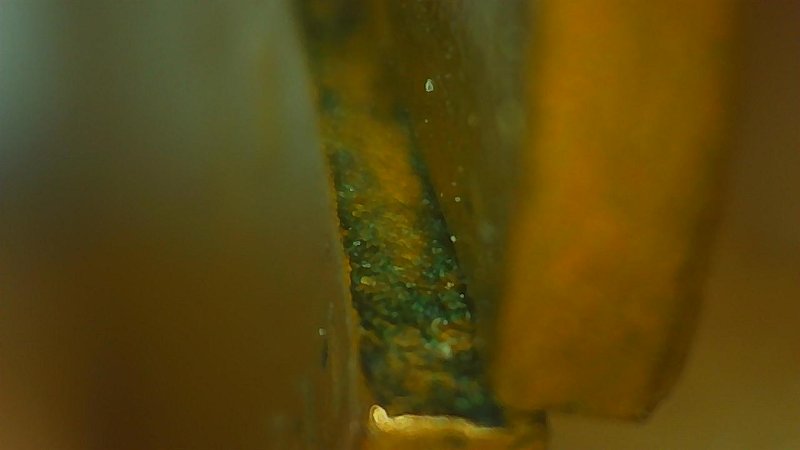
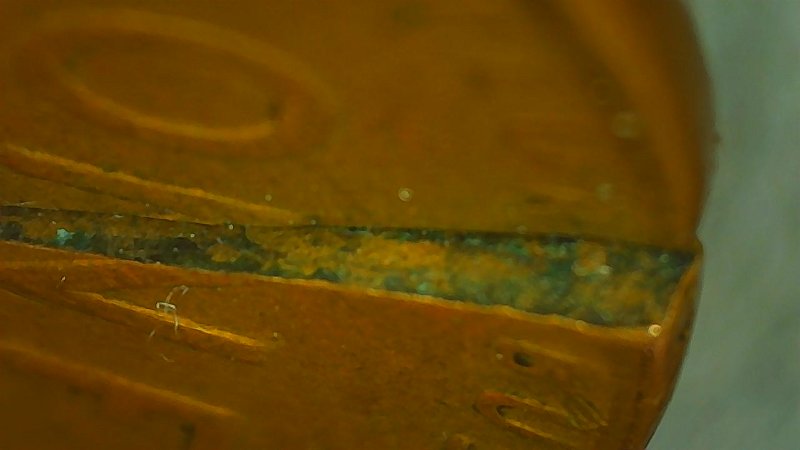
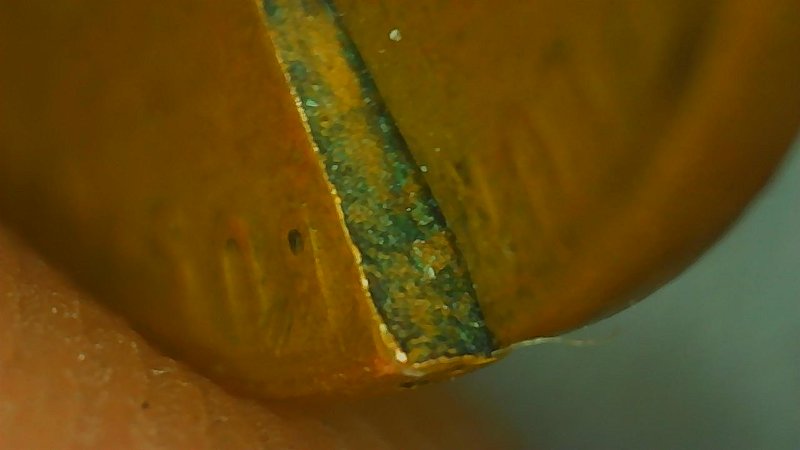
The last edge shot is showing what looks like dental floss? Diamond paste and Dental floss.
|
|
Valued Member
United States
358 Posts |
that is my cats hair tbh,i cant get away from it....its everywhere,lol. I think that gunk is just gunk from years of catching crap in the crease overtime. I cant say for sure. But at the end of the day...i dont think we will ever actually know.....maybe ill send it in for attribution just to get some experts opinion on it by examining it inhand. Ill keep you guys posted if I do so
|
|
Bedrock of the Community
United States
62064 Posts |
I'd send it in to Mike Diamond. I know you have asked him already. But having the coin in hand might show him something that images can't show.
|
|
Pillar of the Community
Canada
6244 Posts |
I am sorry KeepAChange, this coin do not seem to me to be legitimate cracked planchet. Very nice photos, clear and I do not have a clue how you do 'it but superb. Like Coop say, to send to Diamond it is a very good option. By my side it is the lasts photos show me no fracture in the metal. There are some markers who tell me this, and one of the most important it is the Verdi's inside the crack and nothing outside. Second I do not see the de-crystallization of the metal. In the natural de-crystallization (crack) always we have parts which detached which it is not this case. There are more markers which tell me this: It is PMD intentionally done but for our security collecting community I will not say. Hope you do not pay to much for and can have a good return. |
|
New Member
United States
12 Posts |
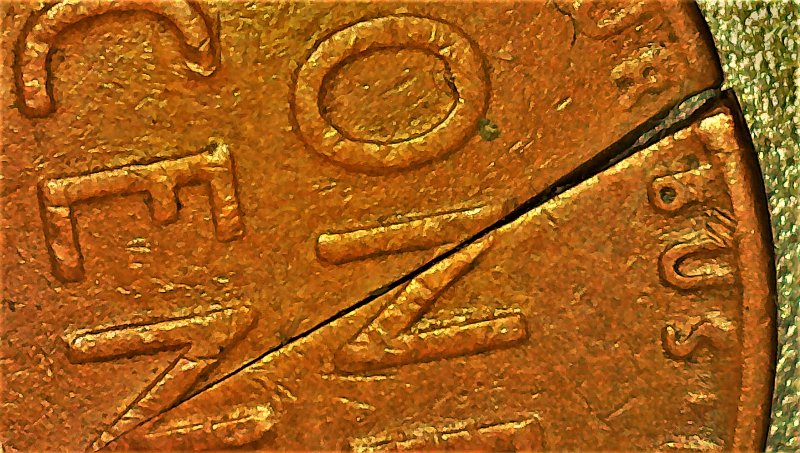
Keepthechannge: I have something that is similar to your but it is a 1944d 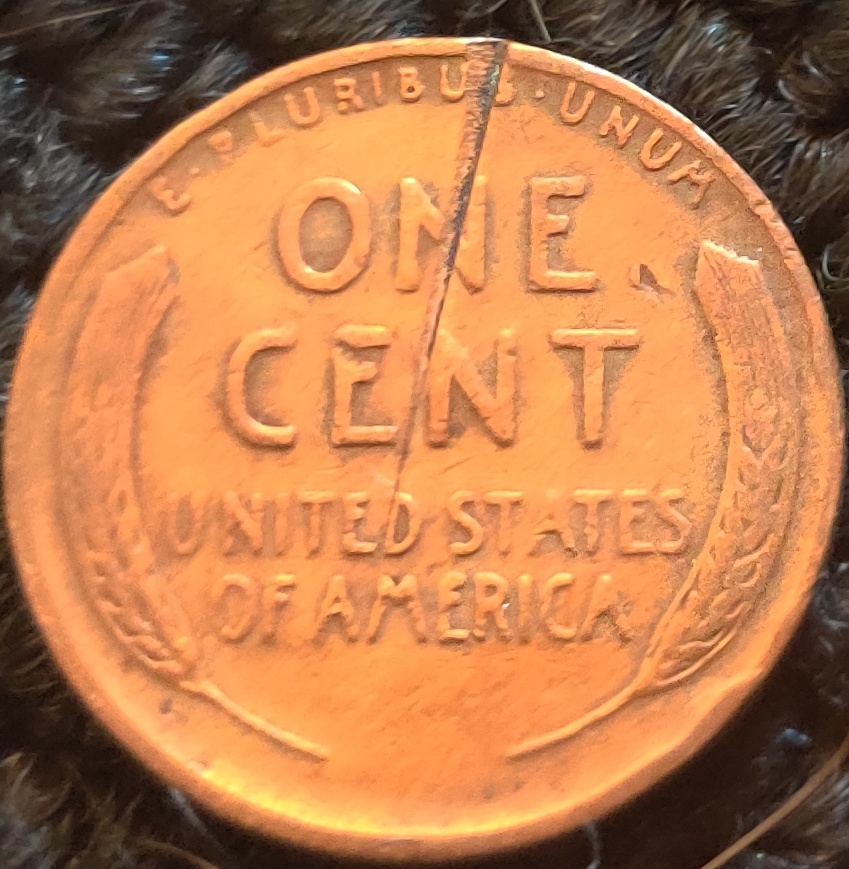 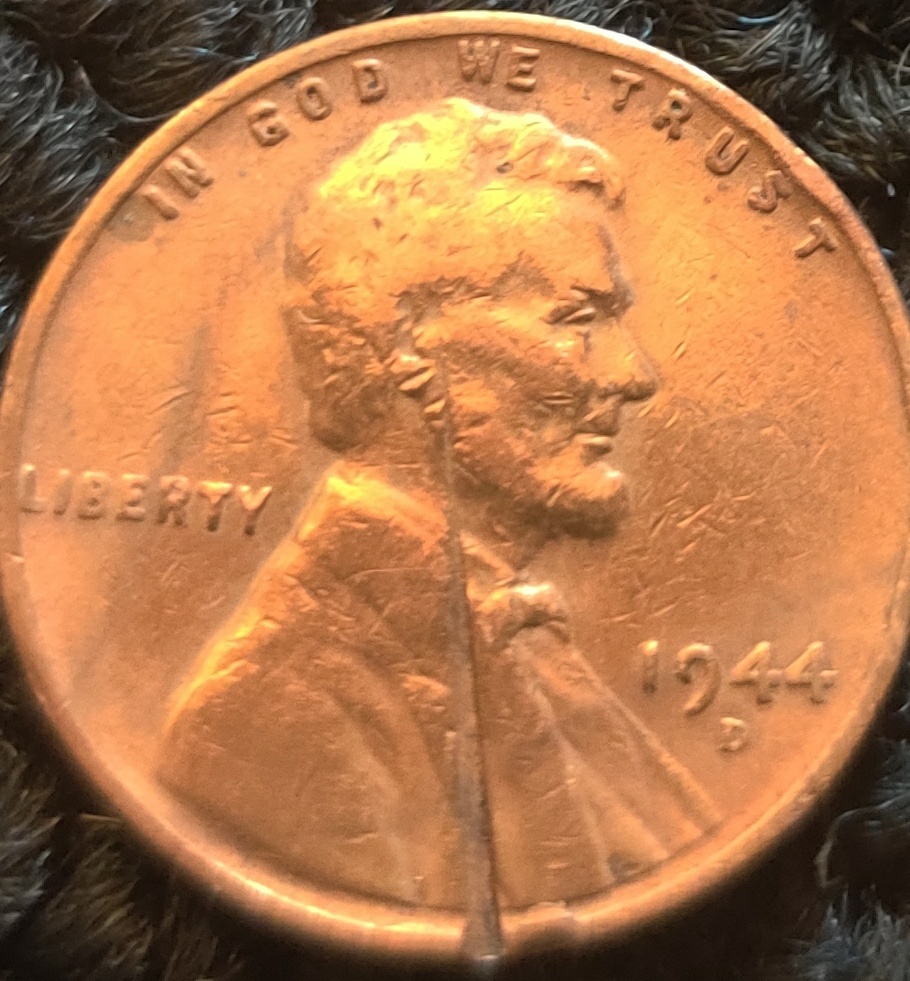 |
|
Pillar of the Community
Canada
6244 Posts |
@DEEZ, excellent photos which prove someone, somewhere fake crack coins and work more with war time because of the alloy composition which it is more instable to cold, heat and strike.
|
| |
Replies: 50 / Views: 5,453 |







 First Page
 Previous Page


 Posted 06/13/2021 12:22 pm