NGC -
This deceptive coin is actually a little older than it looks.The Czechoslovakian Ducat series running from 1923 until 1951 is popular with collectors, as these coins tend to come high grade, they have an interesting artistic design and the series has several dates that are easily attainable for budget-minded collectors.
Most dates in this series trade at generic levels, but dates with mintages lower than 12,000 have elevated values in the Standard Catalog of World Coins. Examples dated 1929, 1930 and 1934 trade for healthy premiums relative to their higher-mintage counterparts, while coins dated 1937 to 1951 have uncirculated catalog values at or over $10,000.
Whenever a series has a mix of both common and better dates, that series is susceptible to counterfeits as well as alterations of genuine coins that change a date from a common year to a scarcer one.
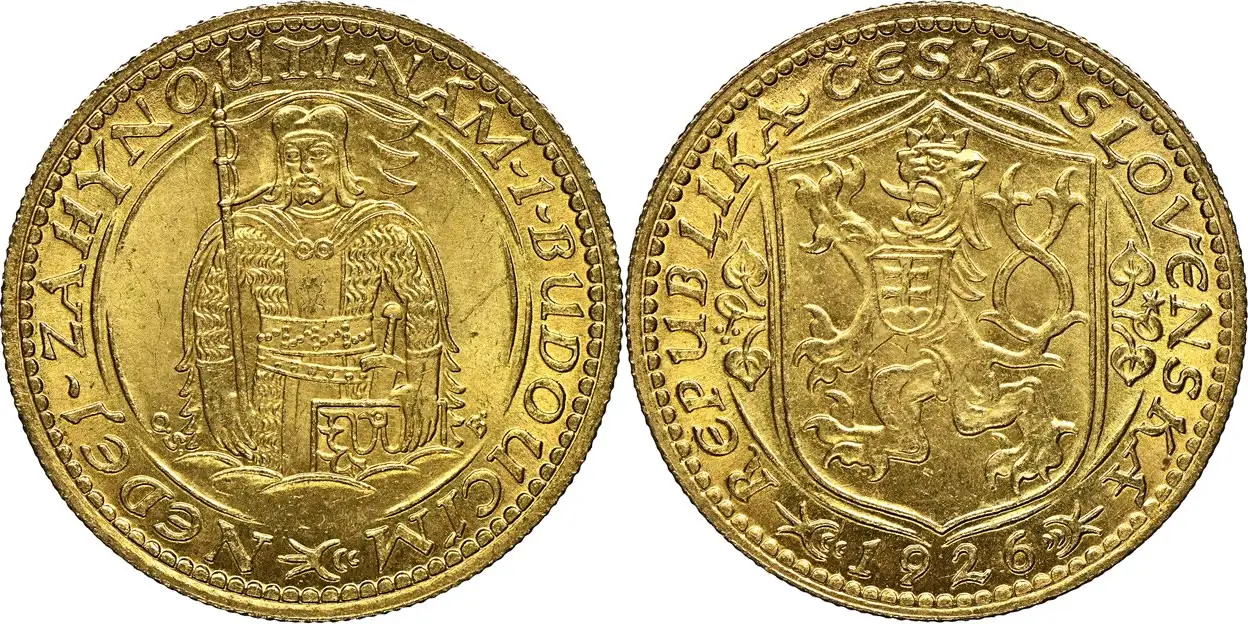 Genuine Czechoslovakia 1926 Ducat graded NGC MS 66
Recently, a coin was submitted to NGC for grading that was found to have a deceptive altered date that was skillfully executed in an attempt to pass off a 1926 Ducat as a scarcer and more valuable 1929. At first glance, this Ducat looks relatively normal, but as one looks more thoroughly, several red flags are evident.
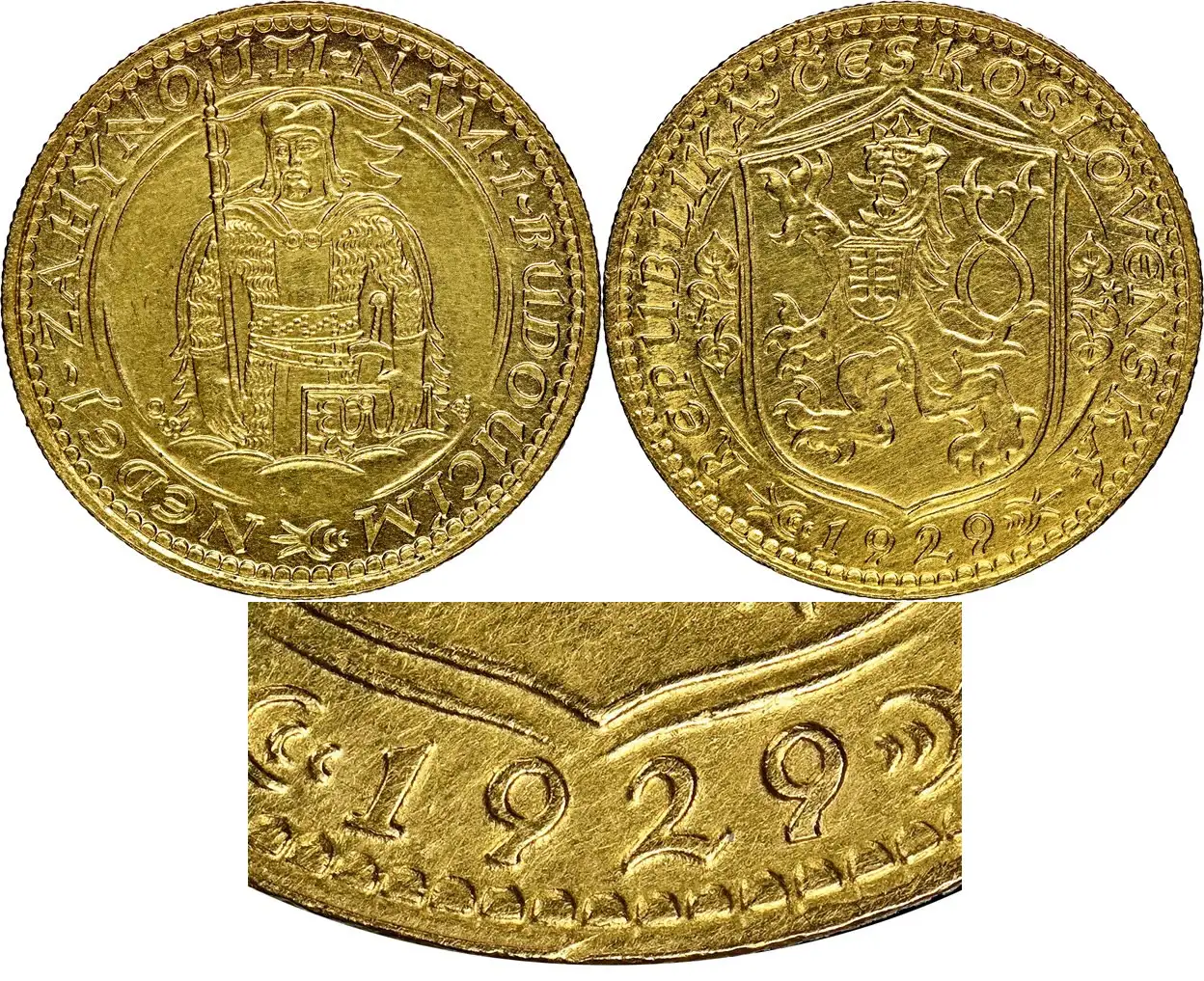 Altered-date Czechoslovakia Ducat
The last digit of the date is of a slightly higher relief and is rendered sharper than the initial three digits. While this can occasionally occur naturally in the minting process as a result of some date digits being added to the hubs and only the last one or two digits being punched into working dies as time elapses, the texture of this specific coin was questionable. The digit is also slightly off-color relative to the rest of the date.
One thing that NGC graders often attempt to do when a concern over a potential altered date arises is to compare date digits if the date in question happens to have more than one of the same digits displayed. Since this coin is dated 1929, there are two examples of a "9" that can be compared against each other.
Upon close inspection under relatively high magnification, the differences between these two 9 punches make it clear that they are not rendered in the same way. The most obvious and striking example of this is the very sharp, square base of the second "9" relative to the first "9", which is wider and fans out at the base.
This lack of consistency in the rendering of the "9" digit led to an attempt to die match the supposed "1929" Ducat to another, more-common date in the series in order to prove that the last digit in the date had been altered. Luckily, this series is relatively short, so common dates to choose for a "1929" alteration by changing only the last digit of the date are narrowed down to coins with dates from 1923 to 1928. Further, even coins that are considered more common or generic in this series still have relatively low mintages, meaning that there shouldn't be a plethora of die pairs used to strike even common date coins of this type.
Fortunately, the die used on this suspicious-looking "1929" Ducat has several unique features that made die matching a relatively easy undertaking. After looking at several potential dates, a 1926 example was found that shared several unique die features with the suspicious "1929"-dated coin, proving that the coin that was submitted to NGC as a 1929 was indeed an altered date that was actually struck in 1926.
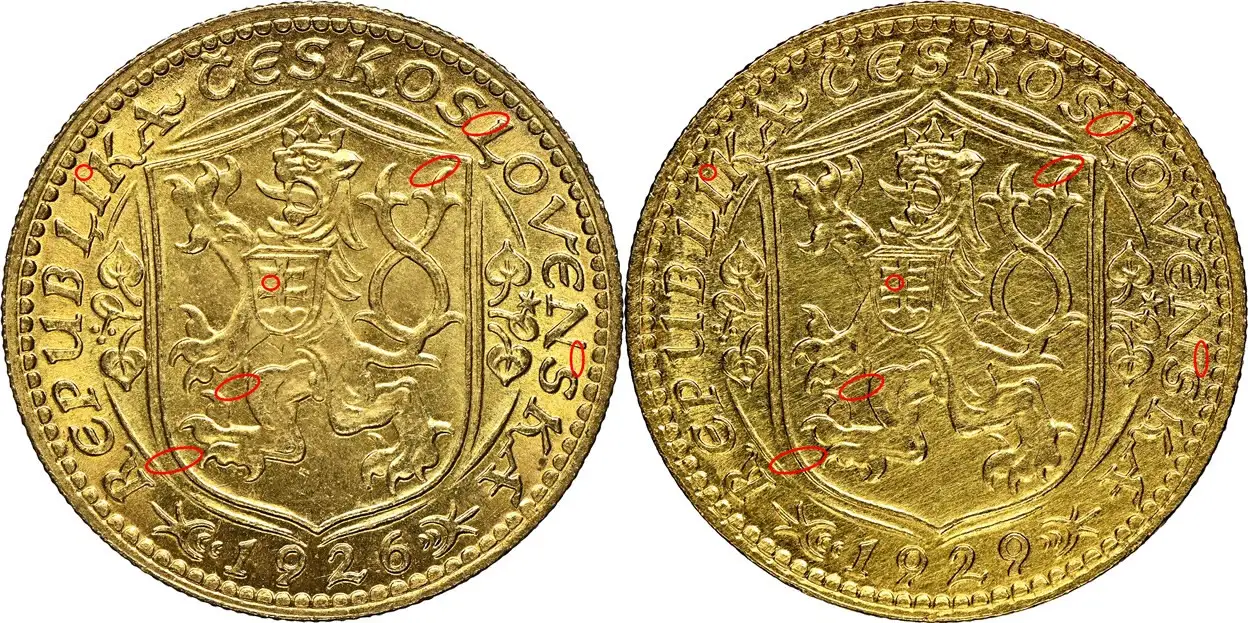 Matching die markers are highlighted in red on a genuine 1926 example (left) and the altered example (right)
Altered dates such as this piece are often difficult to detect, often going years before being discovered. Collectors can be confident purchasing NGC-certified coins knowing that they have been scrutinized by leading experts for signs of alterations. NGC's industry-leading guarantee protects the owner in the highly unlikely event that NGC certifies an altered or counterfeit coin.
Read More: Counterfeit Detection Series 








 Posted 11/23/2021 3:26 pm


