On March 12, 1935 the Indiana General Assembly created the William Henry Harrison Memorial Association to restore and protect the house in which Harrison lived while he served as the Indiana Territory Governor; Harrison named the house "Grouseland" due to the large number of grouse (a game bird) he saw in the area.
Grouseland - Harrison's Indiana Territory Home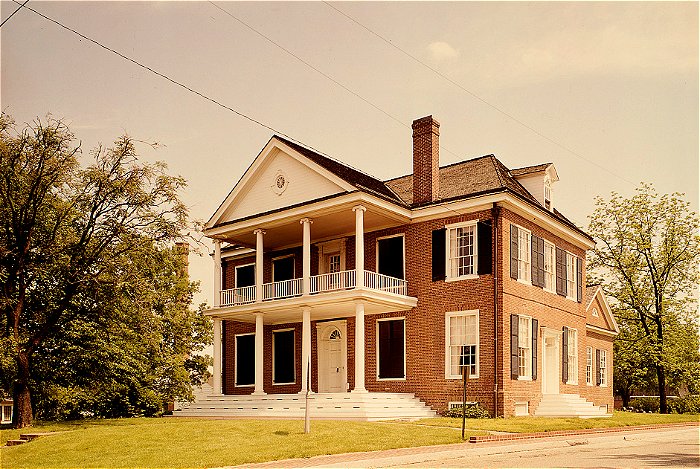 (Image Credit: Library of Congress, Prints and Photographs Division. Public Domain.)
Indiana was a Territory between 1800 and 1816. It was created from land of the Northwest Territory and was comprised (upon its creation) of the present-day states of Illinois and Wisconsin, plus nearly all of present-day Indiana. It also included the western half of Michigan (including the western portion of the peninsula), an eastern portion of Minnesota (land east of the Mississippi River) and a small piece of present-day western Ohio. It lost segments of its territory beginning in 1803 as other states (e.g., Ohio) or territories were formed from it (e.g., Michigan, Illinois).
The Evolving Indiana Territory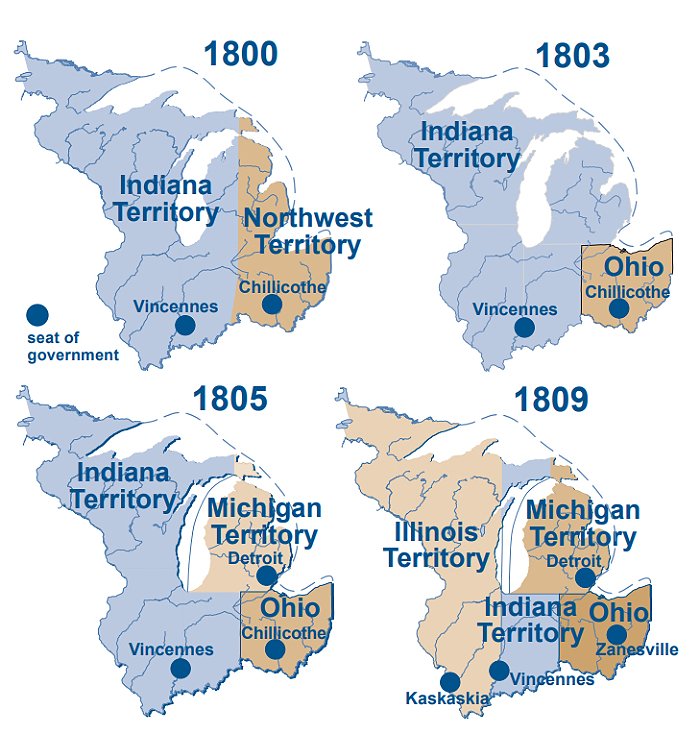 (Image Credit: The Indiana Historian. March 1999. State of Indiana. Fair use.)
Harrison was instrumental in the formation of Indiana Territory while he served as the Northwest Territory Delegate to the US House of Representatives. As a result of his efforts, he was subsequently appointed as the new territory's first governor by President John Adams; he was reappointed by Thomas Jefferson and James Madison. Harrison served as Indiana Territory Governor from January 10, 1801 (when he arrived to take office) until his resignation on December 28, 1812 (so that he could serve as a General during the War of 1812).
William Henry Harrison, Circa 1841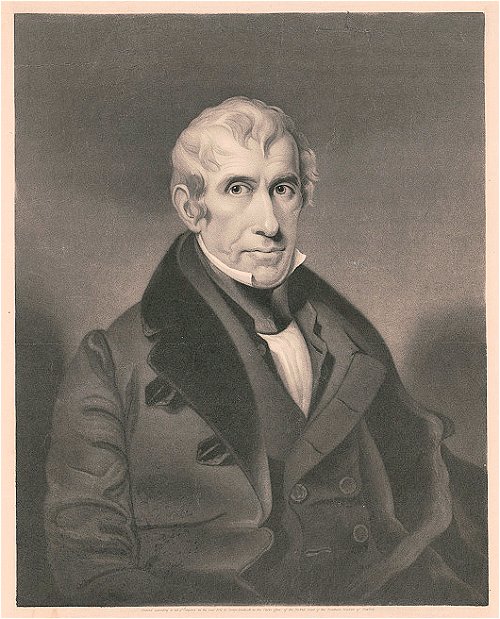 (Image Credit: Library of Congress, Prints and Photographs Division. Public Domain.)
Harrison later went on to serve in the US House of Representatives and the US Senate on behalf of Ohio (his new state of residence) and, on March 4, 1841, became the ninth US President. Unfortunately, he died just a month later from what has traditionally been referred to as pneumonia that followed a cold Harrison got after delivering the longest inaugural address in history during a freezing cold, rainy day in Washington - he did not wear a coat, hat or gloves during the speech.
Modern medical science, however, believes that pneumonia was a secondary cause and that Harrison actually died of enteric fever that manifested in septic shock. He was likely infected by either (or both) Salmonella typhi or S. paratyphi, which are deadly bacteria that cause typhoid and paratyphoid fever, respectively. The bacteria were present near the White House as a result of a lack of proper sanitation systems in DC at the time - a marshy area of human excrement was just blocks from the White House!
But back to the coin...
The coin bill was introduced in the Senate by Sherman Minton (D-IN). It sought to commemorate "the outstanding public services of William Henry Harrison." It recalled his being "first Governor of the Indiana Territory, hero of the Battle of Tippecanoe, major general in the War of 1812, and ninth President of the United States." The bill called for up to 500,000 half dollar coins to be issued upon request of the William Henry Harrison Memorial Association; the Association had to pay for the coins in order to receive them.
The bill did not set a time limit for the Association's coin requests, thus opening the door for a multi-year coin program. It also would have allowed for the coin to be struck at more than one US Mint facility.
The bill was referred to the Senate Committee on Banking and Currency upon its introduction, and was placed on the agenda of a Hearing held by the Committee. It was not discussed at the Hearing, however, and was not reported out of Committee. It was another commemorative coin proposal that faded away due to lack of action.
Though the coin proposal was unsuccessful, the efforts to restore and protect Grouseland were successful. Today, the house is open as a restored museum managed by the Grouseland Foundation; the home is owned by the Francis Vigo Chapter of the Daughters of the American Revolution.






 Posted 06/29/2021 11:23 am





