Continuing my look at classic US commemorative coins that feature a Coat-of-Arms or Seal...6. 1936 Norfolk Bicentennial/TricentennialThe 1936 Norfolk commemorative half dollar marks the 300th anniversary of the land grant that led to the founding of the Village of Norfolk (1636), as well as the 200th anniversary of the establishment of the Borough of Norfolk, VA (1736). Its obverse depicts the modern version of the City of Norfolk, VA Seal along with an encircling commemorative inscription and the date "1936" at the rim.
City of Norfolk Seal, Circa 1740s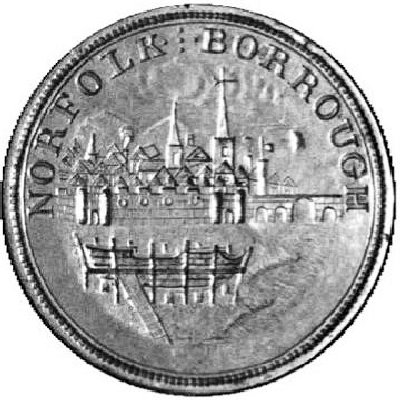
The first Norfolk Seal dates to 1740, just a few years after the borough was created (1736). It was given to the borough by Samuel Smith, the Borough's first Mayor. A second Seal was given to the borough in 1741 by Robert Dinwiddie. Only one of these two early Seals still exists, however, and it is not known for certain which is the Smith Seal and which is the Dinwiddie version - complete original descriptions of the two Seals are not known. The Seal that remains features a sailing ship under construction in the foreground, with buildings of the borough in the background (multiple spires are shown rising into the sky). The buildings appear to be behind a fort-like wall. Fort Norfolk, however, was not built until after 1794, so it is unclear what wall is depicted. (Half Moone Fort possibly?)
City of Norfolk Seal, Circa 1845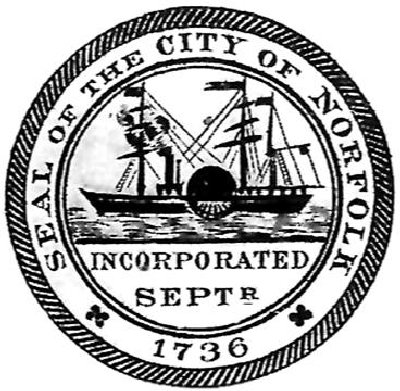
After Norfolk was incorporated as a city in 1845, its Seal was updated to reflect its new status. The new Seal depicted a hybrid sailing ship / side-wheeler at its center with the date Norfolk became a Borough (1736) below it. A rope is used as the Seal's outer rim. (Just FYI: Norfolk was established as a town in 1682, 54 years before it became a borough.)
City of Norfolk Seal, 1913 to Present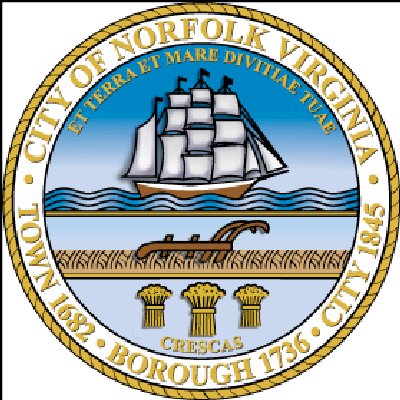 (Image Credits for all Seals: City of Norfolk. Public domain, via https://www.norfolk.gov/gallery.aspx?tmp=no)
 The Seal seen on the 1936 Norfolk commemorative half dollar dates to 1912-13. It was at this time that the Norfolk Common Council and Board of Alderman set about to develop a new Seal for the city. The new Seal that was created featured a fully-rigged sailing ship at its center, with the wheat sheaves and plow form the previous Seal maintained and placed in the forground. New mottoes were placed around the sailing ship: "Et terra et mare divitiae tuae" above it and "Crescas" below it. The figurative translatations of these are "Both by land and by sea thy riches (are)" and "Thou shalt grow" respectively. (A modern, more literal, translation would be "Your wealth, land and sea" and "Increase" respectively.)
1936 Norfolk Bicentennial / Tercentennial Half Dollar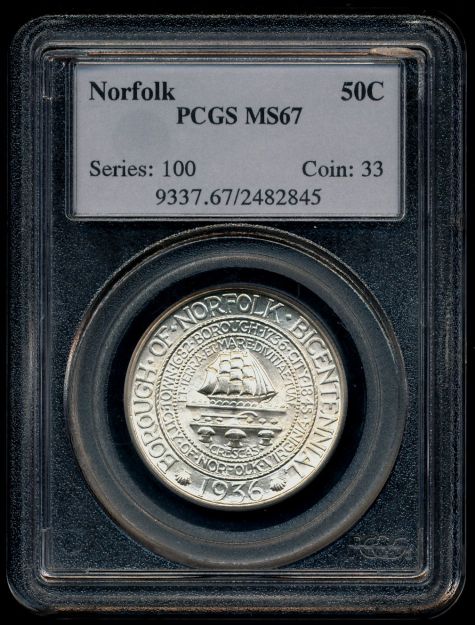
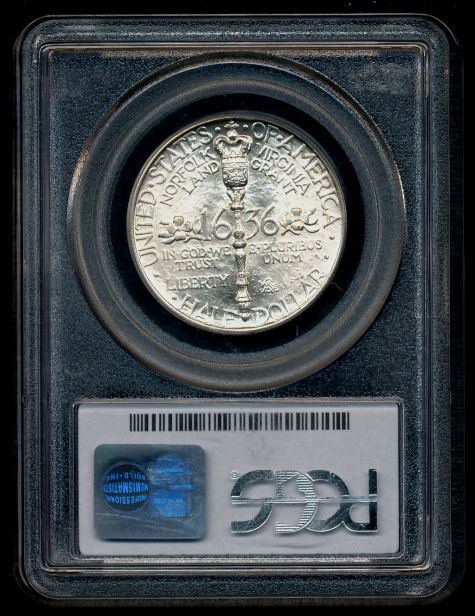
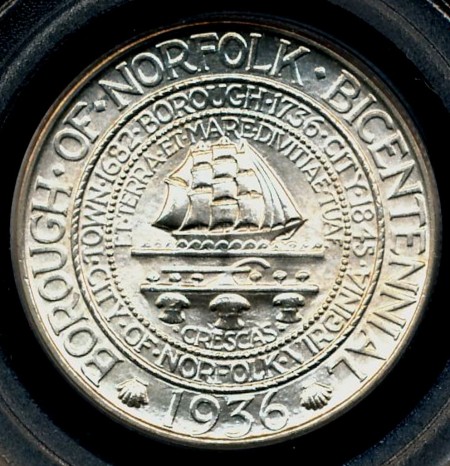
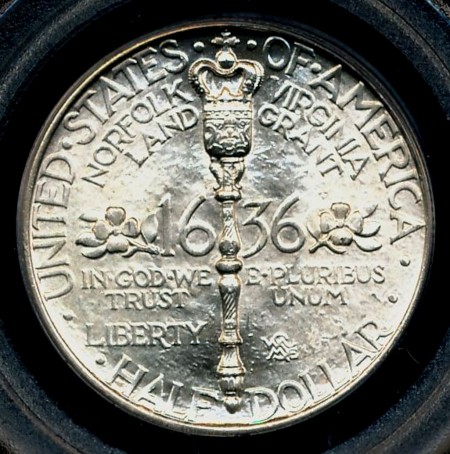
The design of the coin is the work of the husband and wife team of William Marks Simpson and Marjorie Emory Simpson.
You can learn more about the Norfolk half dollar here:
-
1936 Norfolk Bicentennial / Tercentennial-
1936 Norfolk Bicentennial / Tercentennial - Medal vs. Coin-
1936 Norfolk Bicentennial / Tercentennial - Original Models vs. Final Coin-
1936 Norfolk Bicentennial . Tercentennial - Coins Designed by a Woman Thread-
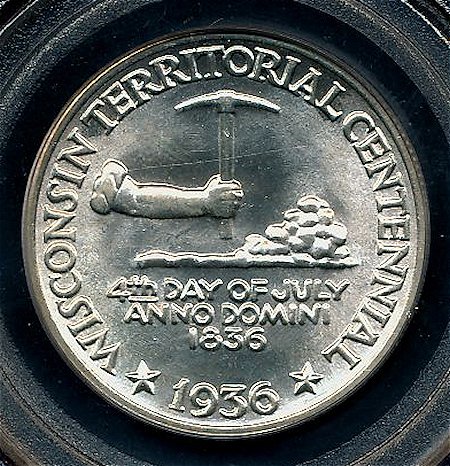
1936 Norfolk Bicentennial . Tercentennial - Coins with Flora Thread7. 1936 Wisconsin Territorial CentennialThe 1936 Wisconsin Territorial Centennial half dollar features elements of the first Great Seal of the Wisconsin Territory on its obverse; the First Seal was used from July 4, 1836 to March 11, 1839 when a new Seal was adopted. It features a disembodied arm holding a pickax with a pile of lead ore in the background. The original Seal was designed by the First Secretary of the Territory, the Honorable John S. Horner.
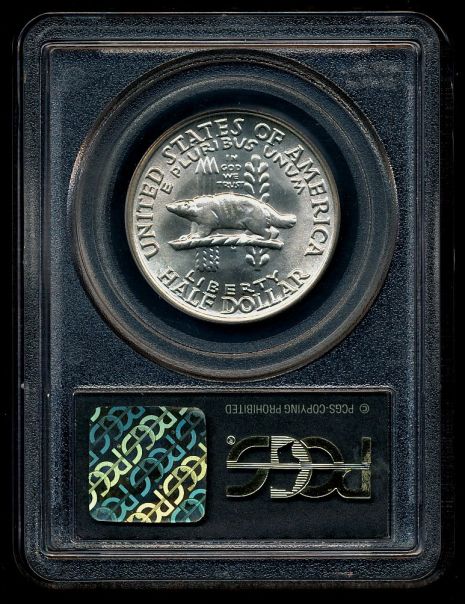
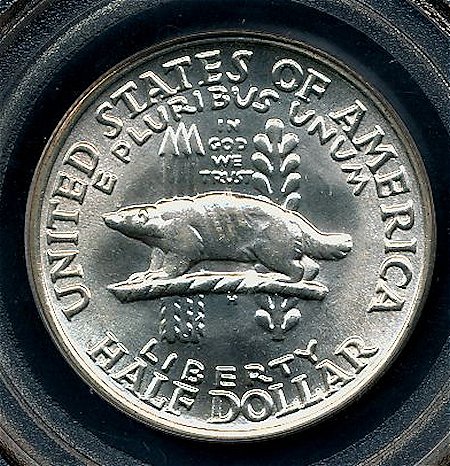
The reverse of the 1936 coin features a badger on a log with arrows (left) and an olive branch (right) behind it; the badger has been the official state animal since 1957, but important to Wisconsin residents since its beginnings. The arrows symbolize the pre-territory clashes settlers had with the indigenous Blackhawk Native Americans, while the olive branch is meant to represent the eventual peace between them.
The arm/hand found on the coin's obverse is based on the arm featured on the first Great Seal; in its hand is seen a pickax. On the coin, a muscular arm is depicted with its shirt sleeve rolled up past the elbow, whereas on the original Seal, the arm is covered by a shirt sleeve to the wrist. For artistic balance, the coin places the arm more centrally within the design (vs. the Seal) such that it is essentially a "clock hand" in the 12 o'clock position with the pickax at the top; I think it works well on the coin vs. a straight duplication of the Seal.
The Seal also incorporates the date "July 4, 1836" - the date on which Territorial officials took their oath of office.
The basic design for the coin and use of the Seal was suggested by the Wisconsin Centennial Commission. Benjamin Hawkins created the final models for the coin based on an initial interpretation of the Commission's design concepts by David Parsons.
Great Seal of Wisconsin Territory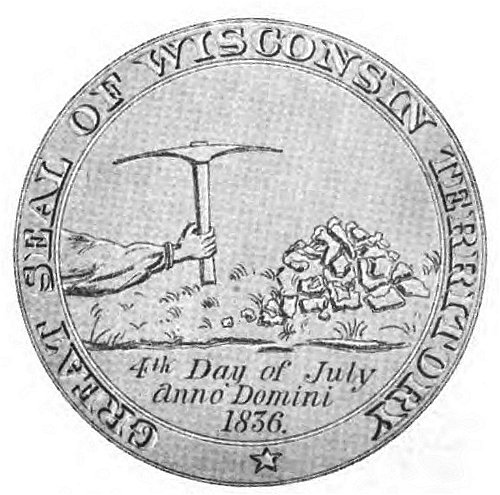 Image Credit: Wisconsin's emblems and sobriquet. Madison, WI: Wisconsin Historical Society. 1908. Public Domain.1936 Wisconsin Territorial Centennial Half Dollar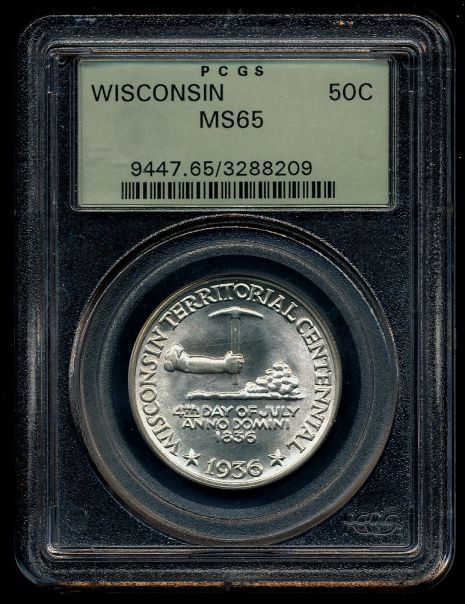
You can read more about the Wisconsin Territory Centennial half dollar here:
-
1936 Wisconsin Territorial Centennial-
1936 Wisconsin Territorial Centennial - Revisited-
1936 Wisconsin Territorial Centennial - Coins with Hands Thread-
1936 Wisconsin Territorial Centennial - Coins with Flora ThreadFor the other installments of this series, check out:
-
Official Seals On Classic US Commemoratives - Part I-
Official Seals On Classic US Commemoratives - Part II-
Official Seals On Classic US Commemoratives - Part IIIMy other stories about other commemorative coins are found here:
Read More: Read More: Commems Collection.







 Posted 08/14/2021 11:48 pm





