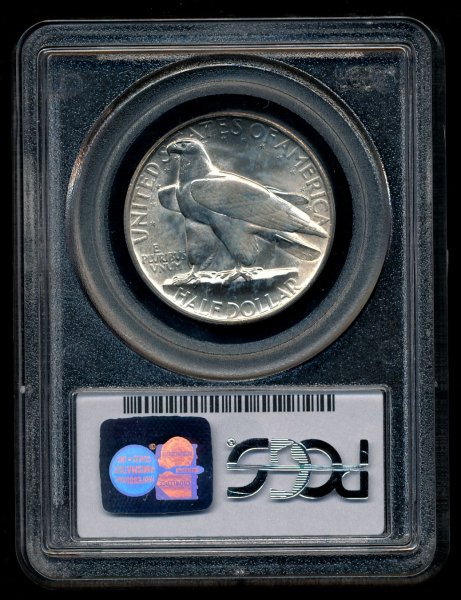
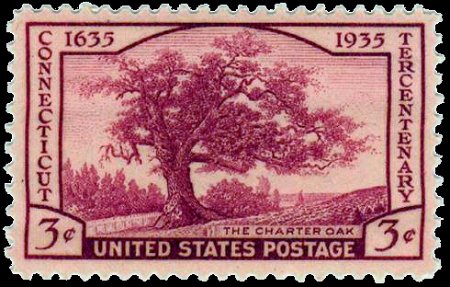
The 1935 Connecticut Tercentenary half dollar and 1936 US commemorative stamp each feature a design that depicts the State's famous Charter Oak. This caused a bit of consternation for some, who weren't keen on having the two collectible souvenirs share a design theme.
Stamp collecting was more popular than coin collecting in the mid-1930s, and this preference is clearly reflected in the brief coverage of the half dollar included in the pages of the
Waterbury Democrat.
From the February 4, 1935 edition:
Philatelically speaking...Connecticut's tercentenary stamp may have the same design as its tercentenary coin, according to Washington dispatches. What's the matter with our Bureau of Engraving and Printing? Can't they concoct at least two different designs? Not that we've anything against the Charter Oak being used on a stamp. Far from it. But if used on the coin, the stamp ought to show something else linked with Connecticut history. And a few years ago we had a tree stamp, when the 50th anniversary of the founding of Arbor Day was observed. Remember it. Let's be different and let's be original. Also, let's have a stamp that will rank among the best of the better commemoratives we've had of recent years...From the
Waterbury Democrat of January 24, 1936:
And while talking about the state we want to comment on a point just raised by Senator Lonergan. He wants the commemorative stamp and coin that Connecticut is to get this year to contain the same design. This action was taken after the Hartford Chamber of Commerce had suggested it. Before anything like that is done we would suggest that the leading philatelists and numismatists in the state be called into conference. After all those experts in stamp and coin collections are a bit more familiar with designs than the ordinary mortal. They know what is right and what is out of place. Don't overlook them in making selections."Ordinary mortal"? I didn't realize we coin collectors were above our non-collecting brethren!

Another brief mention in the January 25, 1936 edition of the same newspaper:
The Charter Oak will constitute the principal design on the tercentenary coin to be minted for Connecticut this year. Information to this effect was forwarded by Senator Augustine Lonergan this week. The added information that the same design might be used for the commemorative stamp is not encouraging. We see no reason why we should make both the stamp and coin correspond in appearance. It seems to indicate a lack of imagination.
Of course, the coin and stamp were each issued with the Charter Oak being a central design element. The stamp depicts the iconic "Charter Oak" in a view that is very similar to the one used by Henry Kreiss for the half dollar. Kreiss used Charles DeWolf Brownell's painting of the Charter Oak as his design reference; it appears likely that Victor S. McCloskey, the stamp's designer, used the painting as well.
Historical Note: The "Charter Oak" was the name given to the tree in Hartford, Connecticut that was used to hide the colony's Royal Charter when an attempt was made by King James II (through his local administrator Sir Edmund Andros) to retrieve and revoke it.Charter Oak Painting by Charles DeWolf Brownell 1935 Connecticut Tercentenary Half Dollar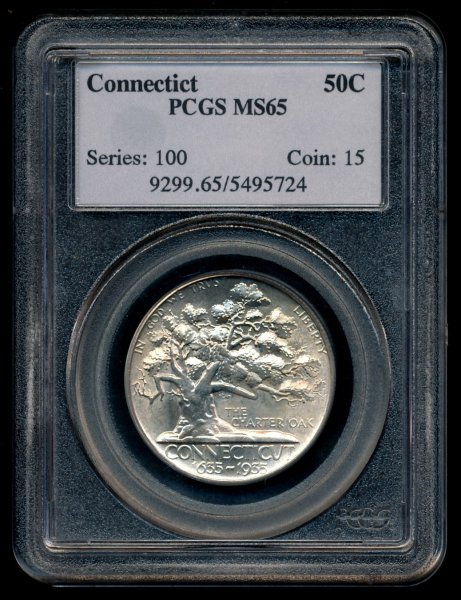
 1936 Connecticut Tercentenary Stamp
 1936 Connecticut Tercentenary Stamp on First Day Cover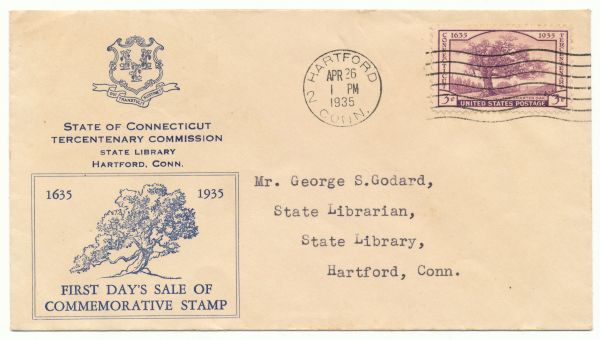
For more discussions of the 1935 Connecticut Tercentenary half dollar, see:
-
1935 Connecticut Tercentenary-
1935 Connecticut Tercentenary - Ephemera-
1935 Connecticut Tercentenary - Ephemera II-
1935 Connecticut Tercentenary - Philatelic Tie-In-
1935 Connecticut Tercentenary - Commission Bulletins-
George Godard First Day Cover For other of my posts about commemorative coins and medals, see:
Read More: Commems Collection.







 Posted 09/13/2021 12:40 pm





