It is typical for the Acts that authorize US commemorative coins to specify maximum mintage figures - almost all of them do! (You can read about the exceptions via the link below.) But one of the proposals for the Cincinnati Music Center half dollars took things a step further and actually specified the quantity to be struck at each of the US Mint facilities.
The bill with the detailed request was introduced by Representative William Emil Hess (R-OH) in January 1936. It specified a maximum mintage of 15,000 50-cent pieces, with 10,000 coins being struck at the Philadelphia Mint, 3,000 at San Francisco and 2,000 at Denver. The bill was referred to the House Committee on Coinage, Weights, and Measures, and was reported back to the Whole House with an amendment that removed the facility-specific language, but upped the maximum mintage from 15,000 to 25,000. The amended bill continued to allow for the coins to be struck at multiple Mint facilities, but without legislating mintage figures for each.
I have little doubt that Cincinnati businessman and main driver behind the Cincinnati Music Center half dollar - Thomas G. Melish - was also behind the bill's atypical language. He was always looking for an angle to market his coins (he also was the catalyst for the 1936 Cleveland Centennial/Great Lakes Exposition half dollar), and what better way to hype coin sales than to tout a Congressionally-mandated, limited mintage from a Branch Mint?
Hess' bill was not ultimately the one that moved forward in Congress, however. A Senate bill introduced the day after Hess' bill was the one that gained traction, was passed by both chambers of Congress and signed into law by President Franklin Delano Roosevelt (FDR). The Senate bill capped the coin's mintage at 15,000 but did allow for coins to be struck at multiple US mint facilities. History shows us that each mint facility (Philadelphia, Denver and San Francisco) struck 5,000 Cincinnati half dollars - no mint-specific rarities for the Cincinnati issue!
1936 Cincinnati Music Center 50th Anniversary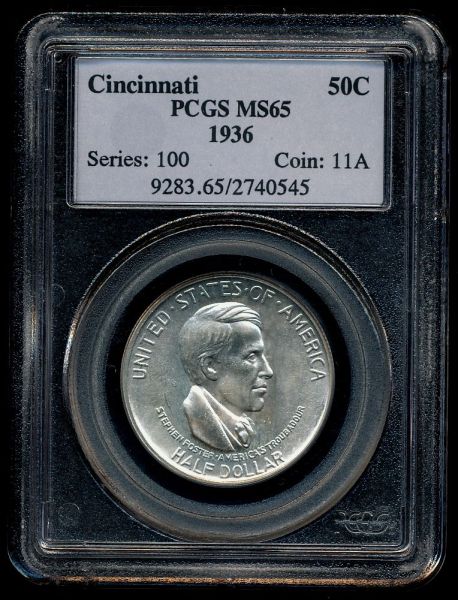
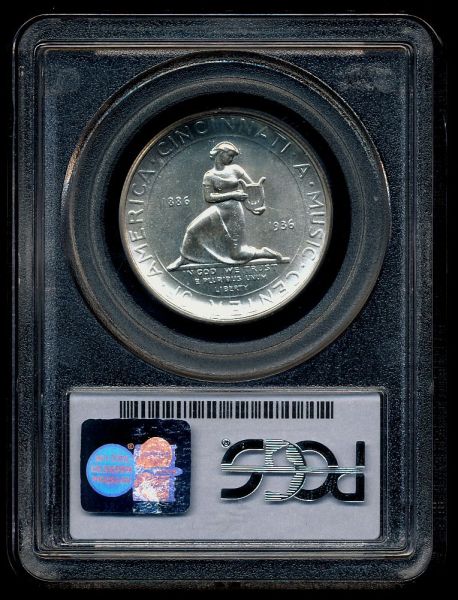
To read about US commemorative coins that were authorized without a maximum mintage specified, have a look at:
-
How Many Would You Like?For more about the Cleveland commemorative half dollar and its original holders, check out:
-
1936 Cleveland Centennial and Exposition-
1936 Cleveland Centennial and Exposition - Revisited-
1936 Cleveland Centennial and Exposition - Ephemera II-
What if? A 1937 Cleveland Centennial Half Dollar-
1936 Cleveland Centennial Half Dollar - Coins Designed by a Woman ThreadFor other of my posts about commemorative coins and medal, see:
Commems Collection.









 Posted 11/25/2021 07:26 am


