The 1928 Hawaiian (European) Discovery Sesquicentennial half dollar has several interesting distinctions within the classic series of US commemorative coins.
One distinction that most collectors give little thought to is the fact that the coin was struck for the Territory of Hawaii, not the State of Hawaii. At the time of its issue, Hawaii was roughly 31 years away from being admitted to the Union as the 50th State. It is the only coin traditionally considered as part of the series to be struck for an entity that was neither a US State, County, City or Town, nor an organization located in such. In a way, it can be said, the Hawaiian commemorative half dollar joins the coinage the US struck for the Territory and eventual Commonwealth of the Philppines as coinage struck for a US possession.
Note: Hawaii became a Territory of the United States in August 1898. The coinage struck by the US Mint in 1883 for the islands was on behalf of the Kingdom of Hawai'i. It was not US coinage in any way, shape or form; the coins were struck by the US Branch Mint in San Francisco.Another distinction for the 1928 commemorative coin is the path it followed to reach the US Congress - it definitely differed from the norm. The typical path is a group decides that it would like to have a commemorative coin struck for its use as a fundraiser, a US Senator or Representative is contacted about the coin request, if agreed to, the Senator/Representative introduces a bill (or resolution) in Congress at which time it is considered and either authorized or dismissed. The Hawaiian commemorative piece, coming as it did from a US Territory, went through several steps before seeing the US Congress. Here's its story...
The coin's journey began at a 1925 meeting of the Board of Trustees of the Hawaiian Historical Society. At the meeting, Albert P. Taylor, one of the Trustees, proposed that a celebration be held to mark the 150th anniversary of Captain Cook's sighting of, and subsequent visit to, what would become known as the Hawaiian Islands. Taylor's proposal was supported by the Board and plans were put into motion.
Bruce Cartwright, the president of the Historical Society suggested that the US Post Office Department and the US Treasury Department be approached about issuing commemorative stamps and coins, respectively, for the occasion.
The Society eventually engaged the Hawaiian Legislature and, on April 14, 1927, a Concurrent Resolution was introduced in the Hawaiian Senate by Victor Stewart Kaleoaloha Houston. The Resolution requested the US President to extend an invitation to the Government of Great Britain to participate in the celebration, and asked the Governor of Hawaii to request from the US Federal Government a series of commemorative postage stamps and a commemorative half dollar. The Resolution was adopted by the Hawaiian Senate on April 14, 1927 and by its House on April 16, 1927.
Subsequent to the passing of this Resolution, the Hawaiian Legislature passed a bill that authorized the Governor to establish a Commission to plan the celebration and appropriated $20,000 to make it happen; the legislation was passed on May 2, 1927.
The Governor selected the members of the Commission and they began to work out the many details of the celebration. (Victor Houston was appointed as an original member of the Sesquicentennial Commission, but resigned in 1927 when he was voted to serve as Hawaii's delegate to the US Congress.) Once it had a solid framework prepared, the Commission presented its plan to the Associated Chambers of Commerce of Hawaii. On November 22, 1927 the Chambers sent the Commission a letter expressing "hearty support" for its plans. In relation to the proposed stamps and coins, the Chambers stated "Regarding such plans, the associated chambers of commerce make the further suggestion and recommendation that immediate action be taken by your commission looking toward an early agreement on the part of the United States Government to issue the coin and stamp decided upon."
Prior to the Chambers letter of support, the Governor had been communicating with the US Department of the Interior regarding the invitations to the foreign governments during the Summer and Fall of 1927.
President Calvin Coolidge supported the sesquicentennial observance and the extending of an invitation to Great Britain requesting its participation. On January 4, 1928, Coolidge sent a message to Congress requesting permission to extend the invitation to the "Government of Great Britain and the Governments of certain of the British Dominions to participate in the celebration at Honolulu...and to provide for participation of the Government of the United States therein." (The other 'British Dominions' were the Governments of Canada, Australia and New Zealand.)
Along with his message, Coolidge forwarded a draft of a resolution he received from the Secretary of the Interior - the person who had been communicating with the Governor of Hawaii about the celebration - outlining the invitations desired and requesting a $5.000 appropriation.
Hawaii Delegate Houston introduced House Joint Resolution 141, based on Coolidge's draft. It was approved by the Whole House and Senate and signed into law on March 7, 1928. President Coolidge also approved the bill that called for a commemorative 50-cent coin for the Hawaiian (European) Discovery Sesquicentennial on the same day.
With that, the US Mint was authorized to strike half dollars for the government of the Territory (not State) of Hawaii.
1928 Hawaiian (European) Discovery Sesquicentennial Half Dollar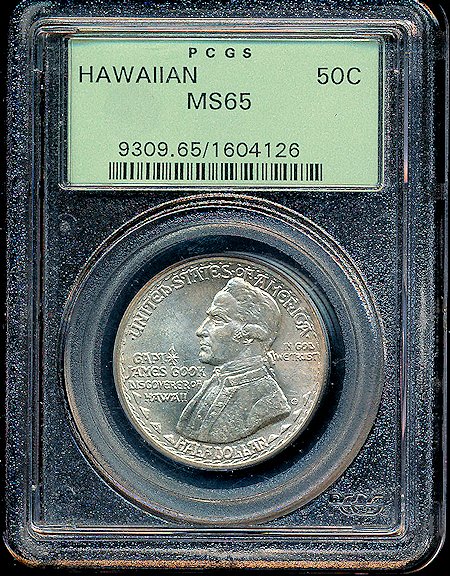
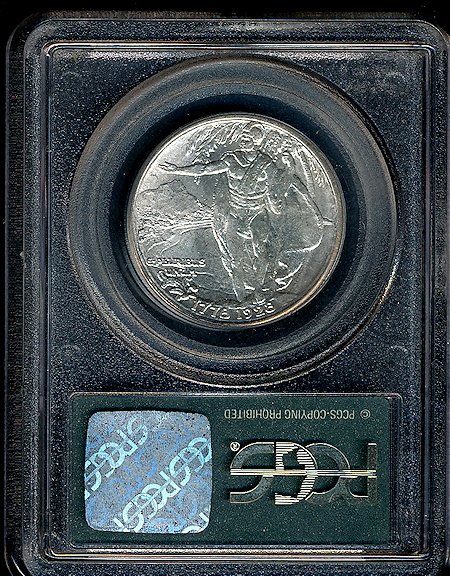
To learn more about the Hawaiian half dollar, check out:
-
1928 Hawaiian (European) Discovery Sesquicentennial -
1928 Hawaiian (European) Discovery Sesquicentennial - Revisited-
1928 Hawaiian (European) Discovery Sesquicentennial - Bank of Hawaii Auction-
1928 Hawaiian (European) Discovery Sesquicentennial - The Hawaiian Chieftain




 Posted 02/14/2022 11:51 am





