I recently presented the origin story of the 1925 California Statehood Diamond Jubilee Half Dollar and how it began its Congressional journey as a standalone coin proposal before being folded into the Battle of Bennington-Vermont Independence Sesquicentennial commemorative coin bill. (See Link Below.) The Fort Vancouver coin had a similar journey, but with a "medallic" twist.
The companion bills proposing the Fort Vancouver half dollar were introduced in the House and Senate in May 1924. The bills called for up to 5 million half dollars (!) of standard specifications to be struck "at the mints of the United States." As with the California Statehood coin, this language was implicit authorization for the creation of three-coin P/D/S sets.
Also, as with the California coin, the bill did not specify a specific year to be placed on the coin or an expiration date for coining authority. If it had been approved as written, the availability of 5 million coins, and no restriction on coin dates or time frames for striking, the Fort Vancouver half dollar could have been the first US commemorative program to extend 5+ years and beaten the Oregon Trail Memorial coin program to the extended-years-of-issue punch!
Each of the bills was referred to its coinage committee upon its introduction: the House bill to the Committee on Coinage, Weights, and Measures; the Senate bill to the Committee on Banking and Currency. No action was taken in either Committee, however, before the Session of Congress adjourned.
When Congress reconvened in January 1925, there was a new (though temporary) mindset in Congress - it was respecting the preference of the Treasury Department and supporting commemorative medals vs. commemorative coins. The Norse-American Centennial medal was approved under this new approach, and the Fort Vancouver piece appeared to be following suit. The Fort Vancouver companion
coin bills of 1924 were replaced by companion
medal bills in February 1925; Representative Albert Johnson (R-WA) introduced each version in the House of Representatives.
It's interesting to note that the medal bills sought just 50,000 medals vs. the 5 million coins previously requested - just 1% of the coin request! (IMO, you'd be hard-pressed to find a clearer indictment against the popularity of medals vs. coins.) The sponsor - the Fort Vancouver Centennial Corporation - was carried over from the coin bills, though it was disappointed with the change to medals.
When the Senate passed the Battle of Bennington-Vermont Independence Sesquicentennial bill, Representative Albert Johnson (R-WA) dropped his agreement to the Vancouver medal proposal and fought for a Fort Vancouver half dollar to be added via amendment to the Bennington-Vermont bill while being considered by the House; he was emboldened in his request by the fact that the California Statehood Diamond Jubilee half dollar had already been successfully amended to the bill.
During the House's consideration of the Bennington-Vermont bill and the California amendment, Representative Johnson offered a simple amendment that added "and Vancouver, Wash." to the bill's first section after "California." The bill, with the full California coin amendment and Johnson's small wording change to the bill's first section, passed the House without further issue.
Johnson then realized that his simple amendment did not directly address the specifics of the desired Fort Vancouver coin, and so, a few minutes later, he requested the House reconsider the coin bill and allow him to add the coin's specific language. After some debate over whether it might be better to just reconcile the details in conference vs. reopening consideration of the bill, Johnson was able to convince Representative John Edward Raker (D-CA), his challenger, to re-open consideration and seek agreement on the language of his full amendment,
It's interesting to note, Johnson's amendment called for up to 300,000 half dollars vs. the original 5 million request. It appears clear that in the months since he introduced the original coin bill, he had reviewed past commemorative coin history and/or consulted with those more experienced in US commemorative coinage and took their guidance for reducing his/the sponsor's mintage request. The amendment continued to allow strikes from multiple mints and be absent of language restricting when the coins could be struck.
The House passed the amended bill after a brief debate over parliamentary procedure, thus creating Congress' first three-program commemorative coin bill.
Of the 300,000 coins authorized, just 50,000 were initially requested and struck by the San Francisco Branch Mint (accidentally w/o the "S" mint mark). Sales proved disappointing, however, with just under 15,000 coins sold - the balance were returned to the Mint to be melted. I've always wondered if sales had been stronger and a second batch had been struck, would the mint mark issue have been corrected such that the second group of coins would have included the "S" mark? I believe collectors of the time would have gotten excited over such a variety!
1925 Fort Vancouver Centennial Half Dollar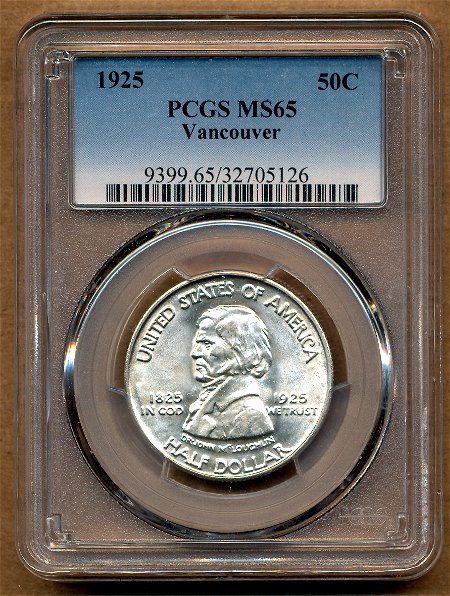
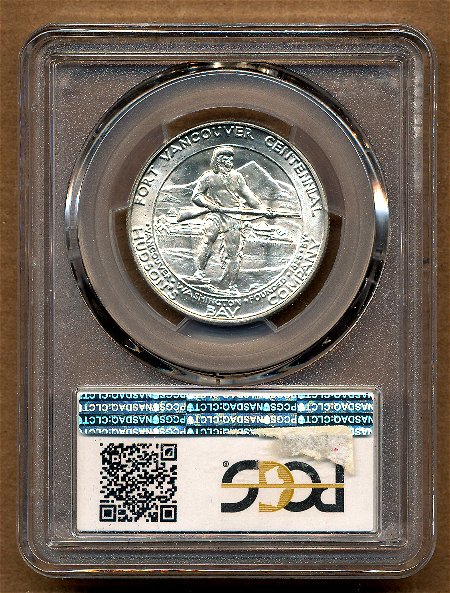
For more of the multi-coin bill story, see:
-
1925 California Statehood Diamond Jubilee - Origin Story-
1927 Battle of Bennington-Vermont Independence SesquicentennialFor more on the Fort Vancouver half dollar, check out:
-
1925 Fort Vancouver Centennial-
1925 Fort Vancouver Centennial- ReduxFor other of my posts about commemorative coins and medals, check out:
Commems Collection. 






 Posted 02/22/2022 12:09 pm





