In January 1921, companion bills were introduced in the House, by Representative William Lester Nelson (D-MO), and in the Senate, by Senator Selden Palmer Spencer (R-MO). The bills called for 500,000 silver 50-cent pieces to be struck "in commemoration of the one hundredth anniversary of the admission of Missouri into the Union."
As would be expected. the House bill was referred to the Committee on Coinage, Weights, and Measures; the Senate bill to the Senate Committee on Banking and Currency.
The Senate Committee supported its bill, but favored a reduction in the mintage from 500,000 to 250,000. The bill, as amended, was reported out favorably. The House Committee recommended the same amendment when it reported the House version of the bill.
The Senate passed the amended bill via Unanimous Consent and sent the bill to the House for concurrence. Upon receipt, the House referred the bill to its Committee on Coinage where it was once again reported favorably - this time, without amendment. The Whole House then took up the Senate bill (vs. its own) and passed it without objection or debate. It was examined and signed in both chambers of Congress, then sent to the President for approval. US President Warren G. Harding signed the bill into law on March 4, 1921. All in all, a very smooth and quick process that took just over two months to complete!
The language of the bill/Act allowed for the coins to be struck at multiple US Mint facilities, but did not name the sponsor/financial guarantor of the coin, did not specify the date that was to appear on the coins, did not set an expiration date for coining authority and did not include restrictions on the placement of coin orders.
The Missouri Centennial Committee (the unnamed sponsor/guarantor) could have had a field day with the Missouri half dollar, but only made an initial request of 50,000 coins from the Mint - all were struck in Philadelphia. Less-than-stellar overall sales (sales of the Plain and 2*4 varieties combined totaled just over 20,000) argued against additional issues in subsequent years, so collectors were "saved" the abuse of a nonsensical multi-year issue for a single-year anniversary.
It definitely seems that most of the early commemorative coin sponsors maintained logical and reasonable plans for the distribution period for their coin in terms of confining such to a specific date/event. Of course, the Oregon Trail Memorial Association took things in a different direction - a direction followed, unfortunately, by several 1930s sponsors. The abusive actions of these "multi-year" sponsors caused the US Congress to step in and pass legislation that ended all existing multi-year programs - but it didn't do so until 1939.
1921 Missouri Statehood Centennial Half Dollar - Plain Variety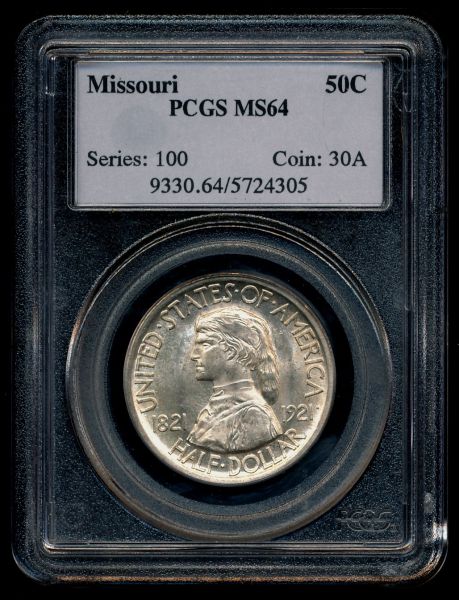
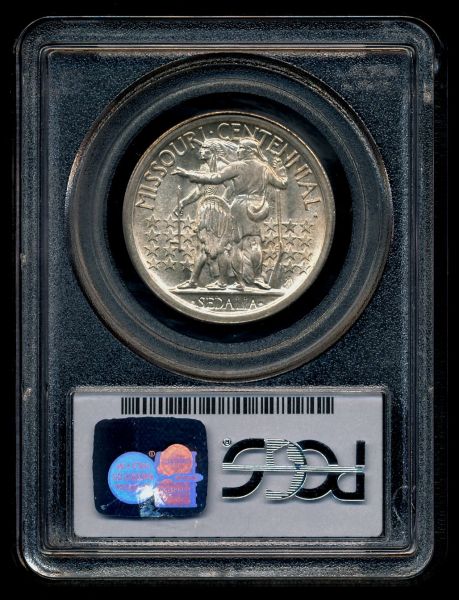
For more on the Missouri half dollar, see:
-
1921 Missouri Statehood Centennial - Plain Variety-
1921 Missouri Statehood Centennial - 2*4 Variety -
1921 Missouri Statehood Centennial - Advertising a Rejected Design-
1921 Missouri Statehood Centennial - Coins with Stars ThreadFor other of my posts about commemorative coins and medals, check out:
Commems Collection









 Posted 03/05/2022 02:07 am


