Intro Note: For a wonderful discussion of the life and collection of Virgil Brand, I would recommend getting a copy of Q. David Bowers' book Virgil M. Brand, the Man and His Era: Profile of a Numismatist.
It's been part of my numismatic library for many years, and my reference source for this post.Virgil Brand was a famous coin collector (hoarder?) who was born into a wealthy family on January 16, 1862. He began collecting coins in his teen years (1880s) and continued to do so until his death on June 20, 1926.
Brand has often been described as one of the greatest coin collectors in history, largely based on the vast collection of US and World coins, plus tokens and medals, he assembled over time and for the meticulous records he kept about his acquisitions. His collection was known for holding duplicates of many rarities; he had several examples of multiple US gold coin rarities, for example (he liked gold coins!).
Virgil did not live to see the heyday of the classic US commemorative series, but he did include some of the commemorative coins that were issued during his lifetime in his collection. As he regularly did with other coins, he generally purchased large groups of commemorative coins vs. individual pieces.
For example, of the 1915 Panama-Pacific International Exposition coins, Virgil recorded purchases of two dozen half dollars, 168 gold dollars and 18 quarter eagles. He also purchased five of the complete five-coin sets in the copper frames; he added another complete set in the frame in 1923. (What I would give for one, never mind six!)
Brand did not generally buy his commemorative coins directly from their sponsors. Most of his purchases were made from dealers; often years after the coins were originally released.
In December 1912, the Chicago Coin Company (a coin dealership Brand co-owned with Theophile E. Leon) purchased 1,079 uncirculated Lafayette silver dollars for just $1,188 - $1.10 a piece! Q. David Bowers has written that he believes a good percentage of the mint state Lafayette dollars available in today's market can be traced to the Brand hoard. The Chicago Coin Company ceased operations in mid-1915, with its remaining inventory of coins becoming part of Brand's personal collection.
I'm not sure if Brand added examples of each commemorative coin issued to his collection, but here are the coins owned by Brand that Bowers noted in his book:

1893 Isabella quarter: 300 - purchased in 1893, possibly from the sponsor though the quantity may point to a dealer being involved
1900 Lafayette dollar: 1, 079 - purchased as a dealer (Chicago Coin Company), paid just $1,188 for the group, an average of just $1.10 each
1903 Louisiana Purchase Exposition gold dollars: 64
Proof coins, purchased in 1920 from B. Max Mehl
1904 Lewis and Clark gold dollars: 30 - paid $50 for the batch - $1.67 each; the coins were sold by the sponsor for $2.00 each
1915 Panama-Pacific International Exposition: 24 half dollars, 168 gold dollars and 18 quarter eagles; six complete five-coin sets in the copper frames
1916-17 McKinley Birthplace gold dollars: 50 of each date, purchased in 1920 from B. Max Mehl
1918 Illinois Statehood: 25 purchased from Theophile E. Leon in October 1918
1920 Maine Statehood Centennial: 80 - purchased from Theophile E. Leon in October 1920
1920: Pilgrim Tercentenary: 75 - purchased from Theophile E. Leon in October 1920
1922 Missouri Statehood Centennial - 2x2 Variety: 100 examples purchased from C. A. Windau in 1925 for just $65.00
1925 Fort Vancouver Centennial: 50 examples purchased from the Guttag Brothers in August 1925 for $55.00
From Brand's records, it appears that he died before acquiring the 1926 American Sesquicentennial silver and gold coins, so his commemorative "collection" likely ended with one or more of the 1925 issues (See Fort Vancouver listing above).
Virgil Brand is a testament to what can be done in numismatics if you are fortunate enough to have near-unlimited financial resources. His meticulous record keeping affords today's collectors with a unique look into his purchasing patterns and the market trends of the late 19th and early 20th century.
In May of 1928, companion bills were introduced in the House and Senate calling for the Board of Regents of the Smithsonian Institution to "investigate the character and value" of Brand's collection and to advise on whether the US should purchase it. The collection contained over 300,000 US and world coins, medals and tokens; many pieces in the collection were gold. The bill was referred to the Committee on the Library vs. the Committee on Coinage, Weights and Measures, likely due to the fact that it was called for a museum acquisition vs. the production of new coinage.
The bill died in Committee and the US did not pursue purchase of the collection. Had it become part of the Smithsonian's collection, the US would have instantly had one of the most extensive numismatic collections in the world. It was ultimately sold in bits and pieces via private sale and auction beginning shortly after his death and continuing for decades as heirs to the collection began to offer their inheritance to the collecting community. The choicest material was sold soon after his death.
Virgil Brand: The Man and His Era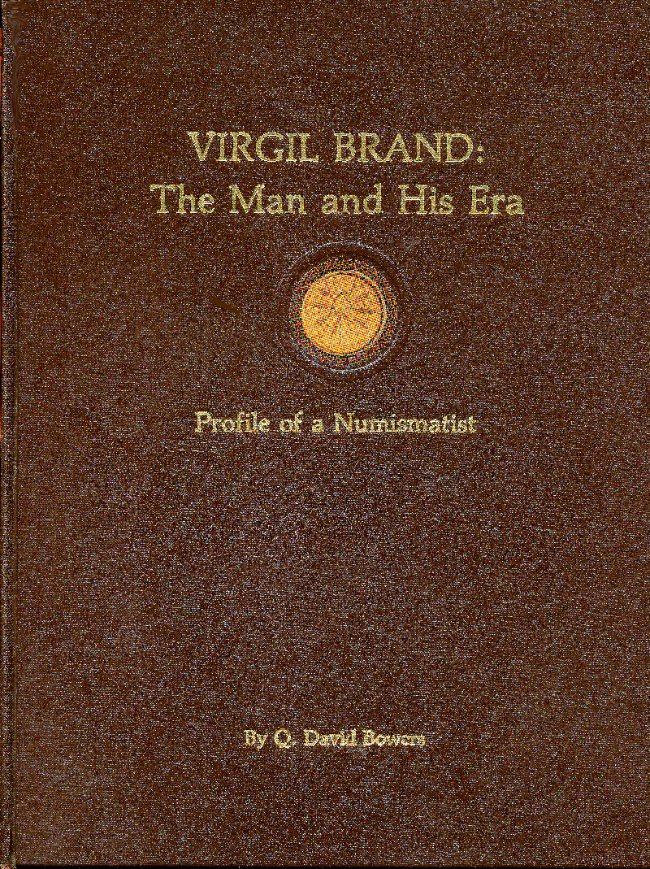
For other of my posts about commemorative coins and medals, see:
Commems Collection. 






 Posted 03/11/2022 09:16 am





