Companion bills calling for a special half dollar "in commemoration of the commencement on June 18, 1923, of the work of carving on Stone Mountain, in the State of Georgia, a monument to the valor of the soldiers of the South, which was the inspiration of their sons and daughters and grandsons and granddaughters in the Spanish-American and World Wars, and in memory of Warren G. Harding, President of the United States of America, in whose administration the work was begun..." were introduced in the Senate (December 1923) and House of Representatives (January 1924).
The Senate bill was introduced by Senator Reed Smoot (R-UT), the House bill by Representative Louis Thomas McFadden (R-PA) - note that neither was from a southern state. As was standard procedure, the Senate bill was referred to the Senate Committee on Banking and Currency. while the House bill was referred to the House Committee on Coinage, Weights, and measures.
The identical bills called for the striking of up to 5,000,000 (!) coins without restrictions placed on the number of Mint facilities that could strike it, when the coin could be struck or the minimum size for coin orders. These provisions would have allowed, the Stone Mountain Confederate Monumental Association ("Association") - the coin's listed sponsor - to create a multi-year, multi-Mint issue in the same way the Oregon Trail Memorial Association did with its coin program which was approved in 1926. With the number of coins to be available to it, the Association could easily have requested coins well into the 1930s, with "boutique" issues of 2,000 coins or less from each Mint to entice collectors who needed a complete set!
Each Committee issued a Report that viewed the coin proposal favorably and recommended passage of the bill without amendment. The Senate was the first to move forward. It brought its bill up for consideration in March 1924 and passed it without objection. The House then considered the Senate bill and joined it by giving its approval. The House version of the bill was subsequently Laid on the Table.
The passed bill was then examined and signed in each chamber, and presented to President Calvin Coolidge for final approval. Coolidge signed the bill into law on March 17, 1924.
Considering the potential controversial theme of the coin - honoring soldiers of the losing side in the US Civil War - I have always been surprised at how smoothly the coin's bill moved through Congress. But that's a topic for a different post.
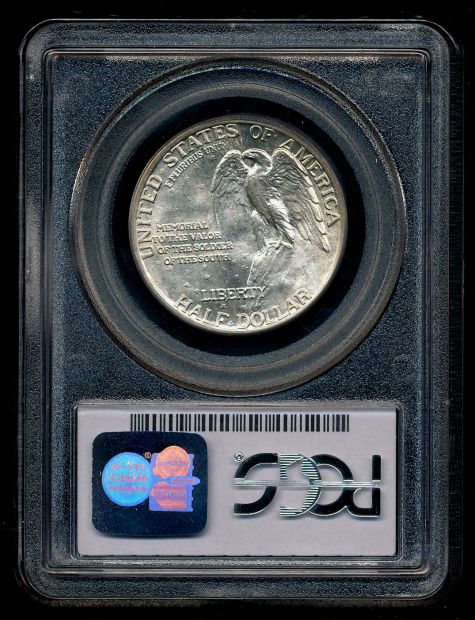
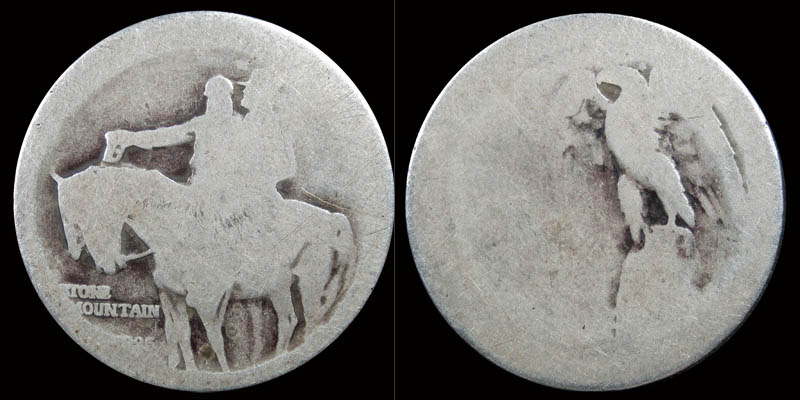
Fortunately for collectors, the Association did not avail itself of all the possibilities offered by its enabling legislation. The coins were struck only in Philadelphia, and only in 1925. The only "abuse" propagated on collectors was the large volume of coins that were made available - approximately 2.3 million coins were minted, but ~1.0 million were returned to the Mint to be melted; a fair number of the coins (likely >100,000) also found there way into circulation. Today, the Stone Mountain half dollar is one of the most readily available coins from the classic-era series and can be found in a wide range of grades, from low-end circulation grades to high-end Superb Gem Uncirculated (i.e., MS-67 or better).
1925 Stone Mountain Memorial Half Dollar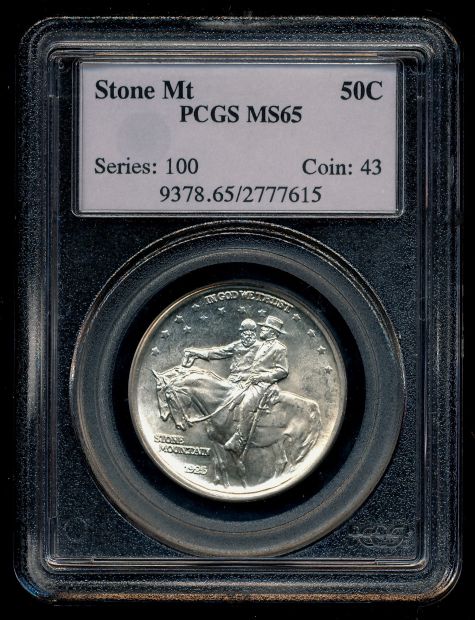
I have posted a number of times about the Stone Mountain half dollar and associated ephemera and medals, you can find the posts here:
Commems Collection.









 Posted 04/30/2022 12:04 pm




 to the forum jerrytheplater. You are in for a real educational and enjoyable read treat if you search through the Commems Collection link provided.


