Continuing my look at classic US commemorative coins that feature a Coat-of-Arms or Seal...8. 1936 Rhode Island TercentenaryThe 1936 Rhode Island Tercentenary half dollar features elements of Official Seals on its obverse as well as reverse.
The obverse of the coin features a modern (circa 1936) adaptation of the Seal of the City of Providence. It depicts the landing of Roger Williams at Slate Rock and him being greeted by local Native Americans (at a site that would become a part of the City of Providence in the future). The half dollar was jointly designed by Howard Benson and Arthur Graham Carey. In the artist's own words: "We selected this subject as an excellent symbol of Liberty, also because it is used as the modern seal and arms of the City of Providence."
Seal of Providence, Rhode Island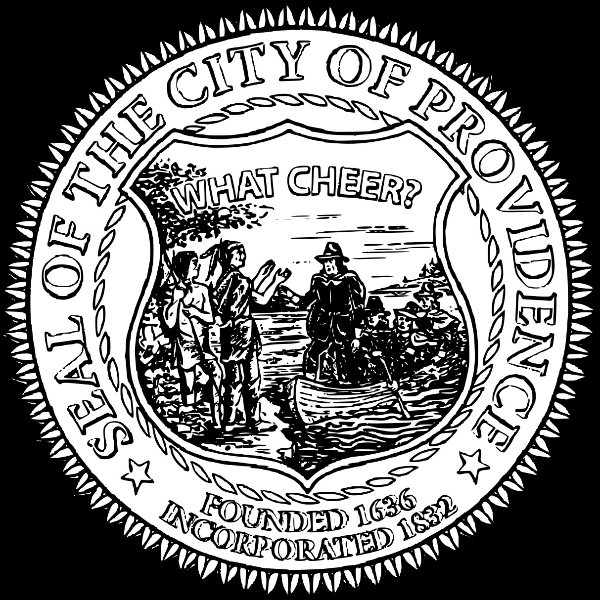
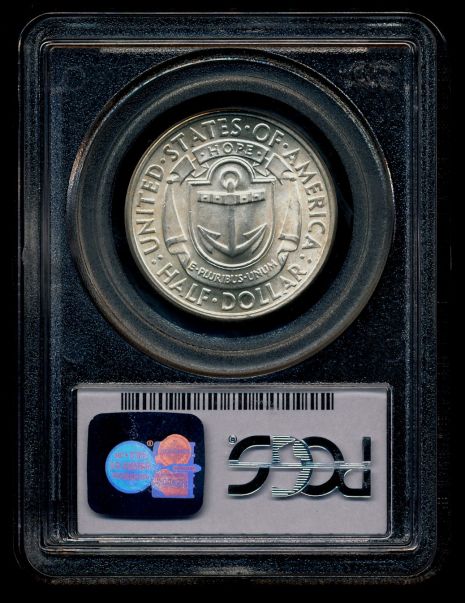
The coin's reverse also presents an adaptation of a government Seal - the Seal of the State of Rhode Island and Providence Plantations.
Seal of State of Rhode Island - Circa 1936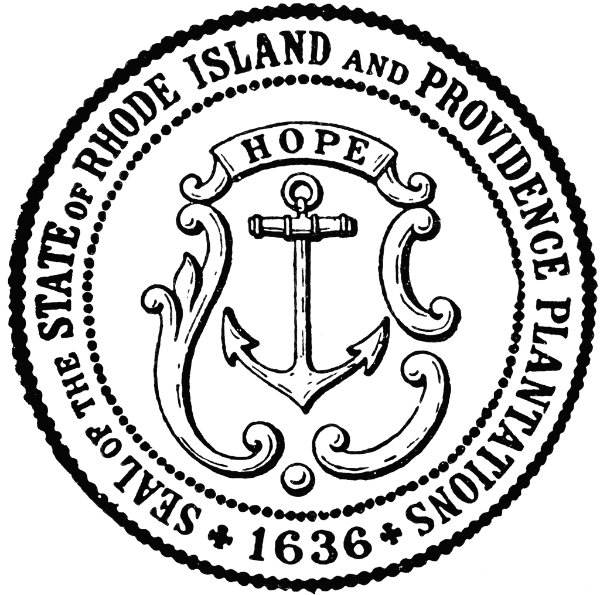
The use of an anchor as a primary design element for Rhode Island's Coat of Arms dates to its colonial days when a General Assembly of the four original towns of the colony adopted a Seal depicting an anchor in 1647; the four orginal settlements/towns were Providence, Portsmouth, Warwick and Newport.
The Seal has been modified, officially and unofficially, multiple time since its original approval. It has seen the addition of "HOPE" above the head of the anchor, and the changing of the anchor from "Plain" to "Foul" (meaning a cable was wrapped around its stock and extended down to its flukes). It has also seen the addition of rococo-style decorative elements (the curved decorative forms) on each side of the anchor.
The roots of the modern (circa 1936) interpretation of the State Seal seen on the coin dates to 1875 when the General Assembly authorized a new Seal:
An Act in Relation to the Seal of the State
Sec.1 there shall continue to be one seal for the public use of the State; the form of an anchor shall be engraven thereon, the motto thereof shale be the word "Hope," and in a circle around the same shall be engraven the words; "Seal of the State of Rhode Island and Providence Plantations, 1636. In 1928, another update of the Seal was made. It did not change/replace any of the Seal's core elements; it strengthened their presentation. It is this version of the Seal that served as a reference source for the commemorative half dollar.
1936 Providence, RI Tercentenary Half Dollar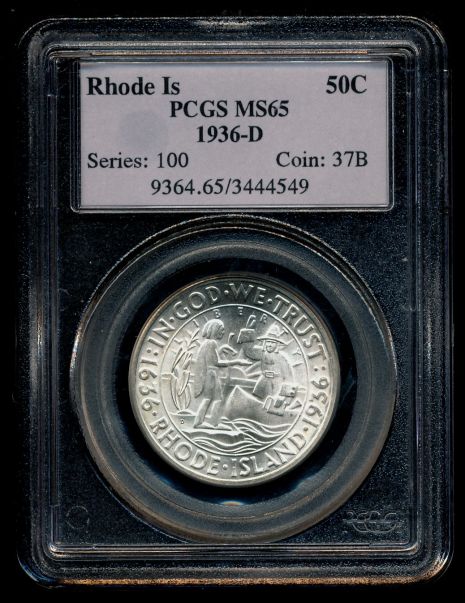
If you're interested in learning more about the Providence, RI Half Dollar, check out:
-
1936 Rhode Island Tercentenary-
1936 Rhode Island Tercentenary - Revisited-
1936 Rhode Island Tercentenary - Horace Grant-
1936 Rhode Island Tercentenary - School of DesignRI Note: In 2021, the voters of Rhode Island voted to drop "and Providence Plantations" from the official State name - the words no longer appear on the official State Seal.1935-36 California-Pacific International Exposition - AKA "San Diego"The "San Diego" half dollar is somewhat of an "Honorable Mention" among the classic US commemorative coins (1892-1954) that depict the Seal of a city or state. The coin's obverse design incorporates core elements of the California State Seal, but does not specifically duplicate the Seal itself.
California State Seal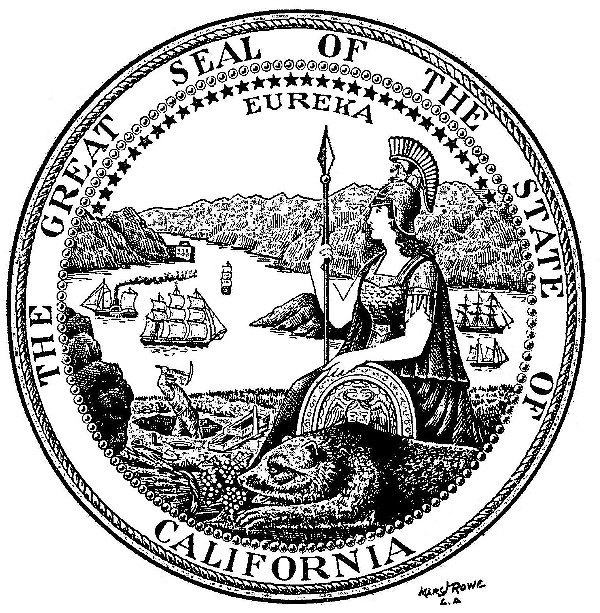
Per the California Secretary of State:
The Constitutional Convention of 1849 adopted a "Great Seal of the State of California." Two main features of the seal are the seated figure of the Goddess Minerva and the California Grizzly Bear crouching at her feet. Other design elements include a gold miner, ships upon a mountain-rimmed bay, and the motto "Eureka," which means "I have found it."1935-S California-Pacific International Exposition Half Dollar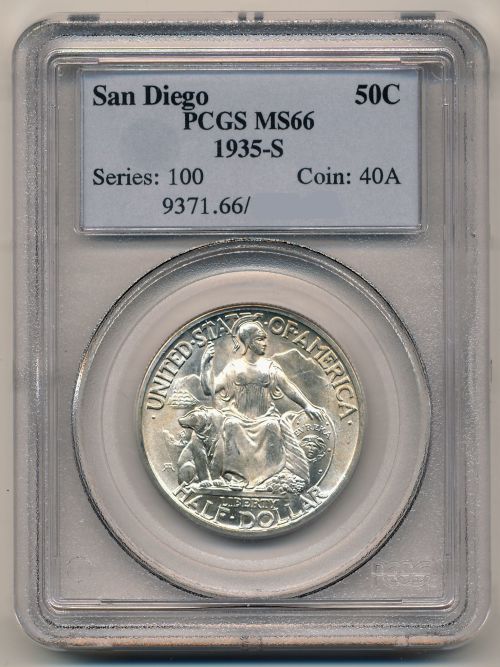
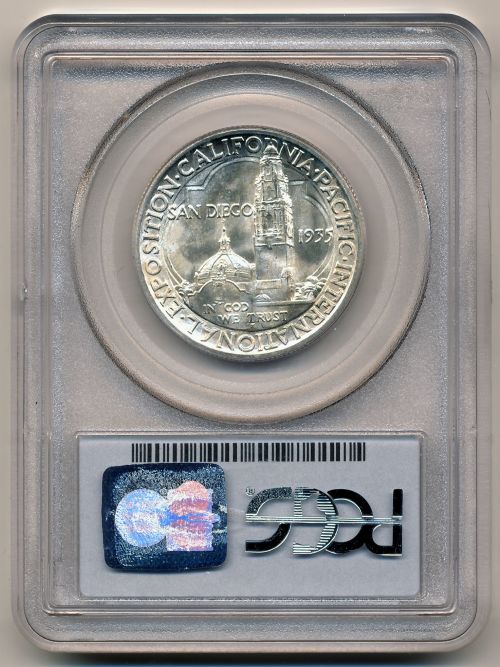
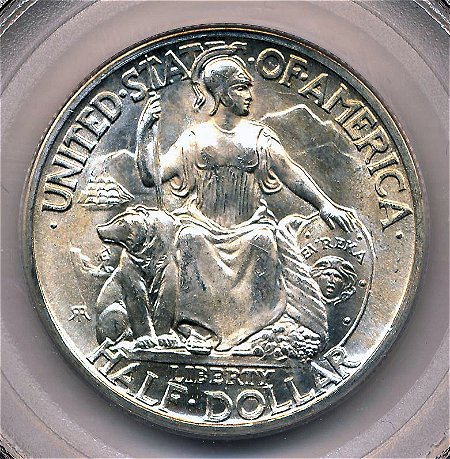
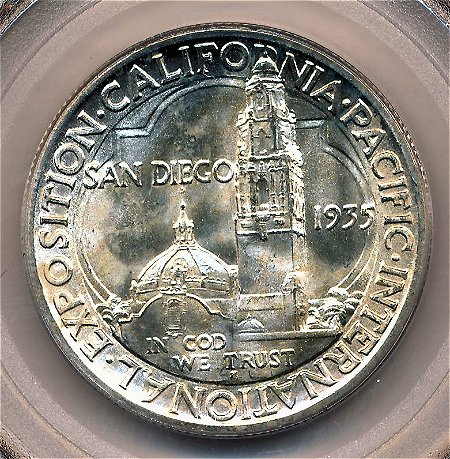
IMO, it's clear that Robert Aiken was strongly influenced by the California Seal as he created the design of the obverse of the commemorative coin. The coin's design includes a depiction of the Roman goddess Minerva, seated and holding a shield. Also included: a grizzly bear, a sailing ship, a miner, a cornucopia/horn of plenty and mountains in the background beyond the water of the bay. The "Eureka" motto is also present. Clearly, the design elements are arranged differently, but the coin design's similarity to the legislated intentions for the Seal's design is undeniable.
For more information about the San Diego half dollar and an original holder for it, have a look at:
-
1935-36 California-Pacific International Exposition-
1935-36 California-Pacific International Exposition - Revisited-
1935-36 California-Pacific International Exposition - Origin Story-
1935-36 California-Pacific International Exposition - Original HolderFor a variety of commemorative-themed posts about coins and medals, check out:
Commems Collection. 









 Posted 07/10/2022 7:47 pm