I recently posted about the unsuccessful proposal for a half dollar "in commemoration of the dedication of Rushmore Mountain... for the carving thereon of a heroic monument." It was "Strike One!" for a Mount Rushmore coin. (You can read it here:
What If? 1927 Mount Rushmore Dedication.)
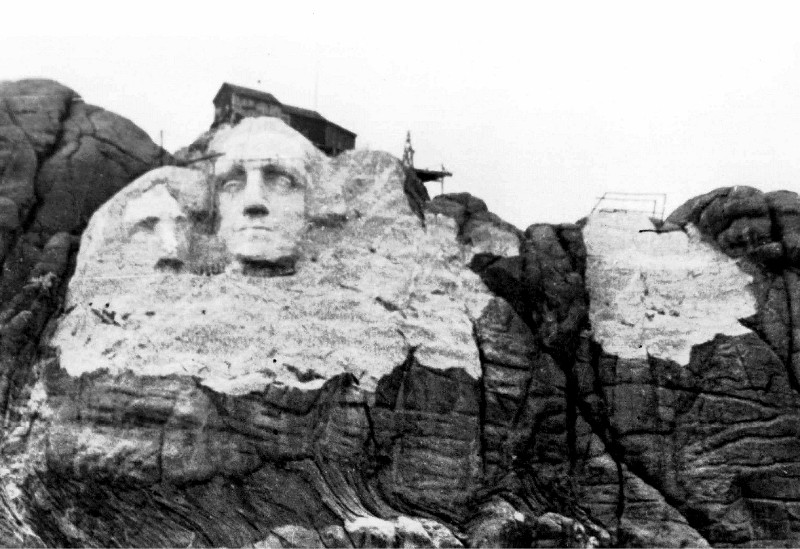
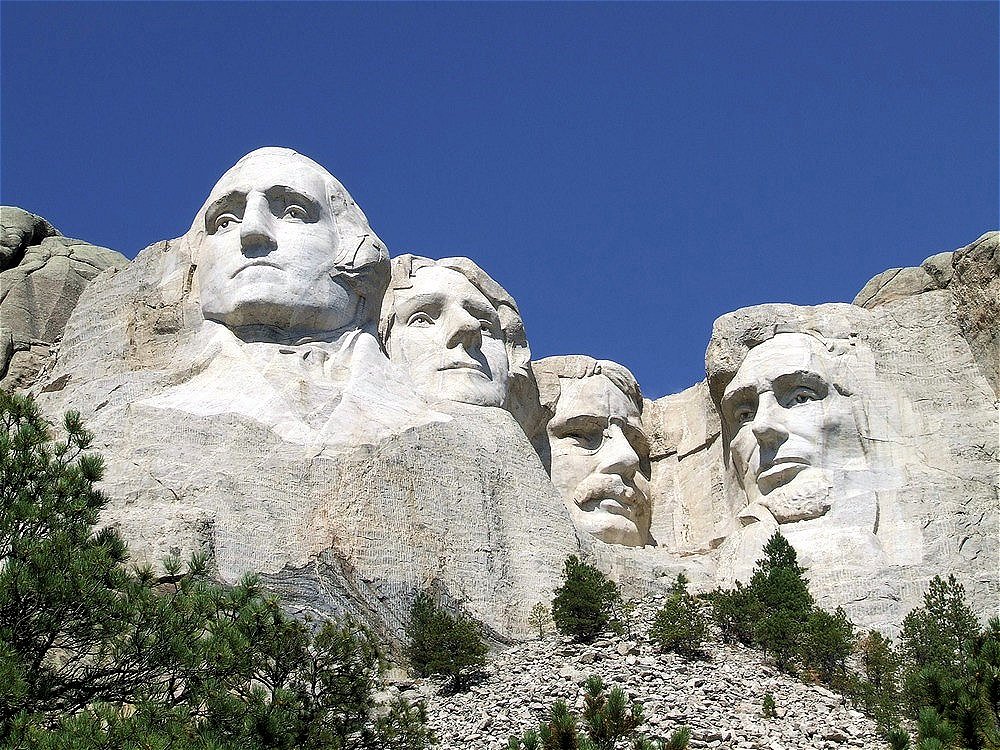
Carving on the Memorial began in 1927 and continued into 1941. Gutzon Borglum designed and modeled the Mount Rushmore National Memorial; he also worked directly on its carving and supervised the work crew. Unfortunately, Borglum died in March 1941, a few months before the finishing touches on the carving could be completed. His son, Lincoln Borglum, took over as supervisor. In reality, Lincoln had been serving as the primary supervisor for work on the Memorial for approximately two years before his father's death, as Gutzon was kept busy with extensive travel in an effort to raise funds for the Memorial.
The US' pending involvement in World War II had suppressed continued Government funding of the project, and led to the project being declared "Complete!" on October 31, 1941 - little more than a month before Japan bombed Pearl Harbor in Hawaii and drew the US fully into the War.
After the War, there was renewed interest in completing the Memorial as originally intended vs. the premature "completion" scope that was forced upon it.
A coin proposal was introduced in the House of Representatives by Francis Higbee Case (R-SD). Its half dollar was intended to financially support the completion of "the Mount Rushmore National Memorial and to commemorate the lives and perpetuate the ideals of the four Presidents of the United States there sculptured -- George Washington, Thomas Jefferson, Abraham Lincoln, and Theodore Roosevelt."
Just over a month later, Senator John Chandler Gurney (R-SD) introduced a similar bill in the Senate. Though its purpose was essentially the same, it differed slightly in its provisions vs. the House bill, and thus was not a true companion bill.
Both bills sought two million (!) half dollars for the benefit of the Mount Rushmore National Memorial Society and specified that the design of the coin was to include a "replica of the memorial." Each also specified that proceeds from coin sales were to be used to: 1) create "additional parking space in the Mount Rushmore Reserve and adequate comfort and sanitary facilities for visitors" - 2) complete the monument based on the models maintained by the National Park Service at the Memorial, under the supervision of Lincoln Borglum and 3) to remove some of the carving debris at the base of the Memorial. The House bill also sought "to complete the construction of the Hall of Records and the native stone stairway and other features of the memorial as originally conceived by the sculptor Gutzon Borglum." The Senate bill did not include any direct reference to the Hall of Records or the stone stairway.
Each of the bills provided terrific leeway for the Memorial Society as it did not place any limitations on order size or frequency, and allowed coins to be ordered for a ten-year period! As neither bill restricted the number of Mint facilities that could be engaged to strike the coins, it seems likely that the Memorial Society would have placed orders for coins to be struck at Philadelphia, Denver and San Francisco in multiple years.
Upon its introduction, the House bill was referred to the House Committee on Banking and Currency; it was never reported out. The Senate bill, however, which was referred to the Senate Committee on Banking and Currency, was reported out of Committee without amendment and with a recommendation to pass. The reported bill was considered by the Senate and passed without debate or objection. After its passage, Senator James William Fulbright (D-AR) entered a motion to reconsider the bill, but withdrew the motion the next day.
The bill was then sent to the House for its consideration, where it was immediately referred to the House Committee on Banking and Currency. As with the previous House version of the bill, the Senate version was never reported out of Committee and ultimately died for lack of action. "Strike Two!"
Senator Case (R-SD) reintroduced his coin bill in April 1953 - it was a duplicate of his 1947 House bill. (After serving seven terms as a SD Representative in the House, Case was elected to the Senate in 1950 and began the first of his three terms in January 1951.) The bill was referred to the Senate Committee on Banking and Currency, but was not reported out or considered further. "Strike Three!"
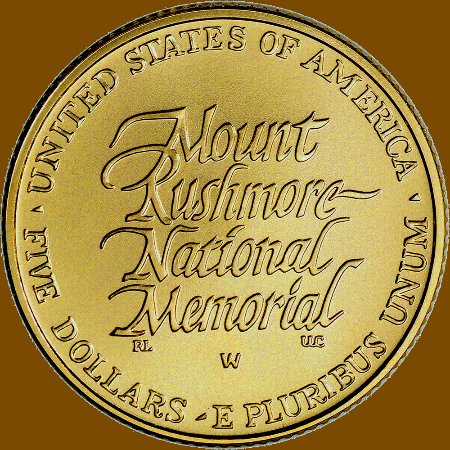
It would take more than 40 years, but coins commemorating Mount Rushmore were eventually approved by Congress in recognition of the Memorial's Golden Jubilee. As a three-coin issue that included a CuNi Clad Half Dollar, a Silver Dollar and a Gold Half Eagle, I would consider the modern program to have hit a "Home Run!" (Yes, I'm a baseball fan!)
1991 Mount Rushmore Golden Jubilee Gold Half Eagle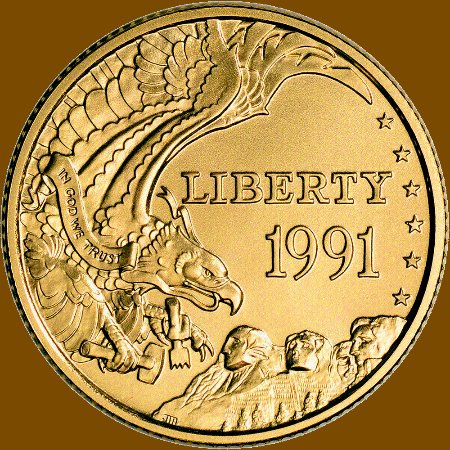
For more of my posts about commemorative coins and medals, including other What If? stories, see:
Commems Collection.










 Posted 09/14/2022 05:35 am