I've previously posted about the 1925 Norse-American Centennial medals, discussing their designs, varieties and mintage figures. (See links below.) This time out, I present a look at its path in Congress.
An important first step in the Norse-American medal's journey through Congress occurred when Secretary of the Treasury, Andrew W. Mellon, convinced Representative Ole Juulston Kvale to pursue a commemorative medal for the Norse-American Centennial vs. a 50-cent piece. This was prior to the introduction of any bills in Congress.
In February 1925, bills were introduced in the House of Representatives and Senate that called for the Secretary of the Treasury "to prepare a medal with appropriate emblems and inscriptions commemorative of the Norse-American Centennial." The House bill was introduced by Ole Juulson Kvale (FL-MN); the Senate bill by Peter Norbeck (R-SD).
(Note: Kvale's "FL" party designator is an abbreviation for the "Farmer-Labor" party. The party saw its greatest success in Minnesota, especially during the years of the Great Depression in the US. )The House bill was reported favorably by the Committee on Coinage, Weights, and Measures without amendment and with a recommendation for passage. The Senate bill, which was originally referred to the Committee on the Library before being switched (properly) to the Committee on Banking and Currency, also received Committee approval without amendment and with a recommendation to pass.
The Senate was the first to consider its bill. It followed its Committee's recommendation and passed the bill without amendment or objection. When the House brought its bill up for consideration, Representative Kvale requested that the House replace its bill with the already-passed Senate bill; there was no objection to the proposed substitution. The Senate bill was read and the House approved it without objection. After the Senate bill was passed, the House laid its bill on the table.
With the same bill approved in the House and Senate, each was examined and signed by its respective leader - the Speaker of the House in the House of Representatives and the US Vice President in the Senate. The bill was then presented to US President Calvin Coolidge for final approval; Coolidge signed the bill into law on March 2, 1925.
At the time, Secretary of the Treasury Andrew Mellon believed the Norse medal signaled a changeover to medals vs. coins for future Mint-struck commemorative pieces - something he favored - but it proved to be more of a one-off case as legal tender coins continued to be the preferred vehicle for commemorative requests presented to Congress - requests that were generally passed over Treasury Department objections.
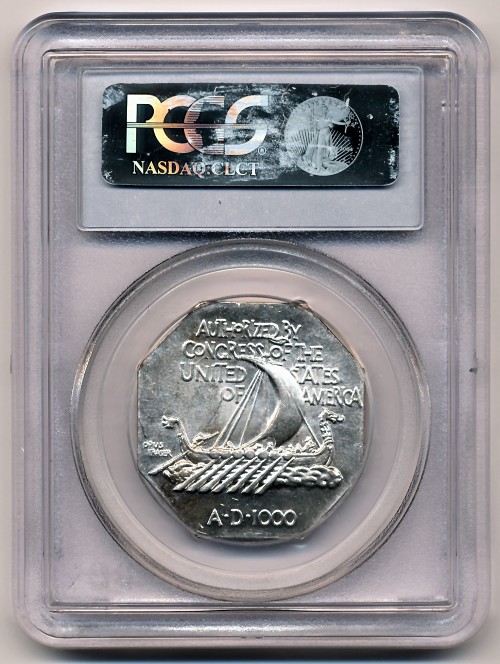
1925 Norse-American Centennial Silver Medal - Thick Variety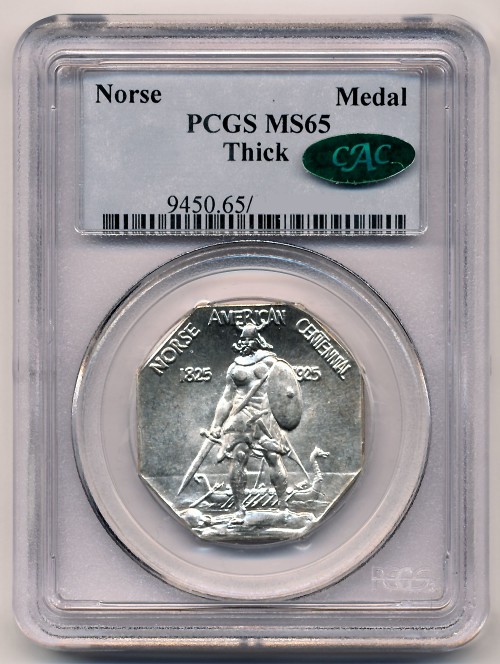
For other of my posts about the 1925 Norse medal, see:
-
1925 Norse-American Centennial-
1925 Norse-American Centennial - Upgrade-
1925 Norse-American Centennial - Future Cousin from NorwayFor more of my topics on commemorative coins and medals, more Origin stories, see:
Commems Collection.







 Posted 09/27/2022 09:25 am





