Here's another unfulfilled commemorative coin proposal from 1937, but one with a twist...Representative Joseph Lister Hill (D-AL) introduced a bill in the House of Representatives in January 1937 that called for half dollars to be struck "in commemoration of the centennial anniversary of the city of Montgomery, Alabama." It was among the earliest commemorative coin bills to be introduced in the 75th Congress - it would eventually be joined by 30+ others!
Montgomery, AL received its City Charter in 1837; nine years later, in 1846, it was named the capital of Alabama (it remains the Alabama capital to the present day). The city traces its roots back to 1817/1818 when three settlements were formed in central Alabama on the banks of the Alabama River - New Philadelphia, Alabama and East Alabama. The towns of New Philadelphia and East Alabama merged and incorporated under the name "Montgomery" in 1819. The town was named in honor of Major General Richard Montgomery, a former British soldier who became an officer in the Continental Army and an American Revolutionary War hero. Montgomery led American forces to victory against the British in the 45-day siege of Fort St. Jean and the capture of Fort Chambly and Montreal as part of the Battle of Quebec. He was subsequently killed in battle at Quebec City on December 31, 1775.
General Richard Montgomery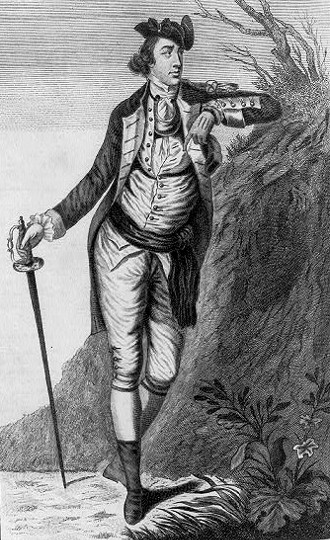 (Image Credit: Library of Congress, Prints and Photographs Division. Public Domain.)Side Note: Montgomery, AL played a central role in the formation and growth of the cotton industry in the South. Its own growth paralleled that of the cotton industry for many years.
The coin bill sought up to 50,000 half dollars of standard specifications for the benefit of a "Commission of the City of Montgomery" (the Montgomery Chamber of Commerce assumed this role). It specified that all coins were to be struck at a single US Mint, and that all coins were to bear the date "1937" regardless of when struck. The bill set the minimum coin order at 10,000 and required that all orders had to be placed by the Commission before the expiration date of one year post-enactment of the bill. Given these included parameters, Representative Hill was definitely aware and mindful of the provisions established by the Senate Committee on Banking and Currency in the prior Congress as he prepared the Montgomery coin bill. (See the link below for more.)
Net proceeds from coin sales were to help defray expenses associated with the city's Centennial celebrations.
The House Coinage Committee received the bill, but did not take action on it. A contributing factor for this inaction was a decision made by the Montgomery Chamber of Commerce - it decided that it would not pursue its planned Montgomery Centennial celebrations (prevailing economic conditions - i.e, the Great Depression - were a major factor); the Chamber requested Lister to withdraw the coin bill from consideration.
Withdrawing a coin bill from consideration was certainly an unusual turn of events - a novel "twist" if you will - but it was a fiscally responsible one and removed one bill from Congress' jam-packed coin proposal hopper.
For more about the Senate Committee on Banking and Currency's commemorative coin recommendations, see:
-
Quick Bits #44 - Senate Committee On Banking And CurrencyFor more of my topics on commemorative coins and medals, including more What If? stories, see:
Commems Collection.









 Posted 12/17/2022 09:48 am


