NGC -
A telltale mark at the top indicates this isn't one of the first English coins struck in the New World.The Mayflower arrived at Plymouth Rock in November 1620, carrying the Pilgrims who established the first permanent English settlement in New England. It was a difficult first winter, and almost half the Pilgrims died. In the autumn of 1621, the survivors held a feast of Thanksgiving with some of their Native American neighbors, an event that inspired the late November holiday celebrated by Americans today.
By the end of the 1600s, the Pilgrims' Plymouth Colony in southeast Massachusetts had merged with the Massachusetts Bay Colony, which included the rest of the state and other territories. In 1652, it was the Massachusetts Bay Colony that authorized the first coins to be struck in the United States, beginning with the rudimentary 'NE' coinage showing only the initials of New England and Roman numerals for a denomination: 'III' for Threepence, 'VI' for Sixpence and 'XII' for Shilling.
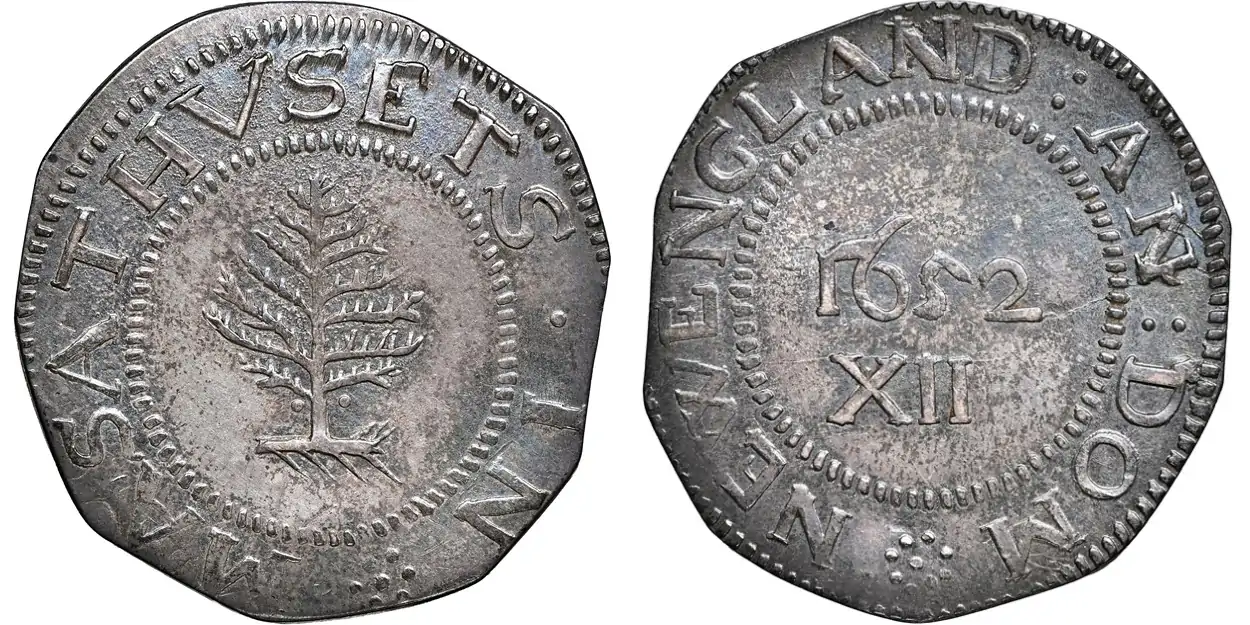 Genuine 1652 Pellets Pine Tree Shilling graded NGC MS 63 and pedigreed to the Christopher J. Salmon Collection
This was followed by three series named after their more complex designs involving trees: Willow Tree, Oak Tree, and Pine Tree. Genuine examples of these coins in the poorest condition are still worth hundreds of dollars, while others can sell for much more, depending on their condition and variety. For example, the genuine "Pellets" Pine Tree Shilling shown here realized $55,200 at an August 2022 Heritage Auctions sale.
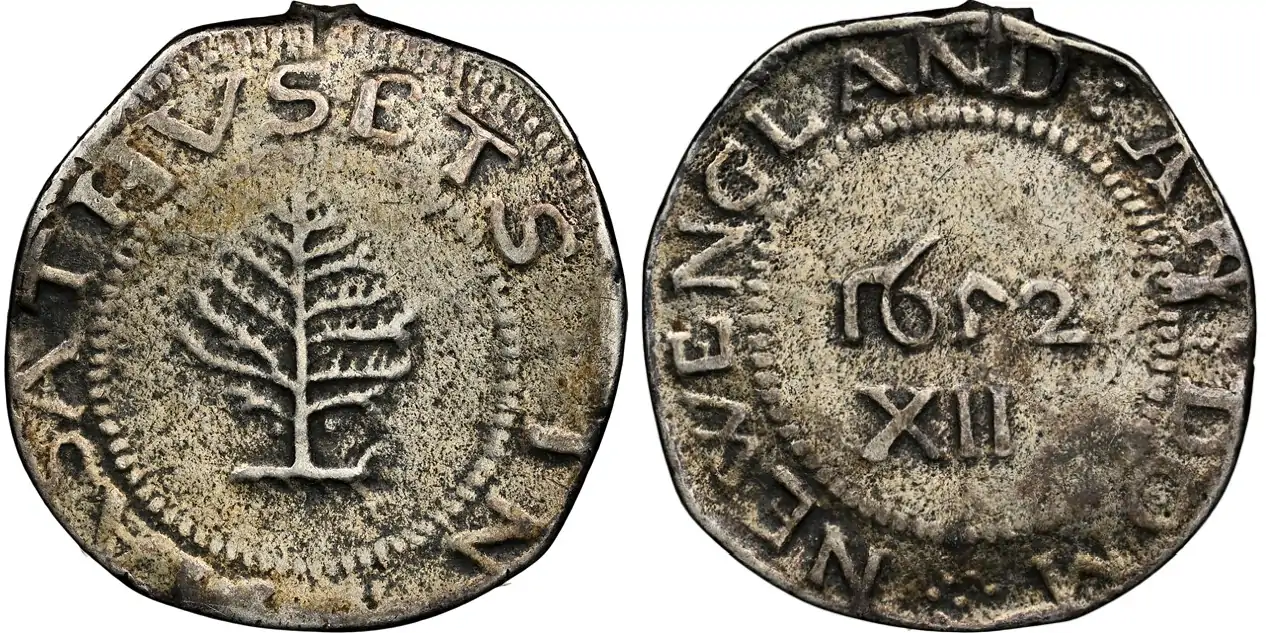 Counterfeit 1652 Pellets Pine Tree Shilling
 NGC recently received a purported example of this particular variety of 1652 Pine Tree Shilling, known as "Pellets" for the pellets on either side of the tree trunk. Among the other varieties of the 1652 Pine Tree Shilling are the 'NE' Monogram (for the combined 'N' and 'E' letters in the legend) and No 'H' (for the absence of that letter in MASATHVSETS). You can see high-resolution images of more than 350 genuine examples of these Massachusetts coins from the unparalleled Christopher J. Salmon Collection in a searchable image gallery at NGCcoin.com/gallery/salmon.
Unfortunately for the submitter of this particular coin, it is a low-quality fake that was not even struck in silver. Possibly a souvenir piece that was originally sold at a gift shop, it appears to have been cast from a genuine example. Note the raised area of metal connecting the 1 and 6 in the year. This is caused by a die break that worsened with time, as can be seen in the progression of images of genuine "Pellets" Pine Tree Shillings from the Salmon Collection below.
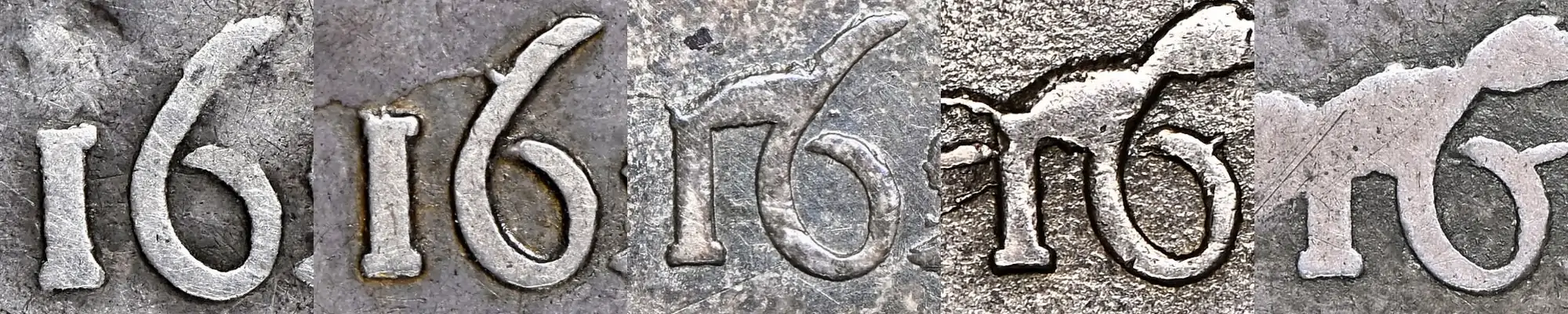 Progression of the die break in images of five genuine coins
The fake coin appears to have a casting spot at the top, which is seen by a depression that interrupts the denticles on the obverse. A similar notch can be seen bisecting the ridge at the edge of the coin between the 'N' and the 'D' on the reverse. During the casting process, this was the port through which molten metal was injected into the mold, which in this case is probably lead or a similar inexpensive "pot metal."
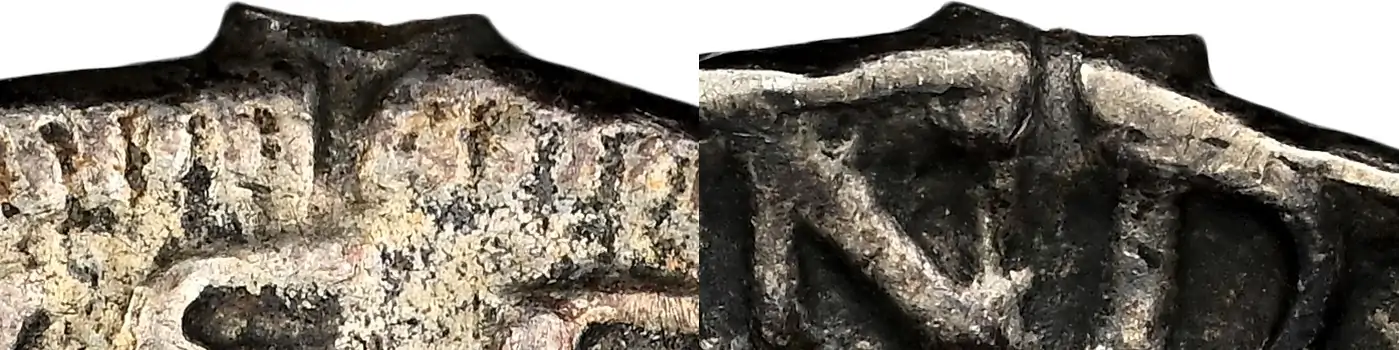 Close-ups of the top of the obverse and reverse of the counterfeit coin.
These Massachusetts coins are both a wonderful conversation starter and a powerful addition to any collection.
Read More: Counterfeit Detection Series Check out 1652 Pine Tree Shillings on ebay
.










 Posted 12/09/2024 12:09 pm





